Automatic Watering System for Pots: The Complete 2026 UK Guide
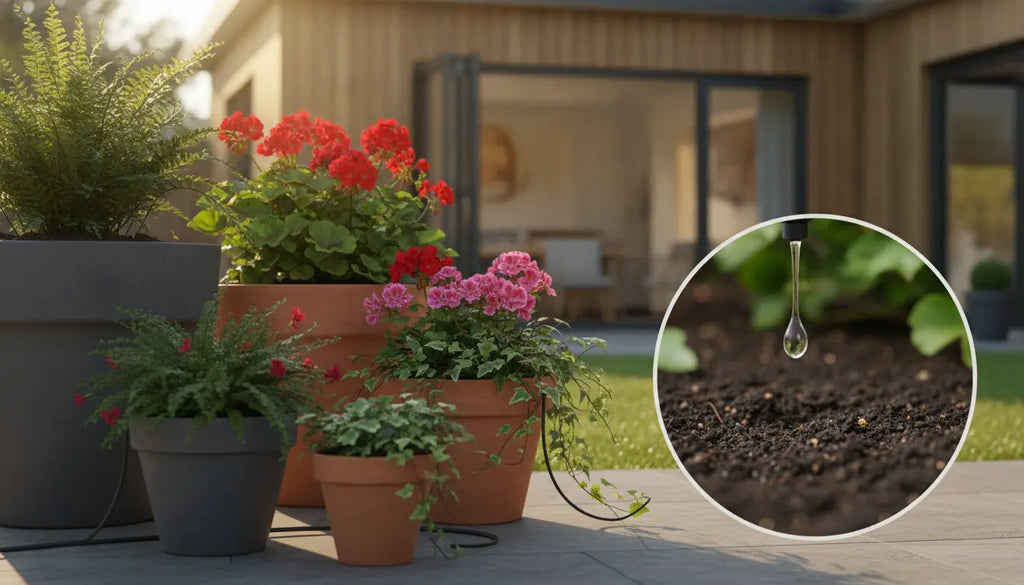
Did you know that even during a strict hosepipe ban, your garden can stay perfectly hydrated while the rest of the neighbourhood turns brown? It's heartbreaking to watch your favourite potted plants wilt during a summer heatwave, especially when you're trying to be responsible with water. Dragging a heavy hose around every evening is a chore that often feels like a losing battle. We understand the frustration of seeing water run off the surface of dry compost rather than reaching the roots where it's actually needed.
This guide shows you how to reclaim your summer by installing a precision automatic watering system for pots that delivers moisture exactly where it counts. By choosing the right drip irrigation components, you can maintain a lush, healthy garden with zero daily effort and significantly lower water waste. We'll walk you through designing a discreet system that fits your patio aesthetic, explaining how to connect multiple pots to a single source while staying compliant with local water regulations. You're about to discover how root-zone management can transform your gardening routine into a hands-free success.
Article Summary: What You'll Discover
We explore why pots dry out faster than garden beds and how an automatic watering system for pots provides the precision hydration needed to keep them thriving. You'll learn to identify the essential components for your setup. This includes choosing between manual and sensor-based timers and selecting the right pipe sizes for efficient water delivery.
We'll walk you through the planning process. We explain how to group plants by their water requirements and calculate pipe lengths to ensure adequate pressure at every dripper. You'll also find expert advice on maintenance. We show you how to use inline filters to prevent clogs and how to resolve airlocks for a reliable, trouble-free system. Finally, we explain why Hozelock's modular components are the preferred choice for UK gardeners who want a high-quality system that can grow alongside their plant collection.
Why an Automatic Watering System for Pots is a Game-Changer
An automatic watering system for pots is essentially a network of micro-pipes that delivers water directly to the root zone of your plants. It's a sophisticated yet simple solution to the "container challenge." Unlike plants in the ground, those in pots have a very limited volume of compost to hold moisture. They're also exposed to more airflow through the sides of the pot, causing them to dry out much faster than garden beds. By automating this process, you remove the guesswork and ensure your plants never reach a point of stress.
Maintaining stable moisture levels is vital for plant health. Fluctuating water levels often cause physiological stress, leading to problems like blossom end rot in tomatoes or leaf scorch on delicate ornamentals. Investing in an automatic watering system for pots provides "Holiday Peace of Mind," which has become a primary driver for garden automation in 2026. With water demand peaking at record levels during UK heatwaves, homeowners want to enjoy their travels without returning to a graveyard of wilted patio plants.
To better understand how these systems function in a real-world setting, watch this helpful video:
The Science of Drip Irrigation in Containers
Traditional watering methods often compact the soil and wash away essential nutrients before the plant can absorb them. In contrast, drip irrigation uses a slow-release method that maintains the soil's structure and prevents nutrient leaching. Capillary action naturally draws the moisture through the compost, ensuring the entire root ball stays hydrated without becoming waterlogged. Adopting a "little and often" approach is far superior for potted plants than one heavy, infrequent soak. It mimics natural rainfall patterns and keeps the plant in a constant state of growth.
Water Efficiency and Environmental Impact
Precision is the key to sustainability. These systems can reduce water waste by up to 90% when compared to traditional hose pipes, which often lose water to evaporation or runoff. This efficiency is crucial for meeting UK water conservation goals, especially in regions like the South East that are classified as seriously water-stressed. Drip irrigation is a targeted delivery system that eliminates evaporation and runoff by placing water exactly where the plant can use it. If you want to see how these components fit together, you can read our detailed guide on the Hozelock automatic watering system to see the technology in action.
Choosing the Right Components for Your Pot Layout
Selecting the right hardware is the first step toward a successful installation. At the heart of every automatic watering system for pots sits the water timer. This device connects directly to your outdoor tap and dictates exactly when and for how long your garden receives moisture. For those just starting out, Hozelock watering kits provide a reliable foundation, containing the essential parts needed to build a professional grade network. It's a straightforward way to ensure all your components are compatible from day one.
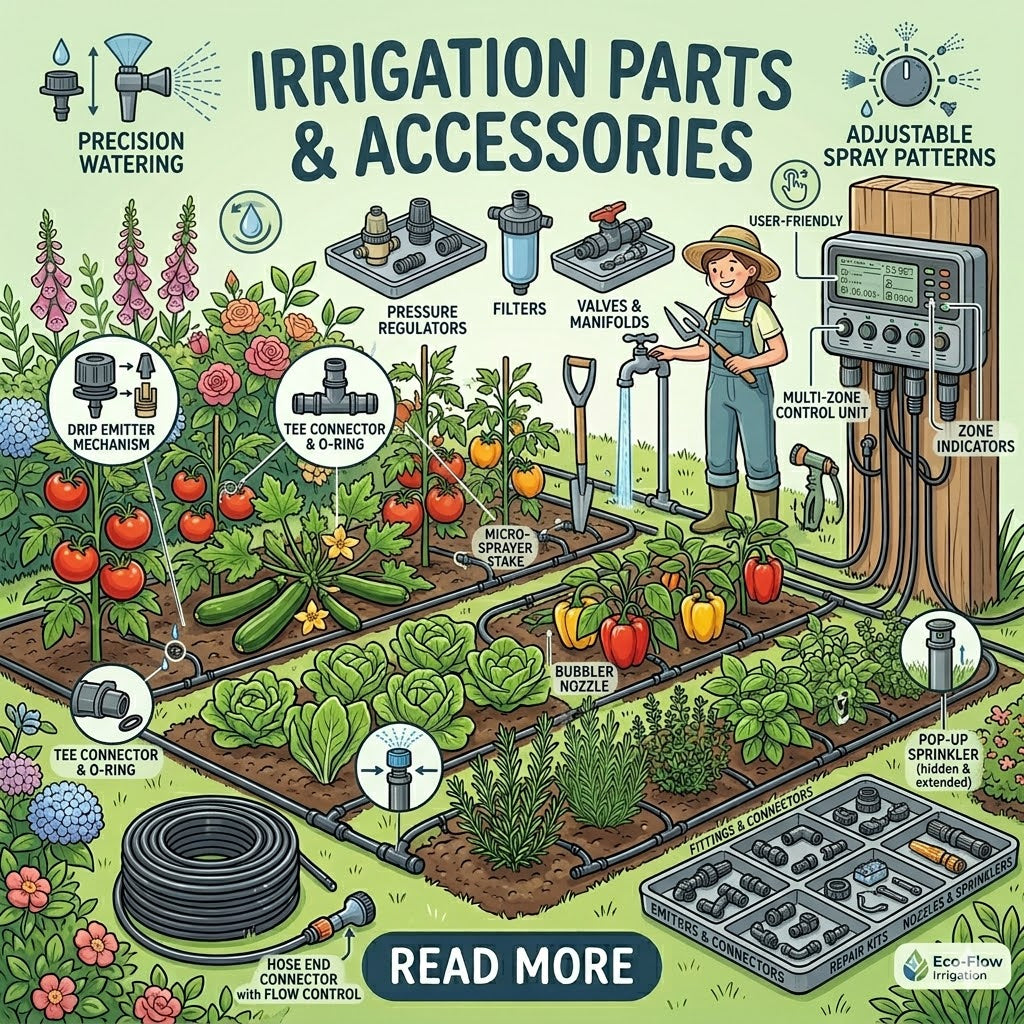
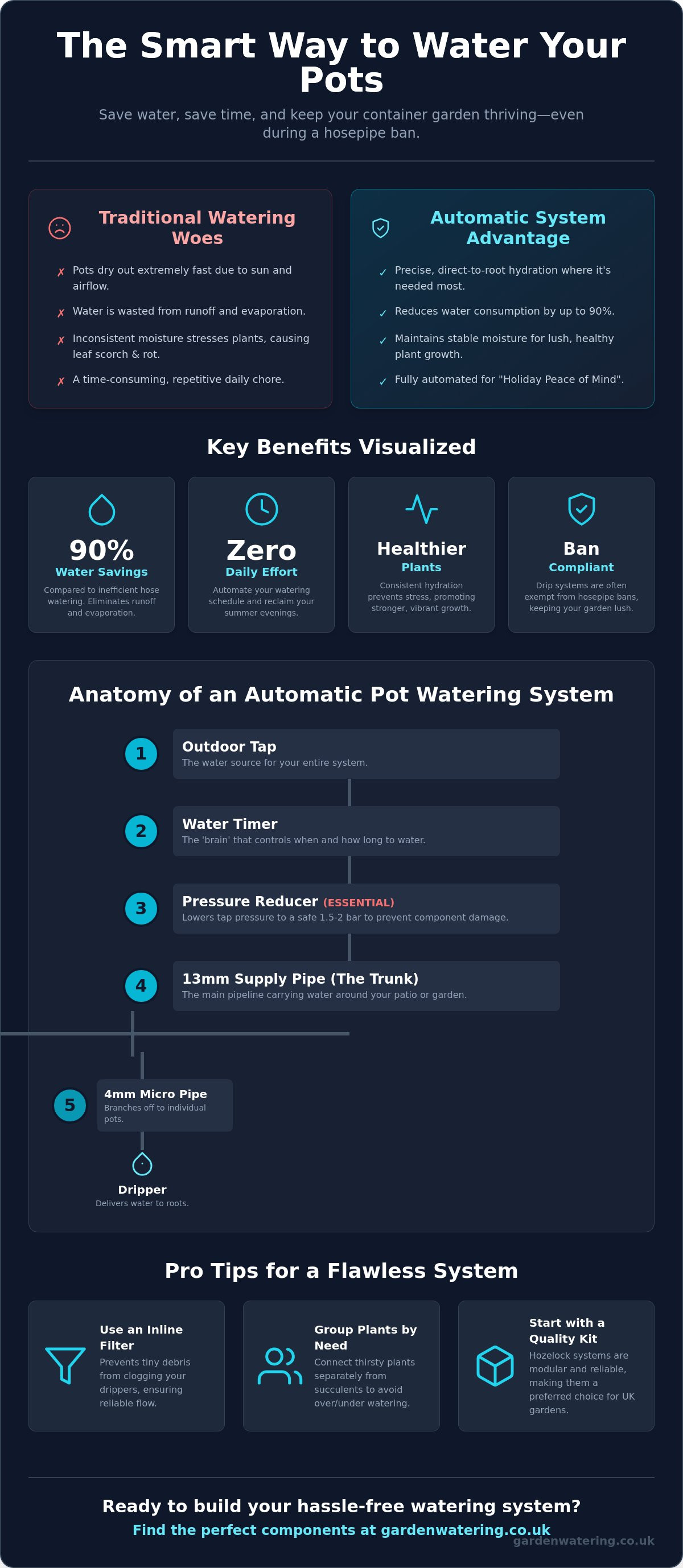
UK domestic taps often deliver water at a pressure too high for delicate micro-irrigation components. This can lead to "blow-outs" where pipes pop off their connectors and waste water. You must install a pressure reducer at the start of your system. This simple component brings the water down to a manageable 1.5 to 2 bar, ensuring the longevity of your fittings. Your system then uses two main pipe sizes. The 13mm supply pipe acts as the "trunk," carrying water from the tap around your patio. Branching off this are 4mm micro-pipes, which deliver water to individual pots. Understanding the fundamentals of watering container gardens helps you decide how many drippers each pot requires based on its size and drainage capacity.
Dripper Types: Matching Emitters to Pot Sizes
Not all emitters are created equal. Adjustable drippers are versatile, allowing you to increase flow for a large citrus tree or decrease it for a small succulent. If your garden has elevation changes, such as hanging baskets or tiered shelving, Pressure Compensating (PC) drippers are essential. They ensure that the pot at the top of the wall receives the same amount of water as the one at the bottom. For wide troughs or dense green walls, micro-spray heads offer a broader coverage area by misting the surface rather than dripping into a single spot.
Timers and Controllers: From Basic to Smart
Your choice of controller depends on your lifestyle. Mechanical tap timers work like an egg timer; you turn the dial, and it shuts off after a set period. Sensor controllers are more advanced, using sunlight sensors to water at sunrise or sunset. This matches the natural rhythm of your plants when evaporation is at its lowest. Smart controllers represent the peak of 2026 technology, allowing you to adjust schedules via your smartphone based on real-time weather data. If you're unsure which controller fits your space, you can browse our range of garden irrigation water timers to find the perfect match for your patio.
Step-by-Step: Planning and Installing Your System
A successful automatic watering system for pots begins with a logical plan rather than a bag of parts. Before you cut any pipe, group your containers according to their specific hydration needs. Thirsty plants like hydrangeas or tomatoes should be on one branch of the system, while drought-tolerant succulents or lavender sit on another. This grouping allows you to tailor the number of drippers per pot, ensuring every plant receives the correct volume without wasting a drop. You must also measure the total "run" of your system. If your pipework extends beyond 30 metres from the tap, you may experience a drop in pressure that leaves the furthest pots dry. Planning your layout in a series of loops or shorter branches helps maintain even flow across the entire patio.
To maintain a clean garden aesthetic, you should focus on a discreet installation. Position your main 13mm pipe along the base of walls, tucked behind the pots, or even beneath the edge of decking. Use wall clips to secure the pipe every metre to prevent it from sagging or becoming a trip hazard. Assembly is much easier when you use the "warm water trick." Simply dip the end of your pipe into a mug of hot water for 30 seconds to soften the plastic. This allows connectors to slide in effortlessly, creating a professional, leak-proof seal as the plastic cools and tightens.
Designing the Main Supply Line
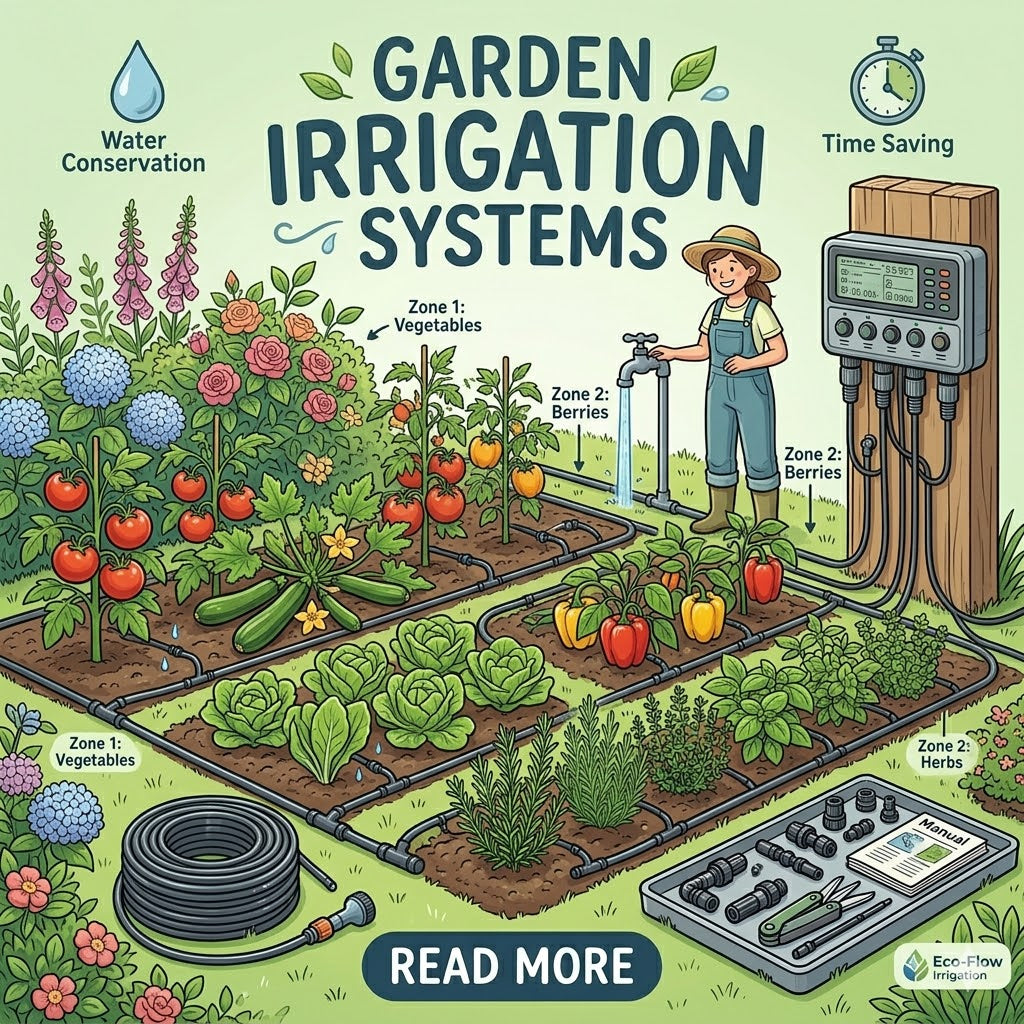
Start at your outside tap by attaching your timer and pressure reducer using high-quality Hozelock connectors. These fittings provide a reliable, leak-free foundation for the rest of your network. Run the 13mm supply pipe along your planned route, using T-junctions to create branches for different pot groups. Never try to force the pipe around sharp corners, as this creates kinks that restrict water flow. Instead, use elbow joints to navigate 90-degree turns cleanly while maintaining maximum pressure throughout the "spine" of your system.
Installing Micro-Drippers in Each Pot
Once the main line is secure, use a hole punch tool to create entry points for your 4mm micro-tubing. Connect one end of the tubing to the main line and the other to a dripper spike placed inside the pot. Position the spike near the plant's stem, but keep it a few centimetres away to ensure the water reaches the roots rather than soaking the foliage. Finally, perform a "dry run" by turning on the system for five minutes. This allows you to check every connection for leaks and confirm that the furthest dripper is delivering the same steady flow as the first one on the line.
Troubleshooting and Maintenance for Peak Performance
The most common concern when installing an automatic watering system for pots is the fear of blockages. It's a valid worry, as a single clogged dripper can lead to a lost plant. However, modern systems are remarkably resilient when maintained correctly. Installing an inline filter at the start of your network acts as a primary defence, trapping fine sediment and debris before it reaches your micro-pipes. This simple addition ensures that your emitters continue to deliver precise hydration throughout the growing season without interruption.
If you find that the furthest dripper on your line is dry while others are flowing, you likely have an airlock or a significant pressure drop. Check that you haven't exceeded the recommended pipe length for your specific system. You can often resolve airlocks by removing the end plug and running the water for a minute to flush the system through. Routine visual checks are also essential for identifying physical damage. Squirrels in UK gardens sometimes nibble on plastic pipes, and garden furniture can easily crush a discreetly placed line. If you need to repair a damaged section or expand your layout, you can find the necessary irrigation fitting adaptors to keep your system running smoothly.
Winterising Your System
UK winters can be harsh on plastic components, particularly when water freezes and expands inside the lines. You should drain your system completely before the first frost to prevent burst pipes and cracked connectors. Disconnect the water timer from the tap and store it in a dry, frost-free environment like a shed or garage to protect its internal electronics. Removing the battery from a timer in autumn prevents corrosion and extends its life by years. These small steps ensure your investment is ready to perform again as soon as spring arrives.
Cleaning and Descaling Drippers
Hard water is a common issue across many parts of the UK, leading to limescale buildup that can restrict flow. If you notice a dripper is performing poorly, you can often clear the blockage with a simple sewing pin. Gently insert the pin into the emitter head to break up any mineral deposits without damaging the internal mechanism. For more stubborn scale, soaking the removable heads in a mild citric acid solution will dissolve the buildup effectively. If a dripper remains stubborn after cleaning, it's usually more efficient to swap it for a new one rather than risk your plant's health on a faulty component.
The Expert Advantage: Why Hozelock Systems Lead the Market
Hozelock has been a fixture in British gardens for over 60 years. This heritage is built on a deep understanding of the unique challenges posed by the UK climate, from sudden heatwaves to freezing winters. When you choose an automatic watering system for pots from this brand, you aren't just buying plastic pipes; you're investing in decades of refined innovation. One of the most significant benefits is the modular design. You might start with a small patio setup today, but as your plant collection grows, you can easily add more drippers and pipework without needing to replace your entire network.
Their components are designed to work seamlessly with your existing Hozelock watering equipment. This cross-compatibility means you can integrate automatic timers and drip lines with your current hose pipes and connectors effortlessly. At Garden Watering, we've spent 15 years helping UK gardeners design and install these systems. We've seen firsthand how a well-planned irrigation network can transform a high-maintenance patio into a thriving, self-sufficient oasis that survives and thrives regardless of your daily schedule.
The Reliability Factor
Generic "bargain" kits often use low-grade plastics that become brittle and crack after just one summer in the sun. Hozelock's UV-stabilised pipes are specifically engineered to withstand the British sun and frost, ensuring they remain flexible and leak-free for years. The timers also feature precision internal valves that prevent the slow drips and pressure losses common in unbranded alternatives. For a deeper look into the technical specifications and advanced features available, you can explore our comprehensive Hozelock Automatic Watering System guide.
Getting Started with the Right Kit
Choosing the right kit depends entirely on your specific space. A compact starter kit is the perfect choice for small balconies with a handful of pots. Larger patios with a mix of hanging baskets and large planters benefit from more comprehensive sets that include adjustable drippers and longer supply lines. Buying from a specialist like us ensures you receive the technical support and tailored advice that general retailers simply can't provide. We understand the nuances of water pressure and plant needs because we focus exclusively on irrigation. Ready to transform your garden into a low-maintenance sanctuary? Browse our full range of Hozelock Pot Watering Kits to find your ideal setup.
Enjoy a Thriving Garden With Minimal Effort
Ready to reclaim your summer evenings? Shop our expert-curated Hozelock Watering Kits for Pots and start building a more resilient, beautiful garden today. We're here to support you as you transition to a smarter, more sustainable way of watering. Your plants will thank you for the consistency, and you'll enjoy the freedom of a lush, self-sustaining outdoor space.
Frequently Asked Questions
How many pots can I run off one automatic watering system?
Most standard systems can effectively water up to 30 pots from a single tap. This capacity depends on your local water pressure and the total length of your pipework. If you have a larger collection, you can use a multi-way tap manifold to run separate lines. This ensures every container receives a consistent flow without overstretching the system's capabilities.
Do I need a water pump for my pot irrigation system?
You don't need a pump if your system is connected to a standard mains outdoor tap. The existing domestic water pressure is more than enough to power the drippers. However, if you're drawing water from a low-level tank or water butt, a solar-powered or electric pump is necessary to push the water through the micro-pipes and emitters.
Can I use an automatic watering system with a water butt?
Yes, you can connect your system to a water butt, but it requires specific components to function. Standard water timers often need a minimum pressure that a gravity-fed butt can't provide. You'll need to use a specialist zero-pressure timer or add a small pump to ensure the water flows reliably through the network of pipes to your plants.
Will an automatic watering system for pots work with a hosepipe ban?
An automatic watering system for pots is typically exempt from most UK hosepipe bans because it uses drip irrigation technology. These systems are designed for high efficiency and minimal waste, which water companies often permit even when traditional hose use is restricted. Always check the specific terms of your local water provider's Temporary Use Ban to ensure compliance.
How much water does a pot dripper use per hour?
A standard pressure-compensating dripper typically delivers either 2 litres or 4 litres of water per hour. This precision allows you to calculate exactly how much water your garden is consuming. By setting your timer for short bursts, you can ensure your plants stay hydrated using a fraction of the water required by manual hose watering.
Is it difficult to hide the pipes on a paved patio?
It's quite simple to hide pipework on a paved area by tucking the 13mm supply line into the expansion gaps between slabs or along the edge of the house. You can also run the pipes behind your pots or use discreet wall clips to keep them flush against brickwork. This keeps the installation tidy and prevents the pipes from becoming a trip hazard on your patio.
What happens if the battery in my water timer dies while I'm away?
If your timer's battery fails, the valve is designed to remain in the closed position to prevent flooding. Most high-quality controllers feature a low-battery warning light that flashes weeks before the power runs out. We recommend installing fresh alkaline batteries at the start of every summer season to ensure your automatic watering system for pots remains reliable while you're on holiday.
Can I add more drippers to my system later?
You can easily expand your system at any time due to its modular design. Simply use a hole punch to add new micro-pipes to your existing 13mm supply line or extend the pipework using straight connectors. This flexibility is a key advantage of specialist systems, allowing your irrigation network to grow as your passion for container gardening evolves.
-
Posted in
automatic watering system for pots, Container Gardening, DIY Gardening, Drip Irrigation, Garden Automation, Potted Plants, UK Gardening, Water Saving