Drip Irrigation: The Complete 2026 Guide to Efficient Garden Watering
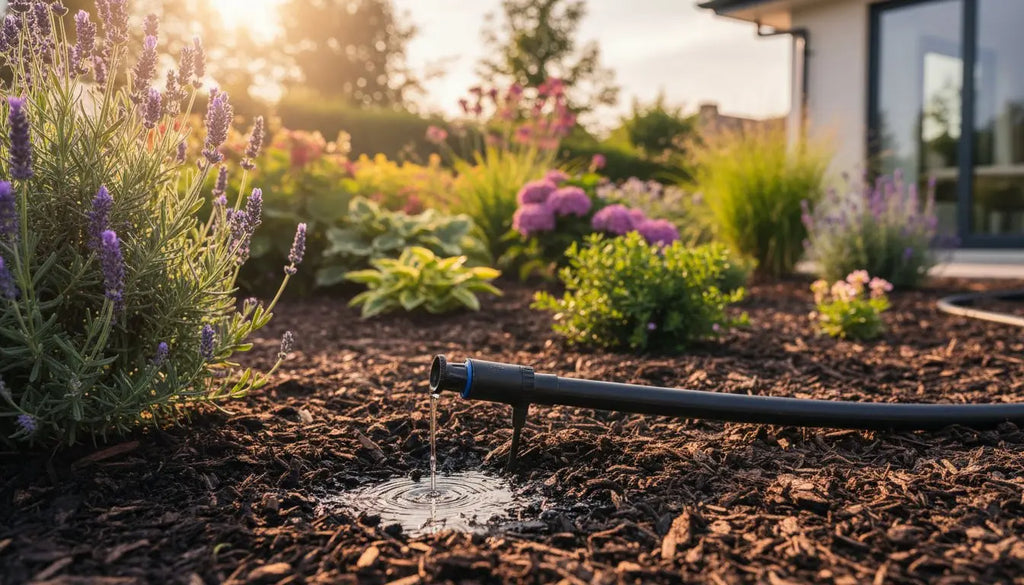
Summer 2025 was England's hottest on record; following the driest spring in 132 years, it left many UK gardeners struggling to keep their borders alive. If you spent those long evenings tethered to a hosepipe only to see your water bill spike, you know that traditional watering is often an inefficient chore. A properly designed drip irrigation system can reduce your water use by 30 to 50 percent. This shift to precision watering potentially saves a typical household between £50 and £150 every year while ensuring your plants get exactly what they need at the root.
We believe your garden should be a place of relaxation, not a source of constant work. You deserve a reliable system that keeps your landscape lush and healthy even when you're away on holiday. This guide will teach you how to master the art of efficient watering to save time and reduce waste. We'll explore everything from the latest 2026 water regulations regarding double check valves to choosing between a £29.71 Hozelock starter kit or a custom professional installation. We specialise exclusively in irrigation because we understand exactly what your garden needs to thrive.
Key Takeaways
- Learn why high-precision drip irrigation is the most effective way to eliminate water waste from evaporation while keeping your plants perfectly hydrated.
- Understand how to protect your home's mains water supply by correctly installing the required backflow preventers and double check valves.
- Compare the benefits of fixed-interval drip lines against customisable individual emitters to find the ideal layout for your specific borders or pots.
- Follow our specialist planning steps to group your plants into hydro-zones and calculate your tap's flow rate for a reliable, efficient system.
- Discover how modern, tool-free components from trusted brands like Hozelock make it easy for beginners to set up a professional-grade system.
What is Drip Irrigation and Why is it Essential for UK Gardens?
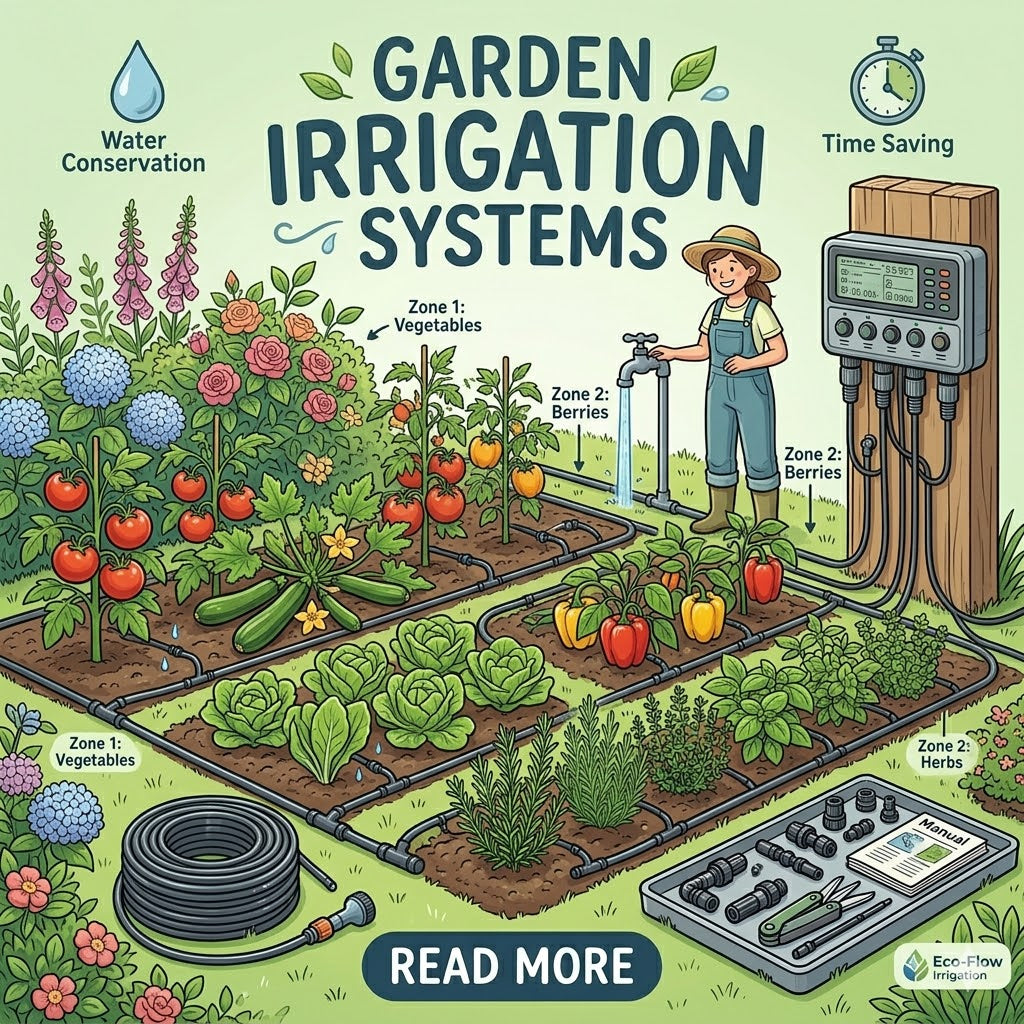
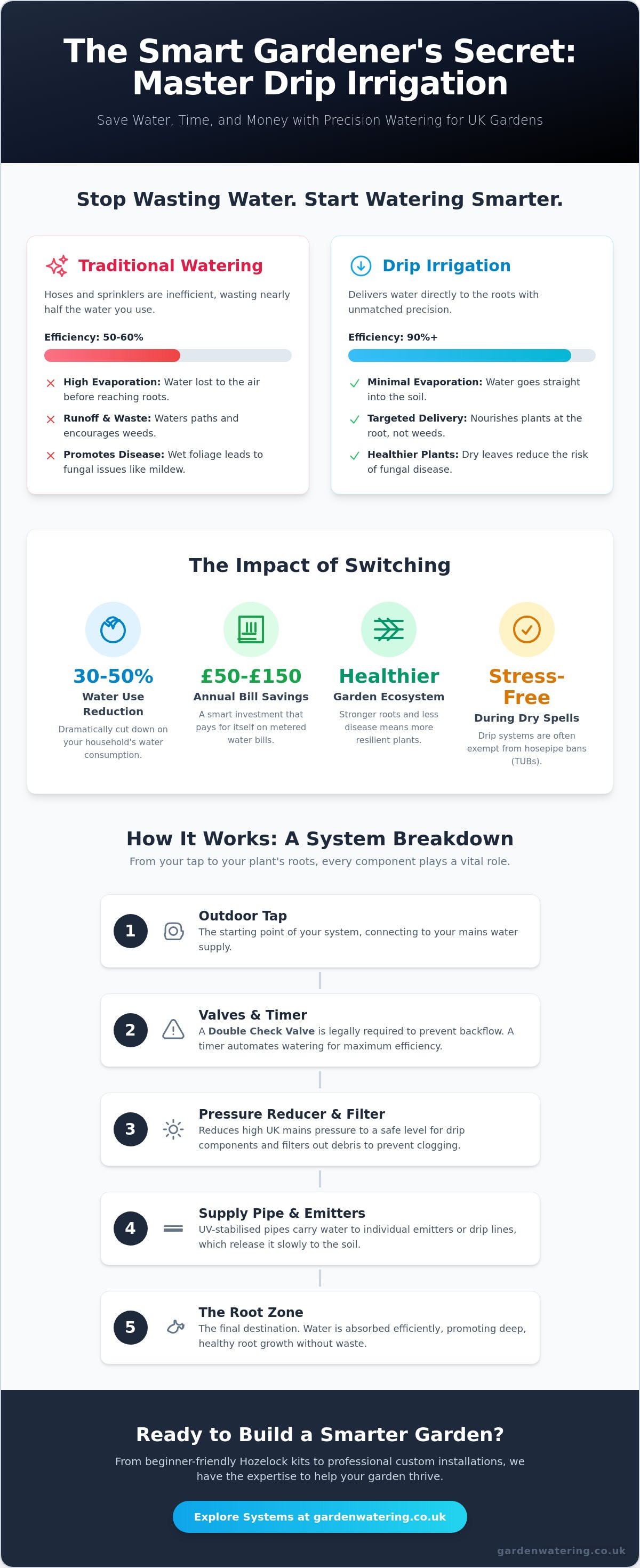
At its core, drip irrigation is a low-pressure, high-precision delivery system designed to get water exactly where it's needed. Instead of saturating the air like a traditional sprinkler, it releases water slowly through a network of pipes and emitters. This method achieves an efficiency rate of 90%, whereas manual watering with a hosepipe often hovers between 50% and 60% due to evaporation and runoff. We specialise exclusively in irrigation because we understand exactly what your garden needs to thrive.
To better understand this concept, watch this helpful video:
Traditional sprinklers often waste water by spraying foliage or garden paths; this moisture evaporates before it ever reaches the soil. Drip systems focus on the root-zone, delivering moisture directly to the base of the plant. This approach ensures the soil stays consistently moist without becoming waterlogged, creating the perfect environment for roots to expand. By keeping water off the leaves, you also promote a healthier garden ecosystem. Expert Irrigation Advice You Can Trust means helping you build a system that works with nature, not against it.
The Environmental and Financial Benefits
Switching to an automated watering system is a smart move for metered UK households. With water prices rising, the 30% to 50% reduction in usage translates to significant savings on your monthly bills. Beyond the cost, there's the critical issue of Temporary Use Bans (TUBs). While hosepipe bans were lifted in regions like Kent and Sussex in February 2026, they can be reintroduced quickly during dry spells. Many water companies allow the use of drip irrigation systems even during these bans because they're so efficient. Keeping your foliage dry also reduces the risk of fungal diseases like powdery mildew, as moisture doesn't sit on the leaves.
Drip Irrigation vs. Soaker Hoses: Key Differences
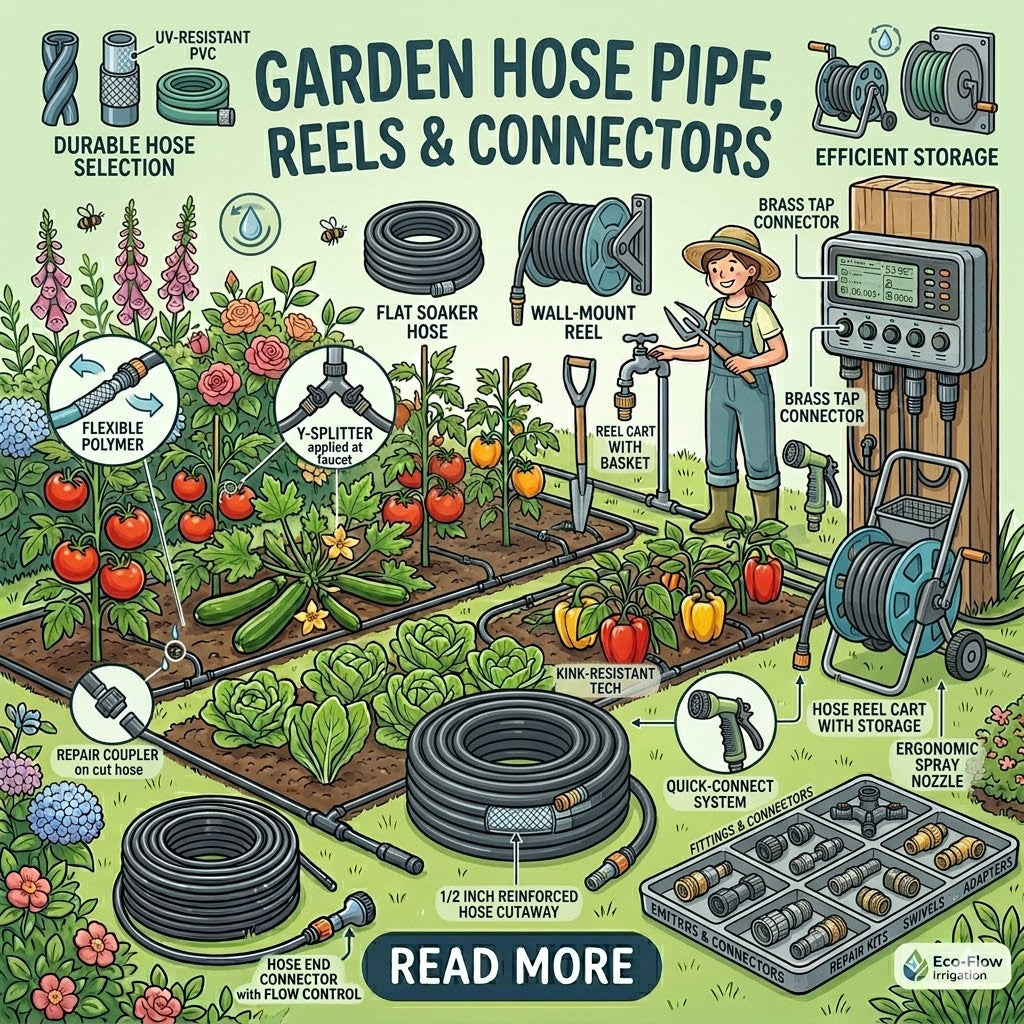
You might consider a porous soaker hose as a cheaper alternative, but they lack the precision of a true drip system. Soaker hoses weep water along their entire length, which leads to uneven pressure and wasted water in gaps between plants. A specialist drip system uses individual emitters that you can place exactly where a plant sits. High-quality systems include pressure regulation and water timers to ensure the last plant in the line gets the same amount of water as the first. We always recommend using UV-stabilised pipes from brands like Hozelock, as they won't become brittle or crack after a single summer in the sun.
How Drip Irrigation Works: From Tap to Root
Understanding the path water takes helps you troubleshoot and maintain your system. It begins at your outside hose union tap. From there, water travels through a series of protective valves and filters before entering the main supply line. This controlled journey ensures that drip irrigation remains the most reliable way to sustain your garden through every season.
Safety is paramount. Under the Water Supply (Water Fittings) Regulations 1999, every UK system must prevent backflow into the mains water supply. You'll need a double check valve at the tap and a specific DB Valve fitted after your timer. This setup protects your home's drinking water from garden contaminants. We specialize in these compliant setups to ensure your installation meets all local water company requirements.
After safety comes automation. A high-quality water timer acts as the brain of your setup. It opens the flow at pre-set times, usually at dawn when evaporation is lowest. Before the water reaches the emitters, an internal filter removes grit and debris. Even tiny particles can clog micro-emitters; this filtration step is vital for a system that lasts for years without maintenance headaches. For those interested in how advanced filtration can protect their entire property's water quality, you can find out more about the specialized solutions from Pure Life H2O.
Essential Components of a Reliable System
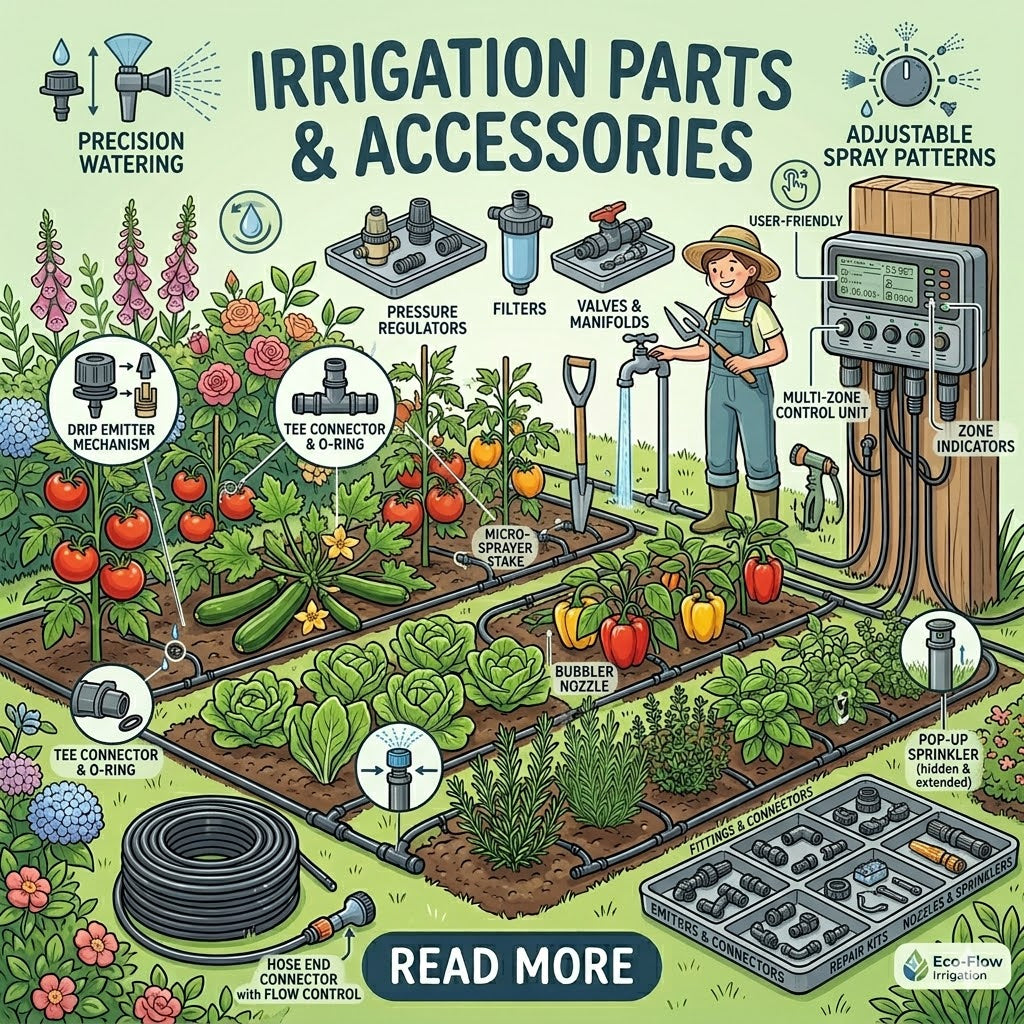
The pressure regulator is a critical piece of kit. Most UK mains pressure is too high for delicate emitters; reducing it to the 1.5 to 2 bar "sweet spot" prevents pipes from popping off or leaking. Your network typically uses a 13mm main supply pipe to carry water around the garden, with 4mm micro-bore tubing branching off to individual plants. Using high-quality Hozelock connectors ensures these joints remain leak-free and secure under constant use.
Understanding Emitter Types
Choosing the right emitter depends on your planting layout. For hanging baskets or isolated pots, end-of-line drippers are the best choice. If you have closely spaced vegetables or hedge rows, in-line drippers built directly into the pipe are more effective. You can also use adjustable flow drippers to give thirsty shrubs more water than hardy perennials. For a deeper look at layout strategy, you might find this guide on Planning and Installing Your Drip System helpful. If you're ready to start your project, you can browse our range of drip irrigation kits to find the right fit for your space.
Drip Line vs. Individual Drippers: Choosing the Right Layout
Choosing the right layout is the most important decision you'll make when designing your drip irrigation system. It isn't just about the hardware; it's about matching the technology to your garden's specific geometry. A "Drip Line" is a length of 13mm pipe with emitters pre-installed inside the tubing at fixed intervals, usually every 30cm. In contrast, a "Drip System" uses blank pipe that allows you to punch in individual emitters exactly where your plants are located. We specialise exclusively in these systems because we know that the right choice now prevents wasted water and dead plants later.
Maintenance requirements differ significantly over a 5-year period. Drip lines are incredibly robust because the emitters are protected inside the pipe, making them less likely to be knocked or damaged by garden tools. However, if a single pre-installed emitter fails after four or five years, you often have to replace a whole section of line. Individual drippers offer more flexibility for repairs since you can simply swap out a single 4mm component. To keep your garden looking its best, we recommend hiding all pipes under a 50mm layer of mulch or decorative bark. This doesn't just look better; it also protects the UV-stabilised plastic from the elements and further reduces surface evaporation.
When to Use Drip Line (Fixed Spacing)
Drip lines are the ideal choice for uniform areas like hedges, long flower borders, and established vegetable allotments. Because the emitters are spaced consistently, they create a continuous "wetting pattern" in the soil. This ensures that dense ground cover or closely packed shrubs receive even hydration across the entire root zone. Installation is much faster for large areas because you don't need to spend time punching holes or connecting micro-bore tubing. If you're planning a new hedge or a rose border, a drip line is almost always the most efficient solution.
When to Use Individual Drippers (Custom Layouts)
Individual drippers are the best choice for varied patio pots, tiered hanging baskets, or scattered specimen plants. They allow you to deliver water to a specific spot without wasting a drop on the empty spaces in between. You can mix and match emitter flow rates to give a thirsty hydrangea more water than a nearby lavender. Many complex layouts require specific irrigation fitting adaptors to bridge gaps between different levels or to navigate around garden structures. This custom approach gives you total control over every plant's health, ensuring your unique garden thrives with minimal effort. Expert Irrigation Advice You Can Trust means helping you find the precise balance between these two methods.
Planning and Installing Your Drip System: A Specialist’s Approach
A successful drip irrigation installation begins long before you connect your first pipe. Planning is where most DIY projects fail, but following a methodical approach ensures your system remains reliable for years. We specialise exclusively in these setups because we know that precision in the planning phase saves you from frustrating leaks and under-watered plants later. Before you start, lay your 13mm supply pipe out in the sun for 20 minutes; this softens the plastic and makes it much easier to work with.
- Step 1: Map your garden. Group your plants into "hydro-zones" based on their water needs. Pots on a south-facing patio will need more frequent hydration than shaded shrubs.
- Step 2: Calculate your flow rate. Place a 10-litre bucket under your tap and time how long it takes to fill. If it takes 60 seconds, your flow rate is 10 litres per minute. Ensure your total number of emitters doesn't exceed this capacity.
- Step 3: Lay out the main line. Position your 13mm pipe along your borders. Don't cut the pipe or push on connectors until you're happy with the entire route.
- Step 4: Assemble the tap source. Install your water timer first, followed by the pressure regulator. This protects the rest of the system from the high pressure of UK mains water.
- Step 5: Flush the system. Run the water for two minutes before adding end caps. This clears out any plastic shavings or grit that could clog your emitters.
Mapping Your Garden for Success
Elevation changes can significantly impact how water moves through your pipes. If your garden is sloped, gravity will cause water to pool at the lowest point, potentially starving plants at the top. You may need to create multiple zones using a manifold if your garden is larger than 30 metres from the tap. Dividing the system into smaller sections ensures that every emitter maintains consistent pressure. For inspiration on complex layouts, you can consult our design ideas and plans to see how we tackle various garden shapes.
Seasonal Maintenance and Winterising
In the UK, winterising your system is the most important maintenance task. When water freezes, it expands by approximately 9%, which is enough to split UV-stabilised pipes and crack expensive timers. You should drain the system and store your timer indoors by late October or early November. If you live in a hard-water area, such as the South East, soak your emitters in a mild descaler once a year to remove calcium buildup. It's also wise to check for "critter damage" in the spring; small garden rodents occasionally chew on 4mm micro-tubing. If you're looking to upgrade your current setup, you can explore our complete drip irrigation kits to find everything you need for a professional-grade installation.
The Hozelock Advantage: Why Quality Components Matter
Hozelock has spent over 60 years at the forefront of UK garden innovation. While budget imports might look similar on the shelf, they often lack the UV-stabilisation and engineering precision required for a long-lasting drip irrigation system. We specialise exclusively in Hozelock because their components are designed to survive the unpredictable British climate. Their 'Easy Drip' technology is a particular standout for beginners. It allows for a completely tool-free installation; you simply push the emitters onto the pipe and lock them in place with a twist.
The modular nature of Hozelock watering kits means your system can grow alongside your garden. You might start with a simple 15-pot micro kit and expand it into a full border network over several years. Unlike generic brands found in large DIY stores, Hozelock ensures that spare parts remain available for decades. This commitment to longevity means you won't need to replace your entire system just because a single connector or seal has worn out after years of service. It's an investment in your garden's future health.
Innovation in Automation
Modern gardening in 2026 is about intelligence as much as efficiency. The Hozelock Sensor Controller represents a major shift in how we water. Instead of relying on a simple clock, it uses a daylight sensor to trigger watering at sunrise or sunset, the most effective times for plant absorption. You can also integrate garden irrigation water timers that offer total peace of mind while you're away. For those who want the ultimate control, the Cloud controller allows you to manage your UK garden from a smartphone anywhere in the world, ensuring your plants never suffer during a sudden heatwave.
Expert Advice You Can Trust
Choosing the right components is only half the battle; knowing how they work together is what makes a garden thrive. Buying from a specialist like Garden Watering provides a level of support you won't find at a general retailer. We've spent over 15 years testing every product we sell. You can see our findings in our new product reviews, where we break down exactly how these systems perform in real-world conditions. We're more than just an online store; we're your trusted irrigation partner. If you're ready to transform your outdoor space, browse our Hozelock Drip Systems today and discover the difference that specialist expertise makes.
Future-Proof Your Garden with Precision Watering
You now have the tools to move beyond the daily chore of manual watering and embrace a more sustainable approach. By implementing a drip irrigation system, you're not just saving time; you're protecting your plants against increasingly dry UK springs and record-breaking summer heat. Whether you choose a streamlined drip line for your hedges or custom emitters for your patio pots, the result is a healthier, more resilient garden that requires significantly less effort to maintain.
As an exclusive Hozelock specialist with over 15 years of experience, we're committed to helping you find the perfect solution for your outdoor space. We offer free UK delivery on all orders over £50 to ensure you have everything you need to begin your project. Shop the Full Hozelock Drip Irrigation Range today and take the first step toward a lush, thriving landscape that looks after itself. We're here to support you every step of the way with Expert Irrigation Advice You Can Trust.
Frequently Asked Questions
Is drip irrigation better than hand watering for vegetable patches?
Yes, it is significantly better because it delivers water directly to the soil, which prevents splashing that can spread fungal diseases like blight. Hand watering often leads to 40% water loss through evaporation and runoff; a precision system ensures your crops receive consistent hydration without the waste. This targeted approach helps your vegetables grow more uniformly and reduces the time you spend standing in the garden every evening. Just as precise hydration is key for your plants, the quality of your own drinking water is vital for your health; to explore how ionized alkaline water can benefit your wellness, visit pH 9 Wasser for expert insights and personal stories.
Can I use a drip irrigation system if I have low water pressure?
How many drippers can I run off a single outside tap?
Most standard UK taps provide enough flow to support between 30 and 50 individual drippers on a single 13mm line. This depends entirely on your specific flow rate, which you can calculate by timing how long it takes to fill a 10-litre bucket. If your garden requires more emitters, you can simply add a multi-way tap connector to run several independent lines from the same water source.
Do I need a plumber to install a garden drip system in the UK?
You don't need a plumber for this type of installation. Modern systems from brands like Hozelock are designed specifically for DIY setup using simple push-fit connectors. The only technical requirement is ensuring your tap has a double check valve to comply with the Water Supply (Water Fittings) Regulations 1999, which prevents garden water from flowing back into your home's drinking supply.
Will drip irrigation work with a water butt or rain harvester?
It will work perfectly, provided you use a dedicated water butt pump. Standard gravity-fed water butts don't provide the 1.5 bar of pressure needed to push water through a network of emitters. By adding a small submersible pump, you can use your harvested rainwater to power a highly efficient drip irrigation network throughout the summer months.
How often should I run my drip irrigation system during a UK summer?
During a typical UK summer, running your system for 20 to 30 minutes in the early morning is usually sufficient. When temperatures exceed 25 degrees, your plants may benefit from a second short session in the evening. Because the water goes directly to the roots, you don't need to run it as long as a traditional sprinkler to achieve deep hydration.
Can I add liquid fertiliser through my drip irrigation network?
Yes, you can add nutrients by installing a specialized fertiliser injector, often called a "fertigation" unit, into your main supply line. This allows you to feed your plants at the same time you water them. This method is incredibly efficient because the nutrients go directly to the root zone, ensuring your plants thrive with minimal product waste.
Is drip irrigation exempt from hosepipe bans in my local area?
Many UK water companies consider these systems exempt from Temporary Use Bans (TUBs) because they are so water-efficient. However, regulations are managed by 14 different regional suppliers, and their rules can change based on local reservoir levels. You should always check the 2026 guidelines on your specific water provider's website to confirm the current status of exemptions in your postcode.
`-
Posted in
drip irrigation