Irrigation Drip Line - Perfect for the Larger Garden Borders
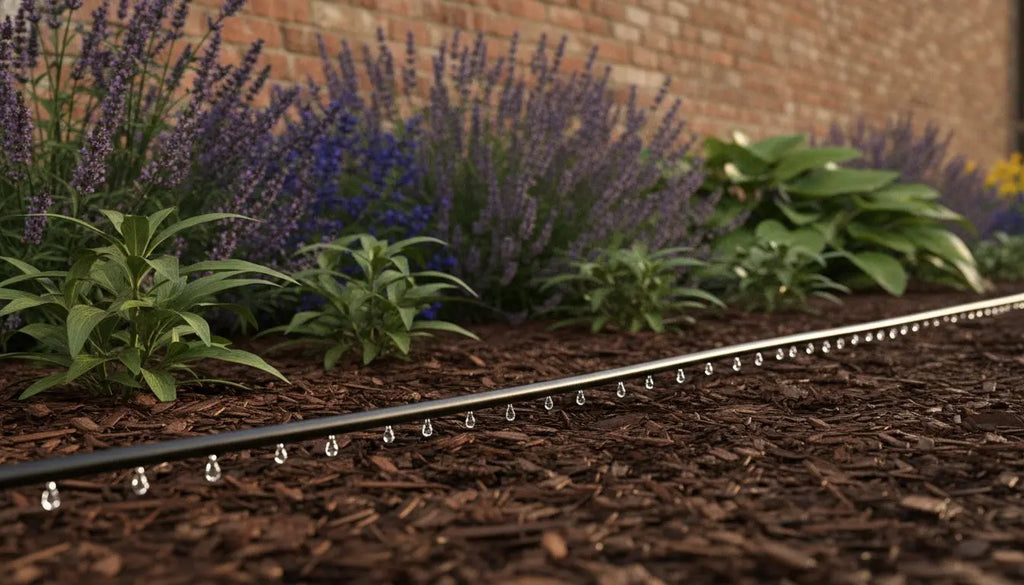
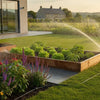
Did you know that switching to a drip irrigation system can reduce your garden's water consumption by up to 70% compared to traditional sprinklers? If you've spent your summer evenings dragging a heavy hose across the lawn or worrying about your prize borders while you're away on holiday, you aren't alone. Managing a large garden is a passion, but it shouldn't feel like a full-time job. Using an irrigation drip line and professional drip line watering techniques ensures your plants receive consistent hydration exactly where they need it, right at the roots.
We understand that the technical side of garden irrigation can feel overwhelming, especially when you're trying to figure out pipe diameters or connector compatibility. It's frustrating to invest in equipment only to find it doesn't fit your existing setup. In this guide, we'll show you how to select the perfect system to protect your landscape and significantly lower your water bills. You'll learn how to create a discreet, automated setup that hides beneath mulch, giving you a thriving green garden with almost zero manual effort.
Key Takeaways
- Understand how targeted root-zone hydration prevents water waste and keeps your larger borders healthy during the hottest months.
- Learn to distinguish between 13mm pipes for sturdy hedges and 4mm micro lines for delicate containers and hanging baskets.
- Master layout techniques like the 'Snake' and 'Grid' methods to provide uniform coverage across your entire garden bed.
- Discover how to automate your irrigation drip line with a water timer to ensure consistent drip line watering without manual effort.
- Find out how to install a discreet system that stays hidden under mulch, protecting your landscape's aesthetic while saving on water bills.
What is an Irrigation Drip Line and Why Does Your Garden Need One?
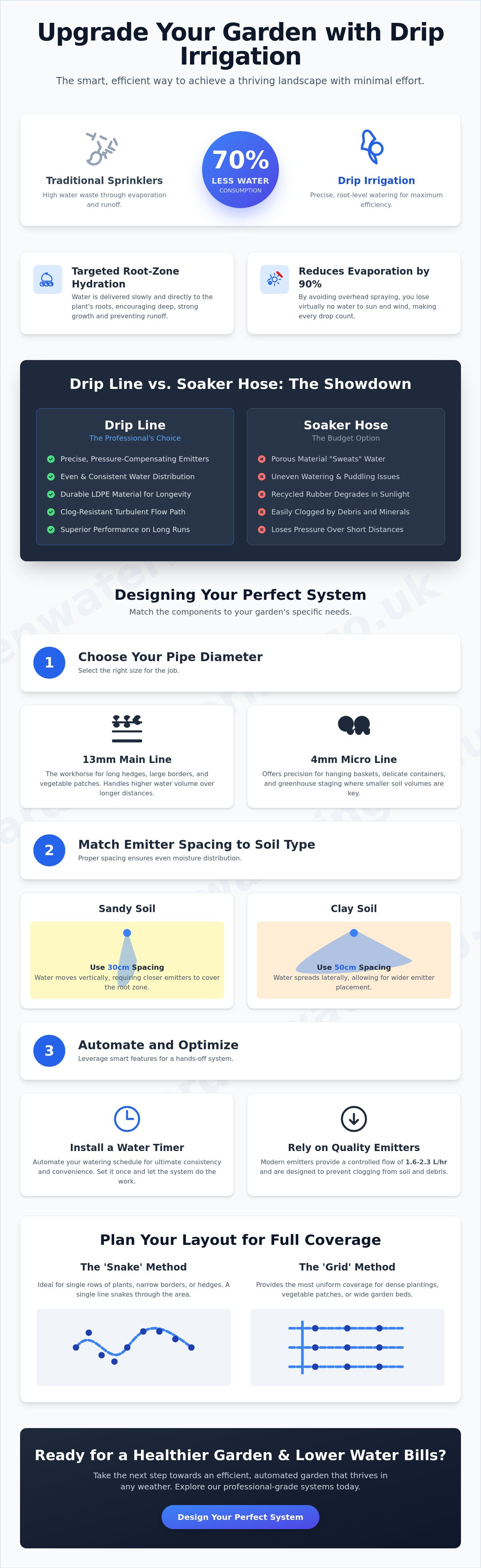
An irrigation drip line is a specialized, flexible LDPE pipe featuring built-in internal emitters that release water at a precisely controlled rate. Unlike traditional hoses or sprinklers, this system is engineered for efficiency and longevity. To understand What is Drip Irrigation, you have to look at the science of root-zone hydration. By delivering water directly to the base of your plants, you eliminate the waste associated with overhead spraying. This targeted approach is incredibly effective; it can reduce water loss through evaporation by up to 90% compared to conventional sprinklers.
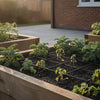
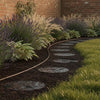
Because the water is applied slowly and deeply, it encourages roots to grow further into the soil, creating more resilient plants that can withstand dry spells. This method isn't just about plant health; it's also about aesthetics. You can easily tuck your tubing under a layer of bark mulch or soil, ensuring your garden borders look pristine and undisturbed while the system works silently in the background.
To better understand how this setup works in a real garden, watch this helpful video:
If you're looking for a professional way to automate your garden care, exploring high-quality Drip Irrigation Systems is the best place to start. These setups provide the consistency your landscape needs to thrive without requiring hours of manual labor every week.
Drip Line vs. Soaker Hose: The Crucial Differences
While they might look similar at a glance, soaker hoses and drip lines function very differently. Soaker hoses are made from porous material that "sweats" water along its entire length, often leading to uneven pressure and puddles. In contrast, drip line watering uses precise, factory-installed emitters spaced at regular intervals. This design makes drip lines far superior for long runs and specific plant spacing. Furthermore, the LDPE material used in professional drip lines is significantly more durable than the recycled rubber found in soaker hoses, which often cracks and degrades after just one or two seasons in the sun.
The Role of Emitters in Consistent Watering
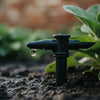
Emitters are the technical marvels that make this system work. These internal drippers are designed with sophisticated turbulent flow paths that prevent clogging from soil, minerals, and debris. Most professional systems operate with flow rates between 1.6L and 2.3L per hour, which is widely considered the industry sweet spot for maintaining perfect soil moisture levels. The emitter is the heart of the system that regulates water output. By maintaining this steady, slow pace, you ensure your garden receives a deep soak that reaches the roots without creating runoff or wasting a single drop.
Choosing the Right Drip Line: Key Selection Criteria for 2026
Choosing the correct irrigation drip line depends entirely on the specific layout and soil conditions of your garden. It isn't just about the length of the pipe; it's about matching the technical components to your plants' needs. For the main sections of your landscape, such as long hedges or expansive flower borders, the 13mm or 14mm standard drip line is your reliable workhorse. It handles higher water volumes and longer runs without losing efficiency. Conversely, if you're tending to hanging baskets or delicate greenhouse staging, a 4mm micro drip line offers the precision required for smaller volumes of soil.
Your soil type also dictates your emitter spacing. In heavy clay soil, water spreads out laterally, so 50cm intervals are usually sufficient to cover the area. In sandy soil, water moves vertically very quickly; here, 30cm spacing ensures that the root zones don't miss out. When you are planning your drip line layout, these small details make the difference between a struggling plant and a thriving one. If you're ready to start building your setup, you can browse our professional-grade Drip Irrigation Systems to find the right diameter for your project.
Pressure Compensation: Solving the 'Slope Problem'
One of the most common frustrations is seeing plants at the end of a line looking parched while those at the start are overwatered. This often happens on sloped ground or very long runs where gravity and friction affect water delivery. Pressure Compensating (PC) emitters solve this by using a silicone diaphragm to regulate output. PC drip lines maintain a constant flow regardless of water pressure fluctuations. If your garden has significant elevation changes or your runs exceed 50 metres, upgrading to a PC-rated line is essential for uniform drip line watering.
Pipe Diameter and Compatibility
Compatibility is a frequent pain point for many gardeners. Most high-quality systems are designed to work seamlessly with Hozelock connectors, but you must check your measurements carefully. Be aware of the difference between Internal Diameter (ID) and Outer Diameter (OD). A pipe measured by its internal opening will require different fittings than one measured by its external width. Always look for UV-stabilised materials. These are specifically manufactured to endure the British sun without becoming brittle, ensuring your investment lasts for many years.
Planning Your Layout for Hedges, Borders, and Veg Patches
Measuring is the first step toward a successful installation. Calculating the total linear meterage of your irrigation drip line isn't just about measuring the length of the border; you also need to account for the loops and bends required to reach every plant. We recommend adding a 10% buffer to your final measurement to handle unexpected obstacles or minor layout changes. Once you have your total length, you can decide which layout pattern suits your specific landscape. For irregular flower beds, the 'Snake' method involves weaving the line between plants in a winding S-shape. If you're managing a square vegetable patch, a 'Grid' layout with parallel lines connected at both ends provides more uniform drip line watering for densely planted crops.
Managing the physical path of the pipe is just as vital as the water flow itself. You'll likely encounter sharp turns around the edges of your beds or near garden structures. Never try to force the pipe around a sharp 90-degree corner by kinking it. Kinking restricts the flow of water and creates stress points that lead to leaks over time. Instead, use high-quality irrigation fitting adaptors to create clean, professional joints. These components ensure the water pressure remains consistent throughout the entire run, preventing dry spots in your borders.
Watering Large Hedges and Boundaries
Hedges require a different approach than flower beds because their root systems are much larger and more concentrated. For established hedges, a single line running 15 to 20cm from the trunk is usually sufficient. However, newly planted hedging often benefits from a double line to ensure the developing root balls stay saturated. Use hold-down stakes every metre to maintain the line's position. This prevents the pipe from shifting as the soil settles or during garden maintenance. Integrating these runs into a broader garden watering system allows you to zone your garden, giving thirsty hedges the deep soak they need without overwatering your lawn.
Micro Drip Layouts for Pots and Baskets
You don't have to install a separate system for your containers and hanging baskets. You can easily tap into your main supply pipe using 4mm micro-connectors to bring water exactly where it's needed. For large planters, try looping the drip line inside the pot to provide 360-degree hydration. Balancing the flow is the main challenge here. You want your pots to receive enough water without flooding them while your main borders are still being soaked. Following Water-Efficient Irrigation Best Practices means grouping pots with similar water needs on the same micro-run. This level of planning ensures your entire garden thrives while keeping your water bills as low as possible.
Standout Drip Line Solutions: Standout Products to Consider
Selecting the right hardware is the final step in moving from a plan to a functional reality. The choice of irrigation drip line you make today will determine the health of your garden for years to come. For most domestic landscapes, the 13mm Pressure Compensating (PC) line is the gold standard. It provides the reliability needed for large borders, ensuring that every plant receives the exact same volume of water regardless of whether it's the first or the fiftieth in the run. This consistency is what makes professional drip line watering so effective for maintaining high-value ornamental plants.
For gardeners seeking long-life performance and industrial-grade durability, Claber drip irrigation and Rain Bird systems are the premier choices. These manufacturers use high-grade LDPE that is specifically engineered to resist splitting and environmental stress. If you're just starting and feel overwhelmed by individual components, pre-assembled drip irrigation systems are an excellent entry point. These kits bundle the pipe, connectors, and emitters together, removing the risk of purchasing incompatible parts. For those with vertical gardens or balconies, 4mm micro lines are the preferred specialist tool, offering the discretion needed for compact spaces.
Ready to automate your garden maintenance? You can browse our complete range of Hozelock watering kits to find a professional solution that fits your specific layout.
Key Features to Compare
When you're comparing different brands, look closely at the internal technology of the emitters. Anti-siphon technology is a vital feature if you plan to bury your lines under mulch or soil; it prevents debris and soil from being sucked back into the pipe when the water is turned off. If you live in an area with hard water, prioritize systems with self-cleaning mechanisms. These use a turbulent flow design to flush out mineral deposits before they can cause a blockage. Finally, consider the flexibility of the pipe. High-quality lines should be easy to coil around tight garden bends without the risk of kinking or structural failure.
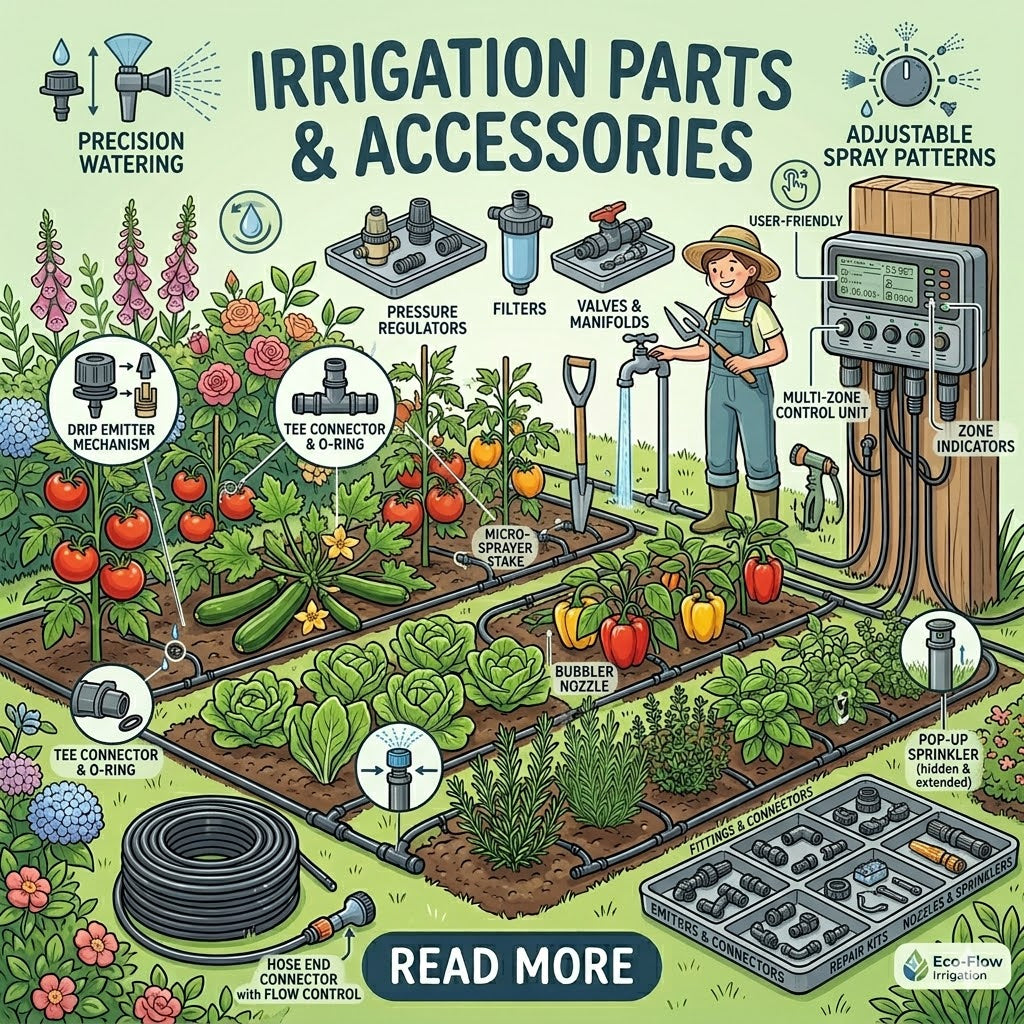
Must-Have Accessories for Your Drip Line
A successful system requires more than just the pipe itself. Pressure reducers are arguably the most important accessory you'll buy. Most mains water pressure is far too high for drip emitters, and a reducer protects your system from blowing apart at the joints. You'll also need a variety of end plugs and stop connectors to properly seal each run and maintain the necessary internal pressure. Don't overlook the importance of a simple mesh filter at the start of your system. It acts as a primary insurance policy, catching fine sediment from the water supply before it ever reaches your drippers.
Installation, Maintenance, and Hosepipe Ban Compliance
Installing your irrigation drip line is a straightforward process that begins at your outside tap. Your first step is to attach a pressure reducer and a water timer. From there, you'll lay your main supply pipe and connect your drip line, securing it with anchor pegs every metre. This keeps the emitters perfectly positioned over the root zones you identified during the planning phase. Once the layout is complete, turn the water on for a few minutes before adding the end plugs to flush out any plastic shavings or soil that may have entered the pipe during installation.
One of the most significant benefits of drip line watering is its status during UK hosepipe bans, or Temporary Use Bans. While you should always check with your local water provider, many companies exempt drip irrigation systems from these restrictions. This is because automated drip systems are incredibly efficient, delivering water directly to the soil with minimal waste. Using a timer ensures you aren't leaving a hose running indefinitely, which is the primary concern for water regulators during a drought. By choosing a targeted system, you protect your garden's health while remaining a responsible water user.
Automating for Efficiency and Compliance
To get the most out of your setup, you must schedule your watering for the optimal time of day. We recommend setting your timer to run between 4am and 6am. During these early hours, the air is cool and winds are typically calm, which virtually eliminates evaporation loss. This ensures your plants are fully hydrated before the heat of the day arrives. To take your efficiency even further, consider adding a rain sensor. This accessory will pause your schedule automatically if it detects rainfall, preventing overwatering and saving you money. For more advanced configurations, our Hozelock automatic watering system guide provides a deep dive into professional-grade automation.
Long-Term Maintenance Tips
A small amount of seasonal care will keep your system running perfectly for years. At the start of each spring, remove the end plugs and flush the system for two minutes to clear any sediment that has settled over the winter. During the peak of summer, walk your borders once a week to check for any dry spots that might indicate a blocked emitter or a shifted pipe. When winter approaches, it's vital to drain the system. Water trapped inside the pipe can freeze and expand, leading to cracks or split joints. We recommend a bi-annual check of all connectors to ensure no leaks have developed over time.
Transform Your Landscape with Smarter Watering
Investing in a professional irrigation drip line is the most effective way to ensure your garden thrives while significantly reducing your environmental footprint. By focusing on targeted drip line watering, you eliminate the waste of traditional sprinklers and provide your plants with the consistent hydration they need to develop deep, resilient roots. Whether you're managing expansive borders or a new hedge, the right layout and pressure-compensating technology will save you hours of manual labor every week.
We've been providing expert UK advice since 2011; we are specialists in Hozelock and Claber systems and are dedicated to helping you build a setup that lasts. If you're feeling unsure about your layout or pipe compatibility, we offer free technical support for system planning to guide you through every step. It's time to stop worrying about dry spells and start enjoying a lush, green garden that practically looks after itself.
Shop our full range of Garden Drip Lines and Watering Accessories and take the first step toward a more efficient, automated garden today.
Common Questions About Garden Drip Lines
Can I bury my drip line under the soil?
Yes, you can bury your drip line, but you must choose a system with anti-siphon technology. This feature prevents soil particles from being sucked into the emitters when the water pressure drops. For most domestic borders, we recommend laying the pipe on the surface and hiding it under a layer of bark mulch. This keeps the system discreet while making it much easier to perform seasonal maintenance or layout adjustments.
How long should I run my drip line watering system each day?
Most gardens thrive with 30 to 60 minutes of drip line watering, two to three times per week. The exact timing depends on your soil's ability to hold moisture. Sandy soils require shorter, more frequent sessions to prevent water from draining away too quickly. In contrast, clay soils benefit from longer, less frequent runs that allow the water to soak deep into the heavy ground without creating surface runoff.
How many metres of drip line can I run from one tap?
You can typically run between 50 and 100 metres of irrigation drip line on a single zone, depending on your mains water pressure. If your garden borders exceed this length, you'll notice a drop in pressure at the far end of the pipe. To solve this, split your garden into multiple zones using a multi-outlet water timer. This ensures every plant receives the same consistent volume of water regardless of its location.
Do I need a pump for a drip irrigation system?
No, a pump is rarely necessary because these systems are designed to operate on standard UK mains pressure. In fact, mains pressure is often too high for the delicate emitters, which is why we recommend installing a pressure reducer at the tap. You would only need a pump if you are drawing water from a low-pressure source, such as a sunken well or a water butt at ground level.
Will my drip line get clogged by hard water or lime scale?
Professional drip lines use self-cleaning emitters with a turbulent flow design to flush out mineral deposits automatically. While lime scale can be an issue in very hard water areas over many years, these systems are engineered to resist blockages. Installing a fine mesh filter at the start of your system is the best way to prevent physical debris and sediment from entering the pipe and causing issues.
What is the difference between 13mm and 14mm drip line?
The difference is usually down to how the manufacturer measures the pipe. Some brands use the internal diameter (13mm), while others use the external diameter (14mm) for their labeling. It's vital to check the specific fitment of your connectors before purchasing. Most high-quality UK systems are designed to be compatible with standard 13mm fittings, but using the correct adaptors is essential for a leak-free installation.
Can I use a drip line with a water butt?
You can use a drip line with a water butt, but gravity alone often provides insufficient pressure for standard emitters to open. To make this work effectively, you'll need to elevate the water butt at least two metres high or install a small solar-powered pump. Alternatively, look for specialist low-pressure drip kits designed specifically for gravity-fed systems to ensure your plants get the water they need.
Are drip irrigation systems really exempt from hosepipe bans?
Many UK water companies do exempt drip systems from Temporary Use Bans, provided they are controlled by an automatic timer or moisture sensor. Regulators recognize these systems as highly efficient because they deliver water directly to the roots with almost zero waste. However, exemptions aren't universal. You should always check the latest guidance from your local water provider during a drought to ensure your specific setup remains compliant.
`-
Posted in
DIY Gardening, Drip Irrigation, Drip Line, drip line watering, Garden Automation, Garden Watering, irrigation drip line, Irrigation System, Large Gardens, Water Conservation