Watering Systems for Gardens: Which Type is Best for You?
Choosing the right way to water your garden can feel like a daunting task. With so many options available, it’s easy to feel overwhelmed. Will a sprinkler system work for your delicate flower beds? Is drip irrigation too complex for a few pots? And how can you be sure you aren't wasting water-and money on your utility bills-with the wrong choice? As irrigation specialists, we understand that finding the perfect watering systems for gardens is not a one-size-fits-all solution, and we're here to provide expert, practical advice you can trust.
This guide is designed to give you confidence. We’ll break down the most popular types of systems, from efficient drip irrigation to versatile pop-up sprinklers, exploring the pros, cons, and typical costs for each. You will discover exactly which system is best suited for your specific needs-whether for a lush lawn, a thriving vegetable patch, or a collection of patio pots. Get ready to save time, conserve water, and enjoy a healthier, more vibrant garden with minimal effort.
Key Takeaways
- Consistent watering is the key to a healthier, more resilient garden, which is a primary benefit of upgrading from a standard hosepipe.
- Understanding the core differences between drip irrigation, soaker hoses, and sprinklers will help you decide which method best suits your garden's layout.
- The most effective watering systems for gardens are chosen by matching the water delivery method to your specific plant types, from lawns to vegetable patches.
- Modern irrigation kits are designed for straightforward DIY installation, allowing you to set up an efficient, water-saving system with confidence.
Why Upgrade from a Hosepipe? The Benefits of a Garden Watering System
For many gardeners, the hosepipe is a familiar and trusted tool. However, to truly help your garden thrive, moving beyond manual watering is one of the most effective upgrades you can make. While the basic principle of applying water to soil has a long history of irrigation, modern watering systems for gardens offer a level of precision and efficiency that a simple hosepipe cannot match. It’s about creating a healthier, more resilient garden with less effort and less waste.
An automated system delivers three core benefits that transform how you care for your plants:
- Consistency: Plants flourish with a regular, predictable water supply. An automated system eliminates the "feast or famine" cycle of manual watering, encouraging deep root growth and making plants more resistant to heat and drought.
- Efficiency: By delivering water directly where it's needed, you save a significant amount of water and, in turn, reduce your utility bills. This is especially crucial during dry spells and local hosepipe bans.
- Convenience: Reclaim your valuable time. Instead of spending hours with a hose, you can let a system do the work, ensuring your garden is cared for even when you're busy or away on holiday.
Water Efficiency: A Smarter Way to Irrigate
One of the greatest advantages of modern irrigation is its remarkable efficiency. Systems like drip lines and micro-jets deliver water slowly and directly to the base of your plants, minimising loss to evaporation and wind. This targeted approach prevents overwatering, which can lead to fungal diseases and root rot. In fact, an efficient drip system can use up to 70% less water than traditional sprinkler or hosepipe watering, making it an environmentally friendly and cost-effective solution.
Time-Saving Automation for Busy Gardeners
Imagine your garden being watered perfectly at dawn, the optimal time to minimise evaporation, all without you having to get out of bed. That is the freedom that automated watering systems for gardens provide. Using a simple timer or a smart controller, you can:
- Set a precise schedule that meets your garden's specific needs.
- Ensure your plants are watered consistently, even when you're at work or on holiday.
- Free up your evenings and weekends to simply relax and enjoy your lush, healthy garden.
The 3 Main Types of Garden Watering Systems Explained
Choosing the right irrigation system is the first step towards a healthier, more vibrant garden. With several options available, understanding the core function of each is key to making an informed decision. Below, we break down the three most popular types of watering systems for gardens in the UK, exploring how they work and which tasks they are best suited for, helping you identify the best starting point for your needs.
Drip Irrigation Systems: Precision for Plants
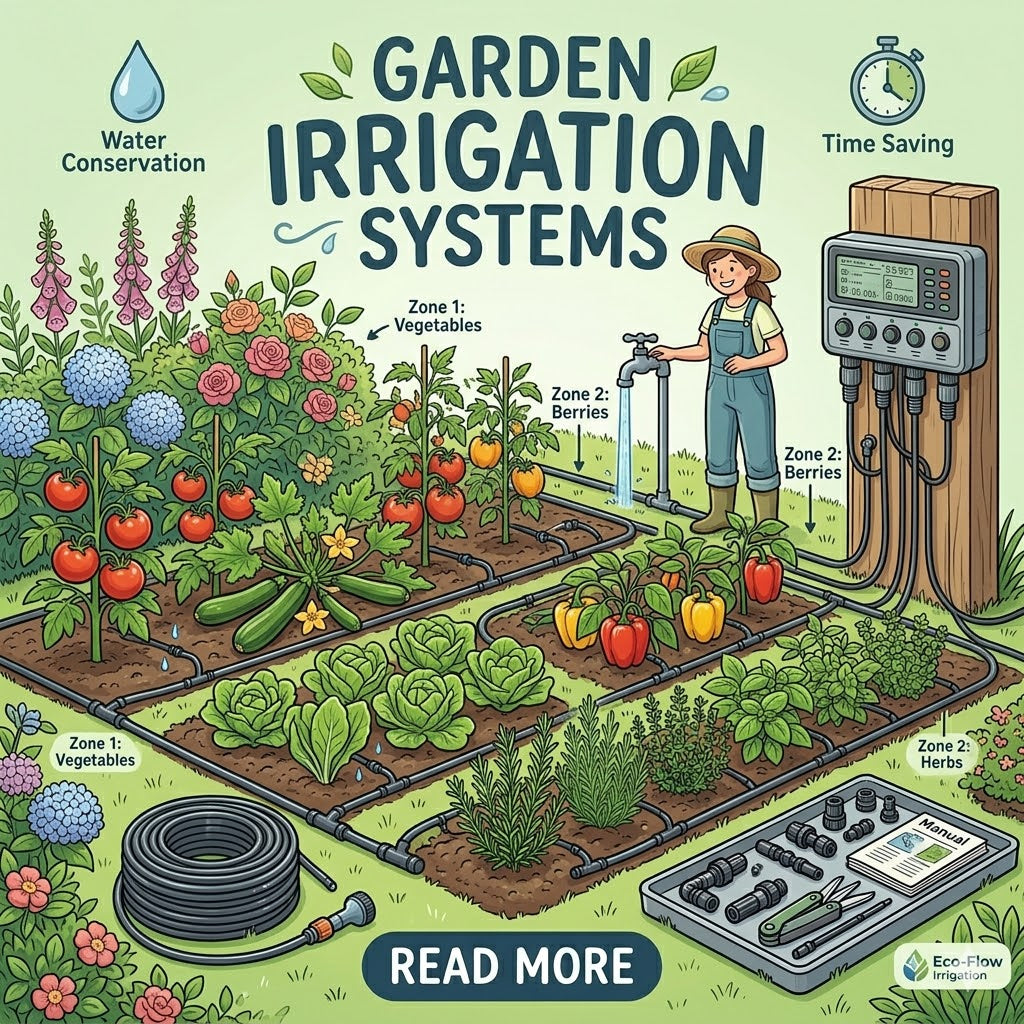
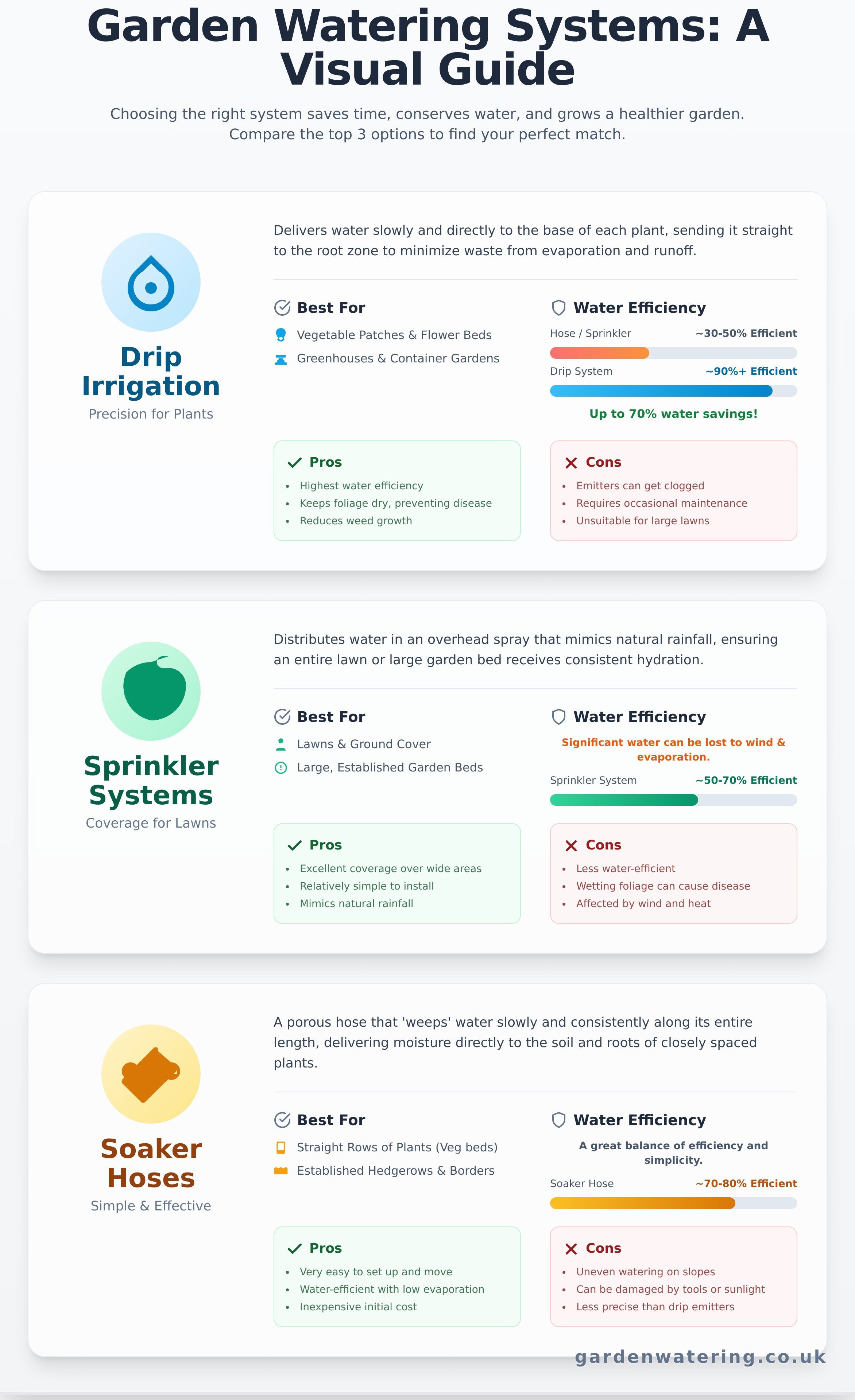
For targeted, highly efficient watering, nothing beats a drip irrigation system. This method uses a network of tubes and emitters to deliver water slowly and directly to the base of each plant. By sending water straight to the root zone, it minimises waste through evaporation and runoff, ensuring every drop is used effectively.
- Best for: Vegetable patches, flower beds, greenhouses, and container gardens.
- Pros: This system is incredibly water-efficient, which is a key principle in expert Watering Tips for sustainable gardening. It also keeps foliage dry to prevent disease and reduces weed growth by only watering the plants you want.
- Cons: The emitters can become clogged by sediment over time, requiring occasional maintenance. It is also unsuitable for providing the broad coverage needed for lawns.
Garden Sprinkler Systems: Coverage for Lawns
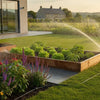
When you need to cover a large expanse like a lawn, a garden sprinkler system is the classic, reliable solution. These systems work by distributing water in an overhead spray that mimics natural rainfall, ensuring your entire lawn or large flowerbed receives consistent hydration. They range from simple, freestanding units to discreet pop-up systems.
- Best for: Lawns, ground cover, and large, established garden beds.
- Pros: Sprinklers provide excellent, even coverage over a wide area and are relatively simple to install and operate.
- Cons: They are less water-efficient than other methods, as a significant amount of water can be lost to wind and evaporation on warm days. Wetting foliage can also encourage fungal issues on more sensitive plants.
Soaker Hoses: Simple and Effective for Beds
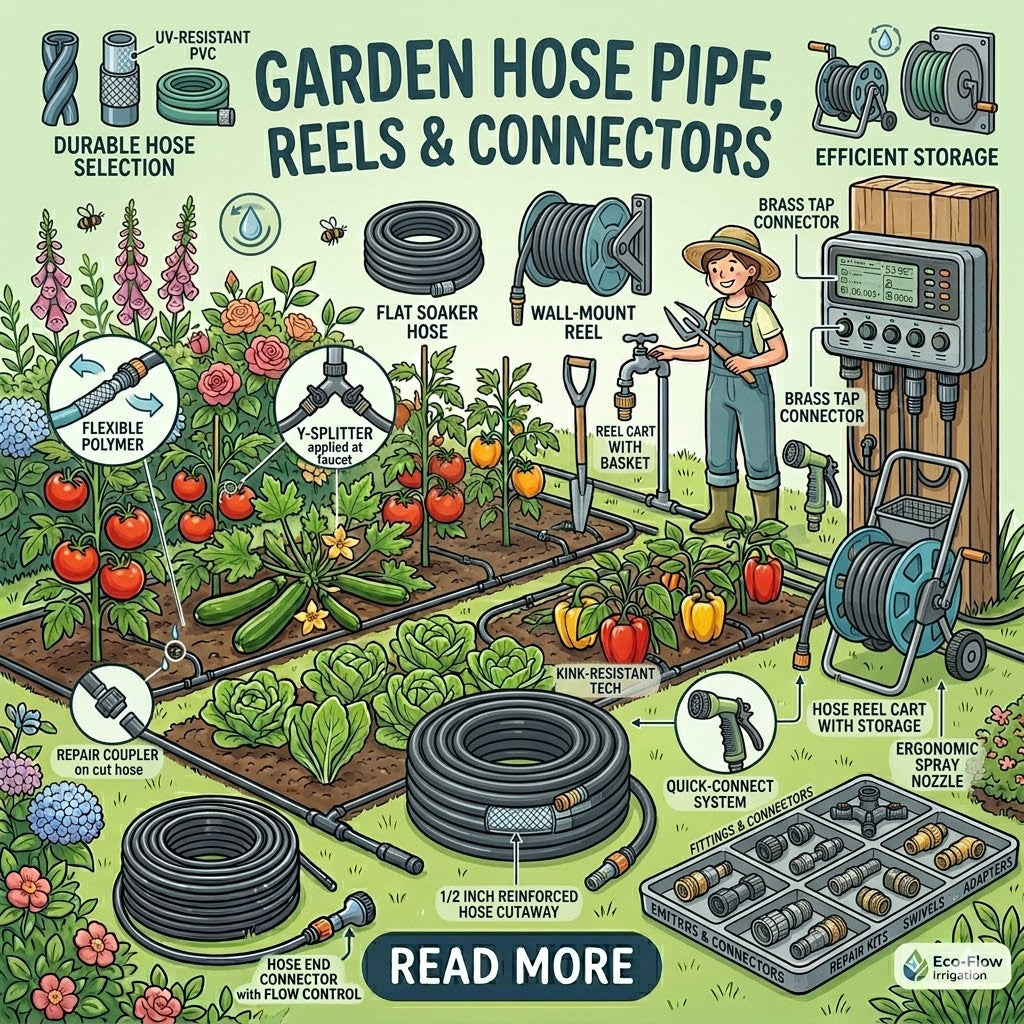
Soaker hoses offer a wonderfully simple and effective solution, perfect for watering in straight lines. Made from a porous material, these specialist hoses ‘weep’ or ‘sweat’ water along their entire length, delivering it gently and directly into the soil. You simply lay the hose where you need it, connect it to your tap, and turn it on.
- Best for: Straightforward rows in vegetable gardens, newly planted hedges, and narrow flower borders.
- Pros: This is often the most budget-friendly and easiest system to use. The slow, gentle watering action is also excellent for preventing soil erosion and compaction.
- Cons: On sloped ground, water pressure can cause uneven distribution, with more water released at the lower end. They are also less precise than a dedicated drip system.
How to Choose the Right Watering System for Your Garden
Selecting the most effective solution from the wide range of watering systems for gardens comes down to one key principle: matching the system to your garden's specific needs. There is no single "best" option, only the one that is right for you. To make a confident choice, you need to consider your garden's size and layout, the types of plants you grow, and how much time you want to save. This practical guide will help you assess your needs and find the perfect fit.
Best for Lawns: Sprinklers for Lush Grass
For a consistently green and healthy lawn, nothing beats the even coverage of a sprinkler system. Pop-up sprinklers are the gold standard, rising to water and retracting discreetly into the turf when finished. For rectangular lawns, an oscillating sprinkler provides excellent coverage, while travelling sprinklers are a great solution for larger or irregularly shaped areas. The key to success is ensuring ‘head-to-head’ coverage, where the spray from one sprinkler reaches the next, eliminating dry patches for a truly professional finish. Explore our range of high-quality lawn sprinkler systems.
Best for Flower Beds & Veg Patches: Drip Irrigation
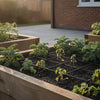
Drip irrigation is an efficient and water-wise method for watering borders, flower beds, and vegetable patches. By delivering water directly to the base of each plant, it keeps foliage dry, significantly reducing the risk of common fungal diseases like blight and mildew. Drip irrigation kits are incredibly versatile and easy to customise for any garden layout. You can even combine slow-release drippers for individual shrubs with micro-jets for ground cover, ensuring every plant gets exactly the water it needs. See our expertly chosen drip irrigation kits to get started.
Best for Pots, Baskets & Greenhouses: Micro Drip Systems
Containers and hanging baskets are notorious for drying out quickly, especially during warm weather, and a greenhouse environment can accelerate this even further. A dedicated micro drip system is the most reliable and efficient solution. These systems use a network of thin pipes and individual drippers to provide a slow, steady supply of water right where it's needed. Best of all, you can easily connect multiple pots, baskets, and grow bags to a single water timer for automated, worry-free watering all season long.
Understanding the Key Components of an Irrigation System
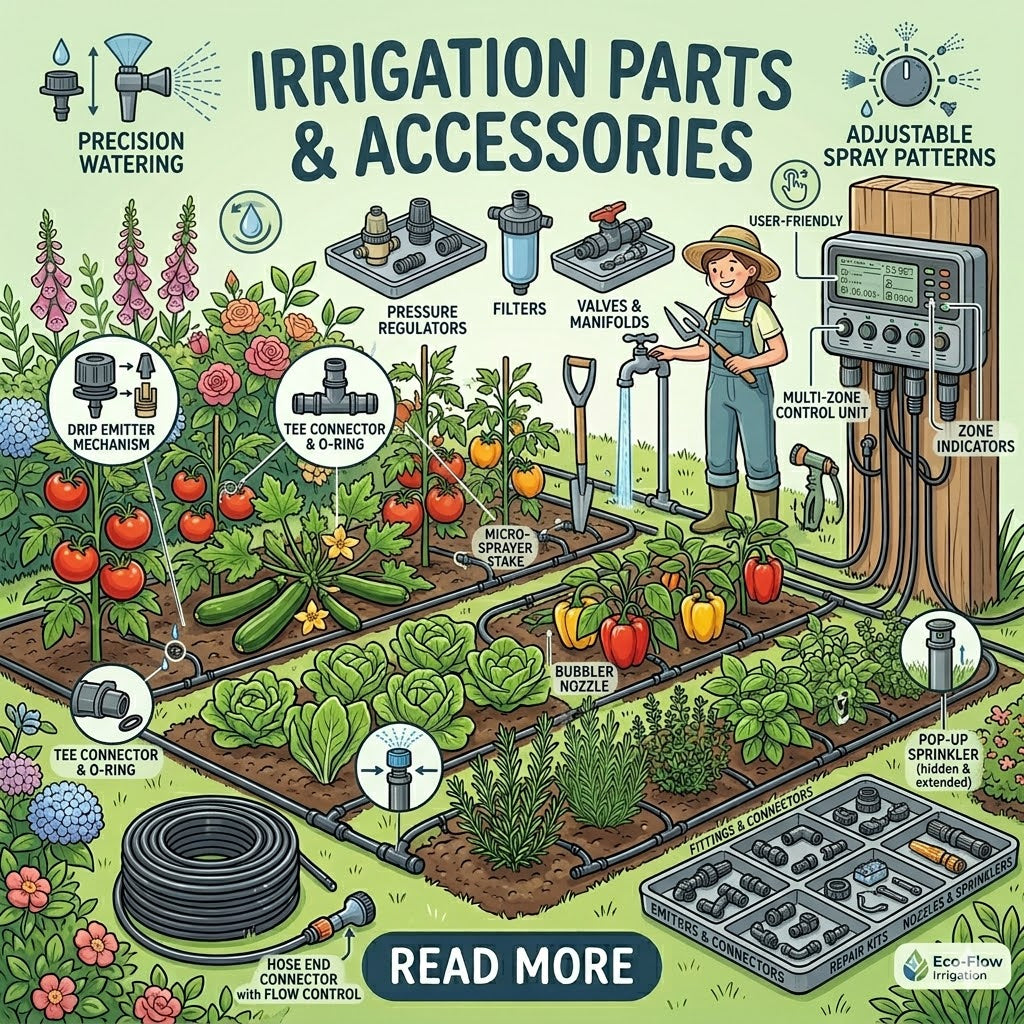
To choose the best solution for your outdoor space, it helps to understand the essential parts that make every system work. Think of it like a body: every setup has a 'brain' to control it, 'arteries' to transport the water, and 'emitters' to deliver it. While the variety of watering systems for gardens can seem complex, they all rely on these same core components. Knowing them will give you the confidence to plan and purchase the right high-quality parts for a garden that will thrive.
The Brain: Water Timers and Controllers
The timer or controller is the command centre of your system, automating your watering schedule for maximum efficiency and water conservation. Simple tap-mounted timers are perfect for smaller gardens, while more advanced multi-zone controllers can manage different watering needs across larger areas, like a lawn and a vegetable patch. For a truly smart solution, look for key features like:
- Rain Sensors: Automatically pauses the schedule when it rains, saving water.
- Manual Override: Allows you to run an extra watering cycle on particularly hot days.
- App Control: Gives you the flexibility to manage your watering from anywhere via a smartphone.
The Arteries: Pipes, Tubes, and Hoses
The arteries of your system are the pipes and tubes that carry water from your tap to your plants. A main supply pipe (typically 13mm) acts as the primary water line. From this, smaller micro-tubing (usually 4mm) branches off to deliver water directly to individual plants in a drip system. It's important to use dedicated irrigation tubing, as it is UV-stabilised and more durable than a standard garden hose, ensuring a long-lasting, reliable installation.
The Emitters: Drippers, Sprays, and Sprinklers
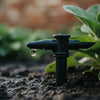
Emitters are the final, crucial component-they determine how the water is delivered to your soil and plants. The type you choose depends entirely on what you're watering. Adjustable drippers are ideal for providing a slow, steady supply of water directly to the roots of individual pots or shrubs. For covering small beds or ground cover, micro-jets and sprays offer a fine mist. For lawns, discreet pop-up sprinklers provide even coverage and then retract neatly out of sight when the job is done.
Understanding how these three key areas work together is the first step in designing an efficient irrigation solution. For expert advice and a full range of high-quality components, explore our complete collection at GardenWatering.co.uk.
Getting Started: Planning and Installation Basics
Choosing the right system is the first step, but how do you get it up and running? The good news is that most modern watering systems for gardens are designed for simple, tool-free DIY installation. The single most important factor for success isn't your plumbing skill, but your preparation. A thoughtful plan removes any guesswork and makes the actual setup a straightforward and rewarding process. Don't be intimidated; follow these basic steps to ensure your system works efficiently from day one.
Step 1: Sketch Your Garden Layout
Before you buy anything, grab a pen and paper and draw a simple map of your garden. It doesn't need to be a work of art. The goal is to visualise the project. Be sure to mark:
- The location of your outside tap.
- The different areas you need to water (e.g., lawn, flowerbeds, vegetable patch, hanging baskets).
- The types of plants in each area to help decide between drippers, micro-jets, or sprinklers.
Finally, use a tape measure to note the key distances. This will give you an accurate estimate of how much tubing you'll need, preventing waste and extra trips to the store.
Step 2: Check Your Water Flow and Pressure
Your home's water pressure and flow rate determine how large a system you can run effectively. You can easily measure your flow rate with a 'bucket test'. Simply time how long it takes to fill a 10-litre bucket from your garden tap. If it takes less than 60 seconds, you have a flow rate of at least 10 litres per minute, which is sufficient for most DIY kits. Water pressure is especially important for pop-up sprinklers to operate correctly, but thankfully, most UK homes have adequate pressure for the systems we specialise in.
Step 3: Choose a Kit or Individual Components
For beginners and those with standard garden layouts, a starter kit is the easiest and most cost-effective way to get going. These kits, like the popular Hozelock and Claber ranges, contain all the essential parts you need in one box. However, if you have a very large or unusually shaped garden, buying individual components provides the flexibility to create a completely custom solution. If you're unsure which path is right for you, we're here to help. Contact our experts for advice.
Your Ideal Garden Watering Solution Awaits
As we've explored, upgrading from a simple hosepipe is one of the best investments for your garden's health and your own free time. The key takeaways are simple: an automated system saves water and effort, and choosing the right type-whether drip, soaker, or sprinkler-depends entirely on your garden's unique needs, from vegetable patches to expansive lawns.
Finding the perfect fit among the many watering systems for gardens can feel complex, but you don't have to do it alone. As UK specialists with over 15 years of experience, we live and breathe irrigation. We specialise in high-quality Hozelock systems and have a solution for every space, from a small patio to a large family lawn. Our passion is helping you achieve a lush, healthy garden with minimal fuss.
Ready to take the next step towards an effortlessly beautiful garden? Browse our complete range of garden watering systems and discover the perfect solution with expert advice you can trust.
Frequently Asked Questions
How much does a garden watering system cost?
The cost of a garden watering system varies depending on the type and size of your garden. A simple drip irrigation kit for a small patio or a few containers can start from as little as £30-£50. For a more comprehensive pop-up sprinkler system for a medium-sized lawn, you might expect to invest between £200 and £500. The final price depends on factors like the quality of components, the length of pipework required, and the complexity of the timer you choose.
Can I install a garden watering system myself?
Absolutely. Most modern irrigation systems, especially drip and micro-jet systems from trusted brands like Hozelock, are designed for straightforward DIY installation. These kits come with clear instructions and all the necessary components. While larger, more complex pop-up sprinkler systems can be installed yourself, some homeowners prefer to seek professional advice to ensure optimal layout and performance. We find most customers feel confident setting up their own systems with minimal effort.
Do automatic watering systems work if I have low water pressure?
Yes, you can still have an effective automatic system with low water pressure, but it's important to choose the right type. Drip irrigation is an excellent solution as it operates at very low pressure, delivering water directly to the plant roots efficiently. Sprinkler systems, however, often require a minimum pressure to function correctly. We recommend checking your home's water pressure and comparing it against the product specifications to find the perfect solution for your garden.
Can you use an irrigation system during a hosepipe ban?
This depends on the specific rules set by your local water authority, as restrictions can vary. Generally, the use of sprinklers is prohibited during a hosepipe ban. However, water-efficient systems such as drip or trickle irrigation are often exempt because they deliver water directly to the soil with minimal waste. We always advise checking your local water company’s guidelines to ensure you are compliant while keeping your garden healthy.
How do I prevent my watering system from freezing in the winter?
To protect your system from frost damage, it’s crucial to winterise it before the first hard freeze. Start by shutting off the water supply to the system. Then, drain all the water from the pipes, sprinklers, and filters. If possible, use compressed air to blow out any remaining water from underground lines. Disconnect and store any timers and filters indoors. This simple maintenance ensures your system will be ready to perform perfectly next spring.
What is the most water-efficient type of garden irrigation?
Without a doubt, drip irrigation is the most water-efficient of all the watering systems for gardens. This method delivers water slowly and precisely to the base of each plant, directly at the root zone. This minimises water loss from evaporation and wind drift, which can be a significant issue with traditional sprinklers. By using a drip system, you can save up to 70% more water while ensuring your plants get the consistent moisture they need to thrive.
`-
Posted in
watering systems for gardens