Pop-Up Lawn Sprinklers, How do these Compare to a regular Sprinkler
Understanding Pop-Up Lawn Sprinklers
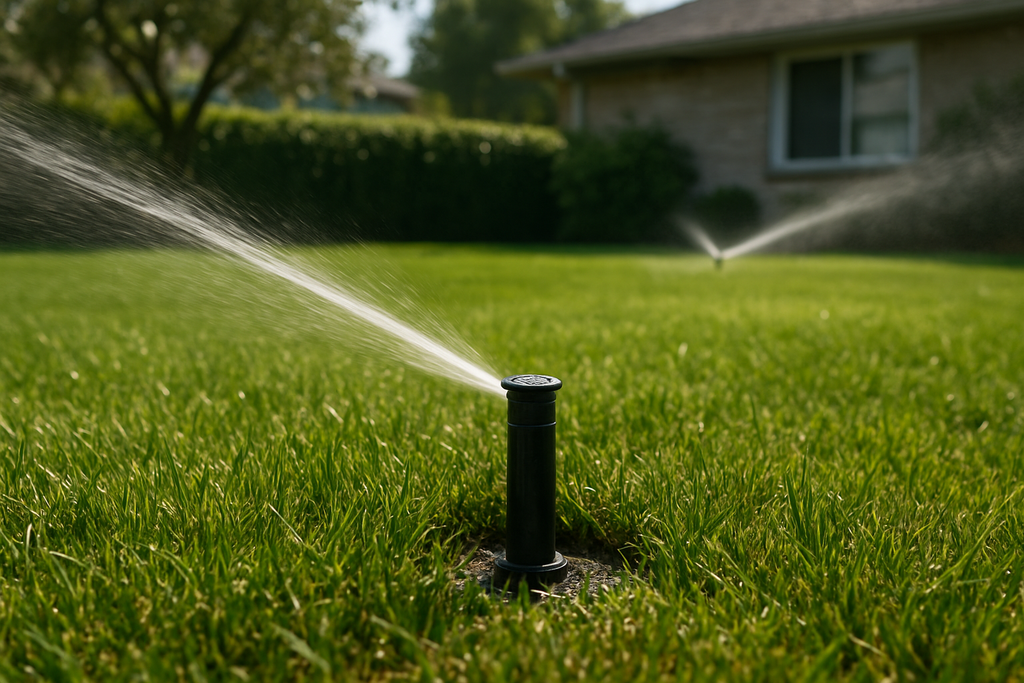
Pop-up lawn sprinklers represent a sophisticated irrigation solution that seamlessly integrates into your garden's aesthetic whilst delivering precise hydration. These retractable mechanisms remain hidden beneath ground level when inactive, emerging only during watering cycles to distribute water across designated zones.
The ingenious design incorporates a spring-loaded mechanism housed within a protective canister. Water pressure activates the sprinkler head, causing it to telescope upward and commence irrigation. Once the watering cycle concludes, the unit retracts flush with the soil surface, maintaining your lawn's pristine appearance.
Key Components and Functionality
Each pop-up lawn sprinkler comprises several critical elements working in harmonious synchronisation. The riser assembly contains the sprinkler nozzle and distribution mechanism, whilst the housing unit anchors the entire system underground. Adjustable arc settings allow customisation of spray patterns, ranging from 25-degree sectors to full 360-degree coverage.
Professional-grade units feature pressure-compensating technology, ensuring consistent water distribution regardless of fluctuations in system pressure. This sophisticated engineering prevents over-watering in high-pressure zones whilst maintaining adequate coverage in lower-pressure areas.
Traditional Garden Sprinkler Systems: An Overview
Conventional garden sprinklers encompass various above-ground irrigation devices that remain permanently visible within your outdoor space. These systems include oscillating sprinklers, rotary models, and stationary spray units, each offering distinct advantages for specific applications.
Oscillating sprinklers utilise a perforated tube that sweeps back and forth, creating rectangular coverage patterns ideal for lawns and flower beds. Rotary sprinklers employ rotating arms or jets to distribute water in circular patterns, whilst stationary units provide fixed-pattern irrigation for targeted areas.
Portability and Flexibility Advantages
Traditional sprinklers excel in their mobility and adaptability. Gardeners can easily relocate these units to accommodate changing irrigation requirements throughout the growing season. This flexibility proves particularly valuable for hobby gardeners cultivating diverse plant varieties with varying hydration needs.
Installation simplicity represents another compelling advantage. Most conventional sprinklers require only hose connection and positioning, enabling immediate deployment without excavation or permanent modifications to your garden infrastructure.
Comprehensive Performance Comparison
When evaluating pop-up lawn sprinklers against traditional alternatives, several performance metrics warrant careful consideration. Coverage uniformity, water efficiency, and operational reliability significantly impact long-term irrigation effectiveness.
"The choice between popup and traditional sprinklers often determines the difference between amateur and professional-grade irrigation results."
Water Distribution Efficiency
Popup systems demonstrate superior hydraulic efficiency through precisely engineered nozzle configurations and pressure regulation. These mechanisms minimise wind drift and evaporation losses, delivering more water directly to root zones where plants require hydration most.
Traditional sprinklers, whilst adequate for basic irrigation needs, often suffer from uneven distribution patterns and increased susceptibility to environmental factors. Wind interference particularly affects lightweight oscillating models, reducing effective coverage and increasing water waste.
Coverage Precision and Customisation
The adjustability quotient favours pop-up systems significantly. Professional-grade units offer micro-adjustable arc settings, throw radius control, and interchangeable nozzles for diverse precipitation rates. This granular control enables precise irrigation matching specific plant requirements and soil conditions.
| Feature | Popup Sprinklers | Traditional Sprinklers |
|---|---|---|
| Coverage Accuracy | ±2% variance | ±15% variance |
| Wind Resistance | High | Low to Moderate |
| Pressure Requirements | 1.5-3.0 bar | 1.0-2.5 bar |
| Installation Complexity | Moderate | Simple |
Installation Considerations and Requirements
Implementing pop-up lawn sprinklers demands more comprehensive planning and execution compared to traditional alternatives. Site preparation involves excavation, proper drainage consideration, and potential trenching for supply lines.
Soil conditions significantly influence installation complexity. Clay soils may require drainage amendments, whilst sandy substrates might need stabilisation measures to prevent settling around sprinkler housings.
Professional Installation vs. DIY Approaches
Many UK homeowners successfully install pop-up systems using quality DIY irrigation kits from established manufacturers like Hozelock and Claber. These comprehensive packages include detailed instructions, essential fittings, and technical support to ensure proper implementation.
Critical installation factors include proper head spacing, adequate water pressure verification, and seasonal drainage considerations for frost protection. Incorrect installation can result in poor coverage, premature wear, or system damage during freezing conditions.
Long-Term Maintenance and Durability
Maintenance requirements differ substantially between pop-up and traditional sprinkler systems. Popup units require periodic cleaning of retraction mechanisms and nozzle inspection for debris accumulation or damage.
- Quarterly nozzle cleaning and adjustment verification
- Annual spring activation and pressure testing
- Winterisation procedures for frost protection
- Periodic replacement of seals and moving components
Traditional sprinklers demand less technical maintenance but require more frequent attention due to exposure to environmental elements. UV degradation, impact damage, and general wear affect portable units more significantly than buried systems.
Cost-Effectiveness Analysis
Initial investment costs favour traditional sprinklers substantially. However, long-term operational expenses often balance this advantage through improved water efficiency and reduced replacement frequency associated with quality pop-up systems.
Water conservation potential represents a crucial economic factor for environmentally conscious gardeners. Popup systems typically reduce water consumption by 20-30% compared to conventional alternatives through improved distribution efficiency and reduced evaporation losses.
Making the Right Choice for Your Garden
Selecting between pop-up lawn sprinklers and traditional alternatives depends on several site-specific factors and personal priorities. Garden size, landscape complexity, and long-term irrigation goals influence optimal system selection.
For established lawns requiring permanent, high-performance irrigation, pop-up systems offer unmatched efficiency and aesthetic integration. However, gardens with changing layouts or rental properties may benefit more from flexible traditional options.
Consider your commitment to garden maintenance, available installation time, and budget constraints when making this important decision. Quality popup systems represent a long-term investment in garden health and water conservation, whilst traditional sprinklers provide immediate, cost-effective irrigation solutions.
Ultimately, both systems serve valuable roles in modern garden irrigation. The key lies in matching system capabilities with your specific requirements and expectations for garden performance.