Garden Hose Connectors: The Complete Guide to Leak-Free Watering
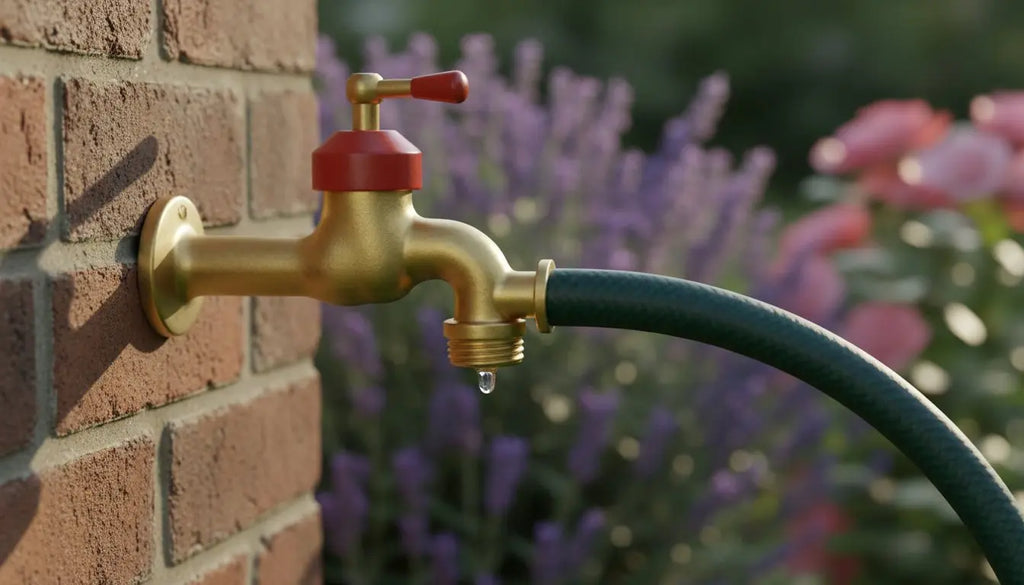
On a typical Saturday morning in June, you step out to water your flowerbeds only to find more water running down your arm than reaching your parched plants. It's a frustratingly common sight in British gardens; a fitting pops off under 3 bar of water pressure or a persistent drip turns your patio into a miniature pond. You've likely felt the confusion of trying to guess whether you need a 1/2 inch or 3/4 inch component while standing in a busy garden centre aisle.
At Garden Watering, we believe your watering routine should be a source of relaxation, not a battle with equipment. This guide helps you master garden hose connectors so you can build a professional, leak-free irrigation system that stays secure. You'll gain the expert knowledge required to choose between high-quality, reliable connectors or durable brass fittings with complete confidence. We also explain how to extend or split your setup, ensuring your garden thrives while you save water and time. Expert Irrigation Advice You Can Trust starts with getting the basics right.
Key Takeaways
- Understand the specific roles of tap and hose end fittings to create a seamless, professional-grade irrigation system for your home.
- Compare the benefits of durable brass versus lightweight ABS plastic to choose the most efficient material for your handheld spray guns and accessories.
- Learn the simple steps to identify your tap size and hose diameter, ensuring you select garden hose connectors that provide a guaranteed leak-free seal.
- Discover essential maintenance tips, including the "golden rule" of winterising, to protect your equipment from frost damage and costly replacements.
- Save water and maintain optimal pressure by mastering the art of replacing worn O-rings instead of discarding perfectly good fittings.
What are Garden Hose Connectors and Why Do They Matter?
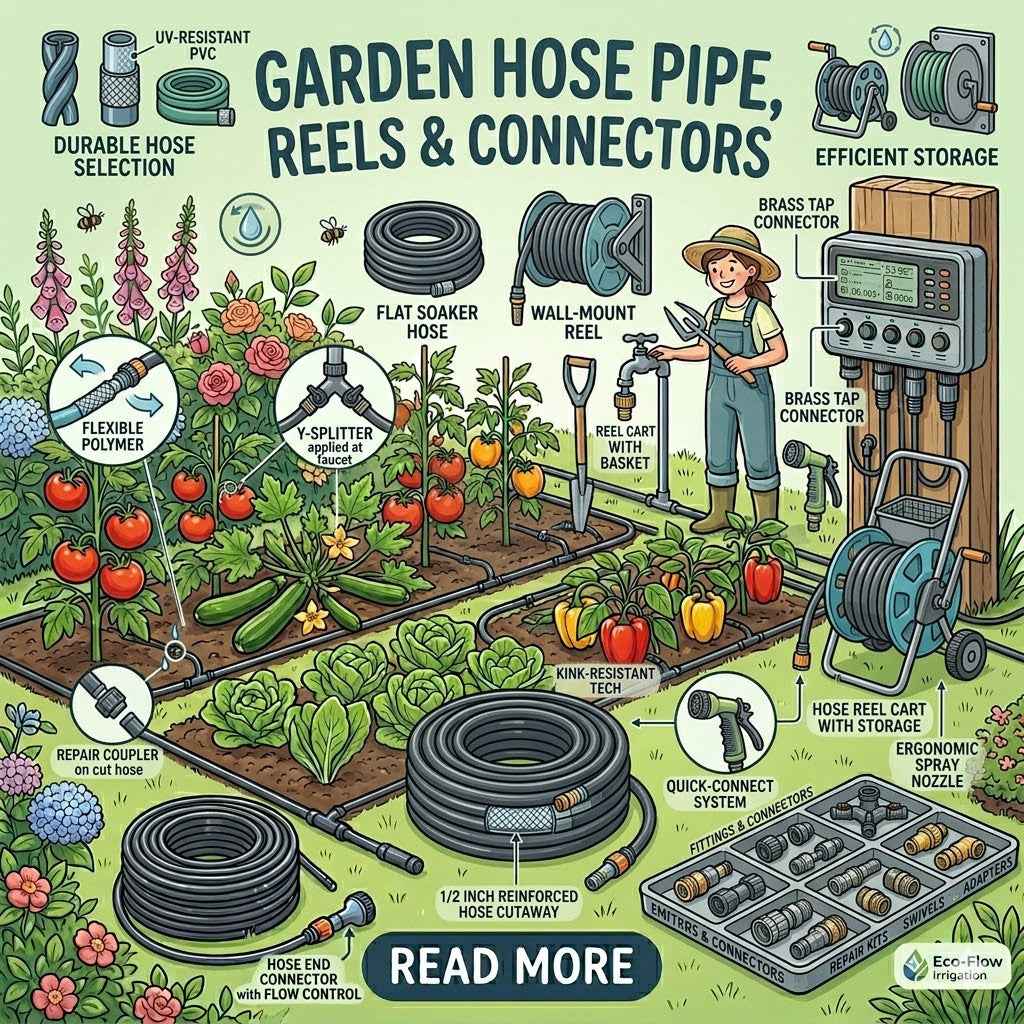
Garden hose connectors are the essential links that bridge the gap between your outdoor tap, the hose pipe, and your various watering accessories. While they might seem like simple plastic or metal fittings, they are the functional heart of any efficient irrigation system. These components ensure that water travels from the source to your plants without losing pressure or volume along the way.
A high-quality connector acts as a pressure regulator for your system. It manages the transition of water from a high-pressure domestic tap into the hose, protecting your equipment from sudden surges that can cause pipes to burst. In the UK, the "Quick-Click" system has become the universal industry standard. This design allows you to swap between a spray gun, a sprinkler, or a pressure washer in seconds, providing a secure and versatile connection that clicks audibly into place when locked.
The Anatomy of a Leak-Free Connection
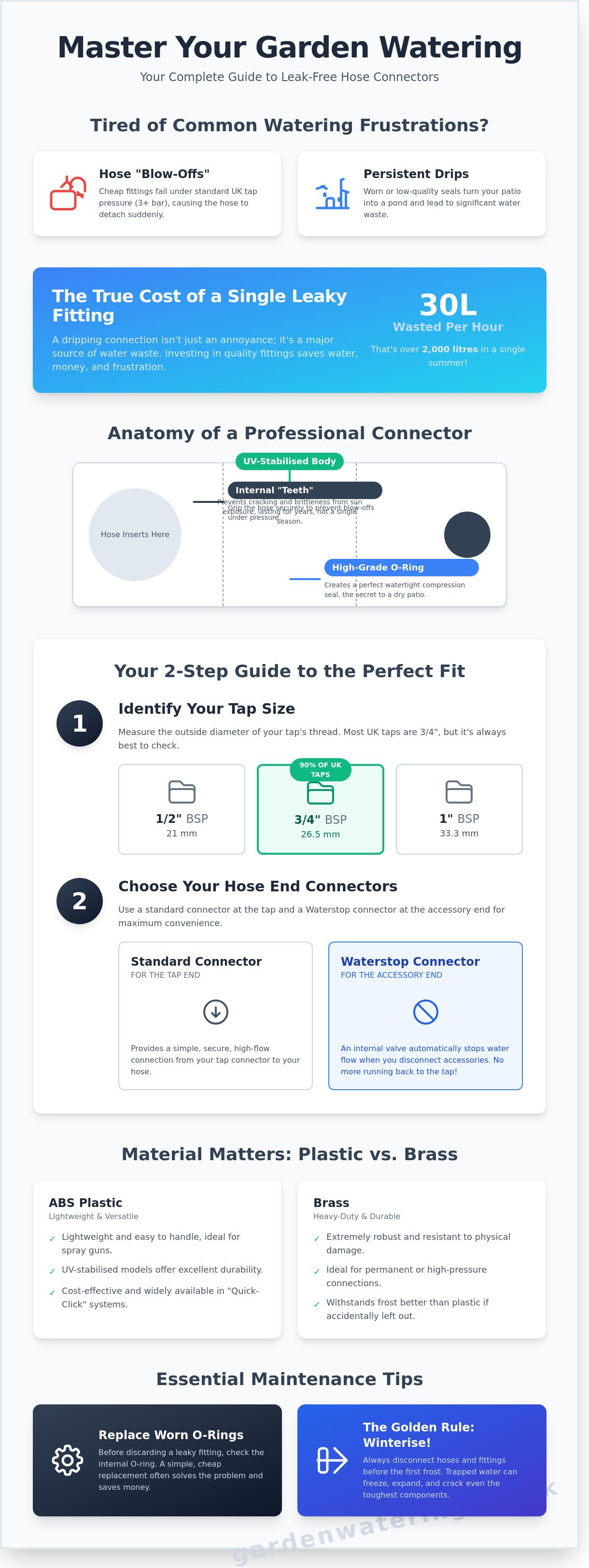
The secret to a dry patio lies inside the fitting. Every reliable connector features a high-grade internal O-ring, usually made from nitrile rubber, which creates a watertight compression seal. Surrounding this seal are the "teeth" or grips. These internal claws bite into the outer wall of the hose pipe when the nut is tightened, ensuring the hose cannot slip out under pressure. Because these fittings often sit in direct sunlight, we always recommend UV-stabilised materials. In the UK, non-stabilised plastics can become brittle and crack within 12 months of exposure to the sun's rays; quality materials prevent this degradation.
The Cost of Poor Quality Fittings
Choosing cheap, unbranded fittings often leads to "blow-offs," where the hose detaches entirely because the grips cannot withstand standard UK tap pressures, which often exceed 3 bar. This doesn't just cause frustration; it leads to significant water waste. A single dripping connection can waste up to 30 litres of water every hour. Over a typical three-month British summer, that is over 2,000 litres of water literally disappearing into the ground. Investing in Hozelock connectors saves money in the long run. These professional-grade garden hose connectors are designed to last for years rather than a single season, ensuring your garden stays lush while your water bills remain manageable.
- Efficiency: Maintains consistent flow for sprinklers and irrigation lines.
- Durability: UV-resistant components prevent seasonal cracking.
- Security: Precision-engineered teeth stop hoses from popping off under high pressure.
The Different Types of Hose Pipe Connectors Explained
Selecting the right garden hose connectors is the foundation of a reliable irrigation system. It's about matching the thread to your tap and the fitting to your task to ensure every drop of water reaches your plants. We specialise exclusively in irrigation, and we've found that using the correct fitting can prevent the 15% pressure loss often caused by ill-fitting, generic components.
Tap Connectors: Finding the Right Thread
Your outdoor tap is where the system begins. In the UK, most modern outside taps use British Standard Pipe (BSP) threads. These typically come in three sizes: 1/2 inch (21mm), 3/4 inch (26.5mm), and 1 inch (33.3mm). About 90% of UK garden taps are the 3/4 inch size, but older properties might still feature the smaller 1/2 inch version.
Measure the outside diameter of your tap's threaded outlet before buying. If you're unsure, multi-tap connectors are a sensible choice. These often include removable inserts that allow the fitting to adapt to different thread sizes, providing a secure, leak-free start to your watering setup.
Hose End vs. Waterstop Connectors
Hose end connectors are the primary link between your hose and your accessories. You'll find two main varieties in our Hozelock connectors range. Standard hose end connectors provide a high-flow, reliable connection at the tap end of your pipe. They're simple and durable.
Waterstop connectors are a specialist variation designed for the accessory end of the hose. They contain an internal valve that automatically shuts off the water flow when you disconnect a spray gun or sprinkler. This feature is incredibly efficient; it saves you from walking back to the tap every time you want to switch from a lance to a lawn sprinkler. Use a standard connector at the tap and a Waterstop at the business end for maximum efficiency.
Specialist Irrigation Fittings
If you're building a more complex layout, you'll need components that go beyond simple connections. Hose repairers allow you to join two lengths of hose or cut out a damaged, split section of pipe to restore full pressure. For those managing multiple areas, Y-junctions and 4-way manifolds can turn a single tap into a multi-zone hub.
When transitioning from a standard 12.5mm garden hose to a 4mm or 13mm micro-irrigation system, you'll need irrigation fitting adaptors. These ensure a secure transition without the risk of the smaller pipes popping off under pressure. If you're planning a larger project, you can browse our watering kits to see how these connectors work together in a complete system.
- Tap Connectors: Secure the hose to the water source.
- Hose End Connectors: Attach the hose to the tap or accessories.
- Waterstop Connectors: Allow accessory changes without turning off the tap.
- Repairers: Fix leaks or extend hose reach.
- Manifolds: Split one tap into multiple controlled outlets.
Material Matters: Plastic vs. Brass Hose Fittings
Choosing the right garden hose connectors depends entirely on your specific watering habits and the environment of your garden. High-grade ABS plastic, used by leading brands like Hozelock, provides excellent impact resistance while remaining light enough for comfortable use. Solid brass is the heavyweight alternative. It's built to survive being stepped on or even driven over by a family car on a gravel driveway. While brass is nearly indestructible, it's significantly heavier, which can make a long watering session feel like a workout.
Corrosion is a vital factor for UK gardeners. If you live in a hard water area, such as the South East of England, limescale can build up inside your fittings. Brass handles these mineral deposits and extreme winter frosts better than standard materials. However, modern UV-stabilised plastics have solved the old problem of fittings becoming brittle and snapping after a single summer. Regarding the total cost of ownership over five years, the numbers tell a clear story:
- Standard Plastic: A £4.50 connector replaced every 18 months due to wear or seal failure costs £13.50 over five years.
- Solid Brass: A single £15.00 high-quality brass connector will easily last five to ten years with basic O-ring maintenance.
The initial investment in brass often pays for itself through reliability and reduced waste. We find that most gardeners prefer a hybrid approach to get the best of both worlds.
When to Choose Plastic Connectors
Plastic is the best choice for handheld spray guns and lances. Metal fittings can feel cumbersome and uncomfortably cold during early morning tasks. Modern designs feature soft-touch grips that provide 35% better purchase for gardeners with limited hand strength or arthritis. These lightweight components are ideal for light-duty home gardening where you frequently swap between different accessories.
The Case for Heavy-Duty Brass
Professional landscapers and allotment owners favour brass because it stands up to high-traffic environments. These garden hose connectors won't crack if they're dropped on concrete or dragged across rough stone. You can safely mix brass and plastic in one system; just ensure you use quality rubber washers to prevent leaks. Many experts use a brass connector at the tap for strength and plastic at the hose end for comfort.
How to Choose the Right Connector for Your Setup
Selecting the correct garden hose connectors ensures your irrigation system remains watertight and efficient. Follow these five steps to find the perfect fit for your garden.
- Step 1: Identify your tap size. Most UK outdoor taps are 1/2 inch (21mm) or 3/4 inch (26mm). Use a standard ruler to measure the outer diameter of the threaded part of your tap to be certain of the size you need.
- Step 2: Determine your hose diameter. Standard UK garden hoses are 12.5mm (1/2 inch) internally. If you have a larger garden, you might use 15mm or 19mm hoses to handle a higher water volume.
- Step 3: Choose your function. Decide if you need to join two hoses together, split one feed into two, or use an AquaStop connector to change attachments without getting soaked.
- Step 4: Select the material. High-quality plastic connectors are perfect for general domestic use. For professional settings or high-pressure systems, brass fittings offer 30% more durability over five years of heavy use.
- Step 5: Verify brand compatibility. While many connectors follow a "click-lock" pattern, choosing genuine Hozelock garden hose connectors ensures a more secure, leak-free seal compared to budget generic alternatives.
Measuring Your Hose Pipe Correctly
It's a common mistake to measure the outside of your hose. Hose sizing always refers to the internal diameter (ID). A standard 12.5mm hose has a 12.5mm hole for water, but the external thickness varies. If you've invested in a heavy-duty, multi-layered hose, it'll likely have thicker walls. These require connectors with wider internal jaws to grip the outer casing securely. If you're struggling to push a connector onto a cold, stiff hose, dip the end of the pipe into a jug of warm water for 30 seconds. This softens the PVC, allowing the connector to slide on easily for a permanent, reliable seal.
Designing Your System for Efficiency
Every connector adds a small amount of friction. To maintain high water pressure, plan your layout to use the fewest number of joints possible. If you want to run a Hozelock automatic watering system and still use a manual hose, a twin-tap outlet is the best solution. This allows your timer to manage the borders while leaving a dedicated outlet free for your spray gun. For gardens over 50 metres long, we recommend Flow-max garden hose connectors. These have a wider internal bore that increases water flow by up to 35% compared to standard fittings, ensuring your sprinklers have the power they need to perform effectively.
Ready to upgrade your watering setup? Browse our full range of Hozelock watering solutions to find the right parts for your garden.
Maintenance and Troubleshooting: Keeping Your Fittings Leak-Free
The golden rule of garden maintenance is simple: remove your garden hose connectors before the first frost hits. Water expands by approximately 9% when it freezes, creating immense internal pressure that can shatter plastic housings. Even a tiny amount of trapped moisture can lead to hairline fractures. We recommend disconnecting every fitting by late October and storing them in a dry shed or garage to protect your investment.
Don't make the mistake of throwing away a leaking fitting prematurely. In our experience, over 85% of leaks at the tap or accessory end are caused by a perished or flattened O-ring. These small rubber seals cost less than 50p each and take seconds to replace. If your fittings feel gritty or the "click" isn't as crisp as it once was, soak them in a mild white vinegar solution for 20 minutes. This dissolves limescale buildup, which is a frequent issue for gardeners in hard water areas across the South East and East of England.
Common Issues and Quick Fixes
If your connector keeps popping off the tap under pressure, it's usually a sign that the internal "teeth" have worn down or the hose hasn't been pushed far enough into the fitting. For a sticky click mechanism, apply a single drop of silicone lubricant to the moving parts. Avoid using petroleum-based products like WD-40, as these can degrade the rubber seals over time. Always inspect your garden hose connectors for faint, spider-web lines. These hairline cracks are early warning signs that the fitting will burst when the sun warms the plastic and increases water pressure.
Expert Advice You Can Trust
We've spent over 15 years helping UK gardeners solve their unique watering challenges. We specialise exclusively in Hozelock watering because they offer the best long-term parts availability in the industry. You can still find replacement seals for Hozelock products manufactured over a decade ago, which aligns with our commitment to quality and sustainability. To ensure your garden remains lush and healthy all summer, use this final checklist:
- Inspect: Check all O-rings for cracks or flattening every March.
- Clean: Clear out grit from the female connector ends to ensure a watertight seal.
- Trim: If a leak persists at the hose end, cut 2cm off the hose to provide a fresh, uncompressed surface for the connector to grip.
- Tighten: Always hand-tighten your fittings. Using tools like pliers often snaps the plastic threads.
By following these simple steps, you'll ensure your irrigation system remains efficient and dependable for years to come.
Upgrade Your Watering System Today
Choosing the right garden hose connectors is the simplest way to prevent water waste and ensure your plants thrive. Whether you opt for the long-term durability of brass fittings or the lightweight convenience of modern plastic, a secure seal keeps your water pressure consistent. Regular maintenance, such as checking rubber washers every spring, prevents frustrating leaks before they start and extends the life of your equipment.
We specialise exclusively in Hozelock irrigation systems and bring over 15 years of expertise to every garden project. As a dedicated UK specialist, we understand the specific needs of British gardens and provide fast delivery on all garden fittings to get your system running smoothly without delay. You don't have to settle for dripping taps or soaked shoes when professional-grade solutions are available to help your garden reach its full potential.
Shop our Expert Range of Hozelock Connectors
Your garden deserves the best care; we're here to help you achieve a lush, healthy outdoor space with minimal effort and maximum efficiency.
Frequently Asked Questions
Are all garden hose connectors the same size?
No, garden hose connectors come in several specific sizes, though 12.5mm (1/2 inch) is the standard for 90% of UK domestic gardens. You'll also find 15mm and 19mm options designed for high-flow professional irrigation systems. Choosing the correct size is vital because a mismatched fitting will either leak or blow off under pressure. Always measure your hose's internal diameter before buying to ensure you get a secure, watertight connection for your setup.
Will Hozelock connectors fit other brands of hose pipe?
Yes, Hozelock connectors are designed to be compatible with almost all standard 12.5mm garden hose pipes regardless of the manufacturer. This universal compatibility is a key reason why Hozelock remains the UK's leading brand for over 60 years. Whether you use a budget hose or a premium reinforced version, the click-lock mechanism should provide a secure fit. We specialise in these systems because their precision engineering reduces the risk of blow-offs under high pressure.
What is a Waterstop connector and do I need one?
A Waterstop connector features an internal valve that automatically shuts off the flow of water when you disconnect an attachment like a spray gun. This clever device saves you from walking back to the tap every time you want to switch tools. It's an essential component for efficient watering because it prevents water wastage and keeps you dry. You typically place this at the accessory end of your hose rather than at the tap end.
How do I stop my hose connector from leaking at the tap?
Most leaks at the tap occur because of a worn rubber O-ring or a perished internal washer. These small parts cost less than £1 to replace and you should inspect them every 12 months for cracks. Make sure you've screwed the connector on straight and tightened it firmly by hand. If it still drips, your tap thread might be worn, or you may need a layer of PTFE tape to create a better seal.
Can I leave my hose connectors outside during the winter?
You should bring your connectors indoors during the winter to avoid damage from sub-zero temperatures. When water trapped inside the fitting freezes, it expands by about 9% in volume, which easily cracks plastic or distorts metal parts. We suggest storing your kit in a frost-free shed between November and March. This simple routine can double the life of your equipment and prevents the frustration of finding leaks when spring arrives.
What is the difference between a 1/2 and 3/4 inch tap connector?
The difference lies in the diameter of the threaded part of your outdoor tap, with 3/4 inch (approx 26.5mm) being the most common size for UK garden taps. A 1/2 inch tap (approx 21mm) is smaller and often found in older properties or indoor utility sinks. Many modern connectors include a removable threaded insert that allows the same fitting to work on both 1/2 inch and 3/4 inch tap threads for maximum versatility.
How do I remove a stuck hose pipe connector?
You can remove a stuck connector by soaking the fitting in a 50/50 solution of warm water and white vinegar for 15 minutes to dissolve limescale. If it remains stubborn, use a pair of adjustable pliers to gently grip the collar, but wrap a cloth around the fitting first to avoid damaging the plastic. Limescale build-up accounts for approximately 70% of stuck fittings in hard water areas like South East England.
Is brass better than plastic for garden hose fittings?
Brass is superior for durability and longevity, often lasting over 10 years compared to the 3 to 5-year lifespan of standard plastic fittings. These metal garden hose connectors withstand UV exposure and physical impact much better than their plastic counterparts. While brass is more of an upfront investment, it doesn't become brittle over time. We often recommend brass for professional setups where equipment is used daily and subjected to harsher conditions.
`-
Posted in
garden hose connectors