How do I water my garden during a hosepipe ban
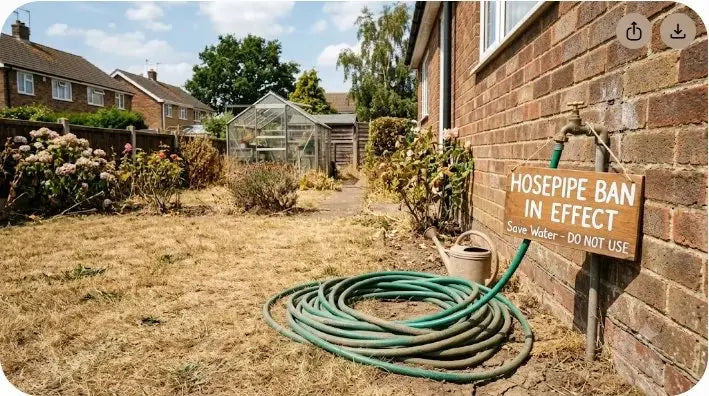
Hearing that a hosepipe ban is in effect doesn't have to be a death sentence for your prized hydrangeas or your carefully manicured lawn. It's completely natural to feel anxious when you see headlines about a £1,000 fine, especially if you've invested years of effort and significant money into your landscaping. You want to follow the rules, but you also don't want to watch your garden wither away during the current June heatwave. We understand that the terminology around water restrictions can be confusing, leaving many homeowners unsure of what they can and cannot do.
The good news is that you can keep your garden thriving legally by switching from a manual hose to a more efficient, compliant method. During a hosepipe ban, drip irrigation connected to an automated timer is often permitted because it's not hand help pipe watering. These systems deliver water directly to the roots, which satisfies the water company's need for efficiency while giving you total peace of mind. In this guide, we'll show you how to set up a professional-grade system that saves your plants, saves your time, and ensures you stay fully compliant with the latest regulations.
Learn how to navigate the 2026 water restrictions safely so you can maintain a beautiful landscape without the worry of a £1,000 fine. We'll clarify exactly what the Temporary Use Ban means for your home and which methods remain legal under current guidelines.
Discover why a hosepipe ban, drip irrigation setup using an automated timer is not hand help pipe watering. This distinction is vital, as it allows for a precision solution that targets roots rather than wasting water on leaves or pavements.
Explore the practical benefits of watering during the early morning hours to maximize absorption and support the long-term health of your plants during drought conditions.
Get step-by-step instructions on assembling a compliant system, from connecting digital timers to installing pressure-reducing valves for optimal efficiency and system protection.
Benefit from our 15 years of specialist expertise and high-quality Hozelock systems designed to keep your garden thriving through even the strictest water regulations.
Understanding UK Hosepipe Bans in 2026: What is Actually Restricted?
A Temporary Use Ban, or what most of us call a hosepipe ban, is a legal tool used by water companies to manage demand during dry spells. In June 2026, South East Water implemented these restrictions for 850,000 customers in Kent following a period of high demand and low rainfall. The main objective isn't to stop you from gardening entirely; it's to reduce peak demand that can climb by 30% during heatwaves. By limiting non-essential water use, companies ensure there's enough pressure for everyone's taps and showers.
The standard 2026 restrictions are quite specific. You generally cannot use a hosepipe to clean a private motor vehicle, fill a domestic swimming pool, or water a private garden using a hand-held hose. These rules apply primarily to domestic settings. Commercial operators, such as professional car washes or commercial plant nurseries, often have different exemptions because their business depends on water use. For the average homeowner, the risk of ignoring these rules is high. You could face a fine of up to £1,000, which is a significant deterrent designed to encourage collective water saving.
The 'Hand-Held' Problem: Why Your Standard Spray Gun is Banned
Water companies specifically target hand-held hoses because they are inherently inefficient. When we use a spray gun, we often waste water on garden paths or over-water certain areas simply because we're doing it by eye. The ban focuses on the 'human element' of high-volume usage. To remain on the right side of the law, your watering method needs to be fixed and precise. During a hosepipe ban, drip irrigation kits paired with an automated timer are usually exempt because they are not hand help pipe systems. They operate as a fixed installation that delivers water slowly and directly to where it's needed most.
Checking Your Local Water Authority Rules
Rules aren't always uniform across the UK. While one provider might allow certain systems, another might have stricter requirements. You can identify your supplier in seconds by checking your water bill or using an online postcode finder. Major providers like Thames Water or Southern Water are required to publish a 'statutory notice' on their websites. This document is the final word on what's allowed. It’s vital to read these notices because exemptions can vary by county. Some authorities might require your drip irrigation systems to include a pressure-reducing valve to ensure maximum efficiency before they grant an exemption.
Why Drip Irrigation is Your Garden's Legal Lifeline
The distinction between a temporary hose and a fixed irrigation system is at the heart of UK water law. When a water company issues a Temporary Use Ban, they're primarily targeting the high-volume waste associated with manual watering. According to industry data, a standard garden sprinkler or hose can discharge as much as 166 liters of water in just ten minutes. In contrast, a drip system operates over a longer period but uses significantly less total volume. It's the difference between an uncontrolled flood and a precise, measured drink for your plants.
The precision of drip systems means water goes exactly where it's needed: the root zone. When you spray a hose, much of the water is lost to the air or ends up on foliage where it can't be used. By delivering water directly to the soil surface, or even beneath a layer of mulch, you virtually eliminate evaporation. This is why these systems are often the only legal way to keep a landscape alive during a drought. Under the official UK hosepipe ban rules, fixed systems that prioritize efficiency are viewed as a responsible alternative to the standard hand-held method. During a hosepipe ban, drip irrigation is your best defense. Because it is not hand help pipe, it falls into a different category of water use, especially when governed by an automated timer.
The Science of Drip Efficiency
Targeted hydration is the primary benefit here. By only watering the soil around your chosen plants, you leave the surrounding areas dry. This naturally discourages weed growth, as seeds in the dry gaps won't have the moisture to germinate. High-quality systems often use pressure-compensating drippers. These ensure that every plant gets the same amount of water, whether it's at the start of the line or the very end. Simply put, drip irrigation is a low-pressure, high-efficiency fixed delivery system designed for maximum plant health.
Legal Compliance: The 'Timer and Pressure' Rule
To qualify for a legal exemption, most water authorities require specific hardware to be in place. A timer is essential because it prevents "set and forget" waste, ensuring the system shuts off automatically after a set duration. Additionally, a pressure-reducing valve is a technical necessity. It protects your fittings from bursts and keeps the flow rate at an efficient level. You can explore Hozelock automatic watering systems to find setups that meet these specific compliance standards and keep your garden thriving through the summer.
Automated Timers vs. Manual Watering: Efficiency Breakdown
Manual watering is notoriously inefficient. When you stand in the garden with a spray gun, you're prone to over-watering some areas while missing others. More importantly, it's easy to lose track of time. An automated timer removes this human error entirely. By setting a precise duration, you ensure that your drip irrigation system delivers exactly what is needed. This level of control is why these systems are categorized as not hand help pipe watering, making them a vital tool during a hosepipe ban.
One of the greatest advantages of automation is the "Early Bird" schedule. Setting your system to run at 4 AM might sound extreme, but it's the gold standard for garden health. At this hour, temperatures are at their lowest and winds are typically calm. This means almost every drop of water reaches the roots rather than evaporating into the morning air. It also helps the wider community by drawing water when "peak demand" is at its lowest, which is exactly what water suppliers want to see.
For those who want even more precision, Hozelock Sensor Controllers offer a sophisticated solution. These devices use integrated light sensors to trigger watering at dawn or dusk, the two best times of day for plant hydration. This technology ensures your garden remains resilient even if you're away on holiday or busy at work. It provides a level of reliability that a manual hose simply cannot match.
Why Timing Matters During a Drought
Water companies face immense pressure between 6 PM and 9 PM. By scheduling your watering for the middle of the night, you help maintain local water pressure. Nighttime watering also prevents the "scorching" effect where water droplets on leaves act like magnifying glasses in the sun. It keeps foliage dry during the day, which reduces the risk of fungal diseases. Plus, you won't have to worry about neighbors' concerns because your system works silently and efficiently.
Choosing the Right Controller
Selecting the right hardware depends on your garden's layout. Mechanical dial timers are excellent for simplicity, while digital models allow for multiple watering cycles. For the ultimate control, Wi-Fi or Bluetooth units let you adjust schedules from your phone. We recommend browsing our range of garden irrigation water timers to find a compliant model. Look for features like a "Rain Delay" button, which pauses the schedule if the British weather provides a natural downpour.
How to Build a Hosepipe Ban Approved System
Building a system that meets the requirements of a Temporary Use Ban is straightforward when you have the right components. The goal is to move away from high-volume, manual watering toward a fixed, efficient installation. By following a logical assembly process, you can create a setup that protects your plants while respecting local water restrictions. This transition ensures your garden remains a priority without risking legal penalties.
Start by connecting a compliant automated timer directly to your outside tap. This device acts as the control center, ensuring water is only used during your programmed windows. Immediately after the timer, you must install a pressure reducing valve. This small but vital component drops the mains pressure to a level that your drip irrigation fittings can handle. Without it, you risk leaks or "misting," where water turns into a fine spray that evaporates before reaching the soil.
Next, lay out your fixed supply line using 13mm or 25mm pipe. Secure this line along the base of your hedges or through your flower beds using ground stakes. Because this setup is not hand help pipe watering, it moves from being a restricted activity to a permitted one in the eyes of most water authorities. Once your main line is in place, install individual drippers at the base of each plant or use a dedicated drip line for rows of vegetables. The final step is to apply a thick layer of mulch over the pipes. This hides the system from view and provides an extra layer of protection against evaporation during a hosepipe ban.
The Essential Component Checklist
It is important to distinguish between a soaker hose and a drip line. Soaker hoses, which weep water along their entire length, are often banned because they can be less efficient. In contrast, a drip line with internal emitters provides a specific, metered flow that is usually exempt. To maintain a truly efficient system, use high-quality Hozelock connectors to ensure every join is watertight. You should also ensure your outside tap is fitted with a double check valve to prevent any backflow into your home's drinking water, which is a standard requirement in UK plumbing regulations.
Testing for Efficiency
Before you leave your system to run on its own, perform a quick efficiency test. Turn the system on and watch for any "run-off." If you see water pooling on the surface or flowing away from the plant, your drippers are delivering water faster than the soil can absorb it. You can easily adjust the flow rates on individual drippers to suit specific needs, such as giving more to thirsty roses and less to established shrubs. A compliant system must be leak-free and automated to qualify for most exemptions. To get started with a complete setup, we recommend exploring our range of Hozelock Watering Kits designed for easy home installation.
Expert Advice from Garden Watering: Your Drought Partners
At Garden Watering, we act as your dedicated partners in garden care, bringing over 15 years of specialist UK irrigation experience to your doorstep. We understand the anxiety that comes with a summer drought and the potential for a £1,000 fine. That's why we focus on delivering systems that are both effective and legally compliant. During a hosepipe ban, drip irrigation kits paired with an automated timer are essential tools. Since these setups are not hand help pipe watering methods, they remain a permitted way to sustain your landscape under most current 2026 regulations.
Our choice to specialize in Hozelock systems is deliberate. Their equipment is engineered for the specific pressures and fittings found in British gardens, ensuring a leak-free experience. Reliability is paramount when your plants depend on a timed schedule. With Hozelock, you aren't just buying a product; you're investing in a system with readily available spare parts and a legacy of quality. This ensures your garden remains resilient even during the peak of a heatwave.
Why Buy a Ready-to-Use Kit?
If you want the fastest way to achieve legal peace of mind, choosing one of our Hozelock watering kits is the ideal starting point. These kits are designed to work together perfectly, meaning you don't have to worry about whether a specific connector will fit your tap or if the drippers will provide the correct flow rate. Each box contains a curated selection of components, from the digital controller to the precision emitters, allowing you to bypass the technical "DIY headache" and get your garden protected in a single afternoon.
Ongoing Support and Maintenance
We are committed to the long-term health of your landscape through our "Watering for Life" philosophy. This involves providing the guidance you need to keep your system running year after year. For example, learning how to winterise your pipes by draining them before the first frost will save you from repairs in the spring. Simply remove the timer and store it in a dry place to protect the internal valves. If you're dealing with a large or unusually shaped plot, contact our experts today for a bespoke watering plan. We can help you map out a custom irrigation layout that ensures maximum water efficiency while keeping your garden lush and vibrant through any dry spell.
Keep Your Garden Growing Legally
Maintaining a vibrant landscape during a drought doesn't have to be a source of stress. By shifting your focus from high-volume manual watering to precision delivery, you can satisfy water company requirements while ensuring your plants thrive. The key is using a fixed system that eliminates waste and operates independently of human error. This approach transforms a challenging season into an opportunity for more sustainable gardening habits.
Setting up a hosepipe ban, drip irrigation system with an automated timer is the most reliable way to stay compliant because it is not hand help pipe watering. This setup allows you to target roots directly, reducing evaporation and preventing the common pitfalls that lead to fines. With our 15 years of expert advice as a specialist UK Hozelock retailer, we're here to help you navigate these restrictions with confidence.
Ready to protect your garden? Shop our hosepipe ban compliant Hozelock drip kits today and enjoy free UK delivery on orders over £50. You've worked hard to create a beautiful outdoor space, and with the right tools, you can keep it green all summer long.
Frequently Asked Questions
Are drip irrigation systems exempt from hosepipe bans in 2026?
Most water companies in the UK, such as South East Water, grant a discretionary exception for drip and trickle irrigation systems during a hosepipe ban. To qualify, the system must be a fixed installation that is not hand help pipe watering. It must also be fitted with a pressure-reducing valve and an automated timer to ensure maximum efficiency. Always confirm the exact wording of the statutory notice on your local water provider's website, as these exemptions can be adjusted based on local drought severity.
Can I use a soaker hose during a hosepipe ban?
In most cases, you cannot use a soaker hose during a ban. These porous hoses are typically restricted because they are less efficient than targeted drip irrigation. While they weep water along their entire length, they often lead to over-watering in some areas and waste in others. Most water authorities specifically exclude "porous" or "leaky" hoses from their list of exemptions, so it's safer to use a metered drip system with individual emitters.
Do I need a special timer to be compliant with water restrictions?
You need a digital or smart timer that allows for precise scheduling and automatic shut-off. This hardware is a key requirement for a legal exemption because it prevents the waste associated with "set and forget" manual watering. High-quality timers ensure that your system only runs for the programmed duration, which demonstrates responsible water use to your provider. Smart controllers that adjust for real-time weather conditions are particularly effective at maximizing these savings.
What is the fine for using a hosepipe during a ban in the UK?
Violating a Temporary Use Ban can result in a fine of up to £1,000. This penalty is set out under the Flood and Water Management Act 2010 to act as a serious deterrent against non-essential water use. Water companies often rely on reports from the public to identify violations. Ensuring your watering method is a fixed, compliant installation is the best way to avoid unwanted attention and potential legal costs.
Can I still water my vegetable patch with a hose?
Many water companies allow an exemption for watering food crops if they cannot reasonably be watered with a watering can. However, this is often restricted to "essential" watering for the health of the plants rather than general maintenance. If you have a large vegetable patch, installing a permanent drip system is a much more efficient way to ensure your crops thrive without the physical labor of carrying heavy cans during a heatwave.
Does a drip system work with a water butt?
Drip systems can work with water butts, but gravity-fed setups often lack the pressure needed for emitters to function correctly. We recommend using a specialist water butt pump to provide the necessary force for the system to operate efficiently. This is an excellent way to combine rainwater harvesting with precise delivery, providing a sustainable solution that works independently of the mains water supply.
Is an automated sprinkler system allowed during a ban?
Standard automated sprinklers are almost always banned during a hosepipe restriction. These systems use high volumes of water, with some models discharging up to 166 liters every 10 minutes. Sprinklers throw water into the air, leading to significant evaporation and waste on paths or foliage. Unlike drip systems, they don't meet the "efficiency" criteria required for an exemption under a Temporary Use Ban.
How do I prove my irrigation system is 'water-efficient' to my provider?
You can prove efficiency by showing that your system is a fixed installation featuring a pressure-reducing valve and a timer. Keep the manuals or packaging for your Hozelock components as evidence of their professional design. If a water company representative visits, you can demonstrate that the system targets roots directly and shuts off automatically, fulfilling the requirements for a "fixed" and efficient setup that is not hand-held.
-
Posted in
automated timer, Automated Watering, drip irrigation, Drought, Garden Maintenance, Gardening Tips, Hosepipe ban, Lawn Care, not hand help pipe, Water Conservation