Garden Watering Systems: The Ultimate UK Guide to a Thriving Garden
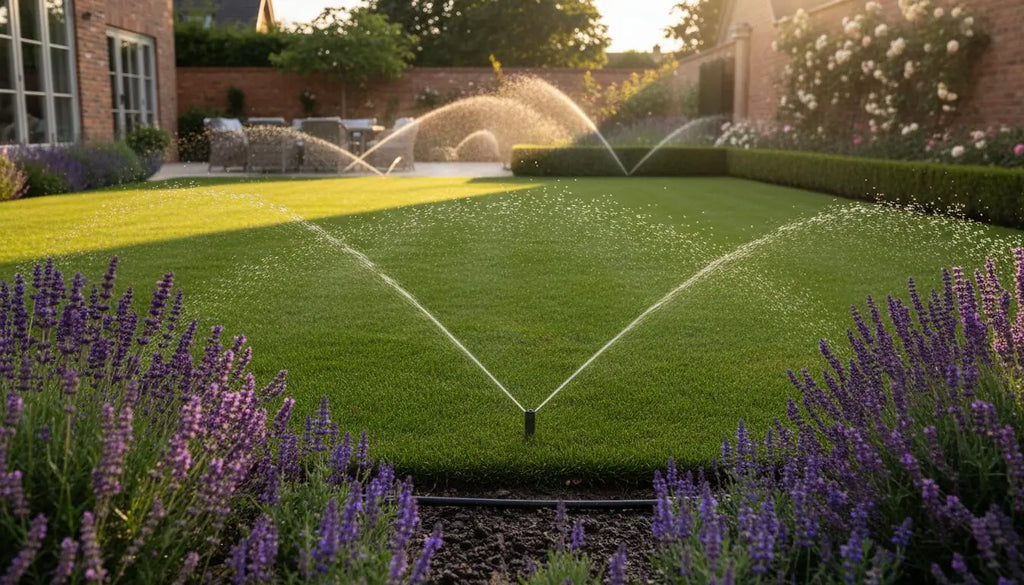
Between a busy schedule and the unpredictable British weather, keeping your garden perfectly watered can feel like a constant battle. You dream of a lush, vibrant outdoor space, but the reality is often a cycle of forgetting, overwatering, and worrying about your plants, especially when you're away on holiday. That's where a reliable garden watering system transforms everything, offering a simple, efficient solution to achieve the thriving garden you've always wanted, without the daily chore.
But with so many options available, from discreet drip irrigation for your borders to pop-up sprinklers for your lawn, choosing the right setup can feel overwhelming. This is where our expert advice comes in. In this comprehensive UK guide, we'll demystify the choices and provide practical solutions. You will learn how to select the perfect system for your needs, saving you significant time, conserving water, and ensuring your garden is cared for, giving you complete peace of mind.
Key Takeaways
- Learn how automated watering goes beyond convenience, promoting deeper root growth and healthier plants while significantly conserving water.
- Discover the key differences between irrigation types, from discreet drip lines for beds to efficient pop-up sprinklers for lush UK lawns.
- Get a step-by-step guide to choosing the perfect garden watering system by evaluating your garden's unique layout, soil type, and planting scheme.
- Understand the essential components every system needs, from timers to pipes, to confidently plan for a successful and trouble-free installation.
Why Install a Garden Watering System? The Core Benefits
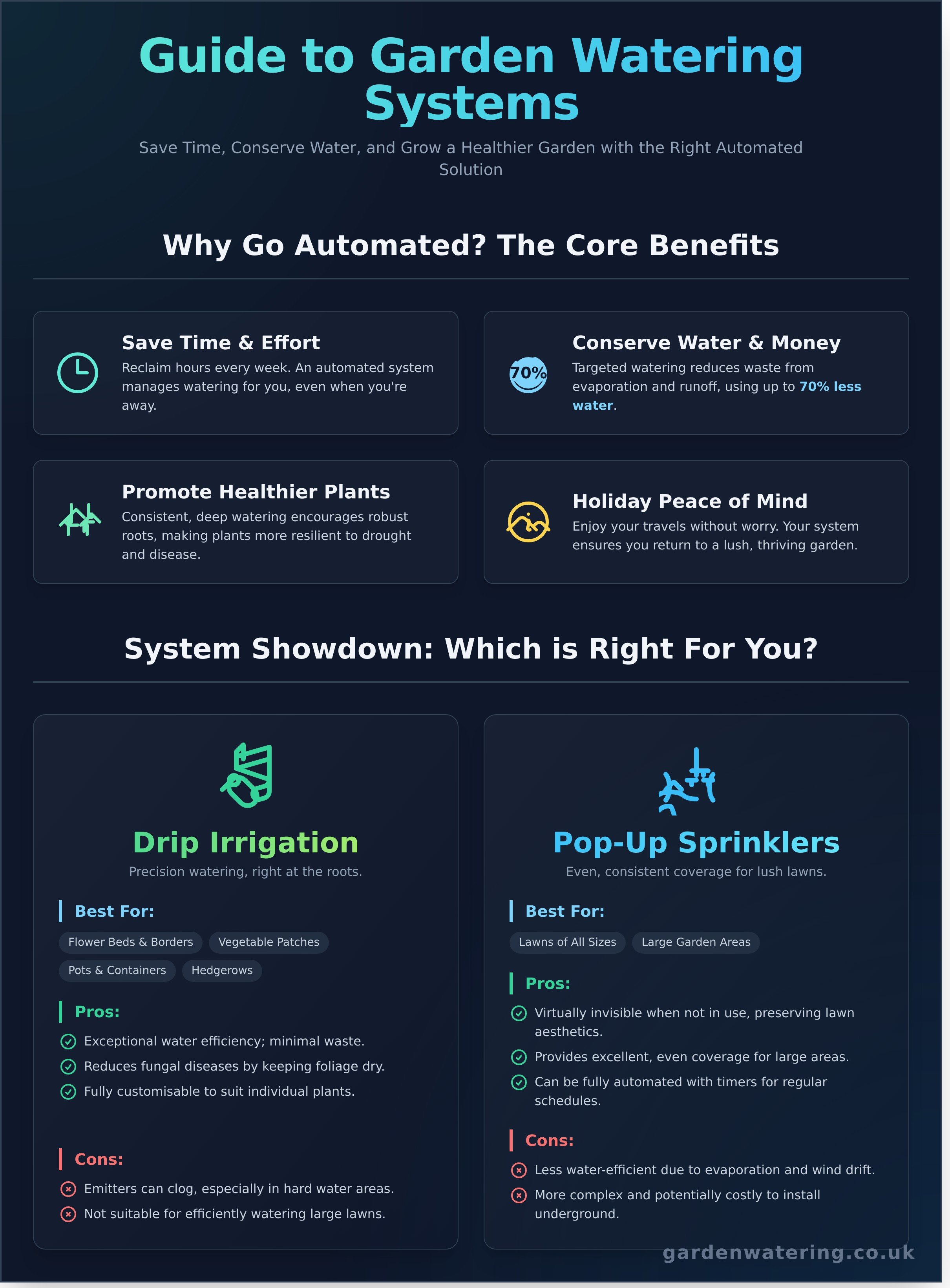
While many gardeners enjoy the ritual of watering, the daily commitment can quickly become a chore. Installing a high-quality garden watering system is about more than just convenience; it’s a strategic investment in the health of your plants, the conservation of water, and your own valuable time. It offers a ‘set and forget’ solution that provides your garden with exactly what it needs to thrive, delivering consistent, efficient watering without you ever having to lift a hose.
To see how straightforward setting up an automated system can be, this video provides an excellent overview:
Save Time and Effort
Consider the time spent watering by hand-often 20-30 minutes a day during peak season. This quickly adds up to several hours a week. An automated system reclaims your evenings and weekends. By using a simple water timer, the entire process is managed for you, ensuring your garden is watered at the most effective times of day, even when you’re at work or away from home. It's a truly efficient solution for busy gardeners.
Conserve Water and Save Money
Automated systems are far more efficient than traditional hand watering. Systems like drip irrigation deliver water slowly and directly to the plant's roots, minimising loss to evaporation and runoff. This targeted approach is a core principle in this modern overview of irrigation techniques and can reduce water consumption by up to 70%. Over a single season, this efficiency translates into significant savings on your water bill and a more environmentally friendly garden.
Promote Healthier, Stronger Plants
Consistency is key to plant health. An automated garden watering system provides deep, regular watering that encourages robust root development, making plants more resilient to drought and disease. It eliminates the harmful stress cycle of wilting from underwatering followed by potential root rot from overwatering. Furthermore, by keeping foliage dry, drip systems help reduce the risk of common fungal diseases that thrive on wet leaves.
The Perfect Solution for Holidays
One of the greatest benefits is the peace of mind an automated system provides when you're away. There’s no need to rely on neighbours or family to care for your plants. You can relax on your holiday, confident that your system is delivering precise, reliable watering. You will return home to a lush, thriving garden, not a collection of dried-out, stressed plants, protecting the investment you've made in your outdoor space.
The Main Types of Garden Watering Systems Explained
Choosing the right garden watering system is the most important step towards a thriving, low-maintenance garden. With several excellent options available for UK gardens, understanding how each one works will help you make an expert choice. Below, we break down the main types to help you find the perfect solution for your lawns, beds, and pots, ensuring your plants get the precise amount of water they need to flourish.
Drip Irrigation Systems
Drip irrigation is a highly efficient method that delivers water slowly and directly to the base of each plant through a network of pipes and emitters. This precision targeting is a key component of modern water-efficient irrigation technology, as it minimises evaporation and waste. It's an adaptable and effective solution for almost any planting area.
- Best for: Flower beds, vegetable patches, containers, hanging baskets, and hedgerows.
- Pros: Exceptional water efficiency, reduces fungal diseases by keeping foliage dry, and is fully customisable.
- Cons: Emitters can become clogged, especially in hard water areas, and it is not suitable for watering large lawn areas.
Pop-Up Sprinkler Systems
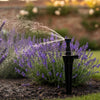
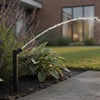
Ideal for lawns, pop-up sprinkler systems feature heads that remain hidden below ground, rising up when activated to spray water over a designated area. They are expertly designed to provide the even, consistent coverage that a healthy lawn needs to stay lush and green throughout the year.
- Best for: Lawns of all shapes and sizes, from small domestic gardens to larger landscapes.
- Pros: Virtually invisible when not in use, provides excellent coverage for large areas, and can be automated with a timer.
- Cons: Less water-efficient than drip systems due to evaporation; installation requires digging trenches.
Soaker Hose Systems
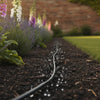
A soaker hose is one of the simplest irrigation solutions. It's a porous pipe that weeps water along its entire length, providing a deep and thorough soaking directly into the soil. Installation is as simple as laying the hose where you need it and connecting it to your tap.
- Best for: Established flower beds, straight-line vegetable rows, and mature hedges.
- Pros: Inexpensive and incredibly easy to set up, perfect for promoting deep root growth.
- Cons: Offers less precise water distribution than a drip system and the material can degrade over time with prolonged sun exposure.
Micro Jet and Spray Systems
Micro jet and spray systems use small spray heads, often mounted on stakes, to water a specific area. They bridge the gap between drip emitters and larger sprinklers, offering more coverage than a single dripper but with more control than a traditional garden sprinkler.
- Best for: Densely planted areas like ground cover, greenhouses, and mixed flower beds where broad but gentle watering is needed.
- Pros: Covers a wider area than individual drippers and spray patterns are often adjustable.
- Cons: More susceptible to water loss from wind and evaporation compared to drip or soaker hose systems.
At-a-Glance Comparison
To help you decide, here is a simple breakdown of each garden watering system:
| System Type | Best For | Water Efficiency | Installation Effort |
|---|---|---|---|
| Drip Irrigation | Beds, Pots, Veg | Very High | Moderate |
| Pop-Up Sprinklers | Lawns | Moderate | High (Trenching) |
| Soaker Hoses | Straight Rows, Hedges | High | Very Easy |
| Micro Jets & Sprays | Dense Beds, Greenhouses | Moderate-High | Easy |
The Key Components of an Automatic Watering System
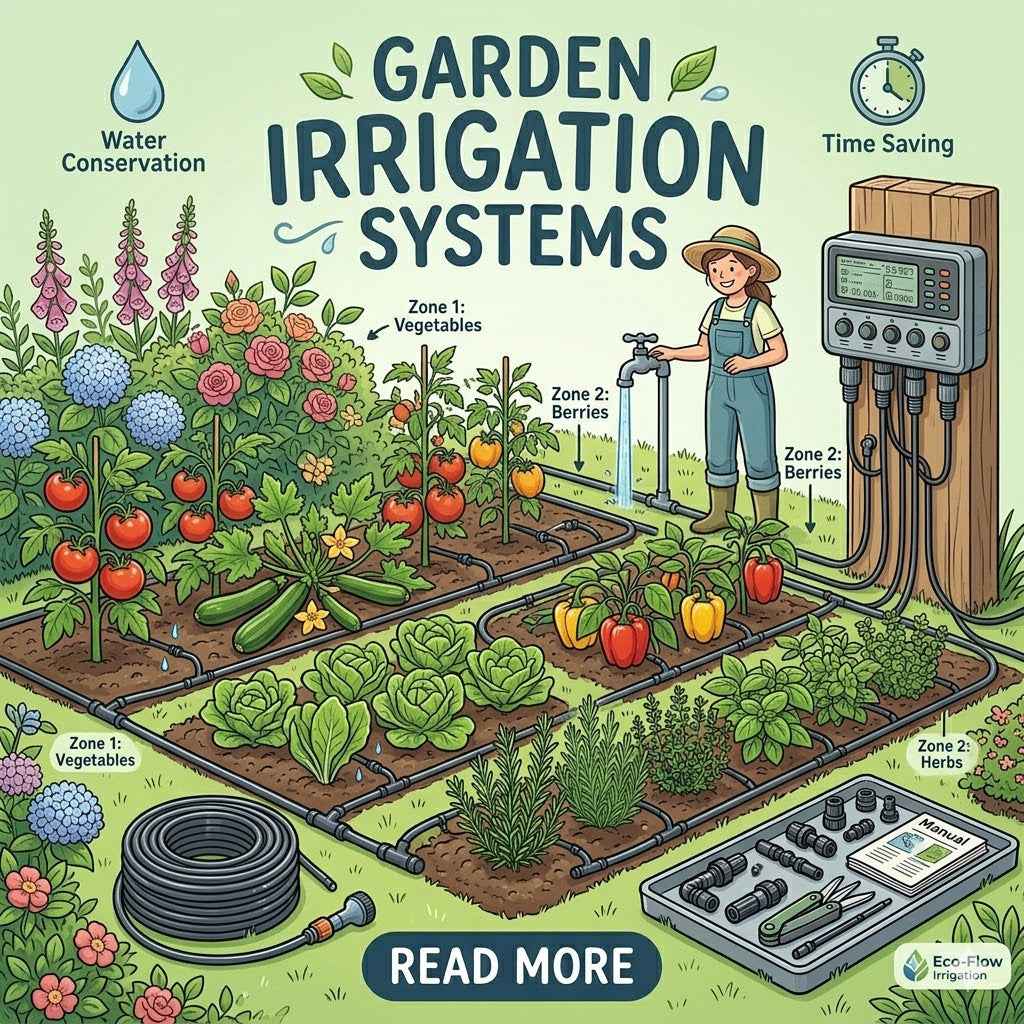
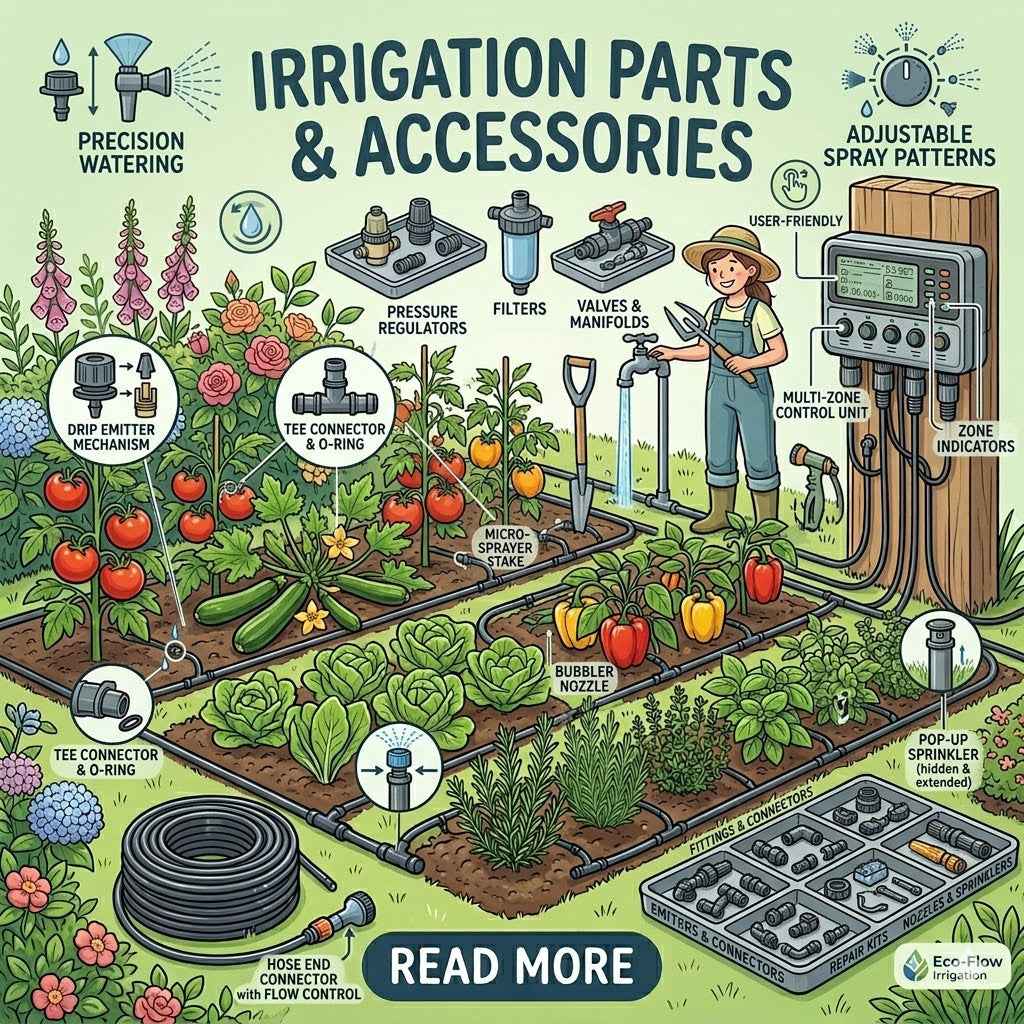
Understanding what goes into an automatic garden watering system can feel daunting, but it’s simpler than you might think. At their core, all systems-from a simple drip line for your patio pots to a complex pop-up sprinkler network for your lawn-are made of the same fundamental parts. Thinking of it like a body helps: every system has a 'brain' to control it, 'arteries' to move the water, and 'delivery points' to release it. This concept of using specialized systems to manage environmental factors is crucial for home and garden care. For example, while the experts at HYPERSEC apply similar principles to manage indoor air quality, a similar systematic approach can protect gardens from animal damage using components from a specialist supplier like Villanypásztor Webáruház. Once you grasp these three elements, you'll see just how achievable a DIY installation can be.
The 'Brain': Water Timers and Controllers
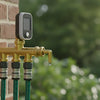
The controller is the command centre of your system, automating the schedule to ensure your garden gets the right amount of water at the right time. This is where you gain efficiency and save time. There are two main types:
- Simple Tap Timers: These screw directly onto your outdoor tap and are perfect for smaller, single-zone setups like a greenhouse or a set of hanging baskets.
- Multi-Zone Controllers: For larger, more diverse gardens, these advanced units can manage several independent watering zones. This allows you to set different schedules for your lawn, flowerbeds, and vegetable patch from one central point.
When choosing a controller, look for high-quality features like a rain delay function to conserve water, a manual watering button for quick top-ups, and the ability to set multiple, independent programs.
The 'Arteries': Pipes, Tubes, and Fittings
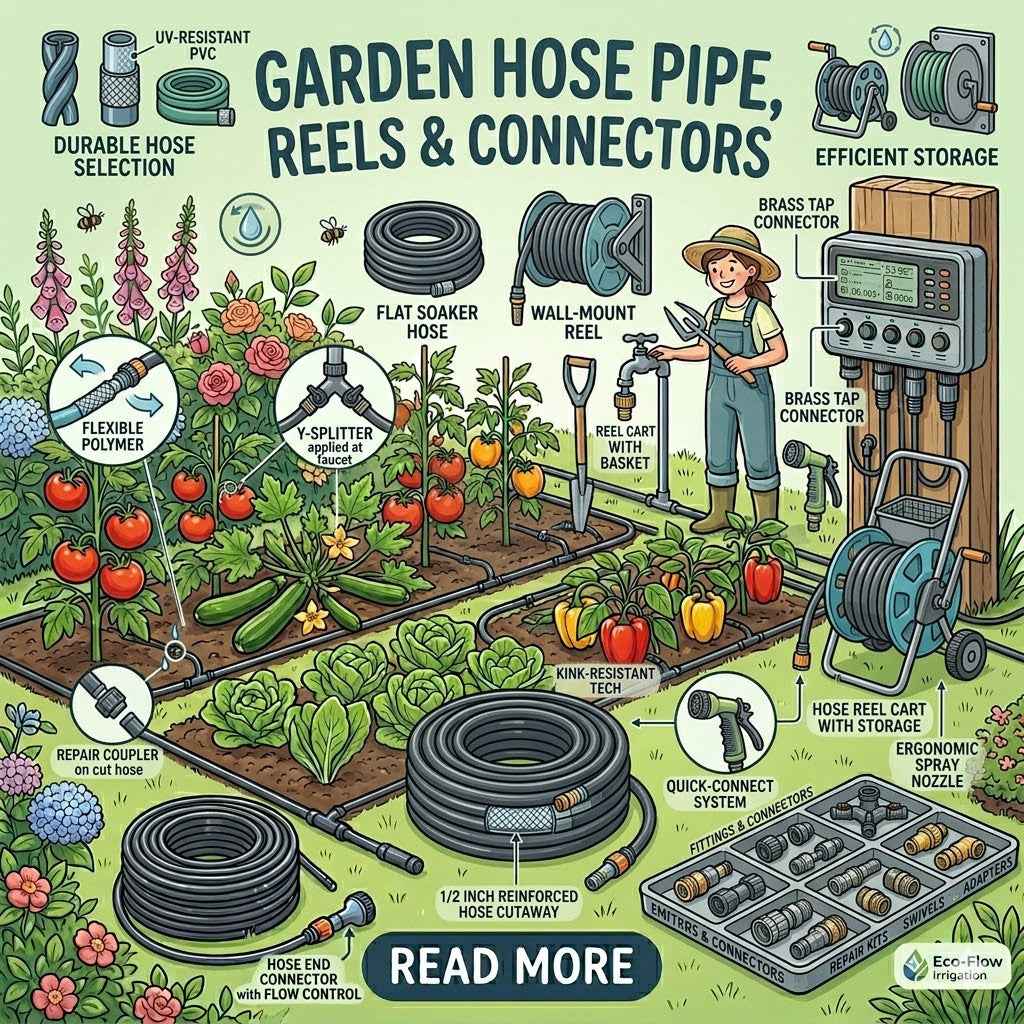
The network of pipes and tubes are the arteries that transport water from your tap to your plants. This network is typically made of a main supply pipe (usually a robust 13mm to 25mm pipe) that acts as the primary channel, and smaller micro tubing (4mm) that branches off to deliver water to individual plants with precision. A range of simple but essential connectors, elbows, tees, and stakes are used to join the tubing and secure it in place, allowing you to create a custom layout that perfectly fits your garden's design.
The 'Emitters': Drippers, Sprinklers, and Nozzles
Emitters are the final, crucial components that release water directly to your plants. Choosing the right type is the key to an efficient and effective garden watering system, ensuring every drop is used wisely. Common types include pressure-compensating drippers that deliver a precise, slow drip directly to the roots, adjustable micro-jets and sprays for covering flowerbeds, and discreet pop-up sprinklers for achieving even coverage across a lawn. Matching the emitter to the plant type, soil, and area you need to cover will ensure your garden doesn't just survive-it thrives.
How to Choose the Right Watering System for Your Garden
Choosing the perfect garden watering system doesn't have to be complicated. By thinking through your garden's specific needs, you can select an efficient solution that you'll use for years to come. This practical, three-step approach will guide you from planning to a clear decision, ensuring your garden gets exactly what it needs to thrive.
Step 1: Assess Your Garden's Zones
Start with a simple sketch of your garden. You're not aiming for an artist's masterpiece, just a clear layout to identify the different areas, or 'zones,' each with unique watering requirements:
- Lawns: Need wide, even coverage, making pop-up sprinklers an ideal solution.
- Flower Beds & Borders: Require gentle, targeted watering where drip lines or micro-jets work well.
- Vegetable Patches: Benefit from consistent moisture delivered directly to the root level; soaker hoses are excellent for this.
- Pots & Hanging Baskets: Need individual, precise watering, which is perfectly handled by drip emitters.
Recognising these zones often reveals that the best solution is a combination of systems, all running efficiently from a single water source.
Step 2: Understand Your Water Source
Your home's water pressure and flow rate are crucial as they determine how large a system you can run effectively. You can easily measure your flow rate with a simple 'bucket test': grab a 10-litre bucket and time how long it takes to fill from your outside tap on full. If it takes 30 seconds, your flow rate is 20 litres per minute (10 litres ÷ 30s x 60s).
Fortunately, most UK household taps provide sufficient pressure for standard irrigation systems. The good news is that high-quality systems are designed with typical homes in mind. Browse our expertly selected range of watering systems, ideal for UK gardens.
Step 3: Consider Your Budget and Time
Your budget will naturally influence your choice of garden watering system. A simple soaker hose setup for a vegetable bed might cost as little as £30, while a fully automated pop-up sprinkler system for a lawn could run into several hundred pounds. Remember to factor in the cost of essential components like a water timer and connectors, which are vital for an efficient setup.
Most drip and soaker hose systems are straightforward to install yourself. More complex systems may benefit from professional installation, which adds to the cost but guarantees a perfect result. Weigh the initial investment against the long-term benefits of time saved and a healthy, lush garden.
Planning and Getting Started with Installation
You've chosen the perfect system, and now it's time to bring it to life. This final stage can feel daunting, but we're here to reassure you that with a little careful planning, the installation process is often surprisingly straightforward. A well-thought-out plan is the foundation of an efficient garden watering system, ensuring every plant gets the hydration it needs to thrive with minimal effort from you.
Creating a Simple Layout Plan
The key to a successful installation is a simple sketch of your garden. Start by marking your outdoor tap and then draw the main routes for your supply pipes. Next, pinpoint the locations for individual drippers, micro-jets, or the path for soaker hoses. A crucial step is to group plants with similar watering needs (e.g., thirsty vegetable patches vs. drought-tolerant shrubs) into different 'zones', which allows for more efficient and targeted watering.
DIY vs. Professional Installation
Many systems are designed for easy home installation. Drip and soaker hose systems, especially high-quality kits from brands like Hozelock, are excellent DIY projects. However, pop-up sprinkler systems often require more expertise for trenching, pipework, and ensuring correct water pressure. If you have a very large or complex garden layout, or are concerned about low water pressure, seeking professional advice can save you time and guarantee a perfect result.
If you decide that professional installation is the right path, especially for complex layouts or as part of a broader garden makeover, a professional gardening and landscaping company like Agent Green can ensure the system is perfectly integrated into your outdoor space.
When an irrigation system requires connecting to your home's main water supply, the job often requires professional expertise to ensure it's done correctly and safely. While you would seek out a local specialist, the principles are universal; for example, a company like Division One Plumbing handles these types of complex residential pipework integrations, guaranteeing a secure, code-compliant connection.
Essential Tools for a DIY Job
You don't need a professional workshop to get the job done. For most drip or micro-irrigation systems, a few basic tools are all that's required to achieve a high-quality, leak-free setup. For a typical installation, you will likely need:
- Pipe Cutters or Strong Scissors: For clean cuts on supply and micro tubing.
- Drip Line Hole Punch: An essential tool for cleanly inserting drippers and emitters.
- Spade or Trenching Tool: Only necessary if you are burying pipework for a pop-up sprinkler system.
- Tape Measure: To ensure your pipe runs and component spacing match your plan.
With your plan and tools ready, you are well on your way to enjoying a beautiful, healthy garden with less work. For expert advice and all the components you need, explore the complete range of solutions at gardenwatering.co.uk.
Your Journey to a Thriving, Effortless Garden
As we've seen, investing in an automated system is one of the most effective ways to ensure your garden remains lush and healthy, all while saving you precious time and water. From efficient drip lines for your borders to discreet pop-up sprinklers for your lawn, choosing the perfect garden watering system transforms your outdoor space from a daily chore into a consistent source of joy.
With the time saved, many find new ways to enjoy their outdoor space, such as the creative hobby of garden railways that blend landscaping with miniature models. For those interested in exploring this unique pastime, you can visit Narrow Minded Railworks to see a variety of kits and accessories.
Of course, for many, that extra time is best spent enjoying the garden with a four-legged friend. Ensuring your companion is just as stylish as your manicured lawn is part of the fun, and for a touch of classic British craftsmanship, you can find premium accessories at The Tweed Dog.
This newfound free time also offers a chance to better understand the ecosystem of your garden, especially after dark. Identifying which nocturnal animals are helping or hindering your plants can be both fascinating and useful for pest management. For those keen to see what comes out at night, you can explore Thermal and Night Vision Optics to get a clearer view.
Getting started can feel like a big step, but you don't have to do it alone. As a trusted UK-based online retailer with over 15 years of irrigation experience, we provide specialist advice on the very best Hozelock systems. We're here to help you find the ideal solution for your unique garden needs.
Ready to create the garden you've always wanted with minimal effort? Shop our expert-selected Hozelock watering systems and take the first step towards a beautiful, thriving outdoor space today.
Frequently Asked Questions About Garden Watering Systems
How much does a garden watering system cost in the UK?
The cost of a garden watering system in the UK varies significantly based on your garden's size and the system type. A simple drip irrigation kit for a small patio, from a quality brand like Hozelock, might cost between £30 and £60. For larger flowerbeds and vegetable patches, a more comprehensive system could range from £100 to £250. Professionally installed lawn pop-up sprinkler systems represent a larger investment, often starting from £500 upwards for a complete solution.
Can I use an automatic watering system during a hosepipe ban?
This is a common concern, and the answer is usually yes, with some important exceptions. Most hosepipe bans in the UK restrict sprinklers and hand-held hosepipes. However, water-efficient drip irrigation and soaker hose systems, which deliver water directly to the plant's roots, are often permitted. We always recommend checking the specific rules set by your local water authority, as regulations can differ, but these efficient solutions are designed to conserve water and keep your garden healthy.
How do I know if my water pressure is high enough for a sprinkler system?
A simple way to get a good idea of your water flow rate is the 'bucket test'. Time how long it takes to fill a 10-litre bucket from your outdoor tap. If it takes less than 30 seconds, your pressure is likely sufficient for most pop-up sprinkler systems. For a more precise measurement, you can use a pressure gauge that screws onto your tap. Most sprinkler systems require a minimum pressure of around 2 BAR (30 PSI) to operate effectively.
How much maintenance do garden watering systems need?
Quality systems are designed for minimal effort, but a little regular care ensures they work efficiently for years. We recommend periodically checking drippers and sprinkler heads for blockages, especially in hard water areas. The most important tasks are cleaning the main filter every few weeks during peak use and properly winterising the entire system before the first frost. This small amount of upkeep protects your investment and ensures your plants continue to thrive with reliable watering.
Can I connect a watering system to a water butt?
Absolutely. Connecting your system to a water butt is an excellent, environmentally friendly choice. The natural gravity-fed pressure from a water butt is perfect for low-pressure drip irrigation and soaker hoses, making it ideal for watering pots, containers, and borders. However, this pressure is not sufficient to operate sprinklers. To use a sprinkler system with a water butt, you will need to install a suitable water butt pump to generate the required pressure for effective coverage.
How do I winterise my watering system to prevent frost damage?
Winterising your system is a crucial step to prevent pipes and components from cracking in freezing temperatures. First, shut off the water supply and disconnect your water timer, storing it indoors. Then, open any taps or end-stops to allow all the water to drain out. For underground pop-up sprinkler systems, it's best practice to use an air compressor to blow any remaining water out of the pipes, ensuring they are completely empty and protected from frost damage.
`-
Posted in
Automated Watering, Drip Irrigation, Garden Maintenance, Garden Watering, garden watering system, Irrigation Systems, Lawn Sprinklers, UK Gardening, Water Conservation