Hozelock Irrigation: The Complete Specialist Guide to Automatic Watering (2026)
Did you know that switching to a precision hozelock irrigation system can reduce your garden's water consumption by up to 90% compared to traditional hosepipes? It's a staggering figure, especially with the 2026 summer forecast showing an elevated risk of water restrictions across South East England and East Anglia. Most gardeners feel the same frustration of wasting hours every evening with a hose, only to worry about their plants dying the moment they go on holiday. You might feel overwhelmed by technical choices like 4mm versus 13mm pipes, but you aren't alone in wanting a simpler solution.
We're here to help you master the art of precision garden hydration with an expert breakdown of Hozelock systems. By the end of this guide, you'll have the confidence to design a custom setup that delivers a thriving, green landscape with zero daily effort and significantly lower water bills. We'll walk you through the essential components you need to build a leak-free system, from initial zone planning to long-term maintenance strategies that ensure your equipment lasts for years.
Key Takeaways
- Learn how to differentiate between supply pipes and micro tubes to create a high-performance hozelock irrigation network.
- Discover the specialist method for zoning your garden to provide tailored hydration for lawns, borders, and pots.
- Master the essential flow rate calculations that prevent pressure drops and ensure every plant receives consistent watering.
- Follow our step-by-step installation tips for connecting pressure reducers and emitters to build a system that lasts for years.
- Understand why partnering with a dedicated specialist provides the technical support you won't find at general hardware stores.
Understanding Hozelock Irrigation: Why It Is the UK’s Leading Choice
The history of the Hozelock brand is rooted in simple, effective engineering that changed how we look after our gardens. What began with the world's first plastic hose connector has evolved into a sophisticated range of intelligent watering ecosystems. Today, hozelock irrigation represents more than just a way to move water; it's a precision tool designed to protect your landscape while giving you back your evenings and weekends.
Modern gardeners face a difficult balance between maintaining a lush garden and managing a busy schedule. The "set and forget" philosophy of Hozelock automation solves this by taking the guesswork out of hydration. Whether you're at work or away on holiday, these systems ensure your plants receive the exact amount of moisture they need at the optimal time of day. This consistency is the secret to professional-grade plant health that manual watering rarely achieves.
To better understand this concept, watch this helpful video:
One of the most significant advantages of this system is its modular design. You don't need to install a massive network all at once. You can start with one of the Hozelock watering kits for a small patio and gradually expand it as your garden grows. This flexibility makes it a practical choice for both small urban spaces and sprawling country borders.
The Science of Water Efficiency
Precision is at the heart of water conservation. By delivering water directly to the root zones, hozelock irrigation can reduce water consumption by up to 90% compared to traditional hosepipes. This method virtually eliminates evaporation and runoff, which is vital given that England faces a projected daily water shortfall of five billion litres by 2050. Choosing a drip system isn't just about convenience; it's a responsible choice for the long-term health of our environment.
Hozelock vs. Standard Watering Methods
Traditional sprinklers are excellent for lawns, but they often waste water when used on flower borders by wetting foliage instead of roots. A dedicated Hozelock automatic watering system uses pressure-regulated drippers to ensure every plant receives a consistent flow, regardless of where it sits on the line. This prevents the common "blow-outs" seen in cheaper, unregulated systems. Every component is engineered specifically for the UK climate, ensuring your setup remains reliable through frost and heatwaves alike.
The Anatomy of a Hozelock System: Controllers, Pipes, and Emitters
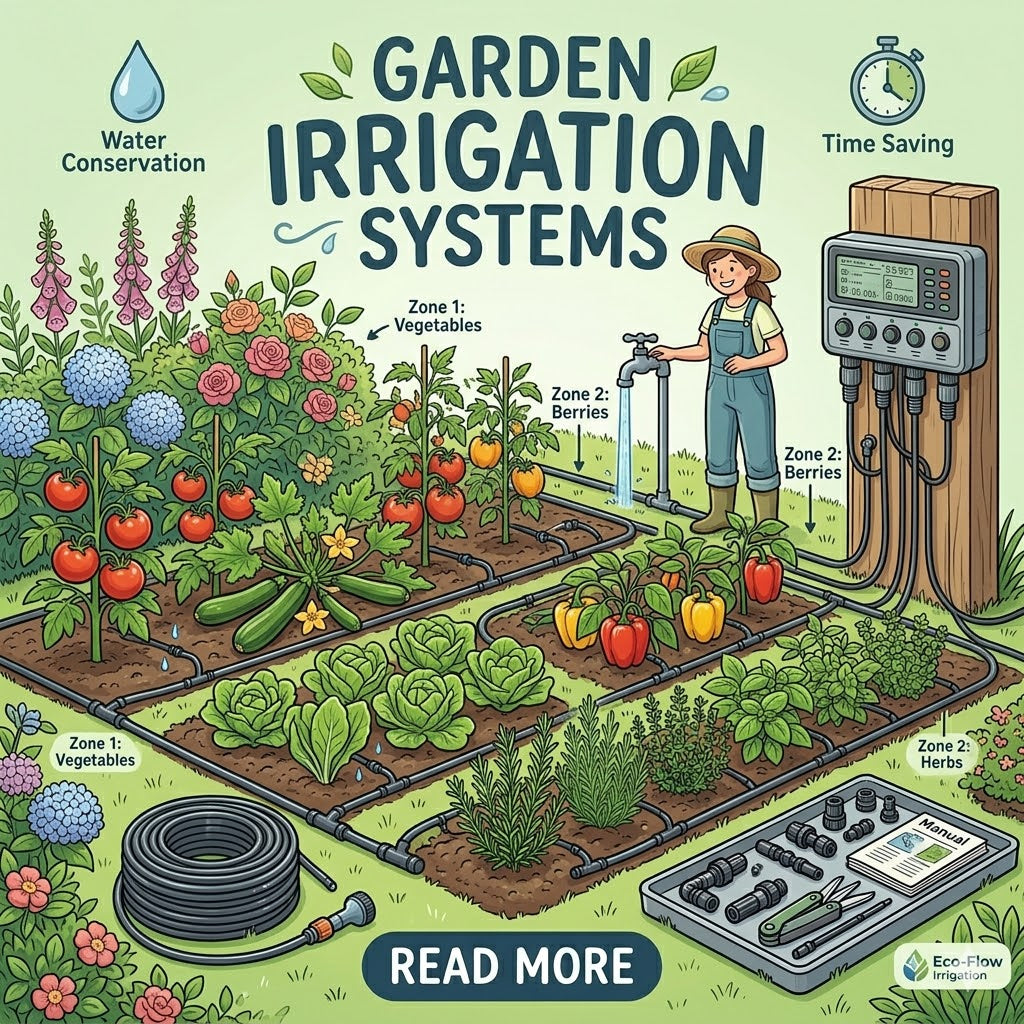
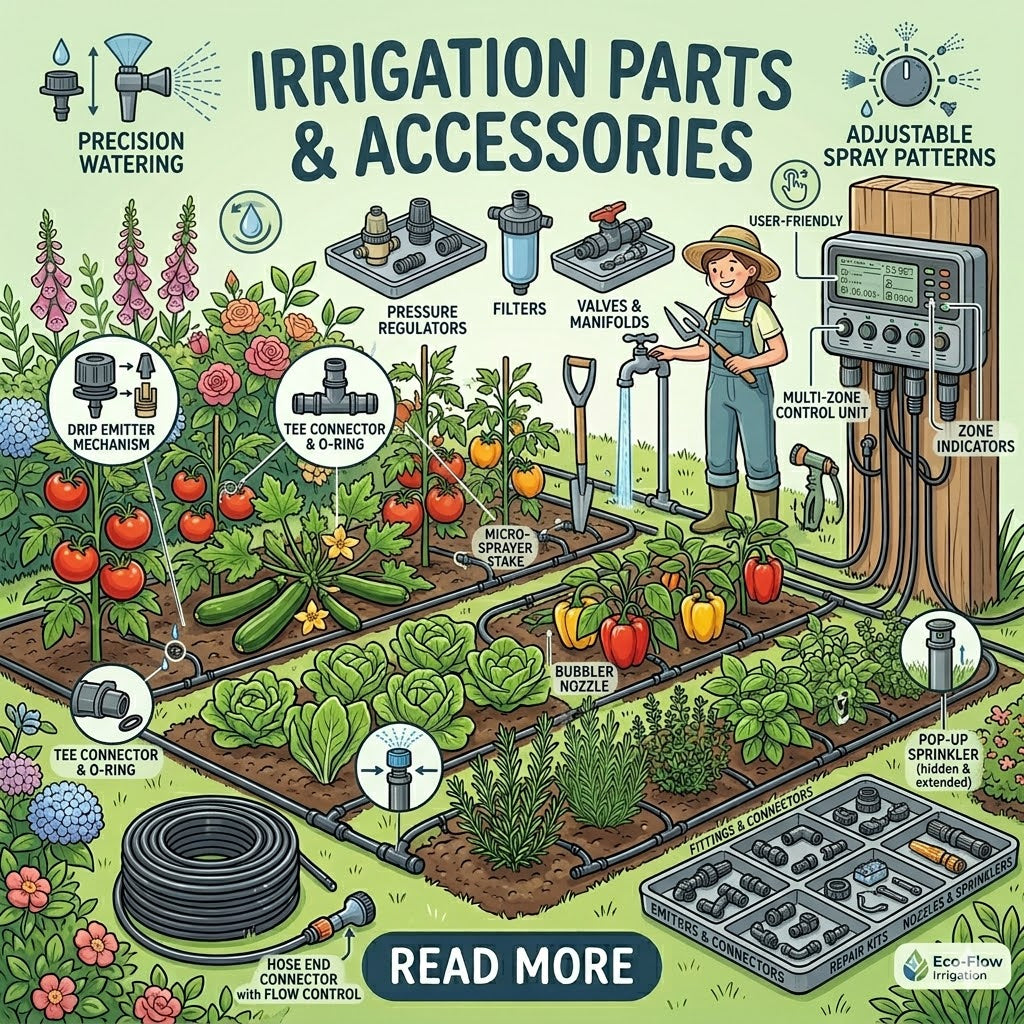
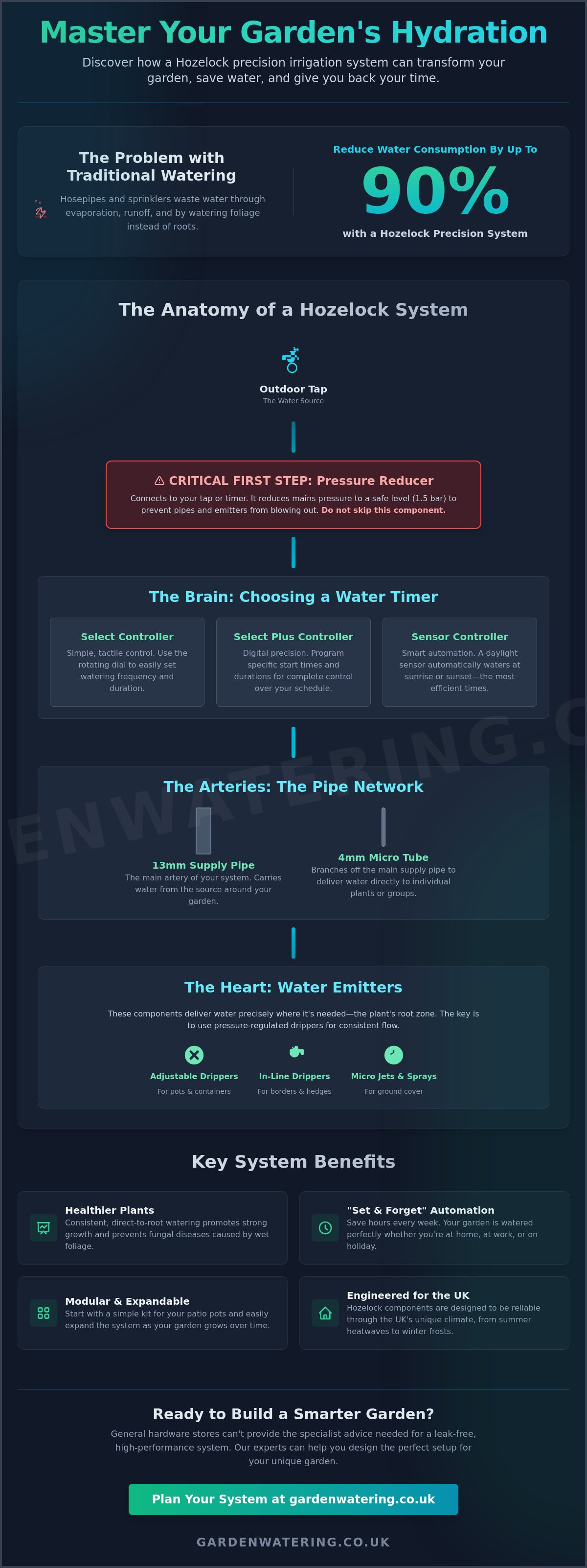
Understanding the hierarchy of your setup is the first step toward a leak-free garden. A hozelock irrigation system is a modular ecosystem where every part has a specific role to play. Think of it as a three-part structure: the brain that schedules the flow, the arteries that carry the water, and the heart that delivers it to your plants. Without the right balance between these components, you risk low pressure or wasted water.
The pressure reducer is the most critical starting point for any installation. It connects directly to your tap or timer, bringing the high pressure of the mains down to a steady level that won't blow your pipes apart. If you skip this step, your emitters will likely pop off the line during the first cycle. It's a small component that ensures the long-term reliability of your entire network.
Choosing the Right Hozelock Water Timer
Your water timer is the "brain" of the operation. If you prefer a simple, tactile interface, the Hozelock Select uses a rotating dial to set watering frequency. For more precision, the Select Plus offers a digital screen where you can program specific start times and durations down to the minute. This level of control is perfect for delicate flower beds that need exact moisture levels.
If you want a system that adapts to the environment, the Sensor Controller is an excellent choice. It uses a daylight sensor to trigger watering at sunrise or sunset, which are the most efficient times for plant absorption. For the modern gardener, cloud-based controllers allow you to adjust your schedule from a smartphone, providing peace of mind while you're away. You can explore our full range of garden irrigation water timers to find the right fit for your technical comfort level.
Pipeline Essentials: 13mm vs. 4mm
Designing your layout requires a mix of two pipe sizes. The 13mm supply pipe acts as your main artery. It's designed to carry high volumes of water over long distances without losing pressure. You should run this along the back of your borders or under the edge of your lawn to create the backbone of your hozelock irrigation network.
The 4mm micro-tube is the discreet branch that brings water from the main line to individual pots or hanging baskets. Because it's thinner, it's easier to hide behind foliage or along brickwork. To keep your garden looking professional, use Hozelock stakes to hold pipes in place and wall clips to secure lines against fences. This prevents tripping hazards and keeps the system nearly invisible.
Finally, the emitters are the "heart" of the system. You can choose between drippers for targeted root hydration, micro-jets for larger ground cover areas, or seep hoses for dense flower beds. Matching these to your specific plant types ensures every drop counts and your garden thrives with minimal waste.
Designing Your Layout: Tailoring Irrigation to Your Garden’s Needs
Designing an effective layout for hozelock irrigation requires a shift in perspective. Instead of seeing your garden as one big area, you must view it as a series of distinct zones. A lawn requires deep, infrequent soaking, while a vegetable patch needs consistent moisture during the growing season. By separating these needs into different zones, you ensure that no plant is overwatered or left thirsty. This professional approach prevents the common mistake of using a "one-size-fits-all" watering schedule for every plant type.
Calculating your flow rate is the technical foundation of a successful design. You can't simply add an infinite number of drippers to a single line. To check your capacity, time how long it takes to fill a 10-litre bucket from your tap. If it takes 60 seconds, your flow rate is 600 litres per hour. Most Hozelock drippers use 4 litres per hour, so you can safely calculate how many emitters your specific tap can support without a drop in pressure. This step is vital to avoid a system that performs poorly at the furthest points.
For the best performance, consider a "loop" layout rather than a "dead-end" line. By connecting the end of your supply pipe back to the start with a T-piece, you create equal pressure throughout the entire circuit. This ensures the last plant on the line receives the same amount of water as the first. When it comes to aesthetics, you can easily hide your pipes under a layer of mulch or pin them along the bottom of fence lines to keep the system invisible. You can find more inspiration for your specific garden layout in our design ideas and plans section.
Irrigation for Pots, Troughs, and Hanging Baskets
Containers dry out much faster than ground soil, making them the perfect candidates for automation. We recommend using adjustable drippers for this zone. These allow you to fine-tune the output, giving more water to a large trough and less to a small terracotta pot. For baskets with dense foliage, high-level micro-jets provide a gentle mist that reaches the roots without damaging delicate flowers. If you're growing climbers, ensure you plan for vertical growth by leaving extra slack in your micro-tubing to adjust the emitter height as the plant scales your trellis.
Watering Beds, Borders, and Vegetable Patches
For established hedge rows or dense borders, seep hoses are often the most efficient choice. These porous pipes allow water to "sweat" out along their entire length, providing a deep soak that encourages strong root development. In vegetable allotments, micro-sprays offer large-scale coverage that mimics natural rainfall, which is ideal for germinating seeds. If you're starting a new project, integrating Hozelock watering kits allows for a rapid, professional setup that you can refine as your planting plan evolves.
Installation and Long-Term Care: Ensuring System Longevity
Setting up your hozelock irrigation system is a straightforward process, but success depends on following a specific sequence. Begin by connecting your pressure reducer directly to the outside tap or your water timer. This component is non-negotiable; it protects your pipework from the high pressure of the mains. Once your 13mm supply pipe is laid out, use the Hozelock hole punch tool to create openings for your drippers. We always advise the "measure twice, cut once" rule here. Rushing this stage leads to misplaced holes that cause unnecessary leaks and waste water.
Before you fit the end caps and finish the installation, you must flush the system. Simply turn on the water and let it run through the open pipes for a minute. This clears out any plastic burrs or soil that entered the lines during the setup process. If you skip this, those tiny fragments will almost certainly block your drippers within the first week. Once the water runs clear, you can securely fit your end plugs and begin your automated watering schedule. Regular maintenance involves a quick visual check for blocked drippers or signs of algae build-up in transparent pipes.
Winterising Your Hozelock System
Protecting your investment during the colder months is essential for system longevity. You must remove your water timer from the tap before the first frost arrives. The internal valves are highly sensitive to freezing, and ice expansion can easily crack the plastic casing. Store your timer in a dry, frost-free environment like a shed or garage to keep the internal seals and O-rings in top condition through the winter.
Draining the supply lines is another vital step. Open the end plugs and allow any standing water to run out. This prevents pipe splits that occur when trapped water freezes and expands. Taking twenty minutes to do this in late autumn ensures your system is ready to go the following spring without the need for repairs. It's a simple habit that prolongs the life of your equipment significantly.
Troubleshooting Common Issues
Most performance problems have simple solutions. If you notice a leaking tap connector, check the health of the rubber O-ring first. These small seals can perish over time, but they are easy to replace. You can find a variety of replacement Hozelock connectors to ensure your fittings remain watertight. If you experience low pressure at the end of a long pipe run, you may have exceeded the maximum number of emitters for your flow rate, which we discussed in the design section.
In hard water areas, calcium deposits can eventually clog micro-jets. If you notice a reduced spray pattern, soak the affected emitters in a mild descaling solution or white vinegar to clear the build-up. Regular checks for grit will keep your hozelock irrigation network running efficiently for years. If you're ready to start your setup with all the right parts, explore our range of Hozelock watering kits to get everything you need in one professional package.
Why Specialist Advice Matters for Your Hozelock Setup
Choosing hozelock irrigation is a smart investment in your garden's future, but the success of your system relies on more than just the parts. At Garden Watering, we've spent 15 years focusing exclusively on these systems. This isn't just one product line among many for us; it's our entire specialty. When you buy from a general hardware store, you're often speaking to staff who move between paint and power tools. They might not understand the specific pressure requirements of a seep hose or the flow rate limits of a complex micro-jet setup. We provide the technical depth required to ensure your system performs perfectly from the first day.
A specialist understands the nuances that a generalist might miss. We maintain a deep-stock inventory that includes rare replacement parts and specific adaptors that high-street retailers rarely carry. If a seal perishes or you need to expand an older system, we have the components and the knowledge to help you find the exact match. This level of support prevents the frustration of stalled projects and half-finished installations, giving you the confidence that help is always available.
Our Commitment to Your Garden’s Success
Our goal is to help you avoid the expensive "trial and error" mistakes that many beginners face. By getting the design right the first time, you save money on components you don't actually need. We recommend using Hozelock watering kits as a reliable foundation for any project. These kits provide a proven starting point that you can then customise with our expert guidance as your garden evolves. We view every customer as a long-term partner. We're here to support you for the life of your garden, whether you're adding new borders or updating your timer technology to the latest cloud-based models.
Next Steps: From Planning to Planting
Ready to transform your outdoor space? You can start by browsing our design ideas and plans to see how different systems fit various garden layouts. If you have a particularly complex garden with multiple levels or mixed planting needs, we're here to assist. We can help you compile a custom component list tailored to your specific environment and water pressure. Taking the time to plan now ensures a thriving, water-efficient garden for years to come. Explore our full range of Hozelock Irrigation Systems today and take the first step toward effortless, professional garden care.
Transform Your Garden with Precision Watering
Transitioning to an automated system is the most effective way to ensure your landscape thrives while protecting vital water resources. By zoning your garden and matching emitters to specific plant needs, you've taken the first step toward a more sustainable and effortless outdoor space. You now understand how to build a reliable network that saves time and reduces waste, from the initial pressure reducer to the final winterisation steps.
Investing in a high-quality hozelock irrigation system is only half the journey; the other half is having a dedicated partner to support you. At Garden Watering, we bring over 15 years of expertise as exclusive Hozelock specialists. Our UK-based team provides the expert technical support you need to navigate complex designs or find rare replacement parts. We're committed to helping you build a garden that stays green and healthy for years to come.
Ready to start your project? Shop the full Hozelock Irrigation collection at Garden Watering today and enjoy the peace of mind that comes with specialist advice. Your perfect garden is just a few clicks away.
Frequently Asked Questions
Can I connect a Hozelock irrigation system to a water butt?
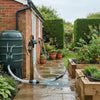
Yes, you can connect your system to a water butt, but you will likely need a Hozelock Water Butt Pump to provide the necessary pressure. Standard water timers require a minimum pressure to open their internal valves, which gravity alone cannot usually provide. Using a pump allows your hozelock irrigation network to function efficiently even when disconnected from the mains supply.
How many drippers can I run off a single Hozelock water timer?
You can typically run between 30 and 50 drippers on a single line, but this depends entirely on your tap's flow rate. As we mentioned in the design section, conducting a bucket test is the only way to be sure of your capacity. If you exceed your tap's limit, the plants at the end of the line won't receive enough water to survive.
Do I need a plumber to install a Hozelock automatic watering system?
What is the difference between a Hozelock seep hose and a drip line?
A seep hose is a porous pipe that "sweats" water along its entire length, making it ideal for established hedges and rows. A drip line uses specific emitters spaced at intervals to deliver water directly to the base of individual plants. While seep hoses are great for area coverage, a drip system provides the precision needed for pots and flower beds.
How long should I set my Hozelock timer to run each day?
Most gardens thrive with 10 to 20 minutes of watering twice a day, preferably at sunrise and sunset. This schedule reduces evaporation and allows the soil to absorb moisture deeply before the heat of the day. You should adjust these durations based on the season; during a summer heatwave, your vegetable patch may require longer cycles than your established shrub borders.
Will a Hozelock irrigation system work if I have low water pressure?
Yes, a hozelock irrigation system will work with low pressure, but you must limit the length of your pipe runs and the number of emitters. Using a "loop" layout helps maintain consistent pressure across the entire circuit. For extremely low-pressure areas, a dedicated pump can boost performance to ensure water reaches the furthest points of your garden.
Can I add a rain sensor to my existing Hozelock controller?
Yes, you can add a Hozelock Rain Sensor to most modern controllers in the range. The sensor plugs directly into a dedicated socket on the bottom of the timer and automatically bypasses the watering schedule when it detects rainfall. This prevents overwatering and ensures you don't waste water when nature is already doing the job for you.
What happens to my Hozelock system during a hosepipe ban?
During a standard hosepipe ban, most automatic irrigation systems connected to the mains are restricted. However, you can still use your system if it is fed from a water butt using a pump. It's important to check the specific exemptions provided by your local water company, as regulations can vary between regions during periods of drought.
`-
Posted in
Automatic Watering, DIY Gardening, Drip System, Garden Maintenance, Hozelock, hozelock irrigation, Irrigation, Water Saving, Watering Guide