Hozelock 13mm Irrigation Pipe: The Complete 2026 UK Guide to Supply Tubes
Why spend hours hand-watering your borders when a single, well-placed "spine" could save you over 30 hours of manual labour every British summer? We understand that dragging a heavy hose around is a chore that often leads to uneven growth and wasted water. It's common to feel overwhelmed by the technical side of things, especially when you're trying to distinguish between 4mm and hozelock 13mm irrigation pipe. You want a garden that thrives, but the fear of pipes kinking or bursting under mains pressure is a real concern for many UK homeowners.
At Garden Watering, we specialise exclusively in these systems. We've spent over 15 years helping people create professional, leak-free setups that stand the test of time. This guide will show you how to master your supply tube, ensuring your layout is water-efficient and fully compliant with UK regulations. We'll walk you through the essential steps to choose, lay, and maintain your 13mm pipe so you can finally enjoy a lush garden with minimal effort.
Key Takeaways
- Understand why LDPE material is the essential choice for creating a flexible, durable foundation that resists kinking and supports your entire watering system.
- Learn how UV-stable construction protects your investment from sun damage while ensuring your setup remains compliant with UK hosepipe ban regulations.
- Master your system’s hierarchy by discovering exactly when to install hozelock 13mm irrigation pipe as a main supply line versus using 4mm micro pipe for individual pots.
- Get professional installation tips on "warming" and securing your pipework to ensure a discreet, professional finish that follows the natural curves of your garden.
- Find the most cost-effective roll length for your project, from 15m to 50m, to ensure you have enough capacity for both current needs and future expansion.
Understanding Hozelock 13mm Supply Pipe: The Foundation of Automatic Watering
The hozelock 13mm irrigation pipe serves as the essential backbone of any professional garden setup. It acts as the primary conduit, carrying water from your external tap or water timer to various zones in your garden. Unlike a standard hose that you might pull across the lawn, this supply pipe is designed for permanent or semi-permanent installation. It provides a stable, high-volume flow that ensures every plant receives the correct amount of hydration without the pressure drops associated with smaller tubes.
Most high-quality systems rely on LDPE (Low-Density Polyethylene) for this main line. This material is chosen because it offers the perfect balance between structural integrity and flexibility. It is robust enough to handle the constant pressure of a modern drip irrigation system, yet supple enough to be guided around corners, garden buildings, or established flower beds. Using the right material prevents the kinks and splits that often plague DIY setups using inferior plastics.
To better understand how these components work together in a real garden setting, watch this helpful video:
It is a common mistake to confuse this supply pipe with a standard 1/2-inch garden hose. While they share a similar internal diameter, their functions are very different. A garden hose is built for high-pressure manual spraying and frequent reeling. The hozelock 13mm irrigation pipe is optimized for efficiency and discreet placement. It is often used as the primary component in hozelock watering kits because it can be easily hidden under a layer of decorative mulch or clipped along a fence line, providing a tidy solution that stays out of sight.
LDPE vs. Standard PVC: Why Material Choice Matters
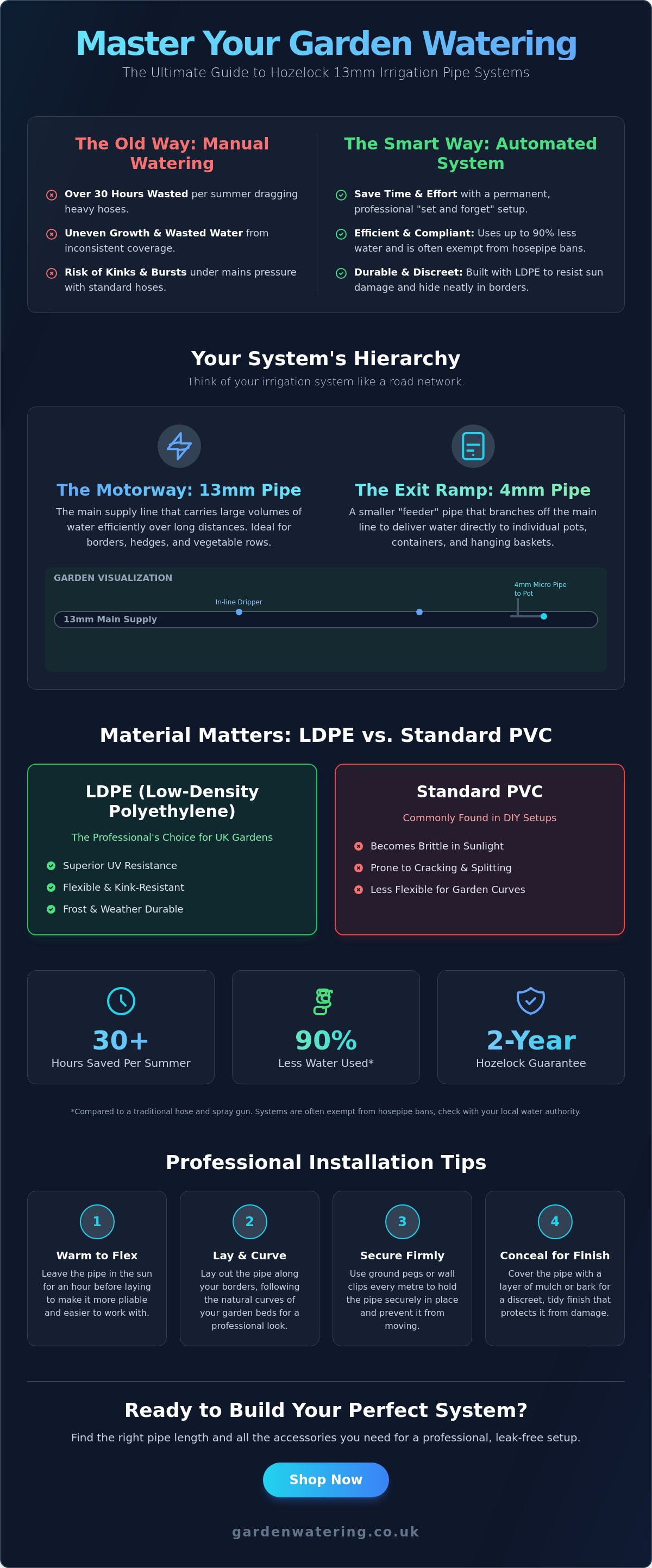
LDPE is the industry standard for UK gardens because of its superior UV resistance. Standard PVC pipes often become brittle and crack when exposed to the British sun and winter frosts over several seasons. Hozelock provides a 2-year guarantee on their 13mm pipe, reflecting its ability to withstand these environmental shifts. The material is rigid enough to maintain a consistent internal bore for maximum water flow, yet it remains flexible enough to navigate a 90-degree turn with the help of a few simple connectors.
Central Supply vs. Micro Pipe: Knowing the Difference
Think of the 13mm pipe as the "motorway" of your garden. It moves large volumes of water across long distances with very little resistance. In contrast, the 4mm micro pipe acts as the "exit ramp" or feeder, delivering water from the main line to individual pots or baskets. You don't always need micro pipe, though. For long hedges or vegetable rows, you can punch holes and install drippers directly "in-line" into the 13mm wall. This versatility makes it the most important component to get right during the planning phase.
Performance Features: UV Stability and Hosepipe Ban Compliance
When you invest in a hozelock 13mm irrigation pipe, you're buying more than a simple plastic tube. This pipe serves as the critical backbone of your garden system, designed to handle the 1,400 hours of sunshine the UK averages annually without becoming brittle. Its UV-stable construction ensures the polymer structure remains intact, preventing the cracking or "chalking" that often ruins cheaper, non-branded alternatives. This longevity is vital because most irrigation pipes are pinned directly to the soil surface where they face constant exposure to the elements.
Navigating UK Water Restrictions with Efficient Irrigation
During peak summer months, water companies like Thames Water or Severn Trent may implement Temporary Use Bans to manage local supplies. However, micro-irrigation systems are frequently exempt from these restrictions because they use up to 90 percent less water than a traditional hose and spray gun. According to RHS advice on irrigation, using targeted delivery systems like drippers or leaky pipes significantly reduces evaporation and runoff. By using the hozelock 13mm irrigation pipe as your main supply line, you create a closed, efficient system that delivers water precisely to the root zone. This efficiency doesn't just save you money on your water bill; it keeps your garden thriving when manual watering might be restricted by local authorities.
Durability in the British Climate
UV stability is the ability to resist polymer breakdown from sunlight. This black, opaque material does more than just resist the sun; it blocks out all light to prevent algae growth inside the tube. Without this protection, internal blockages would quickly starve your drippers and emitters of water. The pipe is also engineered to withstand the UK's fluctuating temperatures, from 30°C heatwaves to -15°C winter frosts. While the pipe itself won't crack in the cold, we recommend draining the system before the first hard frost to protect your automatic water timers and valves from expanding ice.
Maintaining a consistent pressure is critical for a drip system to work effectively across your entire garden. This 13mm pipe is designed to handle pressures up to 3 bar, which is the standard for most domestic UK outdoor taps. If your pressure is too high, it can pop fittings; if it's too low, the drippers at the end of your line won't emit water correctly. Using the correct diameter ensures your flow rate remains stable, allowing you to run lines up to 50 metres in length without significant pressure loss. If you're planning a new layout, you can browse our range of irrigation kits to find the perfect starting point for your project.
Designing Your System: When to Use 13mm vs 4mm Micro Pipe
Choosing the right pipe diameter is the most important decision you'll make when planning your garden layout. It's best to think of your irrigation setup as a network of roads. The hozelock 13mm irrigation pipe acts as the motorway, carrying large volumes of water at high pressure across long distances. In contrast, the 4mm micro pipe acts as the narrow driveway, delivering water to the final destination: the base of your plants. If you try to run your entire garden off 4mm pipe, the friction within the narrow tube will cause the water pressure to drop significantly before it reaches the end of the line.
For any garden larger than 10 square metres, a dual-pipe hierarchy is essential. This approach ensures that every plant receives the exact amount of water it needs to thrive. Without this structure, you risk over-watering plants near the tap while leaving those at the end of the garden parched. Properly designed systems using a 13mm main line are also excellent for hosepipe ban compliance, as these efficient drip systems are frequently permitted during restricted periods in the UK.
The 13mm Perimeter Strategy
The most effective way to layout your system is to run a hozelock 13mm irrigation pipe around the entire perimeter of your garden or along the back of your flower borders. This creates a high-capacity "Main Line" that serves as a constant water source for any area of the garden. It's the perfect solution for high-flow zones like vegetable patches or dense shrubberies where you might need to install several high-output drippers close together.
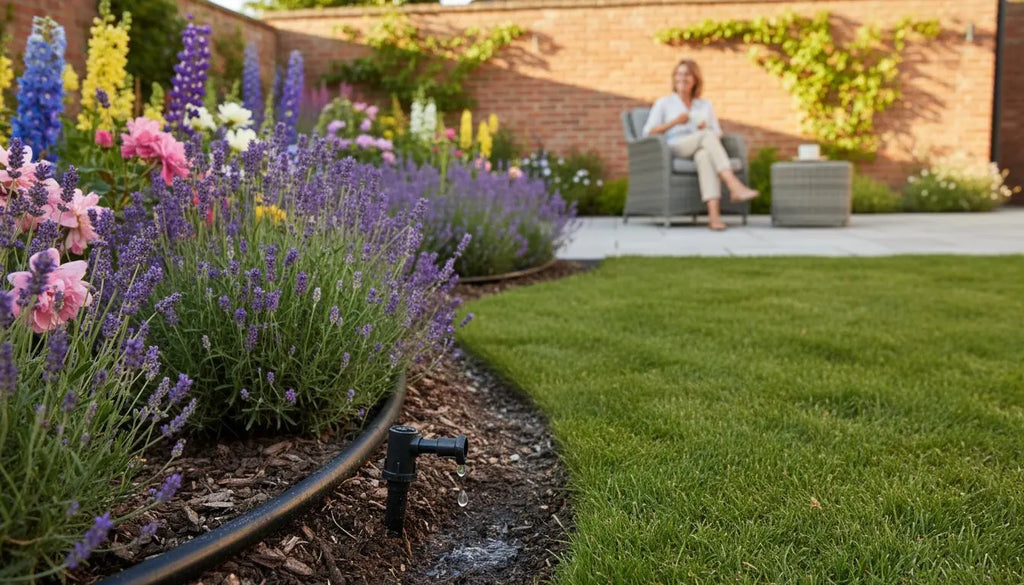
Aesthetics are often a concern for UK gardeners, but 13mm pipe is easy to conceal. You can pin it securely to the base of a fence or hide it under a 5cm layer of decorative bark or mulch. If you prefer a completely invisible look, it's safe to bury the pipe approximately 5cm deep in the soil. This keeps the main infrastructure out of sight while remaining accessible for future maintenance.
Transitioning to 4mm Micro Pipe
When you need to water individual pots on a patio or specific plants in a border, you'll need to "tap into" your main line. This is a simple process using a Hozelock hole punch to create a small, clean entry point in the 13mm tube. You then insert a 4mm connector to branch off with the smaller pipe. To maintain consistent pressure, don't exceed a 5-metre run of 4mm pipe from the main line. Any longer, and the flow rate will suffer.
Using high-quality Hozelock connectors for these transitions is vital to prevent leaks and ensure the system remains pressurized. If you're building a more extensive network with multiple zones, check out our Hozelock Automatic Watering System Guide to learn how to manage flow across different areas of your property.
Installation Guide: How to Lay and Secure Your 13mm Irrigation Pipe
Properly installing your hozelock 13mm irrigation pipe ensures your garden receives consistent hydration without the frustration of leaks or bursts. Follow these four steps to build a system that lasts for years.
- Step 1: Unroll and warm the pipe. Hozelock supply tubes arrive in tightly bound coils. If you try to lay it immediately, the "coil memory" will cause the pipe to spring back. Unroll the pipe on a flat surface like a lawn and let it sit in the sun for 30 minutes. This softens the low-density polyethylene (LDPE), making it much more pliable.
- Step 2: Lay the pipe along your route. Position the tube behind plants or along the edge of borders to keep it discreet. Avoid forcing the pipe into sharp 90-degree bends. If you need to navigate a tight corner, use a dedicated elbow connector rather than bending the pipe itself.
- Step 3: Secure the line. Use 13mm stakes to pin the pipe into the soil every 1 metre. On garden walls or fences, use 13mm wall clips with masonry nails. This prevents the pipe from shifting during temperature changes or when the water pressure kicks in.
- Step 4: Connect to the water source. Attach your pipe to an outdoor tap using a pressure regulator. Most UK domestic taps provide between 2 and 4 bar of pressure, but a Hozelock system operates best at 1.5 bar. A regulator prevents the connectors from popping off under high stress.
Essential Tools for a Professional Finish
Achieving a leak-free system requires the right equipment. We always recommend using a dedicated pipe cutter instead of a kitchen knife or hacksaw. A professional cutter provides a perfectly square, burr-free edge, which is vital for a watertight seal with your connectors. If you need to branch off to individual pots, the Hozelock Key Punch is the only tool you should use to pierce the hozelock 13mm irrigation pipe. It creates a precise hole that snugly fits 4mm joiners. For complex garden layouts with multiple levels or obstacles, incorporating irrigation fitting adaptors allows you to create custom angles without straining the main supply line.
Avoiding Common Installation Pitfalls
Kinking is the most common cause of system failure. A single kink creates a localized pressure spike that can eventually split the pipe or blow out a dripper. If your pipe feels too rigid to work with on a cold day, use the "hot water trick". Carry a thermos of hot water and dip the end of the pipe in for 30 seconds before pushing on a fitting. This softens the plastic, allowing the connector to slide in easily before the pipe shrinks back for a permanent, tight grip. Finally, never leave a line open. Ensure every branch ends with an end plug. This maintains the internal pressure required to push water through every dripper in the circuit.
Ready to automate your garden maintenance? Browse our range of Hozelock water timers to give your plants the exact amount of water they need, every single day.
Buying Guide: Selecting the Right Length and Accessories
Choosing the right amount of hozelock 13mm irrigation pipe is the difference between a seamless afternoon project and a frustrating second trip to the shop. Hozelock typically provides these rolls in three standard lengths: 15m, 25m, and 50m. While a 15m roll might suffice for a small courtyard or a line of patio pots, the majority of UK suburban gardens require at least 25m to cover the perimeter. Opting for a 50m roll is often the most cost-effective choice. It usually offers a lower price per metre and ensures you have enough spare material for future garden expansion or repairs.
If you're new to garden automation, Hozelock watering kits offer a brilliant starting point. These kits bundle the supply tube with essential drippers and connectors, removing the guesswork for beginners. Before you finalise your purchase, run through this essential component checklist:
- Connectors: You'll need T-pieces for branching off and elbows for sharp 90-degree corners.
- Stakes: These keep the pipe pinned securely to the soil, preventing it from shifting as the plastic expands and contracts in the sun.
- Water Timer: Automation is the key to a thriving garden. A timer ensures your plants receive water at dawn or dusk when evaporation is lowest.
Calculating Your Required Footage
Follow the "measure twice, buy once" rule by walking your garden with a tape measure along the exact path the pipe will take. It's easy to overlook vertical runs. If you're running the pipe up a wall for hanging baskets or over a pergola for climbing roses, you must add the height of the structure to your total. Always add 10% extra for "wiggle room." This small buffer accounts for unexpected obstacles and ensures you aren't left 1 metre short at the end of the installation.
Why Specialist Advice Matters
We've spent 15 years at Garden Watering focusing solely on irrigation solutions. We understand how the hozelock 13mm irrigation pipe behaves in different weather conditions and layouts. We're more than an online store; we're your trusted partner in creating a water-efficient landscape. You can browse our complete Hozelock watering collection to find the specific parts needed for your unique project.
Setting up your own irrigation system is a straightforward DIY task that yields professional results. With the right planning and high-quality components, you'll enjoy a lush, healthy garden with minimal effort. If you're unsure about which roll size or accessories fit your design, our team is always ready to provide the expert advice you can trust.
Start Building Your High-Performance Garden Irrigation System Today
Investing in a high-quality backbone for your garden pays off through healthier plants and significantly reduced water waste. By choosing hozelock 13mm irrigation pipe, you're installing a UV-stable system that meets UK hosepipe ban regulations while providing the essential flow to support your 4mm micro-drippers. We've spent over 15 years specialising exclusively in Hozelock systems, so we know that getting your supply tube layout right is the most important step in any installation. These durable tubes ensure your garden stays lush with minimal effort, even during the driest British summers. You'll find every component you need to complete your project right here, from secure stakes to leak-proof connectors. We offer free UK delivery on all orders over £50 to help you get your project moving quickly. Our team remains dedicated to providing the expert irrigation advice you can trust to make your garden thrive. Take the first step toward a more efficient, automatic garden by browsing our specialist range.
Shop the full range of Hozelock 13mm Supply Pipe and Accessories
Frequently Asked Questions
Can Hozelock 13mm irrigation pipe be buried underground?
Yes, you can bury Hozelock 13mm irrigation pipe, but it’s best kept at a shallow depth of 5cm to 10cm. This keeps your garden looking tidy while protecting the pipe from accidental spade damage during planting. Because it’s made from UV-stable LDPE, it doesn't need to be buried to survive the sun. If you bury it deeper than 15cm, you’ll find it difficult to locate for future maintenance or system expansions.
How many drippers can I run off a single 13mm supply pipe?
You can typically run up to 30 individual 4-litre per hour drippers from a single length of hozelock 13mm irrigation pipe. This limit ensures every plant receives consistent water pressure across the whole line. If you’re using 2-litre drippers, you can often increase this to 60 units. Always calculate your total water demand to ensure it doesn't exceed the 1,000 litres per hour maximum flow rate found at most UK domestic taps.
Is 13mm irrigation pipe the same as a standard garden hose?
No, 13mm irrigation pipe is different from a standard 12.5mm garden hose. While the diameters are similar, irrigation pipe is made from Low-Density Polyethylene (LDPE) which is designed to stay in place. Standard garden hoses are reinforced and flexible for frequent coiling. Using a garden hose for a permanent irrigation setup is inefficient because its thicker walls make it difficult to punch holes for drippers or attach 4mm micro-pipes.
Do I need a pressure regulator with 13mm Hozelock pipe?
You should always use a pressure regulator when connecting your hozelock 13mm irrigation pipe system to a UK mains tap. Most domestic taps deliver water at 3 to 4 bar, but these irrigation components work best at a steady 1.5 bar. Without a regulator, the high pressure can cause drippers to pop off or the pipe to burst at the joints. This simple addition ensures your system remains reliable and leak-free for years.
What is the maximum length of a 13mm supply pipe run?
The maximum recommended length for a single run of 13mm supply pipe is 50 metres. If your run exceeds this distance, you’ll likely notice a drop in water pressure at the furthest drippers. For larger gardens, it’s better to create a loop system or use a manifold to split the water into multiple 30-metre zones. This setup maintains even distribution so every plant stays healthy and hydrated throughout the summer.
Will Hozelock 13mm pipe fit other brands of irrigation fittings?
Yes, Hozelock 13mm pipe is compatible with most major brands that use standard 13mm internal diameter fittings. This includes quality components from manufacturers like Claber and Antelco. It’s a versatile choice for UK gardeners who want to mix and match parts for a custom setup. Just ensure you’re using 13mm barbed fittings or compression joints to create a leak-proof seal that can withstand typical garden watering pressures.
How do I stop my 13mm irrigation pipe from kinking?
You can prevent kinking by unrolling the pipe in a straight line and letting it sit in the sun for 20 minutes to soften. This makes the LDPE more pliable and easier to work with during installation. Use plastic ground stakes every 1 metre to pin the pipe securely into position. If you need to make a sharp 90-degree turn, don’t bend the pipe; use a dedicated elbow fitting to maintain a smooth water flow.
Is the 13mm supply pipe safe to use during a hosepipe ban?
Under most UK water authority guidelines, drip irrigation systems using 13mm supply pipe are often exempt from temporary use bans. These systems are 90% more efficient than manual watering because they deliver water directly to the roots. However, you must check with your specific water provider, such as Southern Water or Severn Trent, as local rules vary. Most exemptions require the system to be fitted with a timer or a soil moisture sensor.
`-
Posted in
hozelock 13mm irrigation pipe