
Pop-Up Lawn Sprinklers: The Complete 2026 Guide to Invisible Irrigation
What if your lawn could stay perfectly green all summer without you ever lifting a hose or seeing a single piece of equipment? Most UK gardeners are tired of the daily struggle with tangled hoses and the frustration of seeing brown patches where the water just didn't reach. It's exhausting to move manual sprinklers every evening; it's even worse when wind drift wastes water on your patio instead of your grass.
We understand that the technical side of irrigation can feel daunting, but achieving a professional result is simpler than you might think. This guide will show you how to design and install a professional-grade system using pop up lawn sprinklers that stays hidden under the turf. You'll learn how to maintain a lush, healthy garden with zero manual effort and an invisible setup that won't interfere with your mowing routine. We'll walk through selecting the right Hozelock components, managing your water pressure, and creating an efficient layout that complies with UK standards for the 2026 season.
Key Takeaways
- Understand how invisible irrigation eliminates trip hazards and the daily chore of moving hoses, allowing for effortless lawn mowing.
- Learn the functional differences between spray and rotor heads to ensure you choose the right technology for your lawn's specific size and shape.
- Master the 'head-to-head' layout principle to design a system of pop up lawn sprinklers that delivers uniform coverage across every inch of grass.
- Use the simple 60-second 'Bucket Test' to accurately measure your flow rate and water pressure, ensuring your system operates at peak performance.
- Discover why Hozelock components are the preferred choice for UK DIYers seeking professional results with straightforward, reliable installation.
What are Pop-Up Lawn Sprinklers and Why Choose Them?
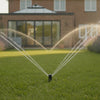
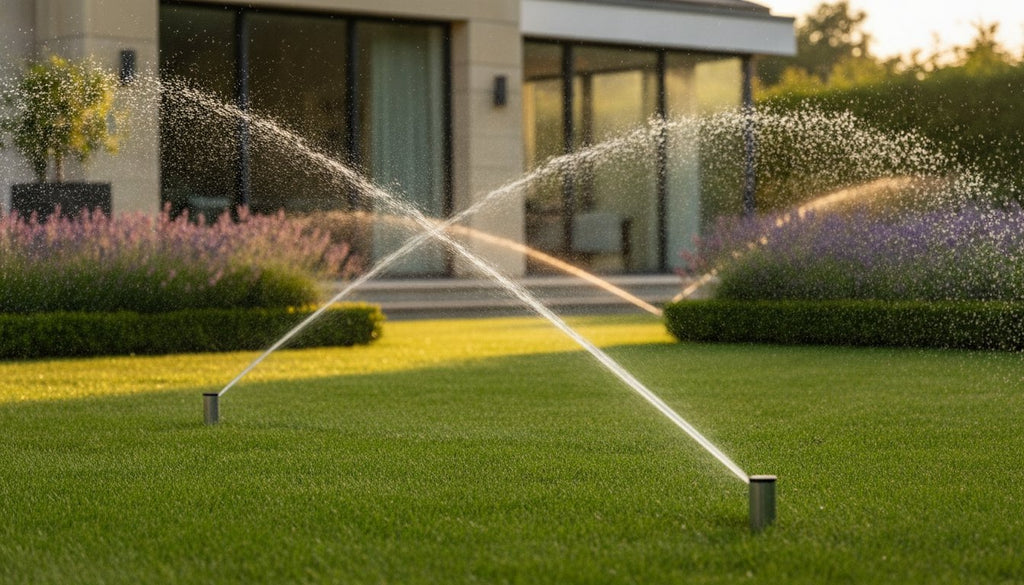
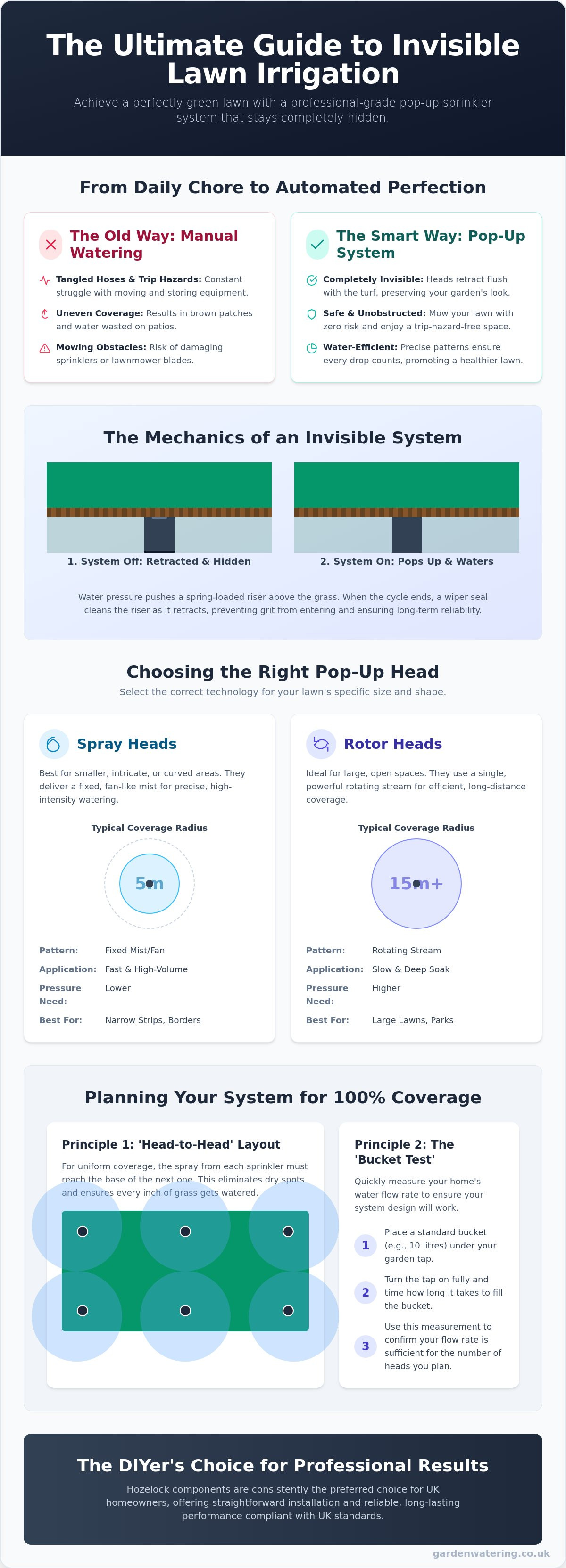
To understand the benefits of modern irrigation, we should first answer a basic question: What are irrigation sprinklers? In the context of a professional garden setup, pop up lawn sprinklers are specialized heads installed entirely beneath the soil surface. They remain flush with the turf when the system is off, making them virtually invisible. Once your water controller triggers a cycle, the internal water pressure forces the riser to emerge and distribute water across the grass. When the cycle ends, they retract back into their protective housing.
This "invisible" design offers a significant advantage for UK homeowners who value a tidy, safe garden. You won't have to dodge trip hazards or manually move heavy hoses every time you want to enjoy your outdoor space. Most importantly, you can mow your lawn without the constant worry of catching a sprinkler head with your mower blades. It's a "set and forget" solution that keeps your garden functional and beautiful.
A functional garden isn't just about the greenery; it's also about the utilities that power your outdoor lifestyle. For those who enjoy outdoor cooking or heating, specialized delivery services like Gas2Home allow you to explore Retail Sales and Exchange Fees for LPG Gas Cylinders to ensure your equipment is always ready for a weekend gathering.
To better understand how these systems look and function in a real-world setting, watch this helpful video:
The Mechanics of a Pop-Up System
The operation of a pop-up head relies on clever hydraulic engineering. As water enters the body, it pushes against a spring-loaded riser, forcing the nozzle above the grass line. A critical component is the "wiper seal." This flexible ring cleans the riser as it retracts, preventing grit or soil from entering the internal mechanism. This feature is vital for the longevity of pop-up lawn sprinkler systems, especially in variable UK weather conditions.
Pop-Ups vs. Traditional Sprinklers
The primary difference between these and surface-mounted options is distribution uniformity. Traditional oscillating sprinklers often suffer from wind drift or puddling near the base. In contrast, underground systems use precise spray patterns that deliver water exactly where it's needed. This efficiency reduces water waste and ensures every inch of your lawn receives a consistent soak. For a deeper look at how these compare to other methods, read our Lawn Sprinkler Guide 2026.
Longevity is another key factor. Because the heads stay underground, they aren't exposed to the degrading effects of UV rays or extreme temperature shifts when they aren't in use. This protects the plastic components from becoming brittle, ensuring your investment lasts for many seasons. By choosing an automated underground system, you save time and water while protecting the long-term health of your landscape.
Types of Pop-Up Heads: Rotors vs. Sprays
Choosing the right hardware is the most critical step in planning your irrigation. While all pop up lawn sprinklers might look similar when they're tucked underground, the way they distribute water varies significantly. Most UK gardens require a combination of spray heads and rotors to achieve total coverage without wasting a drop.
Fixed spray heads are the standard choice for smaller, intricate areas. They produce a high-intensity mist that typically covers a radius of up to five metres. Because they apply a lot of water quickly, they're perfect for narrow strips of grass or curved border edges where precision is vital. You can easily adjust the arc from 0 to 360 degrees to ensure you aren't watering your fence or driveway. Sprays require higher flow rates but operate effectively at lower pressures compared to their rotor counterparts.
For larger expanses of turf, rotor heads are far more efficient. Instead of a constant mist, they use a concentrated, rotating stream of water to reach distances of 15 metres or more. This design makes them much more resistant to wind drift, which is a common problem in more exposed UK gardens. Their slower application rate allows the soil to absorb moisture more effectively, reducing runoff.
If you have a very large, open space, you might consider impact sprinklers. These are the classic "tick-tick" models that many people associate with large estates. They're incredibly robust but are generally louder than modern gear-driven options. Regardless of which head you choose, you must understand "matched precipitation rates." This ensures that every part of your lawn receives the same amount of water, regardless of the sprinkler type used in that zone.
Implementing these water-saving strategies for home lawns helps maintain a healthy landscape while keeping your utility bills in check. Proper planning prevents the "brown patch" problem that occurs when different heads apply water at uneven speeds.
If you're ready to start mapping out your garden, you can explore our range of pop up lawn sprinklers to find the perfect fit for your specific layout.
When to Use Fixed Spray Heads
Fixed sprays excel in tight spots. They're the best tool for detail work, such as watering around a patio or along a winding path. Since they don't rotate, they provide a constant curtain of water that quickly saturates the soil. This makes them ideal for ensuring that smaller grass sections don't dry out during a heatwave.
The Power of Gear-Driven Rotors
Rotors are the workhorses of the irrigation world. They provide incredible flexibility, allowing you to adjust both the radius and the arc to fit rectangular or square lawns perfectly. When you're looking for a quiet and durable solution, gear-driven rotors are a silent, reliable mechanism for 2026 systems. They offer the proficiency needed for large-scale performance without disrupting the peace of your garden.
Planning Your Layout for 100% Coverage
Planning is the foundation of a successful irrigation project. Without a clear map, you risk wasting water or leaving thirsty patches that ruin your lawn's aesthetic. When installing pop up lawn sprinklers, your primary goal is uniform distribution. This begins with the "Golden Rule" of head-to-head coverage. It means that the spray from one head must reach the base of the next one. If you only aim for the edges of the spray to meet, the area in the middle receives significantly less water. This leads to uneven growth and those frustrating brown spots that appear during dry spells.
Start by measuring your lawn accurately with a long tape measure. Plot these dimensions on graph paper or use a digital design tool to get a bird's-eye view. It's best to mark your corners first. These are the most difficult areas to cover. Starting here ensures you don't end up with "dead zones" at the edges of your property. Once the corners are set, fill in the perimeter and then the centre with your pop up lawn sprinklers. Be sure to account for obstacles like garden buildings, mature trees, or stone paths that shouldn't be sprayed. For more inspiration on layouts, see our Design Ideas and Plans.
Avoiding the 'Brown Patch' Trap
Many DIYers assume that 50% overlap is enough. In reality, that often results in poor coverage in the gaps. When comparing spray heads and rotors, you'll see their radius dictates your spacing. Square spacing works for rectangles, but triangular spacing is often better for irregular UK gardens. It ensures better overlap in the centre, preventing those tell-tale yellow circles from forming in the height of summer.
Zoning Your System
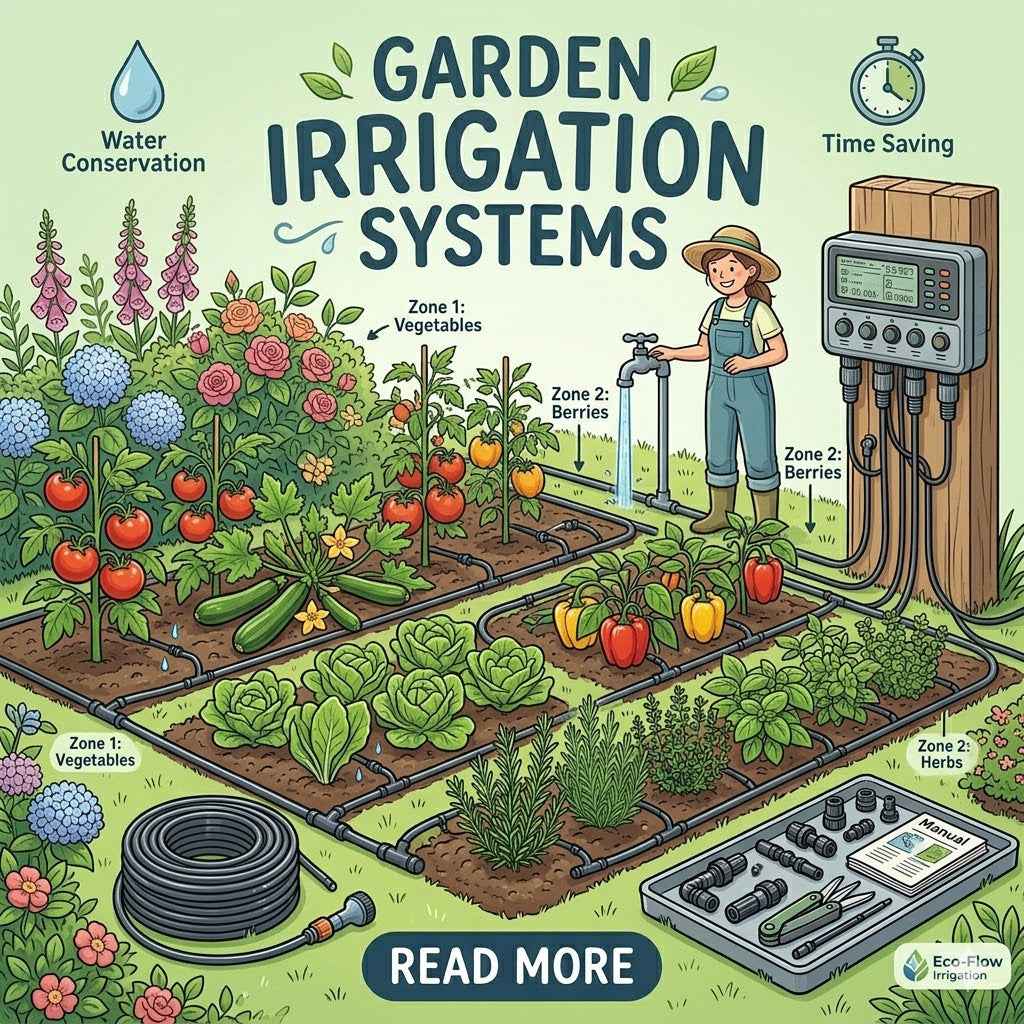
Don't mix rotors and sprays on the same pipe line. They apply water at different speeds, meaning one part of your lawn will be flooded while the other stays dry. To manage your pressure, divide your lawn into "zones." This ensures each head has enough power to pop up correctly and maintain a steady stream. Our Hozelock Automatic Watering System guide offers more support for these technical DIY checks.
Water Pressure and Flow: The DIY Technical Check
Knowing your water's performance ensures your pop up lawn sprinklers actually emerge from the ground when the timer clicks on. Many DIY projects fail because the water source simply doesn't have the "strength" to power every head in a single circuit. To avoid this, you must understand two specific numbers: static pressure (measured in Bar) and flow rate (measured in Litres Per Minute, or LPM). Think of pressure as the power behind the water and flow as the actual volume available to fill your pipes.
Calculating how many heads your system can support is a straightforward process. Each sprinkler head has a specific "demand" based on its nozzle size. By comparing your total available LPM to the combined demand of your chosen heads, you can determine if your system will function correctly. If the demand exceeds your supply, your sprinklers will only partially rise, or the spray distance will be significantly reduced.
The 60-Second Flow Rate Test
To find your LPM, you only need a 10-litre bucket and a stopwatch. Turn your outside tap on fully and time how long it takes to fill the bucket to the 10-litre mark. To get your flow rate, divide 600 by the number of seconds it took to fill the container. For example, if it takes 20 seconds, your flow rate is 30LPM. A flow rate under 15LPM usually requires multiple zones. For the most accurate results, perform this test at the time of day you actually plan to water, as local demand can affect your home's pressure.
Pipe Sizing for Minimum Friction Loss
The pipe you choose acts as the "arteries" of your irrigation system. Most UK domestic setups use either 20mm or 25mm MDPE pipe. While 20mm is often cheaper and more flexible, 25mm pipe is superior for longer runs because it reduces "friction loss." This is the pressure lost as water travels against the internal walls of the pipe. If your pipe run is too long or too narrow, the last sprinkler in the chain will struggle to perform. To maintain a professional standard and prevent pressure drops, use secure Irrigation Fitting Adaptors for every connection in your network.
If your initial tests show low pressure, you have two reliable solutions. You can divide your lawn into smaller zones that operate independently, or you can install a dedicated water pump to boost the supply. Both methods ensure your garden remains lush without overstretching your home's plumbing.
Ready to start your project? You can browse our full range of Hozelock Watering Kits to find a system that matches your garden's specific flow requirements.
Hozelock Pop-Up Solutions: Expert Recommendations
For UK homeowners, Hozelock remains the most accessible and reliable brand for DIY irrigation. While commercial systems often require specialized tools, Hozelock components are designed to work with the standard fittings already found in your garden. This makes installing pop up lawn sprinklers a manageable task rather than a daunting engineering project. You get professional results without the need for a contractor.
Our top pick for small to medium rectangular lawns is the Hozelock Pop-Up Sprinkler. It provides precise coverage without the complexity of professional-grade rotors. To achieve total automation, we recommend pairing your hardware with Garden Irrigation Water Timers. These allow you to schedule watering for the early morning when evaporation is lowest and water pressure is usually at its peak. Using Hozelock Watering Kits as your foundation ensures all your connectors and pipes are fully compatible from day one.
The Hozelock Advantage
Hozelock systems excel because of their seamless compatibility with standard UK garden hose fittings. You don't need to hunt for obscure adaptors to get your system running. These products are also built for longevity, showing impressive durability in UK frost conditions when properly winterised. By choosing these systems, you gain access to our 15 years of expert irrigation advice to help you troubleshoot any layout challenges.
Installation Tips for a Seamless Lawn
To install your pipework with minimal disruption, use the 'V-Trench' method. Cut a V-shaped wedge into your turf with a sharp spade and peel it back carefully. Lay your pipe at the bottom, then replace the turf once the line is secure. It's vital to set your pop up lawn sprinklers so the top of the head is slightly below the soil level. This simple check protects your equipment from mower damage and keeps the system completely invisible when not in use.
Ready to transform your garden? Shop our full range of Pop-Up Lawn Sprinklers to start building your professional-grade system today.
Transform Your Garden With Professional Irrigation
Achieving a lush, healthy lawn doesn't have to be a daily chore. By choosing an invisible system, you've seen how easy it is to maintain 100% coverage without the hassle of moving hoses or dodging trip hazards. Remember that the success of your project depends on accurate planning and the simple "Bucket Test" to verify your water pressure. These technical steps ensure that your pop up lawn sprinklers perform reliably throughout the peak of summer.
As specialist Hozelock retailers with over 15 years of irrigation expertise, we're here to support your DIY journey. Our UK-based team provides the technical knowledge you need to select the right components and design a layout that lasts for years. You don't have to navigate these choices alone; we're dedicated to being your expert partner in creating a sustainable, beautiful landscape.
Explore our expert-selected Pop-Up Sprinkler Systems to find the perfect foundation for your garden. Start your installation today and enjoy a perfectly watered lawn for many seasons to come.
Frequently Asked Questions
Do I need a professional to install pop-up lawn sprinklers?
You don't need a professional to install these systems because modern components are designed specifically for DIY enthusiasts. Most UK gardeners can complete a full installation over a weekend using standard tools and modular connectors. We provide all the technical support and planning advice required to help you achieve a professional-grade result without the high cost of hiring a contractor.
How deep should I bury pop-up sprinkler pipes in the UK?
You should typically bury your pipework at a depth of 15cm to 25cm. This depth provides enough protection from garden forks and aeration equipment while keeping the sprinkler heads flush with the turf. Using the "V-trench" method allows you to lay the pipes with minimal disruption to your existing grass, ensuring the lawn recovers quickly after the installation is finished.
Will my water pressure be high enough for a pop-up system?
Most UK residential properties have sufficient pressure to run a pop-up system, provided you divide the layout into manageable zones. You can easily verify your home's performance by performing a 60-second "Bucket Test" at your outside tap. If your flow rate is lower than required for a full circuit, splitting the system into two or three independent zones ensures each head has enough power.
Can I run pop-up sprinklers from a garden hose?
You can run pop up lawn sprinklers from a standard garden hose for temporary setups, but we recommend using MDPE pipe for permanent underground installations. Hosepipes can kink or perish over time when buried, which leads to leaks and pressure drops. Using a dedicated 20mm or 25mm pipe ensures a more reliable water flow and provides a professional finish that stays hidden for years.
How many pop-up sprinklers can I run off one tap?
The number of sprinklers you can run depends on your home's flow rate and the specific water demand of each head. On average, a standard UK outside tap can support between two and four heads per zone. By checking the Litres Per Minute (LPM) available at your tap, you can accurately calculate how many units can operate simultaneously without losing their spray distance.
What happens to pop-up sprinklers in the winter?
Pop-up sprinklers remain underground during the winter, but you must drain the system to prevent frost damage. In the UK, water left in the pipes can freeze and expand; this can crack the plastic housings or fittings. You can easily winterise your system by using a manual drain valve at the lowest point of your pipework or by blowing out the lines before the first hard frost.
How do I adjust the spray pattern on a pop-up head?
You can adjust the spray pattern by turning the adjustment screw or ring located on the top of the sprinkler head. Most models allow you to change the arc from a narrow 40 degrees to a full 360-degree circle. You can also adjust the radius to shorten the spray distance, ensuring the water stays on your grass and doesn't wastefully soak your garden paths or patio.
Are pop-up sprinklers allowed during a hosepipe ban?
No, pop up lawn sprinklers are typically restricted during a formal hosepipe ban because they are connected to the mains water supply. However, you can still use your system if it's fed by a dedicated pump and a large rainwater harvesting tank. It's always best to check the specific wording of the restriction from your local UK water provider, as rules can vary depending on the drought severity.
`-
Posted in
Automatic Sprinklers, DIY Irrigation, Gardening UK, Hozelock, Irrigation Systems, Lawn Care, pop up lawn sprinklers, Pop Up Sprinklers, Water Management