Lawn Sprinkler Guide 2026: How to Choose the Perfect Sprinkler for Your Garden
Are you tired of looking out at a lawn with frustrating brown patches, knowing you've spent hours with a garden hose trying to keep it green? The constant worry about wasting water-and the rising bills that follow-combined with the confusing array of technical terms can make choosing the right lawn sprinkler feel like an overwhelming task. It’s a common problem, but one with a straightforward solution you can trust.
As dedicated irrigation specialists, we believe everyone deserves a lush, healthy garden without the hassle. This expert 2026 guide is designed to give you the confidence to select the perfect sprinkler for your needs. We will walk you through the different types available, from oscillating and rotating to discreet pop-up systems, and explain exactly how to match them to your lawn's unique size and shape. Prepare to save time, conserve water, and finally achieve that beautiful, even green carpet you've been dreaming of.
Key Takeaways
- Discover the four main sprinkler types to find the most efficient solution for your garden's watering needs.
- Understand why matching your sprinkler to your lawn's specific size and shape is the most crucial step for achieving even, lush growth.
- Learn which key features separate a good lawn sprinkler from a great one, ensuring you get the best performance and long-term value.
- Master simple setup and watering techniques to help your lawn thrive while also conserving water.
Understanding the Basics: A Guide to Common Lawn Sprinkler Types
Achieving a lush, healthy lawn requires consistent and even watering, something that's difficult to accomplish by hand with a hose. Moving beyond manual watering saves you significant time and effort, but more importantly, it prevents the under-watering and over-watering that lead to patchy, unhealthy grass. A dedicated lawn sprinkler is an efficient solution designed for one core purpose: to distribute water uniformly across a designated area, ensuring every blade of grass gets the hydration it needs to thrive.
To see these different sprinklers in action, this video provides a clear overview:
Choosing the right sprinkler comes down to understanding your lawn's specific shape and size. The primary difference between the most common lawn sprinkler types is their spray pattern and the area they are designed to cover. By matching the sprinkler to your garden's layout, you can achieve maximum efficiency and minimal water waste. Let's explore the three main categories you'll encounter.
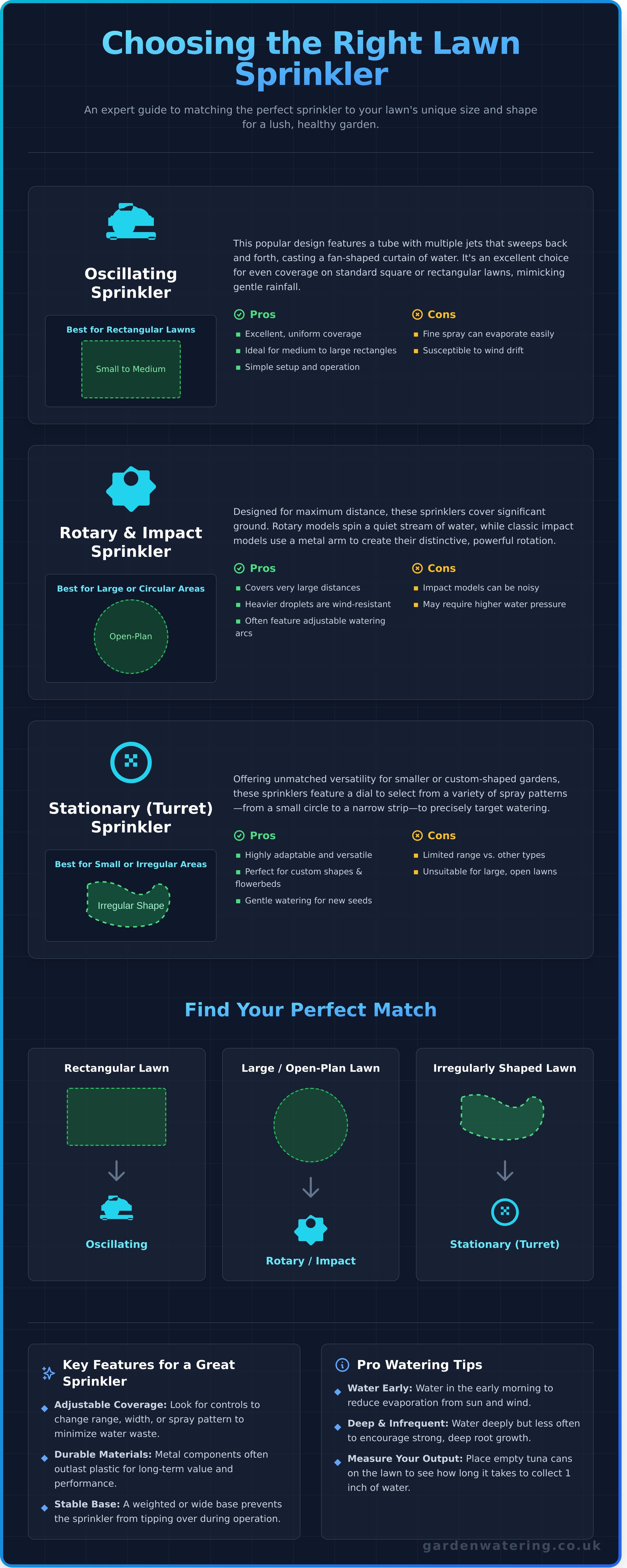
Oscillating Sprinklers: For Rectangular Lawns
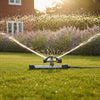
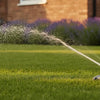
This popular design features a long tube with multiple jets that sweeps back and forth, casting a fan-shaped curtain of water. It's an excellent choice for ensuring even coverage on standard square or rectangular lawns, mimicking a gentle rainfall.
- Pros: Provides excellent, uniform coverage for medium to large rectangular areas with minimal setup.
- Cons: The fine spray can be susceptible to evaporation and wind, making it slightly less efficient on breezy days.
Rotary & Impact Sprinklers: For Large or Circular Areas
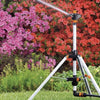
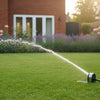
Best for very large or circular spaces, these sprinklers cover a significant distance. Rotary models use internal gears to spin a stream of water quietly and smoothly, while classic impact sprinklers create their rotation with a distinctive 'tick-tick-tick' sound as a metal arm strikes the water stream.
- Pros: Can cover very large distances and often feature adjustable arcs to customise the watering zone. The heavier droplets are more wind-resistant.
- Cons: Impact models can be noisy, and both types may require higher water pressure to operate effectively.
Stationary (Turret) Sprinklers: For Small or Oddly-Shaped Lawns
For smaller gardens, new seed patches, or awkwardly shaped areas, a stationary sprinkler offers unmatched versatility. Often called turret sprinklers, they feature a dial that allows you to select from a variety of spray patterns-from a small circle to a narrow strip-to precisely target your watering.
- Pros: Highly adaptable for custom-shaped gardens, flowerbeds, or newly seeded areas that require gentle watering.
- Cons: Their range is limited compared to oscillating or rotary models, making them unsuitable for large lawns.
Match the Sprinkler to Your Lawn: A Shape & Size Framework
Choosing the right lawn sprinkler doesn’t have to be complicated. The most crucial first step is to understand your space. Before you buy, take a moment to measure your lawn's approximate dimensions and, just as importantly, note its shape. A long, narrow garden has very different needs from a wide, open one. This simple framework is designed to match the right tool to your turf, ensuring efficient, even coverage and a lush, healthy lawn.
Here is a quick reference to help you make a confident choice:
| Lawn Shape | Recommended Sprinkler Type | Key Benefit |
|---|---|---|
| Small/Medium Rectangle | Oscillating | Provides a gentle, rain-like curtain of water ideal for standard lawn shapes. |
| Large or Open-Plan | Rotary / Impact | Delivers powerful, long-range streams for maximum area coverage. |
| Irregular or Complex | Stationary Turret / Pop-up | Offers customisable spray patterns to target specific, non-standard areas. |
For Small to Medium Rectangular Lawns (Typical UK Gardens)
For the classic rectangular gardens found across the UK, an oscillating sprinkler is almost always the best solution. These models spray water in a fan-like motion, moving back and forth to provide consistent, gentle coverage. We recommend looking for high-quality models with adjustable width and range controls. This allows you to precisely water your grass without soaking patios or pathways, saving water and money. Many excellent Hozelock sprinkler models offer this exact functionality.
For Large or Open-Plan Lawns
If you're fortunate enough to have a large, open-plan lawn, you need a sprinkler with serious reach. Rotary and impact sprinklers are the workhorses of large-scale irrigation, projecting a single, powerful jet of water in a full or partial circle. For very large areas, you can often connect several of these sprinklers in a series (a technique known as 'daisy-chaining'). A crucial tip: these models require good water pressure (PSI) to perform optimally, so it’s wise to check your home's supply before purchasing.
For Irregularly Shaped or Patchy Lawns
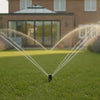
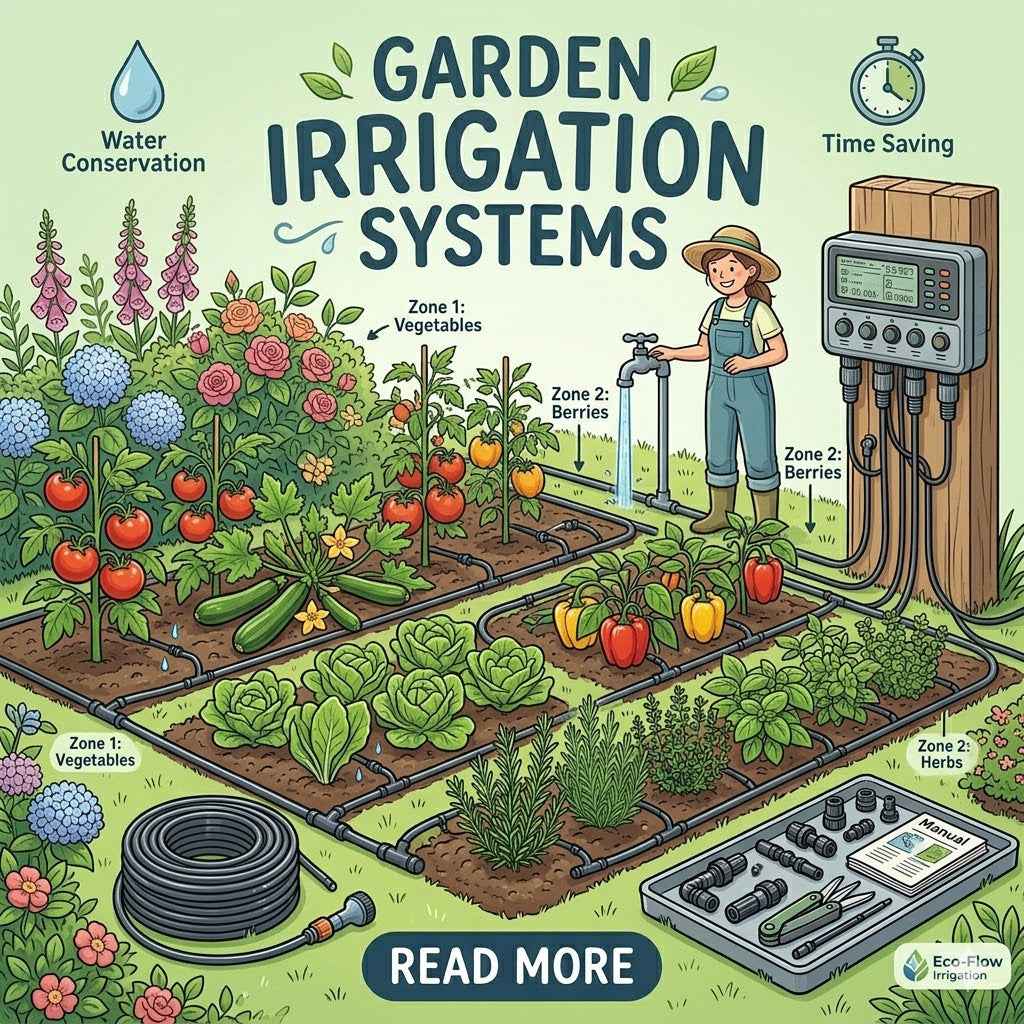
Gardens with curved borders, flowerbeds, or awkward corners demand a more versatile approach. A stationary turret sprinkler is perfect for these complex layouts. With multiple, adjustable spray patterns, you can direct water precisely where it's needed-ideal for targeting a newly seeded patch without overwatering established turf. Following expert efficient watering tips by targeting only the areas that need it prevents waste and promotes healthier growth. For a permanent and discreet solution, consider a professionally installed popup sprinkler system, which can be fully customised to any garden shape.
Key Features to Consider Before You Buy
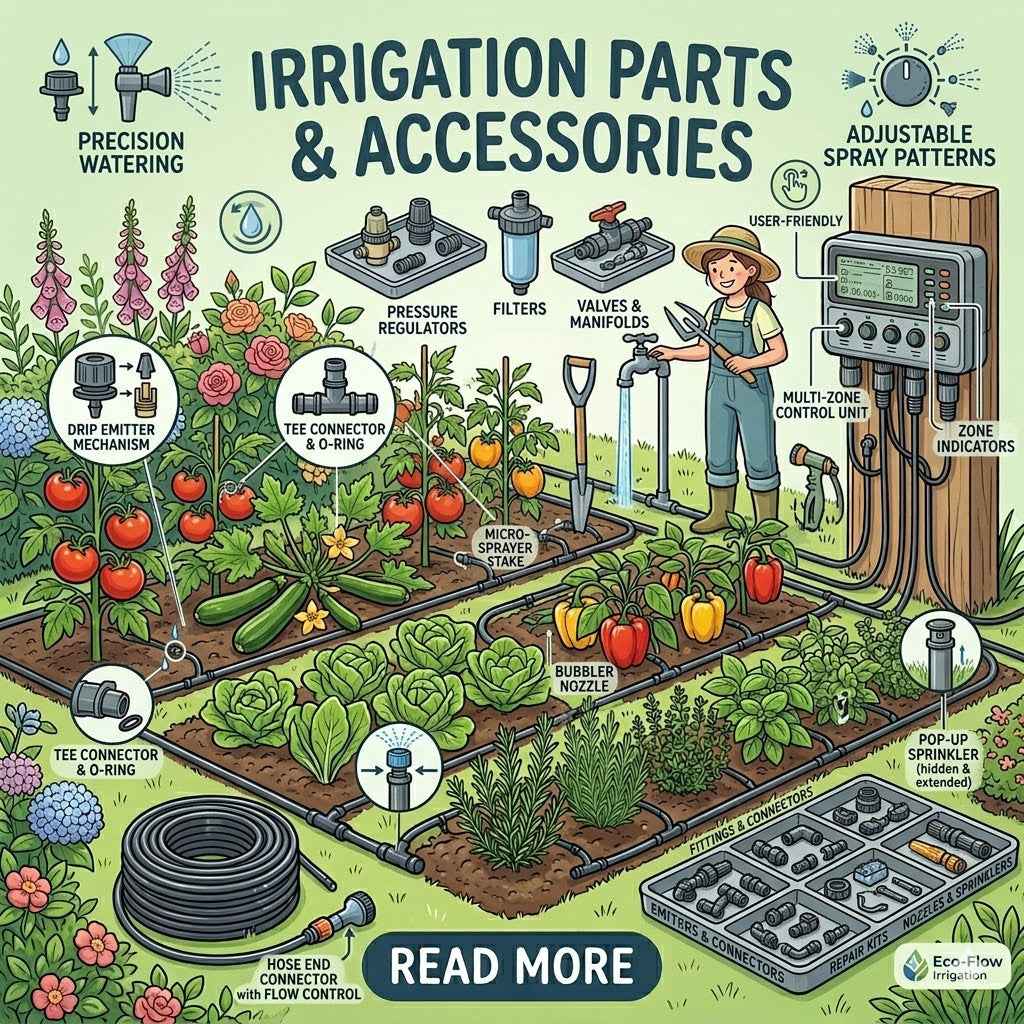
Once you have an idea of which of the main types of irrigation sprinklers suits your garden, it's time to look closer at the features that separate a good sprinkler from a great one. Investing a little more often provides significant returns in durability, water efficiency, and ease of use. These details ensure your new lawn sprinkler not only does the job but does it exceptionally well for years to come, giving you expert control over how you water.
Build Material: Plastic vs. Metal
The materials used in a sprinkler's construction directly impact its lifespan and stability. Plastic models are lightweight and often more affordable, making them a popular choice. However, prolonged exposure to sunlight can make the plastic brittle over time. For superior durability and stability, look for sprinklers with metal components, such as brass or zinc. A heavy metal base prevents the sprinkler from tipping over, while models with a metal spike are perfect for securing the unit firmly in soft ground, ensuring consistent coverage.
Adjustability and Control
Precise control is key to efficient watering. High-quality sprinklers offer a range of adjustments to tailor the water coverage perfectly to your lawn's shape, preventing waste on paths, driveways, or fences. Look for features such as:
- Range Control: Adjusts how far the water is thrown.
- Width Adjustment: Narrows or widens the spray area, ideal for long, thin lawns.
- Spray Pattern Settings: Allows you to select different shapes, such as a full or part circle.
A flow control dial is another excellent feature, allowing you to fine-tune the water pressure directly at the sprinkler for a softer or more powerful spray.
Water Pressure (PSI) Requirements
Household water pressure in the UK can vary, typically ranging from 1 to 4 bar (approximately 15-60 PSI). While most sprinklers are designed to work effectively within this range, some high-performance models require higher pressure to achieve their maximum coverage. If you have low water pressure, a sprinkler designed for low-flow conditions will perform much better. To get a rough idea of your flow rate, you can time how long it takes to fill a 10-litre bucket from your garden tap; under 30 seconds usually indicates good pressure.
Understanding these features will help you choose a lawn sprinkler that offers reliable performance and helps you maintain a lush, healthy garden with minimal effort. Browse our range of high-quality sprinklers at Garden Watering to find a model with the expert control you need.
Getting the Best Results: Sprinkler Setup & Watering Tips
Owning a quality lawn sprinkler is the first step towards a greener garden, but using it efficiently is what truly makes the difference. These expert tips will help you cultivate a lush, healthy lawn while conserving water-a crucial consideration, especially during the summer months when hosepipe bans can be a concern across the UK. By watering smarter, not harder, you can ensure your garden thrives without wasting a single drop.
A stunning, well-watered garden significantly enhances your home's curb appeal, a key factor when it comes to property value. To see how a beautiful exterior can be perfectly captured, you can explore Professional Property Photography and get inspiration for showcasing your own home.
A thriving garden is the perfect backdrop for family activities, and a soft, green lawn is ideal for children's play. To create an even safer and more engaging play space, you might consider adding dedicated equipment from specialists like SoftplayToys4kids.
Of course, a well-used garden often means mud and grass stains find their way indoors. For keeping carpets and furniture looking their best, services from specialists like The Rutland Cleaning Company can be invaluable.
Just as smart watering helps manage your garden during the summer, controlling sunlight indoors can make your home more comfortable and energy-efficient. If you're looking for ways to improve your home's interior climate control, you can visit Universal Blinds UK to explore options for made-to-measure blinds and shutters.
Making the most of the warmer weather often means getting outdoors. While a lush garden is one way to enjoy the sun, another popular activity is getting out on the water. For readers seeking inspiration for water-based fun, or for those in Australia, you can explore Self-Drive Boats for a memorable day out.
For those whose outdoor interests extend beyond the garden to larger tracts of land for activities like hunting, you can explore Hunting Land Brokerage to see what opportunities exist.
When and How Long to Water
The timing and duration of your watering schedule have a significant impact on your lawn's health. Watering early in the morning, ideally between 4 am and 10 am, is the most efficient time. The air is cooler and winds are calmer, meaning less water is lost to evaporation before it can soak into the soil. Aim for deep, infrequent watering sessions. Giving your lawn a thorough soaking once or twice a week encourages deep root growth, making it more resilient to drought. This is far more effective than a light, daily sprinkle which leads to shallow, weaker roots.
This principle of nurturing from the roots for a lush, resilient result extends beyond the garden. In the world of professional hair styling, for instance, achieving a healthy, vibrant look depends on quality from the start. It's why top salon professionals often turn to specialists like ZENEDA®️ for the premium materials needed to create stunning transformations.
Not sure how long to run your sprinkler? Try the simple 'tuna can test':
- Place a few empty, straight-sided containers (like tuna cans) in different areas covered by your sprinkler.
- Turn on your water and time how long it takes to collect about 1 inch (2.5cm) of water in the cans.
- This is the ideal watering time for each session, ensuring the soil is properly hydrated.
Placement and Maintenance
Correct setup and simple upkeep will ensure your lawn sprinkler delivers consistent, high-quality performance. For the most even water coverage, position your sprinkler in the middle of the area you intend to water. If you need to move it to cover a larger lawn, make sure the spray patterns overlap slightly to prevent dry patches from forming.
Regularly check the nozzles for dirt or mineral deposit blockages, which can disrupt the spray pattern. A simple clean with a pin or small brush is often all that's needed. Before winter arrives, drain all water out and store your sprinkler away from direct sunlight and frost to prevent the plastic from becoming brittle and cracking. Following these practical guidelines will lead to a healthier lawn and more efficient water use. For expert solutions tailored to your garden, explore our range of high-quality irrigation systems at gardenwatering.co.uk.
Our Recommended Lawn Sprinklers for UK Gardens in 2026
With over 15 years of hands-on experience in garden irrigation, we've tested countless products to find the very best for UK gardens. We specialise exclusively in Hozelock because their systems consistently deliver on their promise of reliability, innovative design, and outstanding performance. The recommendations below are our expert choices for 2026, selected to match the different lawn types we've discussed in this guide. Each model is chosen for its durability and ability to provide the even, consistent coverage your lawn needs to thrive.
Best All-Rounder: The Hozelock Rectangular Sprinkler
For most standard rectangular or square lawns found across the UK, the Hozelock Rectangular Sprinkler is our top recommendation. Its reliable, water-powered motor ensures it moves smoothly back and forth, providing perfectly even coverage. Key features include an easily adjustable spray width and range, allowing you to water your lawn without wasting a drop on paths or driveways. If you're looking for your first high-quality lawn sprinkler, this is the perfect, dependable choice.
Best for Versatility: The Hozelock Multi-Sprinkler
If your garden has an irregular shape or you need to water both the lawn and surrounding flower beds, the Hozelock Multi-Sprinkler is the ideal solution. It offers multiple spray patterns-from a small circle to a large square-giving you complete control over the watering area. This versatility makes it a fantastic 'one-size-fits-all' device for gardeners with complex layouts. It eliminates the need for multiple sprinklers, saving you time and effort while ensuring every part of your garden gets the hydration it needs.
Best for Large Lawns: The Hozelock Pulsating Sprinkler
For those with a substantial, open lawn space, the Hozelock Pulsating Sprinkler is the undisputed champion. Engineered for maximum reach, it can cover an impressive circular area of up to 450m². Its robust metal spike design ensures it remains stable and secure in the ground, even at high water pressures. This is the go-to lawn sprinkler for anyone needing to efficiently and effectively water a large garden, delivering powerful performance you can rely on season after season.
Choosing the right sprinkler is a crucial step towards achieving a lush, healthy lawn. We are confident that a Hozelock system can provide the perfect solution for your specific needs. Find the perfect Hozelock sprinkler for your garden today.
Your Next Step to a Lush, Healthy Lawn
You are now equipped with the knowledge to make a confident choice. Understanding the different sprinkler types, matching the right model to your garden's unique size and shape, and knowing which features deliver the best results are the keys to efficient, effective watering.
Selecting the perfect lawn sprinkler is the final, crucial step towards achieving that vibrant garden you desire. At Garden Watering, this is our passion. With over 15 years of irrigation expertise and as exclusive Hozelock specialists, we provide expert advice you can trust to help your garden thrive.
Just as we specialise in helping your garden grow, many businesses find that specialist support is key to their own growth online. For UK companies looking to cultivate a strong digital presence and reach the right audience, the creative services offered by agencies like AHS Digital can make all the difference.
Ready to find the ideal solution for your garden? Shop our expert-selected range of lawn sprinklers and discover the difference that specialist knowledge makes. We're here to help you achieve a beautiful, healthy lawn with minimal effort.
Frequently Asked Questions
How often should I use a lawn sprinkler on my UK lawn?
In the UK, a deep watering once or twice a week during dry spells is usually sufficient for an established lawn. Lawns typically need about 2.5cm (1 inch) of water per week, including rainfall. A simple test is to check the soil; if the top few inches feel dry, it’s time to water. This encourages deep root growth, making your lawn more resilient. Adjust this schedule based on the weather-more in a heatwave, less in cooler periods.
What is the best time of day to water my lawn to avoid waste?
The most efficient time to water your lawn is early in the morning, between 4 am and 10 am. Watering at this time minimises water loss from evaporation as the sun is not yet at its peak. It also allows the grass blades to dry fully during the day, which helps to prevent the development of common fungal diseases. Watering in the evening can leave the lawn damp overnight, creating an ideal environment for mould and rot to thrive.
Can a lawn sprinkler work effectively with low water pressure?
Yes, certain sprinklers are specifically designed for low-pressure systems. Models such as oscillating or turret sprinklers can provide excellent coverage even with lower water flow. It is best to avoid impact or pop-up sprinklers, as they require higher pressure to operate correctly. To maximise performance, ensure your hose is fully uncoiled and is the correct diameter for your system. We can offer expert advice on the best solutions for low-pressure situations to ensure your garden gets the water it needs.
How do I stop my sprinkler from watering the pavement or my neighbour's garden?
The key is to use an adjustable sprinkler. High-quality modern sprinklers allow you to precisely control the spray pattern, range, and arc of the water. For example, you can set an oscillating sprinkler to cover a specific rectangular patch or adjust a turret sprinkler to a 90-degree arc for a corner bed. This precision ensures water is directed only onto your lawn, saving water, reducing waste, and keeping your paths and neighbours dry. It’s an efficient and considerate solution.
How long should a good quality lawn sprinkler last?
A high-quality lawn sprinkler from a reputable brand like Hozelock or Claber should provide reliable service for many years. Models with metal components often have a longer lifespan than all-plastic versions. To maximise longevity, drain the unit and store it away from frost during winter. Regularly checking and cleaning the nozzles to prevent mineral build-up will also ensure it continues to perform efficiently. A quality tool is a long-term investment for a healthy, thriving garden.
Is it better to water my lawn for a long time once a week or a short time every day?
It is far more beneficial to water your lawn deeply once or twice a week than to water it shallowly every day. A long, deep watering encourages grass roots to grow further down into the soil in search of moisture. This creates a stronger, more drought-resistant lawn. In contrast, frequent light watering promotes a shallow root system, leaving your grass vulnerable during dry spells. Aim for a session long enough for water to penetrate 10-15cm into the soil.
Do I need a water timer with my lawn sprinkler?
While not strictly essential, a water timer is a highly recommended accessory. It provides consistency and control, ensuring your lawn gets the precise amount of water it needs at the most efficient time of day, even when you're busy or away. This prevents both under- and over-watering, saves water, and removes the guesswork. Pairing a timer with your sprinkler automates the process, saving you time and helping you maintain a lush, healthy lawn with minimal effort.
`-
Posted in
lawn sprinkler