How to Save Water in the Garden: 10 Expert UK Tips
Does the thought of your summer water bill make you wince? As temperatures rise, so does the worry about keeping plants healthy without breaking the bank. With the increasing frequency of dry spells and the looming threat of hosepipe bans, knowing how to save water in the garden uk-wide is no longer just a good idea-it's an essential gardening skill. The great news is that a lush, thriving garden and responsible water use can, and should, go hand in hand.
As passionate irrigation specialists, we're here to provide expert advice you can trust. In this guide, we’ll walk you through 10 highly effective and easy-to-implement methods for watering your garden more efficiently. Forget the guesswork and guilt; you'll learn proven techniques to lower your water bills, prepare your garden for any drought, and create a beautiful, resilient outdoor space. Let’s get started on building a sustainable garden that flourishes all year round.
Key Takeaways
- Master the basics of efficient watering-like timing and technique-to see an immediate reduction in water usage without spending a penny.
- Learn simple garden maintenance techniques, such as applying mulch, to help your soil retain moisture for longer and protect plants during dry spells.
- Discover why collecting rainwater is the expert's choice for healthier plants and how a simple water butt can significantly lower your reliance on tap water.
- For a truly efficient approach to how to save water in the garden uk, explore how automated irrigation systems deliver water directly where it's needed most, saving you time and effort.
Why Saving Water in Your UK Garden Matters More Than Ever
For gardeners across the UK, the familiar pattern of a lush, green summer is changing. We're facing hotter, drier spells, and the prospect of hosepipe bans is becoming an annual concern rather than a rare event. Yet, the desire for a thriving, beautiful garden remains. The key is learning how to save water in the garden UK-wide, ensuring our outdoor spaces are both stunning and sustainable.
The Royal Horticultural Society offers some expert advice on watering your garden wisely:
Beyond the environmental necessity, efficient watering has a direct impact on your household. Pumping and treating water is an energy-intensive process, and every wasted drop contributes to higher utility bills. By adopting a 'water-wise' approach, you create a garden that is more resilient to drought and less demanding on your time and wallet. This involves understanding the core principles of water-wise gardening to work with our climate, not against it.
Understanding Your Garden's Water Needs
Effective water saving starts with knowing what your garden truly requires. A blanket approach with a sprinkler often leads to waste. Instead, consider these key factors:
- Plant Choice: Thirsty plants like runner beans and bedding annuals have very different needs from drought-tolerant shrubs such as lavender or rosemary.
- Soil Type: Sandy soils drain very quickly and need more frequent watering, whereas heavy clay soils retain moisture for much longer.
- Weather Conditions: A hot, windy day can cause significant moisture loss from both soil and leaves, dramatically increasing your garden's thirst.
The True Cost of an Inefficiently Watered Garden
Watering inefficiently doesn't just waste a precious resource; it can actively harm your plants and your finances. Water applied too quickly often runs off the surface, never reaching the roots where it's needed. Furthermore, overwatering can be just as damaging as underwatering, leading to root rot and weak plants. For anyone on a metered supply, this waste is directly reflected in higher water bills, costing you real money for water that never benefited your garden.
The Foundation: Smart Watering Habits That Cost Nothing
Before investing in any equipment, the most significant water savings come from adjusting your approach. Mastering a few core principles is the key to an efficient garden that thrives even in drier conditions. These smart habits cost nothing to implement and form the essential foundation for all other efforts. Understanding how to save water in the garden uk begins not with your wallet, but with your routine.
Water at the Right Time of Day
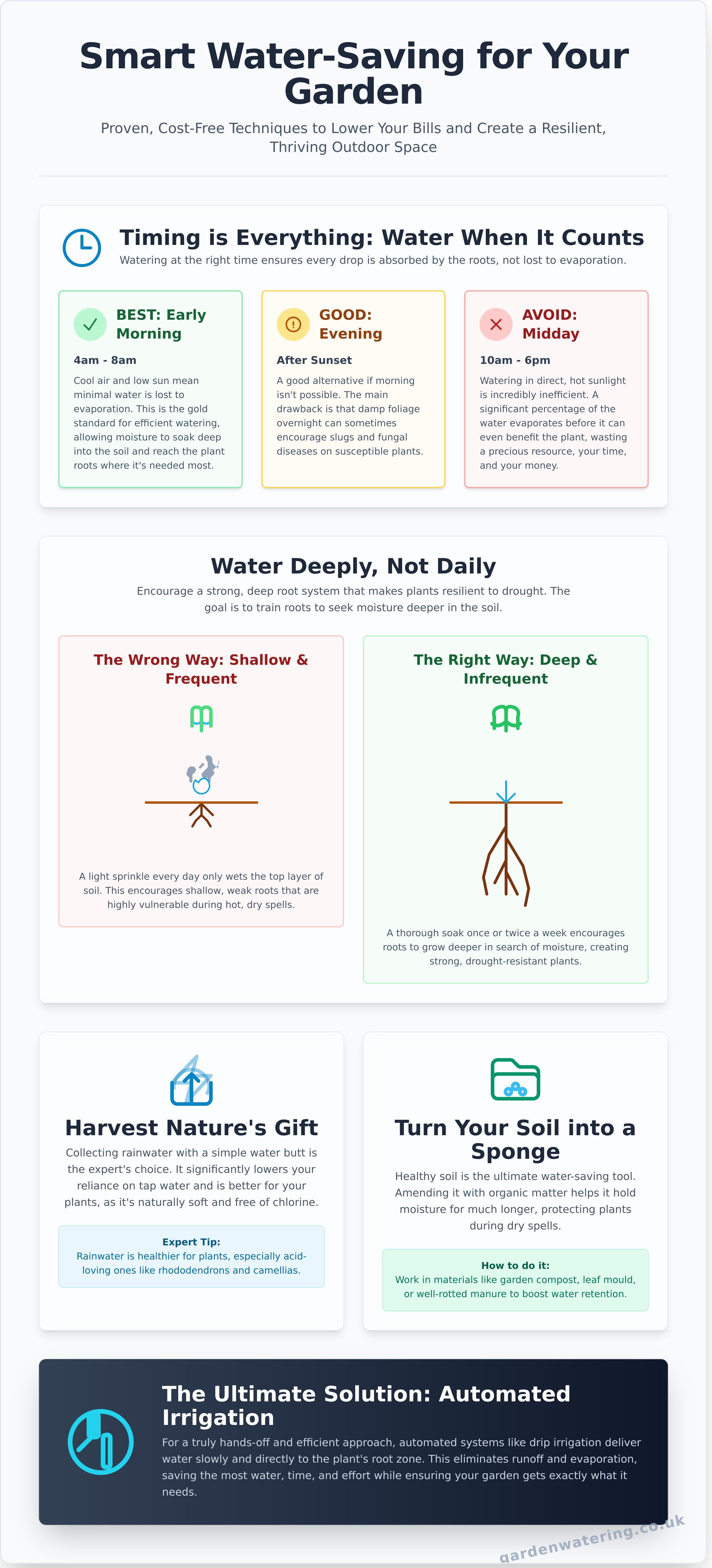
Timing is everything. Watering when the sun is at its peak is one of the most common and wasteful mistakes. To ensure every drop counts, adjust your schedule:
- Best Time: Early Morning. Watering between 4am and 8am is the gold standard. The cool air and low sun mean less water is lost to evaporation, allowing it to soak deep into the soil and reach the plant roots where it's needed most.
- Second Best: Evening. If mornings aren't possible, watering in the evening is a good alternative. The main drawback is that damp foliage overnight can sometimes encourage slugs and fungal diseases on susceptible plants.
- Avoid: Midday. Watering in direct, hot sunlight is incredibly inefficient. A significant percentage of the water can evaporate before it even hits the soil, wasting a precious resource and your time.
Water Deeply, But Less Often
The goal is to encourage a strong, resilient root system. A light sprinkle every day does the opposite, promoting shallow roots that are vulnerable during a dry spell. Instead, give your plants a thorough, deep soak once or twice a week. This method encourages roots to grow deeper into the soil in search of moisture, making them far more drought-resistant. Always direct water to the base of the plant, soaking the soil around the roots rather than the leaves. This targeted approach is a simple yet effective technique for how to save water in the garden.
Improve Your Soil's Water Retention
Healthy soil is the ultimate water-saving tool. Soil rich in organic matter acts like a sponge, holding onto moisture for longer and reducing the need for frequent watering. Amending your beds with materials like garden compost, leaf mould, or well-rotted manure works wonders for all soil types. In sandy soil, it helps bind particles together to retain water, while in heavy clay soil, it improves the structure to allow better water penetration. Building great soil is a core principle in many official UK government water-saving tips because it creates a resilient garden that requires less intervention.
Work Smarter: Simple Techniques to Lock in Moisture
Effective water conservation involves more than just your watering can or hosepipe. By adopting a few smart garden management techniques, you can create an environment that naturally retains moisture, reducing the need to water so frequently. These low-effort, high-impact strategies are fundamental to knowing how to save water in the garden uk, especially during the prolonged dry spells we often see in summer. These expert methods, often included in government water saving tips, help your plants thrive by minimising evaporation and eliminating competition for precious water.
Embrace Mulching: Your Soil's Best Friend
Mulch is simply a layer of material applied to the surface of the soil. Common, high-quality options in the UK include bark chips, home-made compost, leaf mould, or even straw. Applying a layer of mulch is one of the most efficient ways to lock in moisture for three key reasons:
- Reduces Evaporation: It acts as a protective barrier, shielding the soil from the sun and wind, which dramatically slows water loss.
- Suppresses Weeds: A thick layer blocks sunlight, preventing weeds from germinating and competing for water.
- Improves Soil Health: Organic mulches break down over time, enriching the soil with valuable nutrients.
This focus on a thriving, productive garden often inspires creativity beyond just landscaping. Many gardeners use their harvest of fruits and herbs like lavender or mint to create unique homemade cordials, gins, or juices, much like the nature-inspired beverages from Aroha Drinks. When a hobby like this grows, presentation becomes key. For those who take this next step, getting the branding and packaging right is essential, a challenge that specialists like Hatfield Creative excel at.
For best results, apply a layer around 5-7cm (2-3 inches) deep over damp soil, making sure to leave a small gap around the stems of your plants to prevent rot.
Weed Regularly and Ruthlessly
Think of weeds as direct competitors for the water and nutrients meant for your prized plants. Every weed you remove means more resources are available for your flowers and vegetables to flourish. A weed-free bed ensures that every drop of water you provide goes exactly where it's intended. For an easier job, try to weed after a rainfall when the soil is soft and the roots pull out with minimal effort.
Mow Your Lawn Higher
Resist the temptation to give your lawn a very short cut during the summer months. By raising the cutting height on your lawnmower by just one or two settings, you allow the grass blades to grow slightly longer. This has two key benefits: the longer blades shade the soil surface, reducing evaporation, and they encourage the development of deeper, more resilient root systems. A lawn with deeper roots is far better equipped to find water during dry periods, staying greener and healthier for longer.
Harvest Nature's Gift: Collecting and Using Rainwater
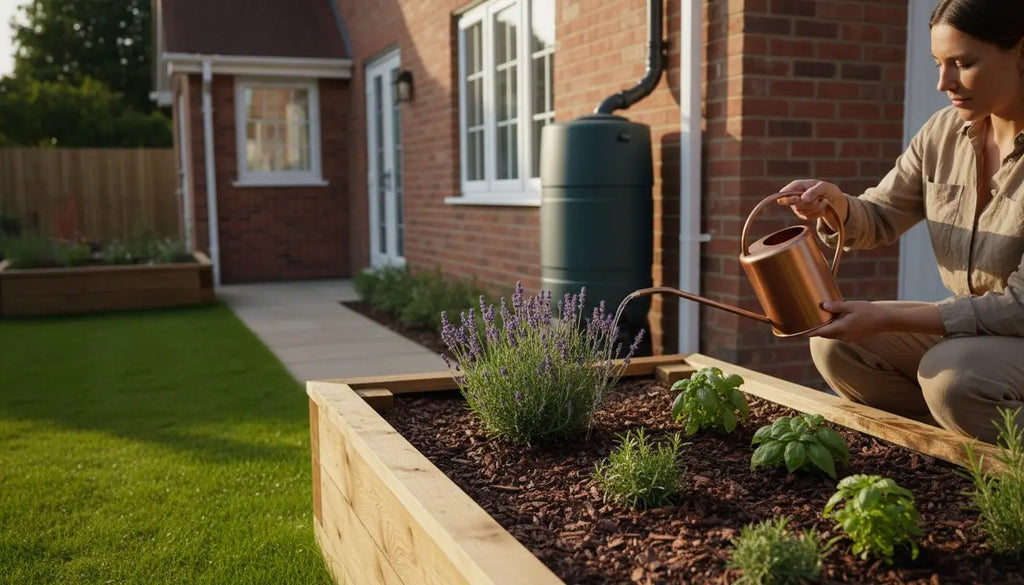
When it comes to watering your garden, nothing beats rainwater. It is a completely free, high-quality resource that falls right from the sky. Unlike tap water, it is naturally soft and free from the chlorine and hard minerals that can affect sensitive plants. It is also at the perfect ambient temperature, meaning you avoid shocking plant roots with cold water from the mains.
Harnessing this natural resource is one of the most effective solutions for how to save water in the garden uk. By installing a simple water butt, you take a significant step towards creating a more sustainable and self-sufficient garden, reducing your reliance on treated tap water and lowering your utility bills in the process.
Choosing and Installing a Water Butt
Water butts come in a range of sizes and styles, from slimline models perfect for tight spaces to large-capacity tanks for bigger gardens. Installation is straightforward: a diverter kit is fitted into your downpipe, channelling rainwater into the butt until it is full, then redirecting any excess back into the drain. Always ensure your water butt has a secure, child-safe lid to prevent accidents and stop algae and debris from contaminating your supply.
Making the Most of Your Harvested Water
Even a standard 200-litre water butt can make a huge difference over the year. To use your harvested water efficiently, focus on targeted application with a watering can. This method delivers water directly to the plant’s base, minimising waste. We recommend prioritising your rainwater for:
- Pots, hanging baskets, and containers which dry out quickly.
- Young plants and seedlings that thrive on soft, chemical-free water.
- Acid-loving plants like rhododendrons, blueberries, and camellias.
Collecting rainwater is a simple yet powerful technique that supports a lush, healthy garden while protecting our most precious resource. It is a core principle for anyone serious about how to save water in the garden uk. For more expert advice on creating efficient watering systems, you can trust the specialists at gardenwatering.co.uk.
The Ultimate Solution: How Automatic Irrigation Saves the Most Water
While water butts and mulching are excellent habits, the single most effective way to reduce water consumption and save time is to upgrade your watering method. For gardeners who want a truly efficient, thriving garden, moving from manual methods to an automated system is the expert's choice. This is the ultimate answer to the question of how to save water in the garden UK gardeners face year after year.
The Problem with Hoses and Sprinklers
Traditional sprinklers and hoses are notoriously wasteful. Sprinklers cast a wide spray, where a significant portion of water is lost to wind drift and evaporation before it ever reaches the soil. Hand-watering with a hose often leads to inconsistent coverage-over-saturating some plants while missing others-and it’s all too easy to lose track of time. Crucially, these are the first methods to be restricted during the hosepipe bans that are becoming more common across the UK.
The Power of Drip Irrigation
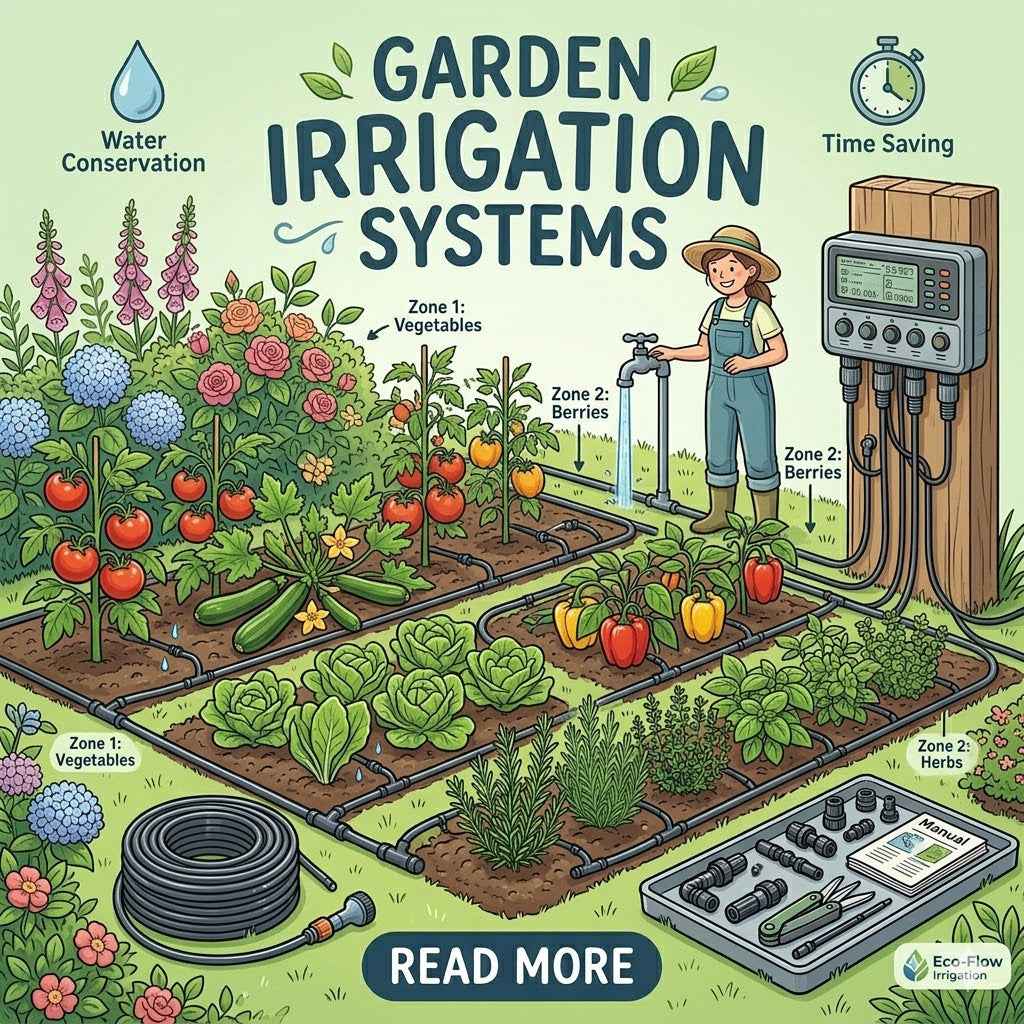
Drip irrigation is a game-changing solution. Instead of spraying water into the air, it delivers it slowly and precisely, directly to the base of each plant. This targeted approach means water goes straight to the roots where it's needed most. The results are remarkable; a well-designed drip system can use up to 70% less water than a conventional sprinkler system. The benefits extend beyond water savings:
- Less Weed Growth: By only watering the plants you want, the surrounding soil stays drier, discouraging weed germination.
- Healthier Plants: Keeping foliage dry reduces the risk of common fungal diseases like blight and mildew.
- Perfect for All Areas: It's an ideal, discreet solution for borders, vegetable patches, containers, and hanging baskets.
Automate with a Water Timer
To unlock the full potential of a drip system, pair it with an automatic water timer. A timer ensures your garden receives a precise and consistent amount of water every single time, eliminating guesswork. You can schedule watering for the most effective time-the cool, early morning hours-to minimise evaporation. It also prevents the common and costly mistake of forgetting to turn the tap off. It's the simplest way to ensure your garden gets exactly what it needs to thrive, with minimal effort and maximum efficiency.
Ready to make the switch to a smarter, more sustainable garden? Explore our expert-approved automatic watering systems and see how much water and time you could save.
Create a Thriving, Water-Wise UK Garden
As we've explored, creating a beautiful and water-efficient garden is entirely achievable. From adopting smarter watering habits to locking in precious moisture with mulch, these techniques form the foundation of sustainable gardening. Mastering how to save water in the garden uk not only helps the environment but also ensures your plants remain resilient and healthy through our increasingly dry summers.
For the ultimate in efficiency, an automated system is the most effective solution. A well-designed irrigation system delivers the precise amount of water your plants need, directly to the roots, eliminating waste from evaporation and runoff. With over 15 years of irrigation expertise, Garden Watering specialises in high-quality, efficient irrigation systems and provides the expert advice you can trust.
Let us help you build a lush garden that thrives with minimal effort. Find the perfect water-saving irrigation system for your garden and enjoy a beautiful, sustainable outdoor space with complete peace of mind.
Frequently Asked Questions About Saving Water in the Garden
Is it better to water my garden every day or a few times a week?
It is far more effective to water your garden thoroughly a few times a week rather than lightly every day. A deep soak encourages plants to develop stronger, deeper roots, making them more resilient during dry spells. This method ensures water penetrates down to the root zone where it is most needed, reducing wasteful surface evaporation. Always check the soil a few inches deep; if it feels dry, it’s time to water.
Can I use 'grey water' from my bath or kitchen sink on the garden?
Yes, you can reuse 'grey water' from baths, showers, and washing-up bowls on your garden, but with caution. Ensure you use eco-friendly, phosphate-free soaps and avoid any water containing bleach or harsh disinfectants. It is best practice to use this water on established, ornamental plants and not on edible crops or delicate seedlings. Apply it directly to the soil to avoid wetting the foliage and maximise absorption.
What are the best drought-tolerant plants for a UK garden?
To create a beautiful, water-efficient garden, consider plants that thrive in dry conditions. Excellent choices for UK gardens include Lavender, Rosemary, Sedum (stonecrop), and Verbena bonariensis, which all perform brilliantly in sunny, well-drained spots. Ornamental grasses like Stipa tenuissima add texture and movement while requiring very little water once established. These plants will help keep your garden looking lush and healthy, even during prolonged dry periods.
How much water can a standard water butt collect from a single downpour?
The amount of water collected depends on your roof size, but it is often more than you might think. For example, an average 6x8 foot shed roof can collect over 45 litres of water from just 10mm of rain. A brief, heavy downpour on the roof of a typical UK house can easily fill a standard 200-litre water butt, providing you with a substantial, free and environmentally friendly water source for your garden.
Will a drip irrigation system work with low water pressure?
Absolutely. Drip irrigation systems are an expert solution precisely because they are designed to operate efficiently at low pressure. Unlike high-pressure sprinklers, they deliver water slowly and directly to the base of each plant, minimising waste from runoff and evaporation. This makes them a highly effective solution for how to save water in the garden uk, ensuring every drop is used to help your plants thrive, even in areas with low water pressure.
How do I stop my hanging baskets from drying out so quickly in summer?
Hanging baskets are very exposed and lose moisture rapidly. A great solution is to mix water-retaining gel crystals into the compost before planting, which will absorb and release water as needed. Opting for larger baskets also helps as they hold more soil and moisture. Finally, applying a top layer of mulch, such as decorative bark or moss, will help to lock in moisture and protect the soil from the sun's heat. Just as we adapt our outdoor spaces for summer, ensuring indoor comfort during warm nights is also key; a good place to start is to explore Bed Linen designed for the season.
`-
Posted in
how to save water in the garden uk