The Ultimate Guide to Automatic Plant Watering Systems: UK 2026 Edition
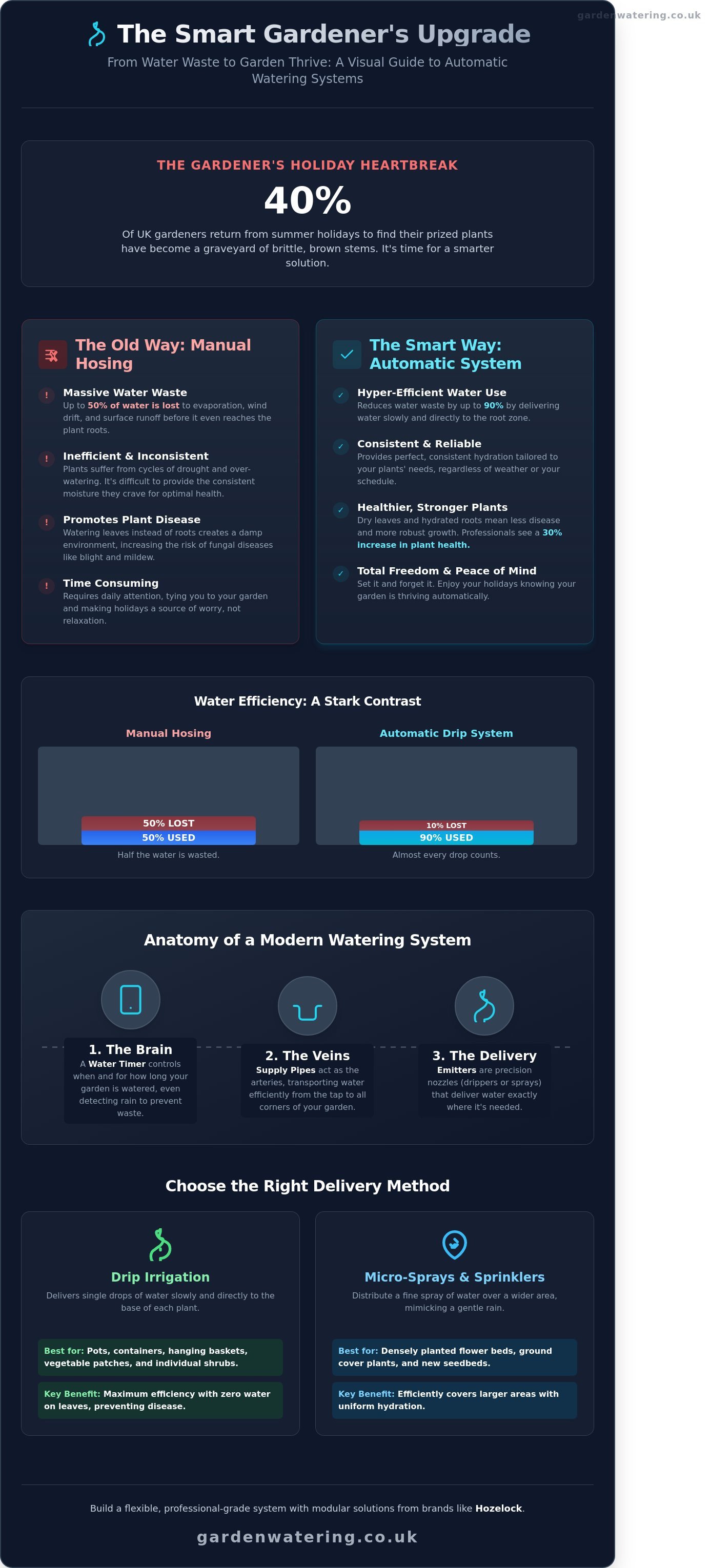
Imagine returning from a fortnight in Cornwall to find your prize-winning borders have turned into a graveyard of brittle, brown stems. It is a heartbreaking sight that 40% of UK gardeners experience after a summer holiday, often because a well-meaning neighbour missed a watering session. Installing a high-quality automatic plant watering system changes the game entirely. Instead of standing for hours with a hosepipe, you can rely on precision-engineered components from specialists like Hozelock to keep your garden thriving while you are away.
We understand that the thought of complex pipework and confusing connectors can feel daunting. You have likely spent hundreds of pounds on your plants already, so you don't want a DIY disaster or a leaky tap that spikes your water bill. This 2026 guide shows you how to design a system that reduces water waste by up to 90% compared to manual hosing. We will walk you through selecting the right timers, mapping out your irrigation zones, and ensuring your setup lasts for years through even the harshest British winters.
Key Takeaways
- Learn how an automatic plant watering system provides consistent hydration for your plants while significantly reducing water waste and saving you valuable time.
- Discover the essential components of a modern setup, including how to choose the right water timer to act as the "brain" of your garden irrigation.
- Master the selection between drip irrigation and micro-sprays to ensure every pot, container, and seedbed in your garden receives the most efficient delivery method.
- Gain expert advice on planning your layout by identifying "hydro-zones" and measuring tap pressure to ensure your system operates at peak performance.
- Explore why Hozelock’s modular solutions are the professional choice for British gardeners looking to build a flexible system that evolves with their outdoor space.
What is an Automatic Plant Watering System and Why Does Your Garden Need One?
An automatic plant watering system is a professional-grade network of supply pipes, water timers, and precision emitters designed to deliver hydration directly to your plants. It's a sophisticated solution that replaces the traditional, often inefficient, garden hose. By adopting modern irrigation methods, you ensure your flower beds and vegetable patches receive the exact amount of moisture they require at the most beneficial times. We specialise exclusively in these systems because we know that a well-planned layout is the secret to a thriving, lush garden that lasts for years.
In the UK, our weather is famously unpredictable. A week of heavy rain can quickly be followed by a 30-degree dry spell that leaves hanging baskets and potted shrubs parched within hours. These sudden shifts put immense stress on plants. An automated system provides the consistency they crave, maintaining soil moisture levels regardless of the forecast. There is also a significant psychological benefit. You can head off on a two-week summer holiday without the constant worry of returning to a garden full of scorched, dead plants. It's about more than just convenience; it's about the quiet confidence that your outdoor space is in expert hands while you're away.
To better understand this concept, watch this helpful video:
The Environmental Case for Automatic Irrigation
Targeted watering is one of the most effective ways to reduce your environmental footprint. Traditional sprinklers often lose vast amounts of water to wind drift and surface runoff. In contrast, an automatic plant watering system delivers water at a low pressure, allowing it to soak deep into the earth. Modern smart timers can be programmed to skip cycles when they detect rain, preventing over-watering and protecting your plants from root rot. Evapotranspiration is the total loss of water from the soil through evaporation and from plants through transpiration, which serves as the primary metric for calculating your garden's daily hydration needs. By understanding this, you can calibrate your system to replace only the water that's actually been lost.
Manual vs. Automatic: A Comparison of Efficiency
Manual hosing is surprisingly wasteful and often fails to reach the roots where it's needed most. Research indicates that hand-watering can waste up to 50% of water through evaporation and surface runoff before it ever benefits the plant. Drip emitters change the game by releasing water slowly and directly into the root zone. This precision prevents the leaves from getting wet, which reduces the risk of fungal diseases. Automation also allows you to schedule watering for 5:00 am. This is the most water-efficient time of day because the air is cool and the wind is usually calm, ensuring every drop reaches its target. With over 15 years of experience in the industry, we've seen how these small gains in efficiency lead to healthier plants and lower water bills. We're your trusted irrigation partner, providing expert irrigation advice you can trust to help your garden thrive.
The Essential Components of a Modern Watering System
Building an efficient automatic plant watering system requires more than just a length of hose. It's a precision-engineered network designed to save time and conserve resources. At Garden Watering, we've spent 15 years refining these setups to ensure every drop counts. Understanding the role of each component helps you avoid common pitfalls like low pressure or water wastage. Most professional installations see a 30% increase in plant health within the first season because of this consistent delivery. This approach removes the guesswork from gardening, allowing your borders and pots to thrive even during the driest British summers.
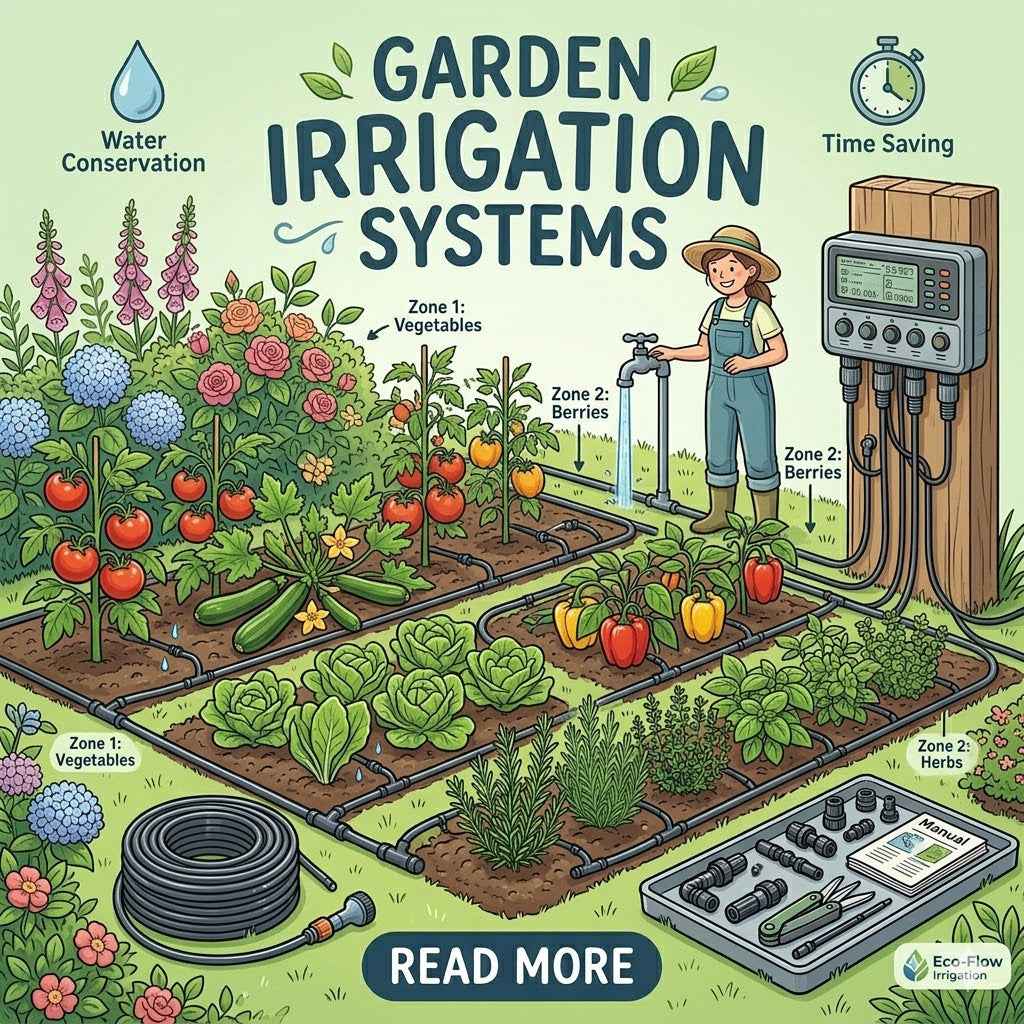
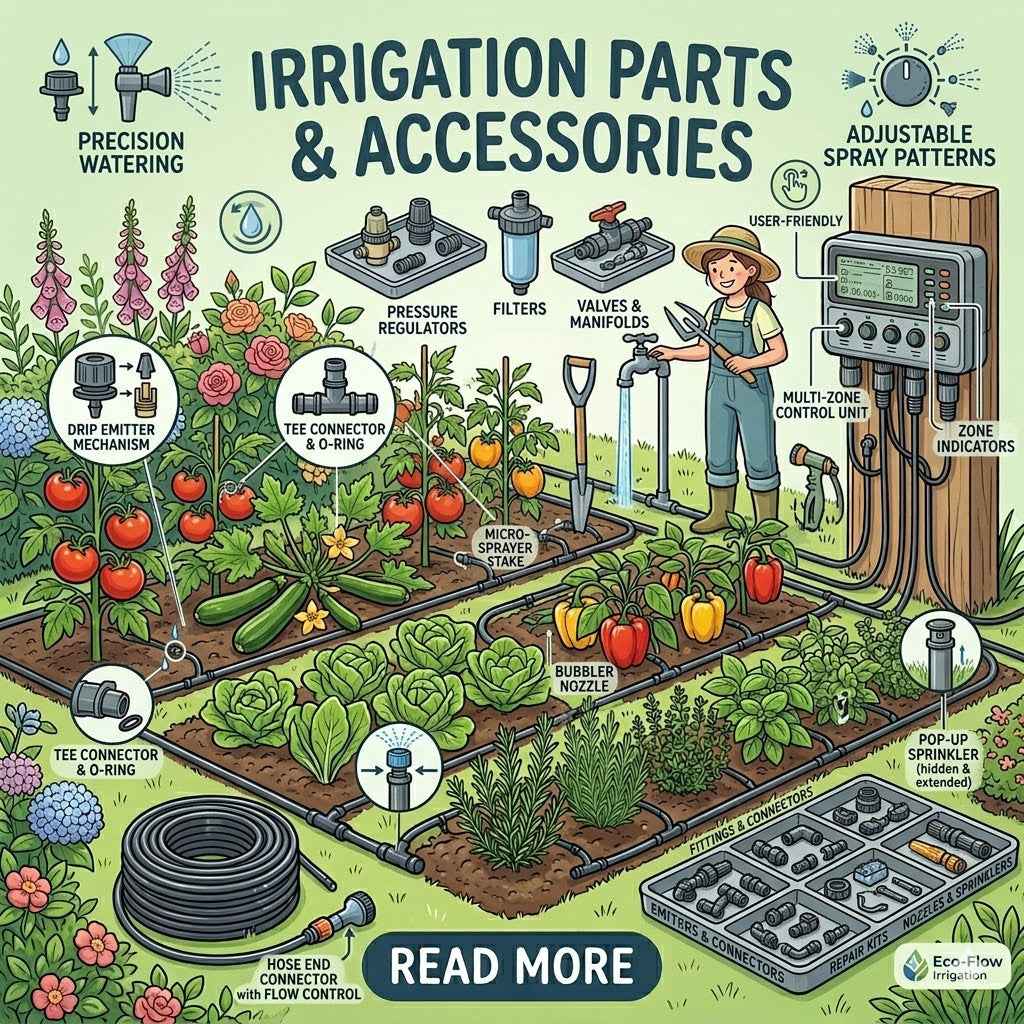
The "brain" of your system is the water timer. Without it, you're back to manual operation. Next, you have the "veins," which are the supply pipes and micro-tubing that transport water across your garden. Connectors and adaptors act as the joints, ensuring a leak-free transition from your outside tap. Finally, emitters and drippers are the "delivery points." These small but vital parts regulate exactly how much water reaches individual plants, preventing over-saturation or root rot. Understanding the benefits of automatic irrigation reveals how these components work together to reduce water consumption by up to 90% compared to traditional hosepipe use. An automatic plant watering system thrives on this internal logic, keeping your garden lush while you focus on other tasks.
Choosing the Right Water Timer for Your Schedule
Selecting a timer depends on your garden's complexity and your daily routine. Mechanical dial timers are excellent for simple setups, allowing you to set a duration for a single session. For more intricate landscapes, digital programmable controllers offer superior flexibility. These allow for multiple start times and varying durations throughout the week, which is vital for established trees versus new seedlings. Hozelock water timers are a reliable choice for UK gardeners because they're built to withstand fluctuating outdoor conditions. Some advanced models even feature sunlight sensors that adjust watering schedules based on sunrise or sunset, ensuring your plants get moisture exactly when they need it most without any manual intervention.
Connectors and Pipework: Building a Leak-Free Network
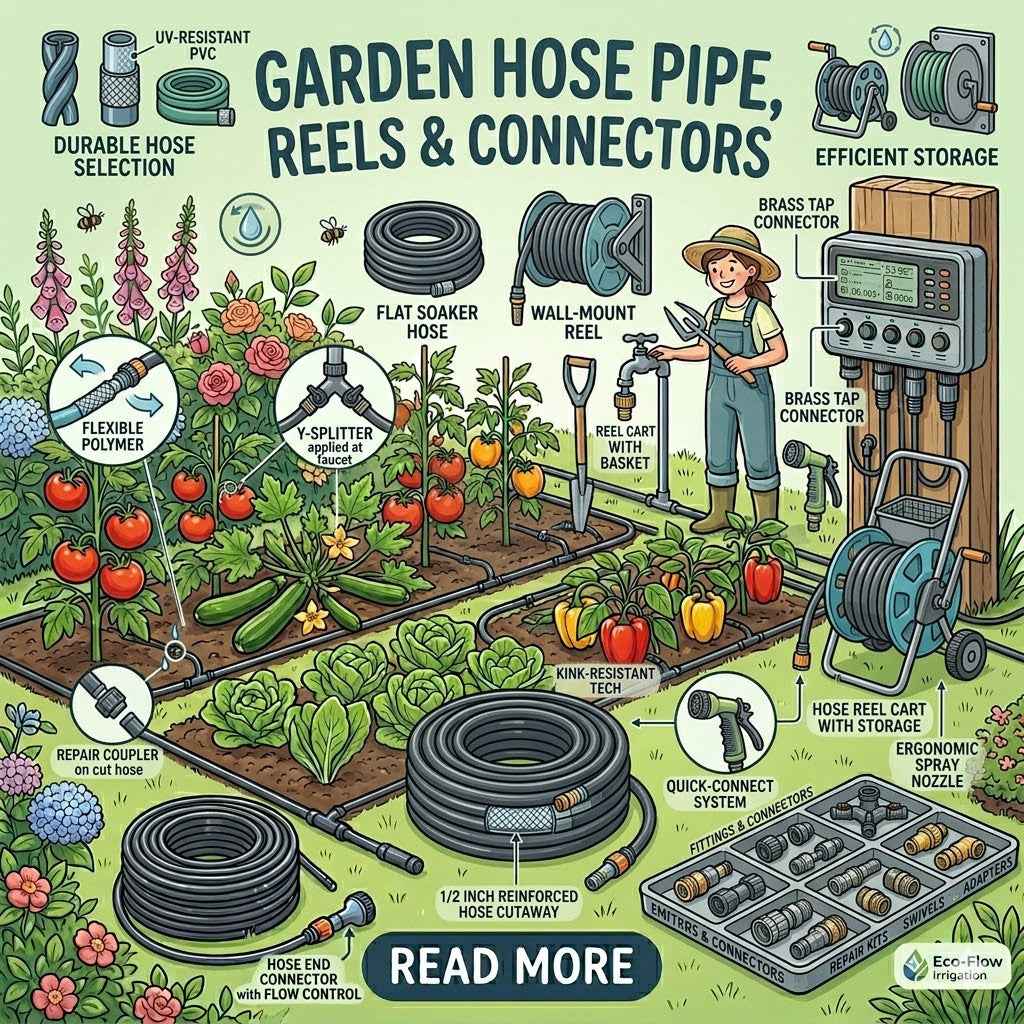
A robust network starts at the tap. Using high-quality Hozelock connectors is essential to prevent pressure loss, which can drop by as much as 20% if fittings are loose or poor quality. Your main artery will typically be a 13mm supply pipe, capable of carrying high volumes of water across long distances. From there, you'll use 4mm micro-tubing to branch off to individual pots or specific plants. This smaller tubing is discreet and easy to hide under mulch or decorative stone. If your layout is non-standard, irrigation fitting adaptors allow you to customise the flow and bridge gaps between different pipe sizes without risking leaks. These components ensure that the pressure remains constant from the tap to the very last dripper in your line.
Emitters and drippers represent the final stage of the journey. These components come in various forms, including pressure-compensating drippers and adjustable micro-sprays. Pressure-compensating models ensure that a plant at the end of a 25-metre line receives the same amount of water as one at the start. This prevents the common issue of uneven growth across a flower bed. By choosing the right delivery point, you can tailor the flow to suit thirsty shrubs or delicate bedding plants. To see how these parts integrate into a complete setup, you can browse our range of irrigation kits designed for every garden size.
Drip Irrigation vs. Micro-Sprays: Selecting Your Delivery Method
Choosing the correct delivery method is the most critical step in designing your automatic plant watering system. Each plant type has unique requirements, and your layout must reflect these differences to ensure maximum health and water efficiency. Drip irrigation remains the most effective choice for 85% of domestic garden scenarios. It delivers water directly to the root zone, which reduces water wastage by up to 90% compared to using a standard garden hose. This precision ensures that moisture reaches exactly where it's needed without evaporating or encouraging weed growth in the surrounding soil.
For areas with dense planting or delicate seedlings, micro-sprays and misters provide a softer, more appropriate touch. These components create a fine canopy of moisture. This is essential for maintaining high humidity levels in greenhouses or ensuring 100% coverage in a tightly packed seedbed. If you're looking to maintain a 20-metre run of laurel or beech hedging, a soaker hose is the most practical solution. It allows water to seep slowly through porous walls directly into the soil along the entire length of the hedge, which is vital for establishing new root systems.
Hozelock systems are designed for modularity, meaning you don't have to choose just one method. You can easily combine these different emitters on a single 13mm supply line. This allows you to run a drip line to your patio pots and then transition to micro-sprays for your vegetable patch, all controlled by the same tap timer. We specialise exclusively in Hozelock Garden Irrigation, so we've seen first-hand how mixing these components creates a truly bespoke solution for any UK garden layout.
When to Use Drip Emitters
Drippers are the preferred choice for hanging baskets and patio pots. They prevent the soil from becoming waterlogged while ensuring the root ball stays consistently moist. If your garden has significant elevation changes, such as a 2-metre rise from the patio to the lawn, you should use pressure-compensating drippers. These ensure that the plant at the top of the slope receives the same 4 litres of water per hour as the one at the bottom. For flower borders, 4mm micro-pipes can be pinned down and covered with bark mulch. This makes the system virtually invisible, maintaining the clean aesthetic of your garden beds while they thrive.
The Role of Micro-Sprays and Sprinklers
Micro-sprays excel at covering large areas quickly. A single 360-degree spray head can cover a diameter of up to 3 metres, making it an efficient way to water groundcover plants. If you have a border against a fence or wall, 180-degree heads ensure water stays on the plants and doesn't soak the timber or masonry. While an automatic plant watering system handles the daily heavy lifting, some delicate plants or newly moved shrubs may need individual attention. You can supplement your automated zones by using Hozelock spray guns and lances for targeted manual care. These tools provide the versatility needed for spot-watering specific zones that might require a little extra hydration during a summer heatwave.
How to Plan and Organise Your Automatic Watering Layout
Success begins with a pencil and graph paper. A well-designed automatic plant watering system relies on a logical layout that accounts for the specific topography of your garden. Start by sketching your outdoor space to a 1:50 or 1:100 scale, marking fixed features like patios, sheds, and large trees. This visual map allows you to identify "hydro-zones," which are areas where plants share similar thirst levels. By grouping these zones together, you avoid the common mistake of overwatering established shrubs while leaving delicate summer bedding parched.
Before buying components, you must calculate your garden's water capacity. Perform a simple bucket test: time how long it takes to fill a 10-litre bucket from your garden tap. If the bucket fills in 40 seconds, your flow rate is 15 litres per minute. This figure is your "water budget." You cannot install emitters that, combined, exceed this total flow. Most UK households operate at a pressure of 2 to 3 Bar, which is sufficient for most Hozelock or Claber systems, but knowing your exact flow rate prevents the system from losing pressure at the furthest point of the circuit.
Mapping the route requires a balance of efficiency and aesthetics. Keep your 13mm supply pipes discreet by running them along fence lines or hiding them under a 50mm layer of decorative bark mulch. Use plastic ground pegs every 1.5 metres to keep the pipework secure. Once the layout is in place, perform a "dry run" for at least 20 minutes. This involves running the system while the pipes are still on the surface. It allows you to spot leaks or blocked emitters immediately, saving you from the frustration of digging up a buried pipe to fix a simple connection error.
Routine maintenance keeps your garden thriving. Clean the primary filter every 12 weeks to remove sediment that accumulates from the mains supply. If you notice a dry patch in a border, check the individual emitters; a quick soak in white vinegar often clears limescale deposits that restrict flow. Ensuring your automatic plant watering system is clear of debris ensures every drop reaches the roots where it's needed most.
Grouping Plants by Water Requirement
Efficient irrigation treats different plants with different priorities. Thirsty vegetable plots often require 4 to 6 litres of water per square metre daily during a dry July, whereas drought-tolerant shrubs may only need a fraction of that. You should place high-demand plants on a separate circuit with a dedicated manifold. For south-facing borders receiving 8 hours of direct sun, use 4-litre-per-hour drippers; for shaded areas, swap these for 2-litre-per-hour versions to prevent waterlogging. For professional layout inspiration, browse our design ideas and plans.
Winterising Your System for the UK Climate
British winters can be brutal on irrigation components. When temperatures drop below zero, water left inside pipes expands, which can split polyethylene tubing and shatter plastic connectors. Always open the end plugs of your system in late October to drain any standing water. You should also bring your water timer indoors to a frost-free environment like a garage or shed. Removing the timer from the tap in November is crucial because it prevents ice from forming inside the internal valve and causing permanent mechanical failure.
Why Hozelock is the Professional Choice for British Gardeners
At Garden Watering, we've spent 15 years focusing exclusively on Hozelock because it's the only brand that consistently meets the rigorous demands of the UK climate. When you're designing an automatic plant watering system, reliability is your biggest priority. We chose to specialise in this brand because their components are engineered to work together as a cohesive ecosystem. This modularity means you don't need to commit to a massive setup immediately. You can start with a basic kit for a few patio pots and expand it to cover fifty different zones as your garden evolves over the years.
A common frustration with generic irrigation brands is the total lack of replacement parts. If a single connector cracks during a hard frost, the entire system often becomes useless. Hozelock solves this problem through sheer longevity and availability. Because they've been a staple in British gardens for decades, every washer, elbow, and dripper is readily available. You'll never have to replace an entire system just because one small component failed. This sustainability is why 90% of our long-term customers stick with the brand for their entire gardening lives.
The Heritage of Hozelock Quality
Hozelock products are designed and manufactured with the specific needs of UK gardeners in mind. Their plastics are treated with high-grade UV stabilisers to prevent the brittleness often seen in cheaper imports after just one summer. In our 15 years of testing, we've found Hozelock timers and pipes withstand the 30-degree temperature fluctuations common in British spring and autumn far better than competitors. It's this durability that makes them the most trusted name in UK garden irrigation.
Choosing your first Hozelock watering kit depends on your specific layout. For a small balcony or terrace, a micro-kit is ideal. For those with larger vegetable patches or mixed borders, look for kits featuring the Select Controller. These kits typically provide a 20% cost saving compared to buying individual components. They offer a logical starting point that ensures you have every T-piece and stake required for a professional finish on day one.
Expert Advice from Garden Watering
We've seen many "solar cowboy" mistakes where gardeners buy cheap, unbranded solar pumps that fail after three days of overcast British weather. Our team provides personalised support to ensure your automatic plant watering system is scaled correctly for your home's water pressure. We help you avoid buying unnecessary parts, often saving the average customer £40 on their initial order by stripping back the unnecessary "fluff" from their shopping basket.
- 15 Years Experience: We know exactly which connectors work best for high-pressure systems.
- UK Based Support: Our team understands the specific challenges of British hard water and limescale.
- Genuine Parts: We only stock authentic Hozelock components that are guaranteed to fit.
We're more than just an online store; we're your trusted irrigation partner. Our goal is to make sure your garden stays lush and healthy with minimal effort on your part. Whether you're planning a simple dripper line or a complex multi-zone layout, we have the expertise to guide you through every connection.
Ready to transform your garden? Browse our full Hozelock watering range today!
Transform Your Garden with Precision Watering
Investing in an automatic plant watering system is the most effective way to ensure your British garden thrives while reducing water waste by up to 90% compared to traditional hosepipe use. You now understand how to select between precise drip emitters for your containers and versatile micro-sprays for your borders. You also know why a structured layout is vital for consistent growth. At Garden Watering, we've spent over 15 years refining our irrigation expertise to help you get these technical details right from the very first day.
We're exclusive Hozelock specialists; this means we guarantee every component in your setup is fully compatible and built to endure British weather. Whether you're managing a small urban balcony or a 200-square-metre lawn, we provide expert advice you can trust for every garden size. It's time to stop worrying about the forecast and start enjoying a healthier, more vibrant outdoor space that looks after itself. Shop our expert-curated Hozelock Watering Kits today and give your plants the consistent care they need to flourish.
Frequently Asked Questions
Are automatic watering systems allowed during a UK hosepipe ban?
Most automatic watering systems are permitted during a UK hosepipe ban if they utilise drip irrigation technology. Under the Water Industry Act 1991, Temporary Use Bans (TUBs) typically exempt drip or trickle systems that include a timer and a pressure reducing valve. These setups are highly efficient, using 90% less water than a traditional hose. You should always verify specific rules on your local provider's website, such as Southern Water or Severn Trent, before operating your system.
Do I need a high-pressure water supply for a drip irrigation system?
You don't need a high-pressure supply; actually, an automatic plant watering system usually functions best with a pressure reducer. Most drip components are designed to work at a steady 1.5 bar. If your mains pressure is higher than 3 bar, it can cause fittings to detach or pipes to split. Installing a simple pressure reducing valve at the tap ensures your layout remains secure and delivers a gentle, consistent flow to every plant in your garden.
How long should I set my automatic timer to water my plants each day?
Set your timer to run for 10 to 20 minutes, twice a day, during the early morning or late evening. This timing allows water to reach the roots before the midday sun causes evaporation. A standard 4-litre per hour dripper provides roughly 1.3 litres of water in a 20-minute session. You can increase these durations if temperatures exceed 28 degrees Celsius or if you're watering particularly thirsty species in sandy soil that drains quickly.
Can I install an automatic watering system myself or do I need a plumber?
You can easily install an automatic plant watering system yourself without needing a professional plumber. We specialise in systems that use simple push-fit connectors, meaning you don't need any specialist tools or soldering skills. Most of our customers complete their entire garden layout in under 4 hours. All you need is a standard 1/2 inch or 3/4 inch outdoor tap to connect your timer and start your project with confidence.
What is the best way to hide irrigation pipes in my flower beds?
The most effective way to hide irrigation pipes is by covering them with a 5cm layer of bark mulch or decorative stones. You can also use a garden spade to create a shallow 3cm trench for the main supply pipe to sit in. Use plastic ground pegs every 50cm to keep the lines pinned down firmly. This creates a discreet and professional finish that protects your equipment from UV damage while keeping your borders looking tidy and natural.
How much does a basic automatic plant watering system cost to run?
A basic system is very affordable to run, typically costing less than £10 per year for a standard UK garden. This figure covers the cost of a 9V alkaline battery for the timer and the metered water used during the growing season. Because drip irrigation is so precise, it uses about 20 litres of water per hour, whereas a hosepipe can waste over 1,000 litres in the same timeframe. It's an incredibly efficient way to keep your garden healthy.
Can I use an automatic system with a water butt or rain barrel?
You can certainly use an automatic system with a water butt, provided you install a low-pressure pump. Gravity alone rarely provides the 1 bar of pressure required for standard drippers to function correctly. A 250W submersible water butt pump will provide the necessary lift to push water through your pipework. Alternatively, you can use a specialised solar-powered timer designed for zero-pressure environments to automate your rainwater harvesting system effectively and sustainably.
What happens to my watering system during a power cut?
Your watering schedule won't be interrupted by a power cut because most garden timers operate on 9V or AA batteries. These units are completely independent of your home's mains electricity supply. Quality controllers from brands like Hozelock or Claber are built with internal memory that saves your settings even when the batteries run low. This means your garden stays lush and healthy even if your local area experiences an electrical fault or scheduled maintenance work.
`-
Posted in
automatic plant watering system