The Ultimate Guide to Choosing an Auto Watering System in 2026
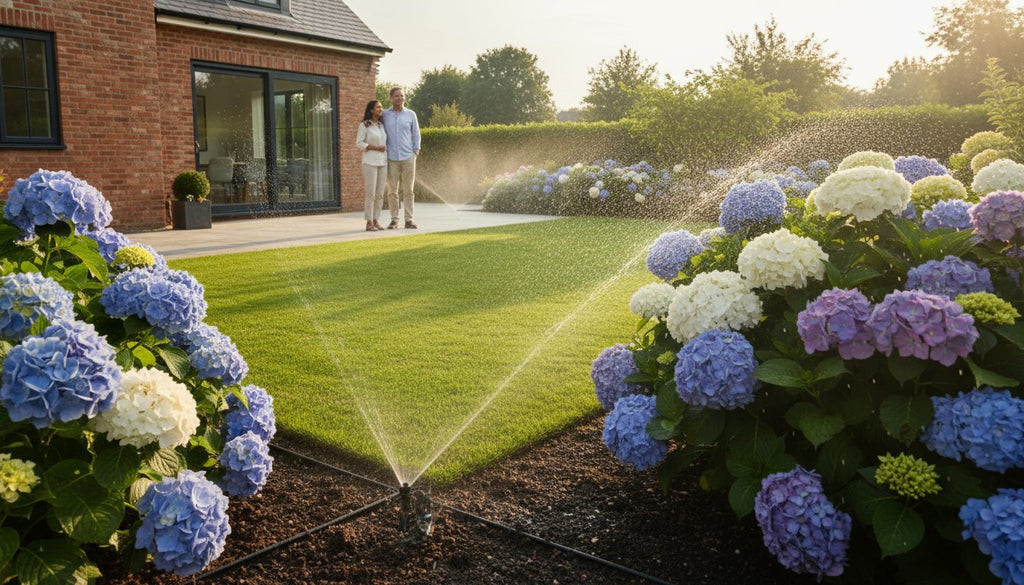
Imagine returning from a fortnight in the Mediterranean to find your hydrangeas have turned to crisp, brown paper and your lawn looks like a scorched paddock. It is a heart breaking sight that many British gardeners face every summer, especially when hosepipe bans or busy schedules get in the way. Investing in a high-quality auto watering system is the most reliable way to prevent this disaster while potentially reducing your annual water consumption by 33 per cent compared to traditional hosepipes.
You likely already know that standing with a hose for an hour every evening isn't just tiring; it's often inefficient, as much of that water evaporates before it even reaches the roots. At Garden Watering, we understand these challenges. Drawing on over 15 years of specialisation in irrigation, we're here to help you move past the frustration of leaking connectors and mismatched components. We promise to show you exactly how to design, install, and maintain a professional-grade setup that keeps your borders lush and your pots thriving with zero daily effort. This guide provides a complete breakdown of the latest 2026 technology, from smart controllers to durable drip line configurations.
Key Takeaways
- Understand how an auto watering system automates hydration at dawn or dusk to significantly reduce water waste and keep your garden lush.
- Identify the core components of a professional irrigation setup, including the programmable water timer "brain" and the essential supply pipes.
- Compare the benefits of high-efficiency drip irrigation for flower beds against discreet pop-up sprinklers to find the best fit for your landscape.
- Learn how to accurately measure your tap's flow rate with the "bucket test" to ensure your system is perfectly designed for your garden's needs.
- Discover why Hozelock’s interchangeable ecosystem provides a reliable, British-engineered solution that can grow alongside your outdoor space.
What is an Auto Watering System and Why Does Your Garden Need One?
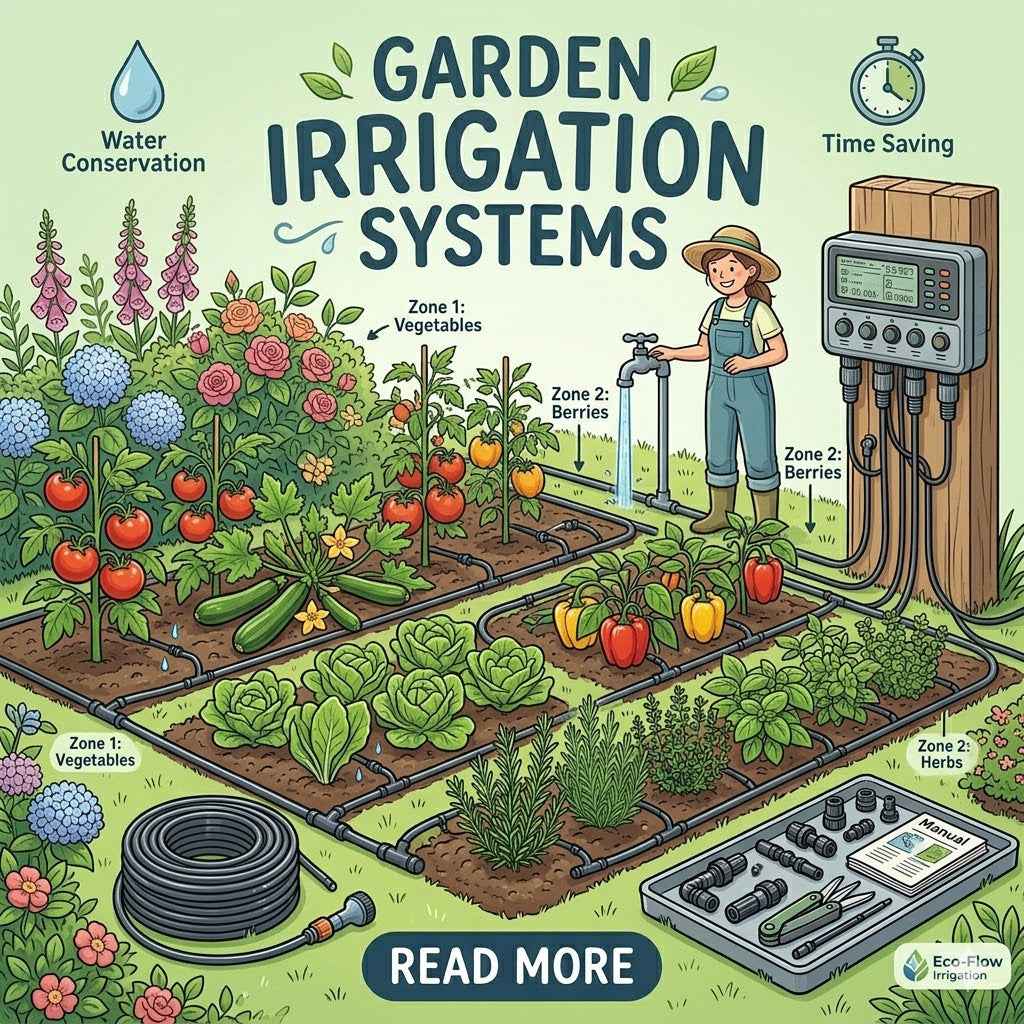
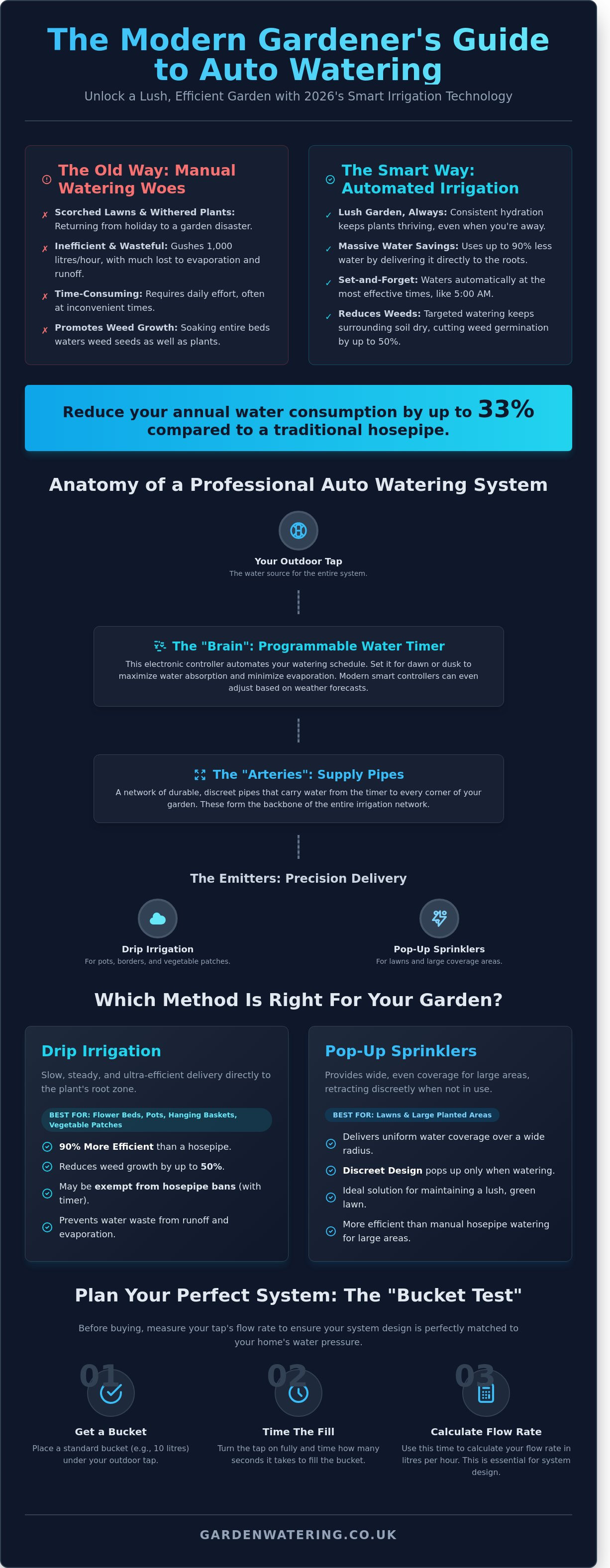
An auto watering system is a professional network of electronic timers, robust supply pipes, and precision emitters designed to automate your garden's hydration schedule. We specialise exclusively in these setups because they move beyond the guesswork of manual hosepipe use. By using a central controller, usually attached to your outdoor tap, the system distributes water through a series of discreet pipes directly to your pots, borders, or vegetable patches. It is a set-and-forget solution that ensures your plants receive exactly what they need to thrive without you lifting a finger.
The core benefit of this technology lies in its timing. Plants absorb water most effectively at dawn or dusk when temperatures are lower. Watering during the heat of a 25°C British summer day is wasteful; up to 30% of that water evaporates before it even reaches the roots. An auto watering system allows you to schedule irrigation for 5:00 AM, ensuring your soil stays moist and your plants remain resilient against heat stress. This consistency is something manual watering rarely achieves.
To better understand how these components work together in a practical setting, watch this helpful video:
Efficiency is the hallmark of modern irrigation. A standard garden hosepipe can gush out 1,000 litres of water per hour, much of which runs off the surface or saturates areas that don't need it. High-quality drip systems from brands like Hozelock or Claber use up to 90% less water than a traditional hosepipe. This is achieved by slow, steady delivery that allows the soil to absorb every drop. For many UK gardeners, the "Holiday Peace of Mind" factor is the ultimate decider. You don't have to rely on a neighbour to remember your hanging baskets during a two-week trip; the system handles it all with specialist precision.
The Environmental Impact of Smart Irrigation
Smart irrigation is a vital tool for the eco-conscious gardener. By delivering water directly to the root zone, you significantly reduce surface runoff and wastage. This targeted approach does more than just save water; it actively prevents weed growth. When you soak an entire border with a hose, you're watering weed seeds too. Keeping the soil dry between your desired plants can reduce weed germination by as much as 50%. Furthermore, modern systems often include rain sensors. These clever devices detect a British downpour and automatically bypass the next scheduled cycle, ensuring you never waste water when nature is already doing the job.
Understanding British Hosepipe Bans
Navigating water restrictions is a common challenge in the UK. It's a little-known fact that certain drip irrigation systems may be exempt from standard hosepipe bans, provided they are fitted with a timer and a pressure-reducing valve. Local bylaws vary, so we always recommend checking with your specific water provider, such as Thames Water or Anglian Water. The UK government's 2026 regulations under the Environmental Improvement Plan prioritise smart, timed delivery over manual spraying to hit per-capita consumption targets. Investing in a "leaky hose" or a dedicated drip line now prepares your garden for a future where water efficiency isn't just a choice, but a necessity for a lush, healthy landscape.
The Anatomy of an Automatic Watering System
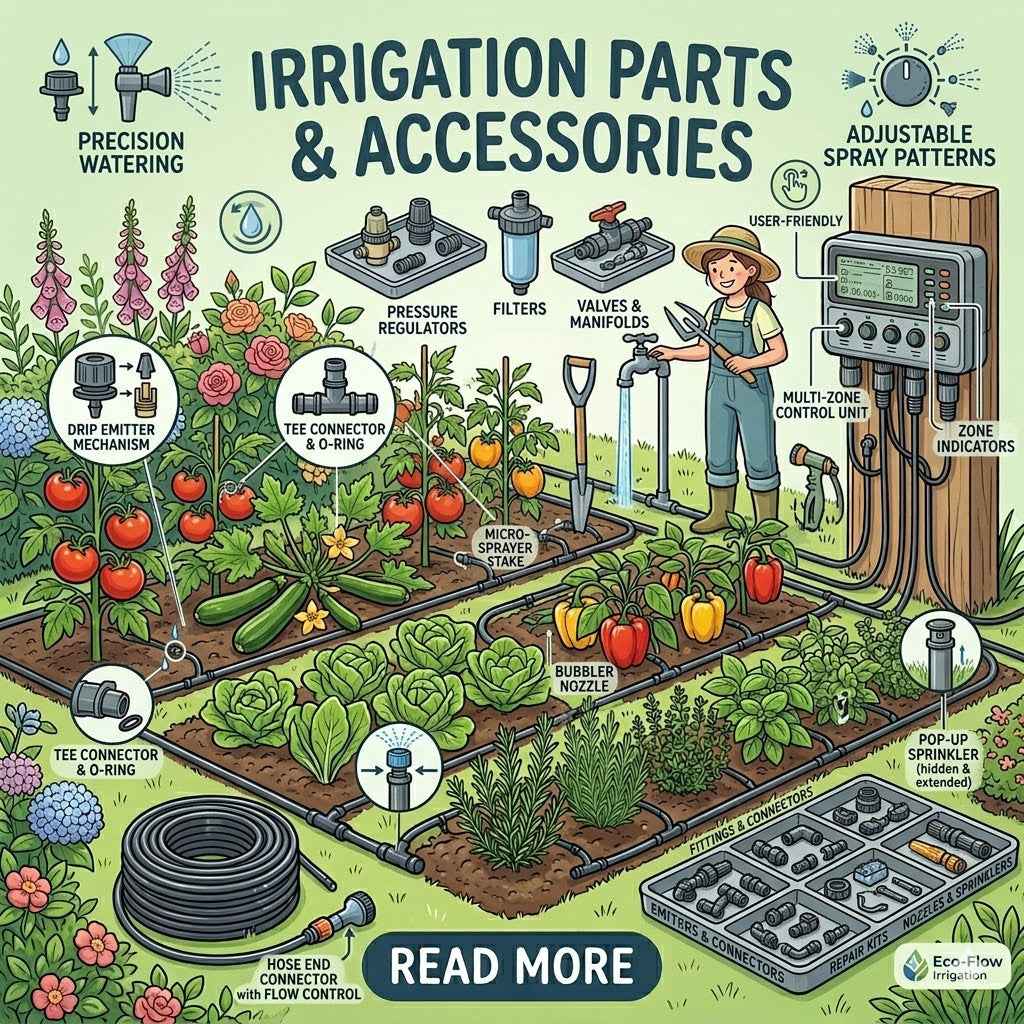
Understanding the internal mechanics of your auto watering system is the first step toward effective winter maintenance. To protect your investment from frost damage, you need to know exactly where water might linger and cause pipes to split. Most domestic systems are built from four primary component groups that work together to keep your garden thriving with minimal effort.
The water timer acts as the "brain" of the operation. It's a programmable valve that sits between your outdoor tap and the rest of the network. Modern systems often incorporate advanced irrigation controllers that use local weather data to adjust watering schedules automatically. These smart units can reduce water waste by up to 30% compared to basic manual timers. Because these devices contain delicate electronics and internal solenoids, they are the most vulnerable part of your system during a British winter.
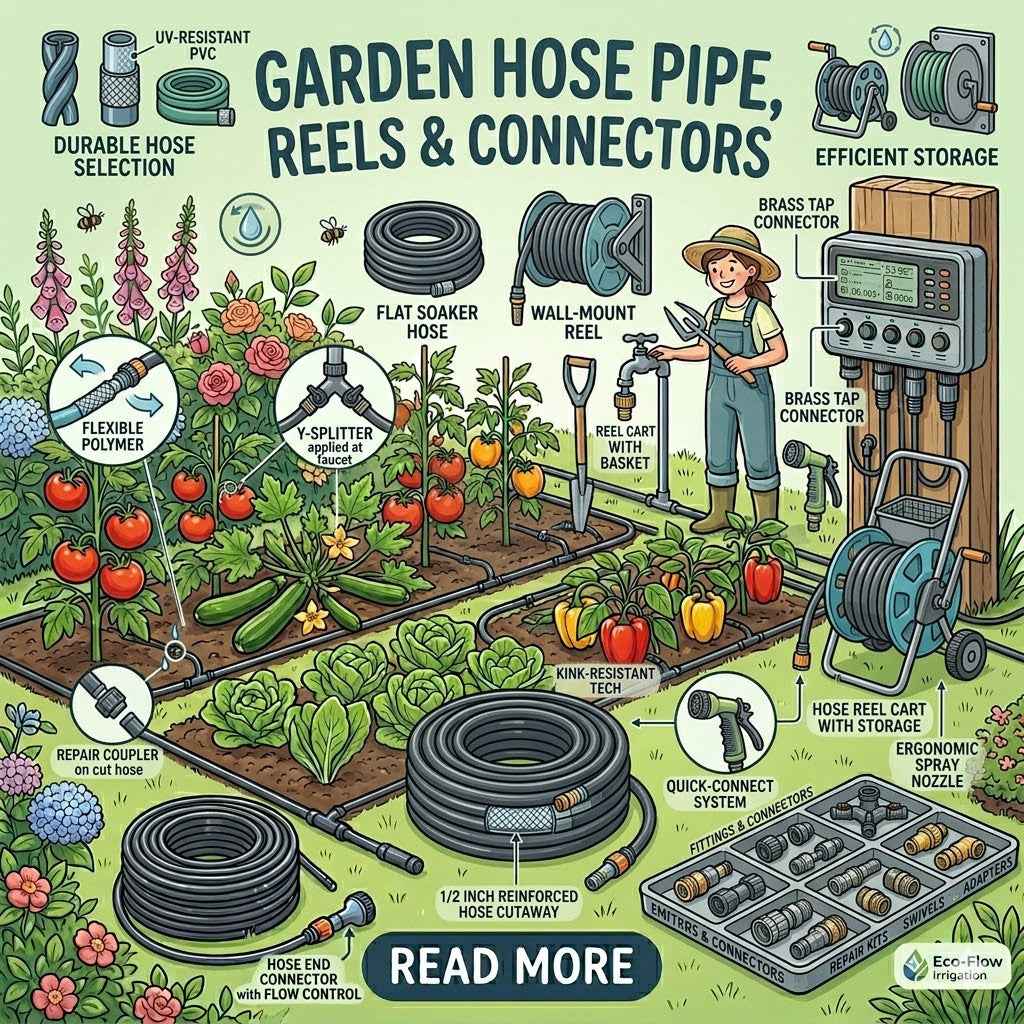
The water then travels through supply pipes, which function as the "arteries" of the garden. In the UK, most residential setups use 13mm LDPE (Low-Density Polyethylene) pipe. This material is UV-resistant and durable, but it can become brittle if water is left to freeze inside it. For larger estates where the run exceeds 50 metres, a 25mm pipe is often used to maintain high flow rates and prevent pressure loss at the furthest emitters.
- Micro Tubing: These 4mm "veins" branch off the main supply pipe to deliver precise amounts of water to individual pots, hanging baskets, or specific plants.
- Connectors and Adaptors: These are the joints that hold the system together. They must be robust enough to handle the 2 to 4 bar of pressure typically found in UK mains water supplies.
- Emitters: Whether they are drippers or mini-sprinklers, these are the final exit points for the water.
Choosing the Right Water Timer
Your choice of timer dictates how much control you have over your garden's hydration. Mechanical timers are simple, clockwork devices that are ideal for small flower beds. Digital timers allow for more complex scheduling, such as watering three times a day for five minutes. For those managing different environments, like a thirsty vegetable patch and a drought-tolerant rockery, dual-outlet timers are essential. These allow you to programme two independent zones from a single tap. You can explore our range of garden irrigation water timers to find a model that suits your specific garden layout and budget.
Connectors: The Secret to a Leak-Free System
When you're building an auto watering system, the quality of your fittings determines the longevity of the setup. High-quality Hozelock connectors are engineered to prevent pressure drops, ensuring that the last dripper on your line performs just as well as the first. Most systems utilise barbed fittings, which are pushed into the pipe and held by friction, or compression fittings that use a locking nut for a more permanent, high-pressure seal. If you're integrating different brands or pipe sizes, irrigation fitting adaptors provide the flexibility needed for custom layouts. If you need help selecting the right components for your garden, our specialists can help you find the perfect irrigation parts to ensure your system remains efficient for years to come.
Drip Irrigation vs. Sprinklers: Which is Best for Your Garden?
Every garden has unique thirsty spots. Choosing the right delivery method for your auto watering system ensures every plant gets exactly what it needs without wasting a drop. While one area might require a gentle mist, another may need a deep soak to reach the roots of established shrubs. Understanding the mechanics of each component allows you to build a setup that is both efficient and effective.
- Drip Irrigation: This method delivers water at a rate of 2 to 4 litres per hour directly to the base of plants. It is the top choice for flower beds, vegetable patches, and container gardening where keeping foliage dry is vital to prevent mildew and fungal diseases.
- Pop-up Sprinklers: These sit flush with the soil and rise only when water pressure is applied, offering a spray radius of up to 10 metres. They provide 360-degree coverage, making them the gold standard for discreet, even lawn hydration without leaving trip hazards on the turf.
- Soaker Hoses: These porous pipes "sweat" water along their entire length and are typically available in 15 to 50-metre rolls. They're ideal for established hedges and dense borders because they provide a slow, steady soak that penetrates deep into the soil.
- Micro Sprays: These create a fine, directed mist that covers a smaller area than traditional sprinklers. They are perfect for greenhouses and delicate nursery plants that require high humidity or gentle watering to avoid damaging fragile stems.
Zoning Your Garden for Success
You should never mix high-flow sprinklers with low-flow drippers on a single line. Sprinklers require high pressure to function properly, while drippers operate at much lower levels. If you combine them, your drippers might blow off the pipe or your sprinklers won't have enough power to lift. This level of control is what makes a modern auto watering system so effective for busy homeowners. Calculating a "water budget" involves measuring your tap's flow rate; most UK domestic taps provide between 10 and 15 litres per minute. To simplify this process, using Hozelock watering kits allows you to set up pre-configured zones that match specific plant needs. Integrating smart irrigation technology like soil sensors ensures your zones only activate when the ground is truly dry, preventing over-watering during damp British summers.
The Pros and Cons of Drip Systems
Drip systems are incredibly efficient because they target the root zone directly. This precision reduces evaporation loss by up to 90 percent compared to traditional hand watering with a hose. Direct hydration also means fewer weeds, as the water isn't being sprayed onto bare soil where weed seeds are waiting to germinate. However, these systems aren't entirely maintenance-free. They require periodic checking for emitter blockages, especially in hard water areas like South East England where lime-scale can build up. A drip line is the most efficient delivery method for 2026 because it uses pressure-compensating emitters to guarantee uniform water distribution regardless of elevation changes in your garden. By taking the time to inspect your emitters every few weeks, you ensure your plants remain lush and healthy throughout the peak growing season.
Planning and Installing Your Auto Watering System
Designing an effective irrigation layout requires more than just laying pipes across the lawn. A successful auto watering system relies on precise hydraulic planning to ensure every plant receives the correct amount of hydration. Without a clear strategy, you risk low pressure at the end of your lines, leaving your furthest borders parched while those closest to the tap are overwatered.
The first technical step is the "bucket test" to measure your tap flow rate. Use a standard 9-litre bucket and time how long it takes to fill from your garden tap. If the bucket fills in 20 seconds, your flow rate is approximately 1,620 litres per hour. This specific number is vital because it determines how many drippers or sprayers you can run simultaneously. Exceeding this capacity leads to a drop in pressure that prevents the emitters from functioning correctly.
Once you've established your flow capacity, sketch a detailed layout on paper. Identify where your 13mm supply pipes will act as the "backbone" of the system and where the 4mm micro-tubing will branch off to individual pots or flowerbeds. It's often helpful to group plants with similar water requirements into specific zones. This allows you to tailor the watering duration for thirsty vegetables versus drought-tolerant shrubs.
Before making any permanent cuts to your LDPE pipe, peg out the entire system on the ground using plastic landscape stakes. This allows you to visualise the run and ensures you have enough elbows, tees, and wall clips to finish the job. It's much easier to adjust a pegged-out line than it is to fix a pipe that's been cut 10cm too short.
Testing is the final stage of a professional installation. Turn on the water and let the system run under full pressure for at least 15 minutes. Check every joint for leaks and observe the output of each dripper. This is the time to identify "dry spots" where the spray doesn't quite reach. Fixing these issues now prevents plant loss during a summer heatwave when the soil can dry out in less than 24 hours.
Design Tips for Complex Layouts
Hiding pipes is essential for a tidy finish. You can tuck supply lines under 50mm of bark mulch or decorative gravel to keep them out of sight and protected from UV damage. For larger gardens, use a "loop" configuration. By connecting the end of your supply pipe back to the start, you equalise the pressure throughout the entire circuit. You can find more professional layout inspiration by reading our design ideas and plans.
Maintenance and Winterising
Protecting your investment means preparing for the UK's erratic winter weather. In regions like the East Midlands or Scotland, ground temperatures often drop below -5°C, which can crack plastic fittings if water is left inside. Always drain the lines before the first hard frost, usually by late October. Remove the batteries from your water timer to prevent terminal corrosion and flush the lines to clear out the limescale deposits that are particularly common in hard water areas like the South East.
Ready to upgrade your garden's efficiency? Shop our professional garden irrigation systems to get started today.
Why Hozelock is the Professional Choice for 2026
Choosing the right equipment for your garden isn't just about the upcoming season; it's about building a reliable infrastructure that lasts for a decade or more. Hozelock has been the cornerstone of British gardening since 1959, and their 67-year history of engineering specifically for the UK climate makes them the undisputed leader. While budget brands often fail under the pressure of British winters or the intensity of a summer heatwave, Hozelock components are designed to withstand these extremes. An auto watering system from Hozelock represents a long-term investment in your garden's health, combining mechanical reliability with the latest smart technology.
The ecosystem is built on the principle of total interchangeability. You can start with a basic setup and expand it as your garden evolves. Whether you're adding a new greenhouse or extending your borders, the components click together with a satisfying, leak-free precision. This modularity ensures you don't have to replace your entire system just to add a few extra drippers. In 2026, the brand continues to lead the market by focusing on water efficiency, helping gardeners reduce waste by up to 30% compared to traditional manual hosing.
The Hozelock Advantage
Quality materials are the foundation of any professional irrigation setup. Hozelock uses high-grade, UV-stabilised polymers that won't become brittle or perish when exposed to direct sunlight for years. You can see this dedication to durability in the tactile, ergonomic designs of Hozelock spray guns and lances, which are built to handle high water pressure without leaking. Unlike generalist brands that treat watering as a seasonal side-line, Hozelock maintains a massive catalogue of spare parts. If a seal wears out after five years, you can simply buy a replacement rather than binning the whole unit.
Innovation remains at the heart of their 2026 range. The latest sensor-based controllers now use sophisticated light sensors to trigger watering at sunrise or sunset, the exact moments when evaporation is at its lowest. These units are now housed in ultra-durable casings that protect the internal electronics from the damp conditions typical of a British autumn. By combining these smart controllers with an auto watering system, you ensure your plants receive the precise amount of hydration they need, regardless of your schedule.
Trust the Irrigation Specialists
We don't just sell products; we live and breathe garden hydration. We specialise exclusively in Hozelock watering solutions, meaning our team knows every technical detail of the range. With over 15 years of hands-on experience, we provide the expert advice you need to design a system that actually works for your specific landscape. We understand the nuances of water pressure and flow rates that general retailers often overlook.
Our commitment to your success goes beyond the checkout. We've spent over 1,000 hours testing these components in real-world conditions to ensure they meet our high standards. You can read more about the Hozelock automatic watering system in our deep-dive review, where we break down the performance of the latest 2026 models. When you buy from a dedicated specialist, you're gaining a partner who's invested in making sure your garden thrives year after year.
Take Control of Your Garden's Health Today
Investing in a high-quality auto watering system is the most effective way to ensure your plants thrive while reducing water waste by up to 90% compared to manual hosing. Whether you opt for precise drip irrigation for your flower beds or a robust sprinkler setup for the lawn, the right technology eliminates the guesswork. Proper planning ensures every drop reaches the roots where it's needed most; this protects your investment in your outdoor space while saving you hours of manual labour every week.
At Garden Watering, we've spent over 15 years building our reputation as the UK's leading specialist in irrigation. We specialise exclusively in Hozelock because it remains the professional choice for reliability in 2026. As an exclusive stockist with deep product knowledge, we support you through every step of the installation process. You'll benefit from our expert advice and fast UK delivery on all irrigation kits and components to get your project moving quickly.
Browse our complete range of Hozelock Automatic Watering Systems
It's time to stop worrying about the weather and start enjoying a lush, healthy garden that looks after itself. We're ready to help you find the perfect solution for your specific landscape.
Frequently Asked Questions
Can I install an auto watering system myself or do I need a plumber?
You can certainly install an auto watering system yourself without hiring a professional plumber. Most modern kits use simple push-fit components that connect directly to your external 3/4 inch threaded garden tap. Since these systems operate outside and don't involve permanent changes to your home's internal plumbing, they're a perfect DIY project for any weekend gardener.
How much does a garden irrigation system cost to run per year?
Running an auto watering system typically costs less than £15 per year for an average 30m² UK garden. This figure includes approximately £4 for a high-quality 9V alkaline battery and roughly £11 in water usage if you're on a meter. Because drip systems are 90% more efficient than manual hosing, you'll likely see a reduction in your overall water bill.
Will an automatic watering system work with a water butt?
Yes, an automatic watering system works with a water butt if you choose the right equipment. Standard timers often need at least 0.1 bar of pressure to open the valve, which a gravity-fed butt might not provide. We recommend using a solar-powered pump or a specialist zero-pressure timer to ensure your plants get the water they need from your harvested rain.
What happens to the watering system during a hosepipe ban?
You must generally turn off any system connected to the mains supply during a formal hosepipe ban. During the 2022 restrictions, most UK water companies prohibited the use of automatic timers unless they were connected to a non-mains source. Switching your system to run from a water butt is the most reliable way to keep your garden thriving during these periods.
How often should I change the batteries in my water timer?
You should change the batteries in your water timer once every 12 months, ideally at the start of the spring growing season. While a quality pair of AA or 9V batteries can last for a full season of daily watering, replacing them annually prevents the unit from failing during a heatwave. Always remove the batteries over winter to prevent any internal corrosion or leakages.
Can I add more drippers to my existing Hozelock system later?
You can easily expand your Hozelock system by adding more drippers as your garden grows. A standard 13mm main supply pipe can comfortably support up to 30 individual 4-litre-per-hour drippers over a 50-metre distance. If you plan to add more than this, simply use a T-piece connector to create a second loop or branch to maintain consistent pressure throughout.
Do I need a pressure reducer for my micro-irrigation setup?
You definitely need a pressure reducer for a micro-irrigation setup to prevent the high mains pressure from blowing the drippers off the pipes. UK mains pressure often reaches 4 bar, but an auto watering system performs best at a steady 1.5 bar. Installing a regulator at the tap ensures the joints remain secure and prevents your emitters from spraying water haphazardly.
Is an auto watering system suitable for a small balcony or patio?
An automatic watering system is an excellent solution for small balconies or patios where pots and hanging baskets dry out rapidly. Compact kits use discreet 4mm micro-pipes that you can easily tuck behind planters or along railings. These systems ensure that 100% of your container plants stay hydrated with minimal effort, even if you're away from home for a few days.
`-
Posted in
auto watering system