Hozelock Irrigation Hose: The Complete 2026 Guide to Garden Pipelines
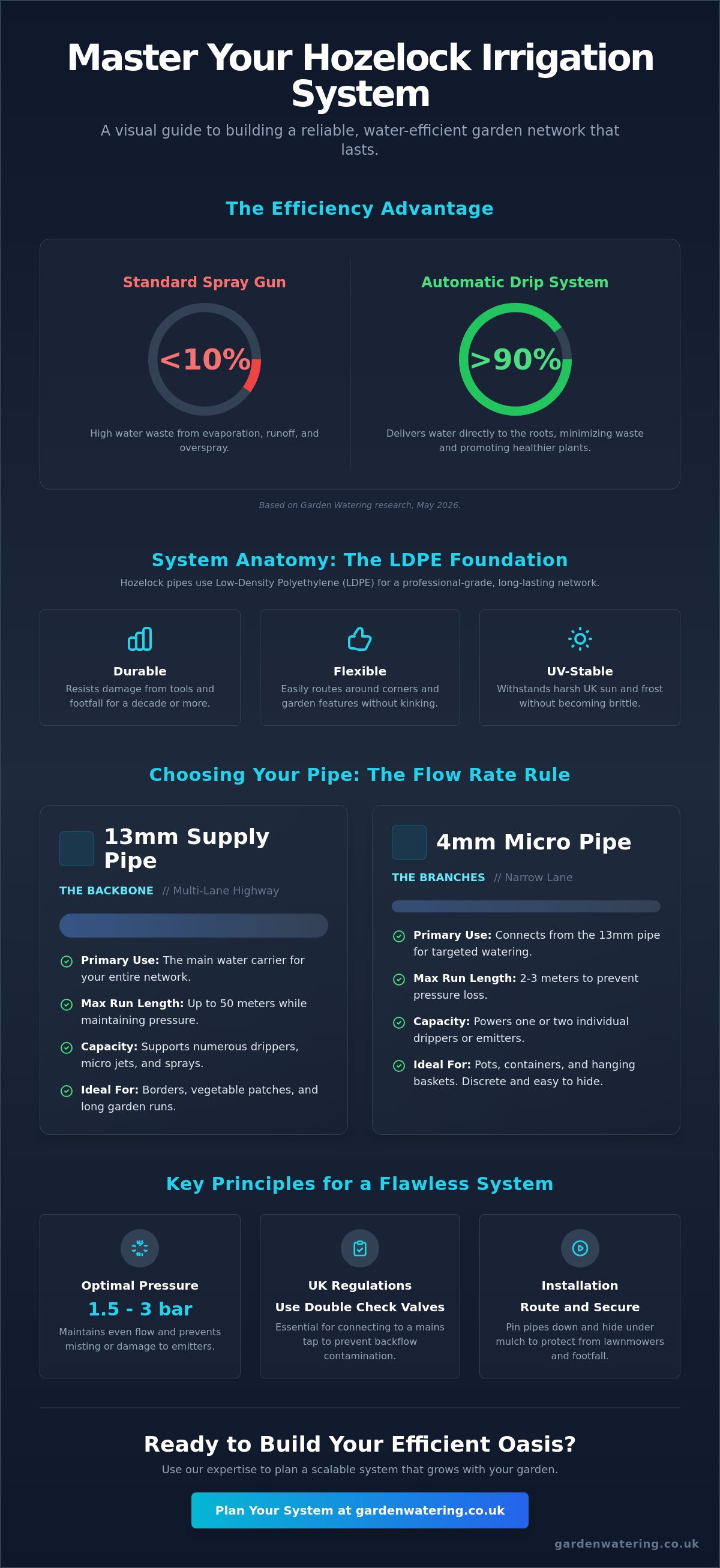
Did you know that an automatic drip irrigation system is over 90% more efficient than using a standard spray gun? According to research from Garden Watering in May 2026, switching to these targeted systems is the most effective way to conserve water while protecting your landscape. You likely want a lush garden but feel frustrated by the technical confusion of 13mm versus 4mm pipes or the fear of a connection bursting while you are away. It is common to worry about pressure loss over long garden runs, especially when the health of your prize plants is on the line.
This guide helps you master the technical specifications of your hozelock irrigation hose to build a reliable, leak-free network. We will provide a clear shopping list for your specific layout and show you how to ensure your system lasts for a decade or more. You'll learn how to navigate UK water regulations using double check valves and how to maintain perfect water delivery to every pot and border. We are here to help you transform your garden into an efficient, self-sustaining oasis that thrives even during the driest summers.
Key Takeaways
- Understand the structural advantages of LDPE piping for creating a durable, professional-grade watering backbone.
- Master the "Flow Rate Rule" to correctly choose between 13mm supply lines and 4mm micro pipes for your specific hozelock irrigation hose setup.
- Learn how to route and secure your pipelines to create a discreet system that is protected from lawnmower damage and footfall.
- Discover how specialized components integrate with standard connectors to prevent pressure loss and leaks across long garden runs.
- Gain the expertise needed to plan a scalable system that can expand easily from a small patio to a larger landscape.
Understanding the Hozelock Irrigation Hose Ecosystem
Building a garden watering network requires a shift in how you view your equipment. While a standard yellow reinforced hosepipe is excellent for washing the car or manual watering, it isn't designed to stay pressurized or sit outdoors year round. A dedicated hozelock irrigation hose is different. These pipes are manufactured from Low-Density Polyethylene (LDPE), a material chosen for its unique balance of flexibility and structural integrity. Unlike standard hoses that can kink or perish, LDPE remains stable even when hidden under mulch or pinned across a flower bed. This technology serves as the foundational architecture for a modern drip irrigation system, ensuring water reaches your plants without the waste associated with evaporation or runoff.
To better understand how these components function as a complete network, watch this helpful video:
For UK gardeners, UV-stability is a critical feature that cannot be ignored. Our seasonal shifts mean your pipes face intense summer sun followed by freezing winter temperatures. Without high quality UV protection, plastic pipes become brittle and crack within a few seasons. The current Hozelock "Pipeline" range is engineered to withstand these cycles, providing a dependable backbone for your Hozelock watering setup that won't require constant repairs. This durability is why professional growers rely on LDPE for long-term installations.
The Backbone: 13mm Supply Pipe
The 13mm supply pipe is the primary carrier for your entire network. It's the industry standard because it provides enough volume to support multiple drippers or micro-sprays without a significant drop in pressure. This pipe is fully compatible with Hozelock Easy Drip components, allowing you to punch drippers directly into the line. For the best performance, try to keep your main 13mm runs under 50 meters. If your garden is larger, you might need to create a ring main or use multiple zones to ensure every plant receives the same amount of water.
The Branches: 4mm Micro Supply Pipe
If the 13mm pipe is the trunk of the tree, the 4mm micro pipe represents the branches. This smaller hozelock irrigation hose is perfect for the "final inch" of water delivery. It is discrete and easy to hide, making it the ideal choice for hanging baskets or individual pots on a patio. You can connect these branches to your main line using irrigation fitting adaptors. Just remember that 4mm pipe has physical limits. To maintain adequate pressure at the dripper, keep individual micro pipe runs to a maximum of 2 to 3 meters.
Supply Pipe vs. Micro Pipe: Choosing Your Diameter
Choosing the right pipe diameter is about balancing water volume with garden aesthetics. If you select a pipe that is too narrow for your layout, the plants at the end of the line won't receive enough water. This leads to uneven growth and wasted effort. To avoid this, you must understand the "Flow Rate Rule." Think of your hozelock irrigation hose as a motorway. A 13mm pipe is a multi-lane highway capable of carrying a high volume of water, while a 4mm pipe is a narrow lane meant for light traffic. If you try to power twenty drippers through a 4mm micro pipe, the friction will cause the water pressure to vanish before it reaches the final plant.
To maintain a healthy system, aim for a pressure between 1.5 and 3 bar across your entire network. Maintaining this steady flow is one of the primary water conservation benefits of professional systems, as it prevents the misting and runoff associated with high-pressure spikes. For gardens with many tight corners, look for "Flexi" hose variants. These are more pliable than standard LDPE, making them easier to weave around established shrubs without the need for dozens of elbow connectors. If you are just starting your project, browsing our Hozelock watering kits can help you see how these different diameters work together in a pre-configured setup.
When to Choose 13mm Mainline
The 13mm supply pipe is the correct choice for large borders, vegetable patches, and long hedges. It acts as the primary header pipe, capable of supporting up to 30 or 40 low-flow drippers on a single run. In greenhouse environments, use the 13mm pipe as a central spine running along the floor or staging. This ensures that every individual pot branch receives a consistent, high-volume supply of water without the pressure dropping halfway through the house.
When to Stick with 4mm Micro
The 4mm micro pipe is best for patio pots, hanging baskets, and window boxes where a thick 13mm pipe would look unsightly. Its small profile makes it easy to hide along mortar lines or behind foliage. However, you must respect its physical limits. For the best results, limit each 4mm branch to a maximum of 5 or 6 drippers. If you need to water more pots than that, run a 13mm supply line closer to the area and use irrigation fitting adaptors to create multiple short micro-branches instead.
Specialised Hozelock Hoses: Beyond the Standard Pipe
While standard LDPE supply lines form the skeleton of your system, specialised hoses provide the functional "muscles" for specific watering tasks. Choosing a specialized hozelock irrigation hose allows you to tailor water delivery based on plant type and soil conditions. These functional hoses integrate seamlessly with standard Hozelock connectors, meaning you can swap a standard spray line for a porous or dripper variant without redesigning your entire network. This modularity ensures your garden remains efficient as it matures and your watering needs change.
Porous Soaker Hose (Weeper Hose)
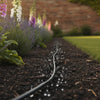
The porous soaker hose uses a unique "sweating" mechanism to release water slowly along its entire length. This hose is particularly effective in heavy clay soils, where slow absorption is necessary to prevent surface runoff and wasted water. It is the ideal solution for established hedges and densely planted borders where individual drippers might be difficult to place. To maximize the 70% water saving potential of this hose, always install it under a layer of bark mulch. This protects the pipe from UV degradation and ensures the moisture goes directly into the earth rather than evaporating into the air.
Dripper Hose (Integrated Drippers)
For uniform watering along a straight line, the Hozelock dripper hose is a professional-grade choice. It features pre-installed drippers spaced at regular intervals, typically every 30cm. These drippers utilize internal labyrinth technology, which creates a turbulent flow to prevent grit and bio-film from clogging the outlets. Unlike DIY dripper installation where you punch holes manually, this factory-sealed hozelock irrigation hose offers a much higher level of reliability. It is especially useful in sandy soils where water drains quickly; the precise placement ensures the root ball stays hydrated without saturating the surrounding dry patches.
Sprinkler Hose (Perforated Spray)
The sprinkler hose is a perforated flat pipe that provides a fine misty spray. You can use it facing upwards to water narrow strips of lawn or flip it over to spray downwards into a seedbed. Because these hoses have a high flow requirement, they are best suited for shorter runs connected directly to a tap. While they are excellent for established flower beds during a summer heatwave, we generally recommend them as a temporary seasonal solution. For long-term, permanent Hozelock watering, the solid-wall supply pipes and dedicated drippers mentioned in previous sections offer superior durability and better control over water pressure.
Installation Masterclass: Routing and Securing Your Hose
Planning the route for your hozelock irrigation hose is just as important as choosing the right diameter. You need to consider the physical movement of the pipes. LDPE material naturally expands and contracts as temperatures change in the UK. This can lead to "pipe creep," where the hose slowly shifts out of position over several seasons. To prevent this, use stakes every meter on soil or wall clips on hard surfaces. Always route your lines along the edges of flower beds or under hedges to avoid lawnmower blades and heavy footfall, which can crush the pipe or cause connections to loosen over time.
Creating a watertight seal requires a clean cut and a firm hand. Use a sharp pair of garden snips to ensure the pipe end is square rather than angled. If you are joining multiple sections, ensure the pipe is pushed fully over the internal barbs of the fitting. This creates the mechanical grip needed to withstand the constant pressure of an automated system. If you need to expand your network later, keep a few spare joiners and T-junctions in your garden shed to make modifications simple and quick.
To Bury or Not to Bury?
Burying your system creates an "invisible" garden, but it requires careful planning. In the UK, a burial depth of 5cm to 10cm is usually sufficient to hide the pipe while avoiding heavy soil compression. However, sub-surface irrigation makes repairs harder if you accidentally pierce the line with a spade. A professional tip is to lay a thin trail of white sand or place small markers above the buried pipe. This ensures you know exactly where the network sits before you start planting new shrubs or digging over your borders in the spring.
Mastering Hozelock Connectors
Achieving a leak-free join is straightforward when you use the dedicated Hozelock Connector range. If you find the 13mm pipe is too stiff to push onto a joiner, use the "hot water trick." Dip the end of the pipe into a thermos of hot water for 30 seconds to soften the plastic. It will slide onto the connector easily and form a shrink-fit seal as it cools. Pay extra attention to end-plugs and T-junctions. These points face the highest pressure in the hozelock irrigation hose network, so ensure the locking nuts are fully tightened to prevent blow-outs during the night.
Winterising Your Pipeline
Water expands when it freezes, which can split even the toughest pipes. Before the first frost, you must drain your system. If your layout has a low point, install a manual drain valve there to let gravity do the work. While you can leave permanent LDPE pipe in-situ over winter, always remove and store your water timers and pressure regulators indoors. When you restart in the spring, flush the system without the end-plugs attached to clear out any grit or debris that may have settled. Explore our full range of Hozelock watering components to find the perfect stakes and clips for your installation.
Designing Your Network with Garden Watering Expertise
Designing an efficient irrigation system requires more than just picking parts off a shelf. While general retailers often provide basic product descriptions, expert guidance ensures your network handles the specific water pressure and layout of your UK garden. A well-planned hozelock irrigation hose system is an investment in the long-term health of your landscape. It allows you to scale your watering needs as your garden grows. You can easily expand from a few patio pots to a full acre of borders by adding new zones to your existing backbone without starting from scratch.
Using genuine Hozelock components is the best way to ensure the 10-year longevity we have discussed throughout this guide. Professional-grade LDPE pipes and fittings are engineered to work together. Third-party alternatives often fail to create the same watertight seal, which leads to hidden leaks and pressure drops. By sticking to a single, high-quality ecosystem, you guarantee that every T-junction and dripper works in harmony to deliver water exactly where your plants need it most.
Building Your Shopping List
Starting your project is easier when you break the system down into its core components. If you are new to automated watering, we recommend starting with Hozelock Watering Kits. These packages include the essential pipes and drippers needed for a standard layout. To gain the full benefits of a "set and forget" system, add one of our Garden Irrigation Water Timers to your tap. This allows you to schedule watering for the early morning when evaporation is at its lowest. For more complex layouts involving multiple branches, use Irrigation Fitting Adaptors to customise the flow around your specific garden features.
Why Trust Garden Watering?
We bring over 15 years of exclusive Hozelock expertise to every customer interaction. Our team understands the unique challenges of UK gardening, from managing hard water scale to protecting systems against frost. We provide direct support for complex garden layouts and can help you troubleshoot pressure issues before you even begin your installation. If you need inspiration for your project, our Design Ideas and Plans blog offers a wealth of technical layouts and real-world examples. We are dedicated partners in your gardening success and are here to help you build a system that saves time, water, and money. Browse our full Hozelock Irrigation Hose range today and take the first step toward a more efficient garden.
Build a Resilient Garden for Years to Come
You now have the technical knowledge to transform your outdoor space into a highly efficient, water-wise environment. By mastering the differences between 13mm and 4mm diameters and understanding the unique roles of specialised pipes, you can eliminate the guesswork that often leads to pressure loss or plant stress. A professional hozelock irrigation hose setup isn't just about convenience; it is about providing consistent hydration and protecting your landscape against the unpredictable UK climate.
As an exclusive Hozelock specialist with 15+ years of irrigation expertise, we are here to support your project from the first pipe cut to the final spring restart. Our UK-based expert support team is ready to help you navigate technical challenges and ensure your system performs at its peak for a decade or more. Take the next step toward a thriving, low-maintenance garden by selecting the right components for your specific layout.
Shop the Full Range of Hozelock Irrigation Hoses at Garden Watering
We look forward to helping you create a vibrant landscape that remains healthy and beautiful all year round.
Frequently Asked Questions
Can I bury Hozelock irrigation hose underground?
You can certainly bury your hozelock irrigation hose to keep your garden looking tidy. We recommend a depth of 5cm to 10cm to hide the pipe without causing compression issues. It is important to mark the location of buried lines using sand or stakes. This simple step prevents you from accidentally piercing the LDPE pipe with a spade during future planting sessions or seasonal border maintenance.
What is the difference between 13mm and 4mm Hozelock pipe?
The 13mm pipe serves as the main supply carrier or "backbone" of your network, while the 4mm micro pipe acts as the "branches." You should use the 13mm line to transport water across the garden and the 4mm line for final delivery to individual pots or hanging baskets. This hierarchy ensures you maintain adequate water pressure for every plant without overloading the smaller distribution tubes.
How many drippers can I run off a single length of 13mm hose?
You can typically run between 30 and 40 low-flow drippers off a single 50-meter length of 13mm hozelock irrigation hose. This capacity depends on your local mains pressure and the specific flow rate of the drippers you choose. If you need to water more plants, it is best to split your system into multiple zones to ensure every dripper receives a consistent and efficient flow.
Do I need a pressure reducer for my Hozelock irrigation system?
Yes, installing a pressure reducer is a vital step for any automatic watering system. Most domestic taps provide pressure higher than the 1.5 to 3 bar required for drip components. A reducer protects your fittings from blow-outs and ensures that your drippers operate at their intended flow rate. This prevents water waste and helps your system last for many years without requiring constant repairs.
Can I connect a Hozelock soaker hose to a standard garden hose?
You can connect a Hozelock soaker hose to a standard garden hose using any standard Hozelock quick-connect fitting. This is a practical way to extend your watering reach to a specific hedge or border without laying a permanent pipeline. Just remember that soaker hoses require low pressure to function correctly, so you may still need to adjust your tap flow or use a regulator.
Will my irrigation pipe split if it freezes in winter?
Your irrigation pipe is designed to be durable, but it can split if water is left inside during a hard frost. Ice expands with immense force, which can damage even high-quality LDPE. To protect your investment, always drain the system before winter. You can do this by removing the end plugs and letting gravity clear the lines, ensuring your system is ready for a spring restart.
How do I stop my irrigation fittings from leaking?
The most effective way to stop leaks is to ensure your cuts are square and the pipe is pushed fully over the internal barbs. If the pipe is difficult to seat, use the "hot water trick" to soften the plastic before fitting. Once the pipe cools, it will shrink-fit onto the connector. Always check that your locking nuts are hand-tight to maintain a secure, watertight seal under pressure.
Is Hozelock irrigation hose compatible with other brands?
Hozelock pipes are generally compatible with other irrigation brands that use standard 13mm and 4mm measurements. However, we always recommend using genuine Hozelock components for the best results. The tolerances are specifically matched to provide the most reliable, leak-free connections. Mixing brands can sometimes lead to minor sizing discrepancies that cause drips or blow-outs during the high-pressure cycles of an automated watering schedule.
`-
Posted in
Automatic Watering, DIY Gardening, Drip Irrigation, Garden Pipelines, Garden Watering, Hozelock, hozelock irrigation hose, Irrigation, Water Conservation