The Ultimate Guide to Soaker Hoses: Efficient Garden Watering in 2026
Did you know that a traditional garden sprinkler can waste up to 50% of the water it uses through evaporation and runoff? It’s a frustrating figure for any passionate UK gardener, especially when you're trying to navigate complex hosepipe ban rules during a dry spell. You want a lush, healthy garden, not a higher water bill and parched plants.
This is where the quiet efficiency of a soaker hose system becomes your garden's greatest ally. We believe that smart watering shouldn't be complicated. In this expert guide, we promise to give you all the practical advice needed to choose, install, and maintain the perfect system for your garden. We'll walk you through everything from selecting the right diameter for your flowerbeds to simple maintenance that guarantees years of reliable, water-saving performance.
Key Takeaways
- Discover how the right soaker hose can cut your garden's water consumption by up to 70%, promoting healthier plants while saving on your utility bills.
- Learn to distinguish between soaker hoses and drip lines to make the most efficient choice for your specific garden layout, from dense borders to vegetable patches.
- Master a simple, step-by-step installation process that guarantees even water distribution and helps you avoid common setup mistakes.
- Find expert solutions for keeping your system running smoothly, including how to tackle limescale in UK hard water areas and fix frustrating dry spots.
What is a Soaker Hose and Why Does Your Garden Need One?
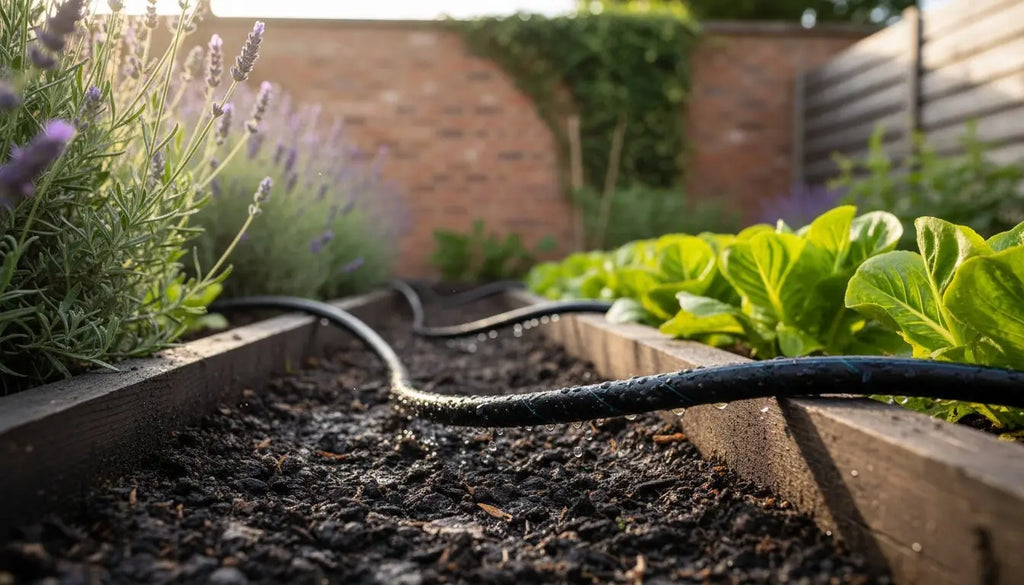
Understanding the best way to water your garden is the first step towards a lush, healthy outdoor space. While sprinklers and traditional hoses have their place, a soaker hose offers a uniquely efficient and targeted solution for garden beds, borders, and vegetable patches. At its core, it’s a specialised porous pipe, often made from recycled rubber, designed to "sweat" or weep water slowly and evenly along its entire length. This method delivers water directly into the soil, right where your plants need it most: the root zone.
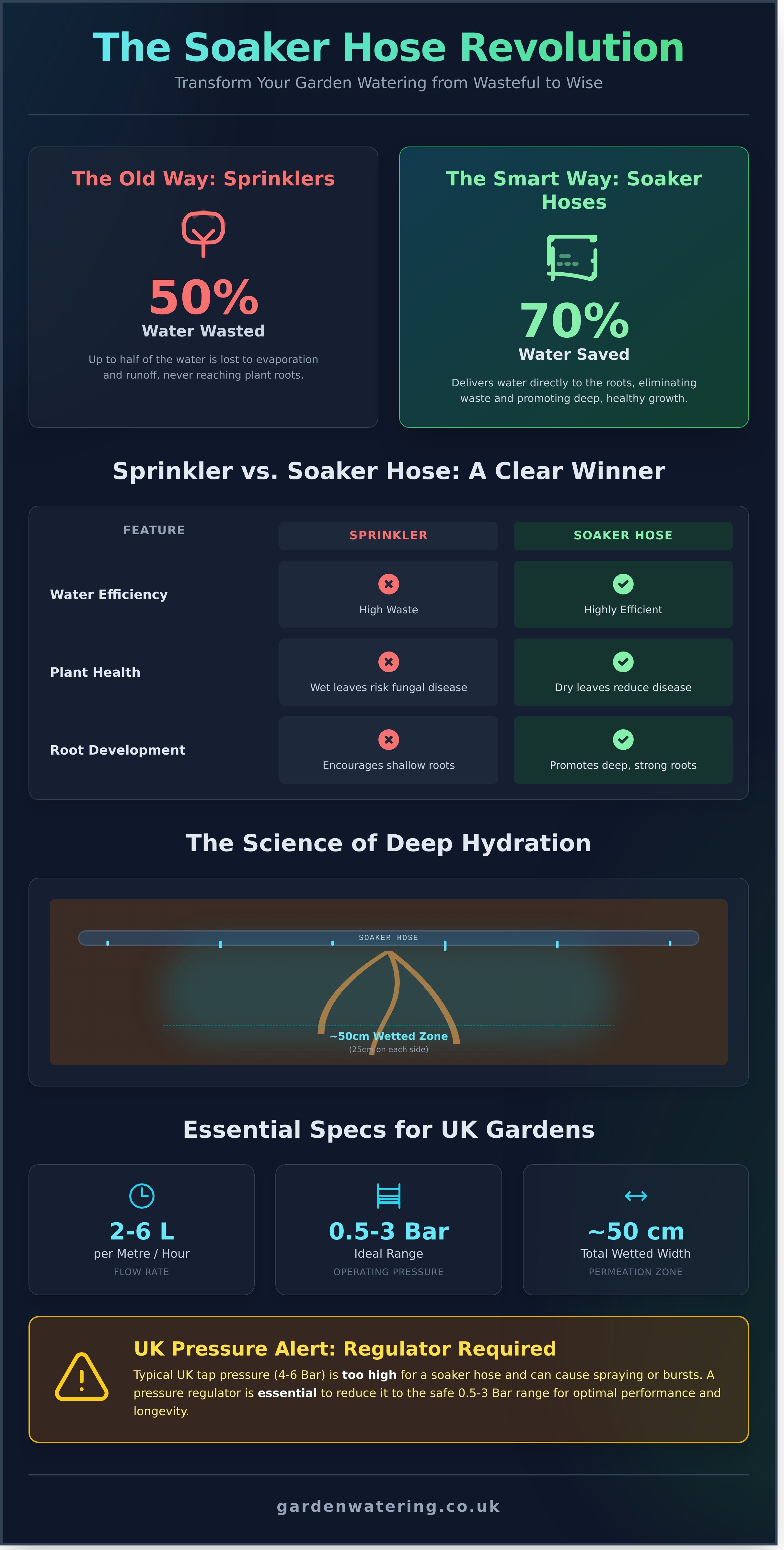
This direct-to-root approach is a game-changer for both your plants and your water bill. By eliminating wasteful evaporation and runoff associated with surface spraying, a well-placed soaker hose system can reduce water consumption by up to 70% compared to a standard sprinkler. For gardeners in the UK, this efficiency makes it a secret weapon during the increasingly common summer hosepipe bans, as targeted irrigation systems are often exempt from restrictions. It's the ultimate "set and forget" solution; connect it to a water timer, and you can ensure your plants receive consistent, deep hydration with minimal effort, freeing up your time to simply enjoy your garden.
The Science of Porous Pipe Irrigation
The magic of this system lies in its simple yet clever construction. The recycled rubber material is permeated with thousands of micro-pores. When water flows through the hose at a low pressure, it seeps out through these tiny holes all along the pipe. This 'sweating' is a low-pressure delivery system that releases water slowly and consistently, preventing runoff and waste. This slow release allows the soil's natural capillary action to take over, drawing water horizontally and creating a wide, moist band deep in the soil, encouraging strong root development.
Soaker Hose vs. Traditional Garden Hoses
The difference in performance is stark. A traditional hose delivers a high volume of water to the surface, much of which never reaches the roots. Unlike a standard hose that sprays water into the air, porous or perforated soaker hoses are designed for an entirely different purpose: deep-soil hydration. This targeted method provides several key advantages:
- Reduced Water Waste: Surface watering can lose as much as 50% of its water to evaporation on a warm, windy day. By delivering water underground, nearly every drop is used by your plants.
- Healthier Plants: Wet foliage is a primary cause of common fungal diseases like blight and powdery mildew. Because a soaker hose keeps leaves dry, it significantly reduces the risk of these damaging conditions taking hold.
- Deeper Root Growth: Slow, deep watering encourages roots to grow further down into the soil in search of moisture. This creates stronger, more drought-resistant plants that can better withstand dry spells.
Ultimately, choosing this method means you're not just watering your garden; you're investing in its long-term health and resilience, all while conserving a precious resource.
How Soaker Hoses Work: Technical Specs for UK Gardeners
A soaker hose is a marvel of simple, effective engineering. Instead of spraying water into the air, its porous material weeps water directly into the soil along its entire length. This targeted approach is incredibly efficient, but its success depends on understanding a few key technical details. Getting these right ensures your plants get the consistent moisture they need to thrive, without waste or damage to your system.
For UK gardeners, here are the core specifications to know:
- Flow Rate: A quality porous pipe typically delivers between 2 and 6 litres of water per metre, per hour. This slow, steady release prevents runoff and allows water to penetrate deep into the root zone.
- Operating Pressure: The ideal water pressure is surprisingly low, between 0.5 and 3 Bar. This gentle pressure allows the hose to "sweat" water evenly. Too much pressure can cause it to spray or even burst.
- Permeation Zone: Water generally travels about 25cm horizontally into the soil on either side of the hose, creating a wetted strip approximately 50cm wide. This is crucial for planning your layout to ensure complete root coverage.
To achieve the correct operating pressure from a standard UK tap, using a dedicated pressure regulator is essential. A high-quality pressure regulator is not just a recommendation; it's the key to preventing blowouts and ensuring the longevity and efficiency of your entire system.
Understanding Water Pressure and Flow
With a soaker hose, more pressure is your enemy. The average UK household tap delivers water at 4-6 Bar, which is far too powerful for a porous pipe. High pressure forces water out unevenly, often as a fine spray, which defeats the purpose of sub-surface watering and can damage the hose material over time. You can perform a simple test: if a standard 10-litre watering can fills from your tap in less than 30 seconds, your pressure is likely too high for direct connection. It's also vital to consider that pressure drops along the length of the hose; a 30-metre run will have noticeably lower pressure at its end.
Material Matters: Recycled Rubber vs. Fabric
The material of your hose directly impacts its durability and performance, especially in the variable UK climate. Recycled rubber has become the industry standard for good reason. It's robust enough to handle being buried under mulch and flexible enough to snake around established plants. Cheaper fabric alternatives often degrade quickly when exposed to soil and moisture. High-quality porous pipes are manufactured with UV inhibitors to prevent the rubber from becoming brittle after prolonged sun exposure. With proper care and winter draining, a well-made recycled rubber system installed today should provide reliable service well beyond 2030. Ensuring you start with the right materials is the first step to a lasting, efficient setup, and you can explore our complete range of irrigation solutions to find the perfect fit for your garden's needs.
Soaker Hose vs. Drip Line: Which is Best for Your Beds?
Choosing the right irrigation system is about matching the watering method to your garden's specific layout. The core difference between these two excellent systems lies in how they deliver water: a soaker hose provides gentle, continuous "blanket" coverage along its entire length, while a drip line offers precise, "targeted" delivery through individual emitters. Understanding this distinction is the key to ensuring every plant gets the exact hydration it needs to thrive.
For densely planted areas, the continuous moisture strip created by a soaker hose is unparalleled. Think of a long hedgerow, a bed of established perennials, or a row of lettuces in your vegetable patch. The hose weeps water along its full length, ensuring the entire root zone of closely packed plants receives consistent moisture. In contrast, drip irrigation would require placing an emitter every few inches, which is inefficient and costly. For these applications, the broad coverage of a soaker system is the clear winner.
Conversely, a drip line excels where plants are spaced further apart. If you have a bed with specimen shrubs planted a metre apart, watering the soil between them is a waste. Drip emitters allow you to deliver water directly to the base of each individual plant, maximising efficiency and minimising weed growth in the dry areas. This targeted approach is the most efficient solution for container gardens, fruit trees, and landscape beds with distinct plantings.
From a cost and installation perspective, simplicity often wins. A high-quality 25-metre soaker hose system is typically more affordable, often costing between £20 and £35, and can be installed in minutes by simply laying it on the soil. A comparable drip line kit requires more planning, cutting pipe to size, and punching in individual emitters, with costs generally starting around £40. Maintenance also differs; the tiny pores of a soaker hose can become blocked by limescale in hard water areas, whereas drip emitters are more susceptible to clogging from sediment in the water. Thankfully, you can often clear the pores by following established soaker hose best practices, like flushing the system periodically.
Best Use Cases for Soaker Hoses
A soaker hose is the gold standard for providing consistent moisture to linear plantings. For established hedges and straight vegetable rows, no system is more efficient or easier to deploy. They are also exceptionally useful in allotments, where water pressure from standpipes can be low or inconsistent. Because they are designed to operate at very low pressure (often below 10 PSI), they provide reliable watering where other systems might fail. For a deeper dive, our complete Soaker Hose vs Drip Line comparison guide covers every detail.
When to Choose Drip Irrigation Instead
Drip irrigation is the expert choice for precision. It's the only practical solution for watering individual pots, hanging baskets, or widely spaced trees, where you need to get water to a specific point. This precision is also vital for high-value or water-sensitive plants, like a prized Japanese Maple, that require a measured amount of water. The great news is you don't have to choose. You can easily create a hybrid system using Hozelock connectors to run a drip line to your pots and a soaker hose section for your flower bed, all from one tap.
Professional Installation: Setting Up Your System for Success
A high-quality irrigation system is only as good as its installation. Fortunately, setting up a soaker hose is a straightforward job that, when done correctly, guarantees years of efficient, trouble-free watering. With over 15 years of specialisation in garden irrigation, we've refined the process to a few simple steps. Your success starts with what we call the "Golden Rule" of installation: always unroll your hose and leave it in the sun for at least an hour. This makes the material far more flexible, preventing kinks and making it much easier to position around your plants.
Planning Your Layout: Snaking vs. Parallel
Before you connect a single piece, map out your route. For wide flowerbeds or densely planted areas, a gentle "S-shape" or snaking pattern ensures the entire root zone receives even moisture. For vegetable patches or narrow hedges, laying out two or three parallel lines is a more efficient strategy. Remember, the maximum effective length for a single run is 50 metres. Exceeding this causes a significant drop in water pressure, leading to inconsistent watering at the far end.
Connecting to the Mains: The Hozelock Way
Protecting your system begins at the tap. We exclusively recommend starting every installation with a Hozelock 2760 Pressure Regulator. UK mains pressure can reach over 6 bar, while your hose is designed for 1.5 bar. This small device is essential to prevent splits and bursts. For layouts that need to cross paths or patios, you can use standard 13mm or 16mm supply pipe to bridge the gaps without wasting water. To truly automate the process, add a Hozelock Sensor Controller, which waters automatically at sunrise or sunset-the two best times of day to minimise evaporation.
Once your plan is ready and your components are gathered, follow these expert steps for a perfect setup:
- Position the Hose: After letting it warm up, lay the hose according to your plan, aiming for it to be no more than 30-40cm away from the base of your plants.
- Secure It Firmly: Use A-Stakes or ground pegs every 50-100cm to pin the hose down. This is critical. It ensures the hose stays in direct contact with the soil, delivering water straight to the roots instead of losing it to the air.
- Connect and Cap: Attach your hose to the supply pipe from your pressure-regulated tap. At the opposite end of the line, fit a secure end plug to stop the flow.
- Run a Quick Test: Turn the tap on for 5-10 minutes. Walk the line to check for leaks at the connections and ensure water is weeping evenly along its entire length.
- Apply Mulch (The Pro Move): This is the final step that separates good results from great ones. Cover your soaker hose with 2 inches (5cm) of organic mulch like bark chips. This simple action can reduce surface water evaporation by up to 70%, protects the hose from UV degradation, and keeps your garden looking tidy.
By following this professional process, you ensure every drop of water is used effectively, promoting a lush, healthy garden with minimal effort.
Maintenance and Troubleshooting: Keeping the Water Flowing
A high-quality irrigation system is an investment in the health of your garden and the efficiency of your watering. With just a small amount of seasonal care, your soaker hose will provide consistent, reliable performance for years. We've used our 15 years of specialist experience to compile the most common issues and simplest solutions to keep your system in peak condition.
One of the most frequent queries we receive is about "dry spots" in a garden bed. If you notice an area isn't getting watered, the cause is usually simple. First, walk the length of the hose to check for any sharp kinks that restrict flow. Second, remember that water pressure naturally drops over distance. For Hozelock's 13mm systems, we find performance is optimal up to a maximum single length of 30 metres. If your run is longer, you may need to split it into two separate zones from the tap. Finally, a blockage from sediment can be cleared by removing the end stop and flushing the system at full pressure for 5-10 minutes.
In hard water areas, common across more than 60% of the UK, limescale can gradually clog the pores of the hose. You can restore flow by disconnecting the hose, coiling it in a bucket, and pouring in a solution of one part white vinegar to one part water. Let it soak for at least an hour before reconnecting and flushing thoroughly with fresh water.
Accidents happen. A misplaced garden fork or spade can easily puncture the line. Fortunately, a repair takes less than two minutes. Simply make a clean cut on either side of the puncture and insert a 13mm barbed straight joiner to reconnect the two ends. It's a secure, permanent fix that costs less than £2.
Most importantly, you must winterise your system. Before the first hard frost, typically in late October or early November in the UK, disconnect the hose from the tap. Remove the end stop and elevate one end to allow every drop of water to drain out. Water expands by approximately 9% when it freezes, and this force will cause microscopic splits in the hose material, rendering it useless next spring. Store the drained hose in a shed or garage.
The Hozelock Advantage: Integration and Longevity
We specialise exclusively in Hozelock systems because their components work together flawlessly. Integrating your soaker hose with a Hozelock Cloud Controller allows you to adjust watering schedules from your phone, a vital feature during unpredictable UK summer heatwaves. Using genuine Hozelock connectors also guarantees a tight, leak-free seal, maintaining optimal pressure and preventing water waste. Based on our tests, the upcoming 2026 Hozelock kits are our top recommendation, featuring an enhanced UV-resistant polymer designed to extend the product's lifespan to an estimated 7-8 years.
Seasonal Care Checklist
- Spring: Before its first use of the season, flush the entire system for 5 minutes to clear out any winter debris, spiders, or sediment that may have accumulated.
- Summer: Monitor your plants during heatwaves where temperatures exceed 25°C. You may need to use your water timer to add a second, shorter watering cycle in the evening to compensate for increased evaporation.
- Autumn: When preparing for winter storage, inspect the hose for any signs of root intrusion. Fine roots from aggressive plants can sometimes try to enter the pores. If you spot any, gently pull them out and plan to lay the hose a few inches further away next year.
Achieve a Healthier Garden with Smarter Watering
You now have the expert knowledge to transform your garden's health and efficiency. This targeted irrigation method is a game-changer; it delivers water directly to the plant roots, reducing water waste by up to 70% compared to traditional sprinklers while also preventing common leaf diseases. It's a simple, highly effective solution for maintaining lush flowerbeds, healthy hedgerows, and productive vegetable patches. With the right professional-grade setup, you'll save significant time, conserve water, and see your plants flourish.
Ready to put this knowledge into practice? As an Official Hozelock Specialist with over 15 years of irrigation expertise, we've curated the best solutions for UK gardens. Shop our range of Hozelock-compatible Soaker Hose Kits and enjoy free UK delivery on all orders over £100. We're your trusted partner for expert irrigation advice.
Let's make 2026 the year your garden truly thrives.
Frequently Asked Questions
Do soaker hoses work on slopes or hills?
Soaker hoses are not ideal for slopes because gravity will cause water to pool at the lowest point, leading to uneven watering. For the best results, they should be used on ground that is relatively level, with a gradient of no more than 1 in 100. If your garden has a significant incline, a pressure-compensating drip line is a more efficient solution, as it ensures each emitter delivers the same amount of water regardless of elevation.
Can I bury a soaker hose under soil or mulch?
Yes, you can and should bury your soaker hose. Placing it 5-10 cm beneath a layer of mulch or soil is highly effective. This protects the hose from UV degradation, which extends its lifespan, and it delivers water directly to the root zone. Burying the hose also minimises water loss from evaporation by up to 70%, making your watering routine much more efficient and environmentally friendly. It's a simple step for a healthier garden.
How long should I run my soaker hose each day?
The ideal run time depends on your soil type, weather, and plants, but a good starting point is 30-60 minutes, two or three times per week. For clay soils, shorter, more frequent watering is best, while sandy soils may need longer sessions. The best way to check is to dig down 15 cm near the hose after a session. If the soil is moist but not waterlogged, your schedule is just right. Adjust as needed throughout the season.
Are soaker hoses exempt from hosepipe bans in the UK?
Soaker hoses and drip irrigation systems are often exempt from UK hosepipe bans because they are considered highly efficient methods of watering. However, the specific rules are set by individual water companies and can vary. During a ban, it's essential that you check the current restrictions with your local supplier, such as Thames Water or United Utilities. Never assume an exemption; always verify the regulations in your area to avoid potential fines.
What is the maximum length I can run a soaker hose?
The maximum effective length for a single run of soaker hose is typically 30 metres (around 100 feet). Beyond this length, the water pressure drops off significantly, and the far end of the hose will seep out very little water, leading to inconsistent coverage. If you need to water a larger area, it's better to run multiple, separate lines from a main, non-porous supply hose using connectors, ensuring each line is within the 30-metre limit.
Do I need a pressure regulator for a soaker hose?
Yes, using a pressure regulator is essential for optimal performance and longevity. Soaker hoses are designed to operate at a very low pressure, typically between 10 and 25 PSI (0.7-1.7 BAR). Standard UK mains water pressure is often over 50 PSI, which can cause the hose to split or spray water rather than seeping slowly. A simple, inexpensive regulator attaches between your tap and the hose, guaranteeing an efficient, gentle watering action.
Can I connect multiple soaker hoses together?
You can connect multiple soaker hoses, but you must stay within the recommended maximum total length of 30 metres for a single line. For example, joining two 15-metre sections with a standard connector will work perfectly. However, connecting two 25-metre hoses end-to-end will result in very poor water distribution in the second hose. For layouts longer than 30 metres, design a system with a solid main supply line feeding several shorter soaker hose sections.
How do I prevent my soaker hose from clogging with limescale?
In hard water areas, limescale and mineral deposits can clog the pores of the hose over time. The most effective preventative measure is to periodically flush the system. Simply remove the end cap or stopper and let water run through the hose at full pressure for 2-3 minutes. This will help dislodge any small particles or mineral build-up. For areas with exceptionally hard water, installing an inline water filter at the tap can provide an excellent long-term solution.
`-
Posted in
soaker hose