Drip Line Buying Guide: Garden Border Watering (2026)
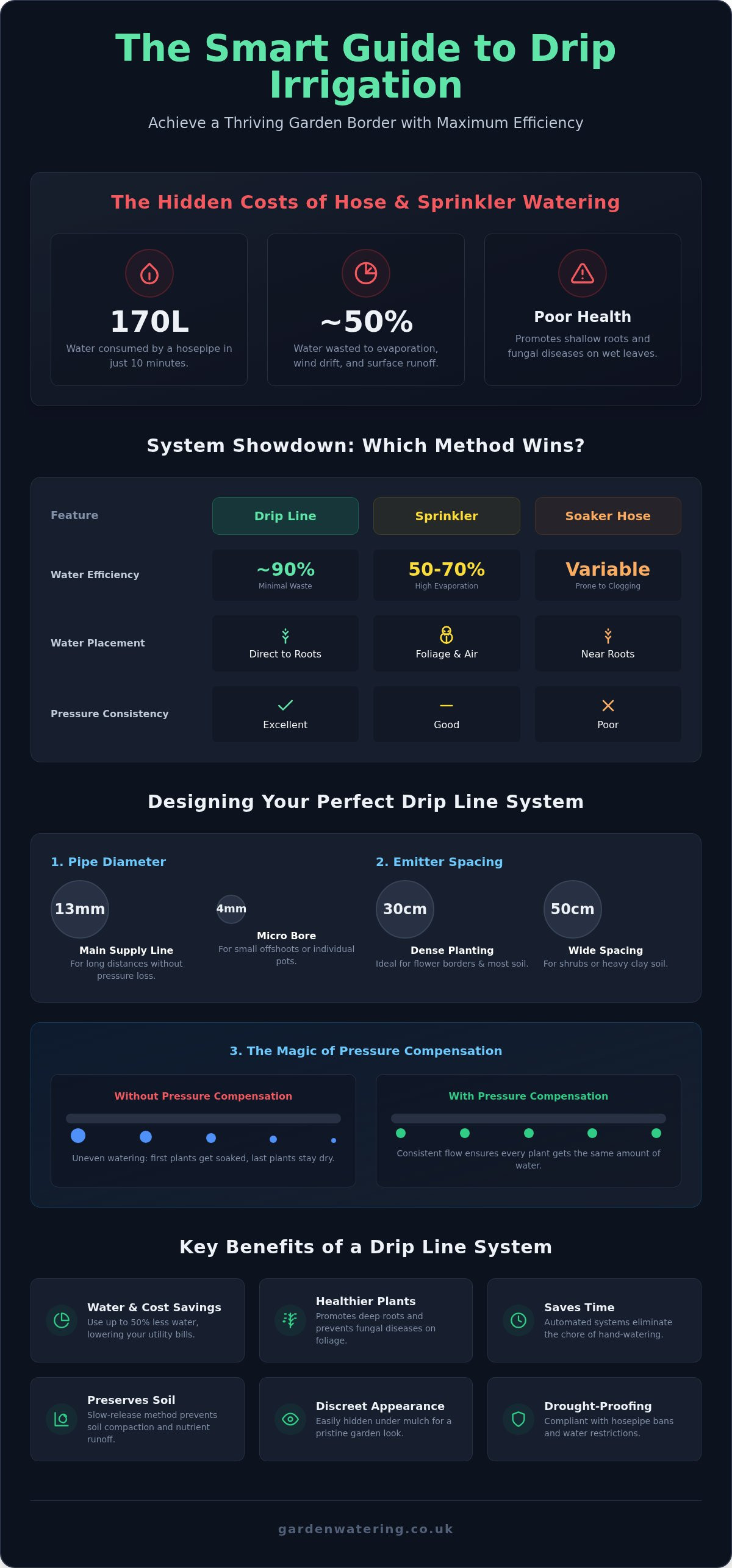
Did you know that the average hosepipe consumes a staggering 170 litres of water for every ten minutes it is turned on? In a year where hosepipe bans remain in place for Thames Water and other UK regions, keeping your landscape healthy often feels like a race against the clock. We understand the frustration of spending your evenings hand-watering, only to find uneven growth or scorched patches where the water did not reach. It is a common challenge for gardeners who want a lush, vibrant space without the waste or the worry of local restrictions.
This guide will help you master precision irrigation by choosing the ideal drip line | efficient, targeted watering for gardens border's. By switching to a dedicated system, you can reduce water consumption by up to 50% compared to traditional methods. We will show you how to select the perfect setup for your specific layout, focusing on high-performance components from specialists like Hozelock and Claber. Whether you are looking for a simple kit or a smart, Bluetooth-controlled solution, you are about to discover how to achieve a thriving garden border that practically looks after itself.
Key Takeaways
- Understand why professional-grade drip lines are the superior choice for deep root hydration when you're looking to replace traditional hose watering.
- Learn to choose the correct pipe diameter and emitter spacing for your drip line | efficient, targeted watering for gardens border's to match your plant density.
- See how drip systems solve the "porous pipe" problem of uneven pressure that's often found in standard soaker hoses.
- Follow our expert planning steps to calculate your water demand and connect your system safely to an outside tap or water butt.
- Get the inside track on the most durable Hozelock and Claber components that'll provide long-term performance in UK gardens.
Why Drip Line is the Gold Standard for Garden Border Irrigation
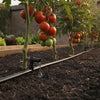
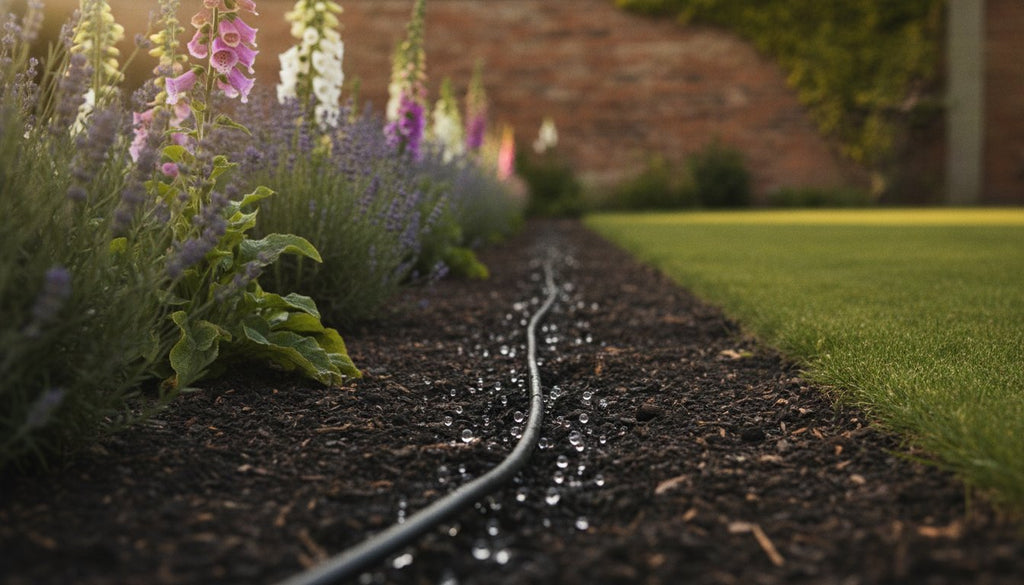
A drip line is essentially a flexible pipe equipped with internal emitters spaced at regular intervals. These emitters release water at a very slow, controlled rate directly onto the soil surface. Unlike the large-scale drip irrigation systems used in agriculture, modern garden versions are designed for simple, effective DIY installation. For most UK landscapes, using a drip line | efficient, targeted watering for gardens border's ensures that every plant receives the hydration it requires without a single drop being wasted on paths or foliage.
When you water with a standard hose, the high volume of water often causes the soil surface to seal. This leads to surface runoff, where water flows away from the plant's root zone before it can soak in. Drip lines avoid this by mimicking a steady, gentle rain. This encourages roots to grow downwards into the cooler, damper layers of soil rather than staying near the surface where they're vulnerable to heat and drought. It's a more natural way to support plant development.
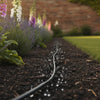
Sprinklers are often hindered by wind drift and evaporation, especially during the warmer summers we've seen recently. A drip system delivers moisture at ground level, bypassing these issues entirely. From a design perspective, these pipes are incredibly discreet. You can easily pin them down and cover them with a layer of bark or mulch. This creates a completely hidden watering solution that maintains the pristine look of your flower beds while keeping your plants thriving.
The Science of Targeted Root Zone Watering
Precision watering does more than just keep plants alive; it preserves the soil structure. Rapid flooding from a hose can compact the soil and wash away vital nutrients. By using a slow-release method, you maintain the soil's aeration and keep nutrients exactly where the roots can reach them. Additionally, keeping water off the leaves is a major benefit for plant health. Many common border plants are susceptible to fungal diseases when their foliage stays damp. By delivering water only to the base, you significantly reduce the risk of mildew and black spot.
Saving Water (and Money) in the UK Climate
With many UK water companies implementing strict usage limits during dry spells, efficiency is no longer optional. An automated system using components from our drip irrigation systems collection helps you stay compliant while protecting your investment in your garden. Research indicates that drip systems can be up to 90% efficient, which is a vast improvement over the 50 to 70% efficiency of traditional sprinklers. Over time, the reduction in water bills and the prevention of plant loss provide a clear return on investment. A drip line is the most efficient delivery method for garden borders, providing a reliable way to sustain plant health through precision engineering.
Key Features to Compare: Choosing the Right Drip Line for Your Soil
Selecting the right equipment requires understanding how different specifications interact with your specific environment. The most common choice for a drip line | efficient, targeted watering for gardens border's is the 13mm diameter pipe. It serves as a robust main line, capable of carrying water over long distances without significant pressure loss. In contrast, 4mm micro-bore lines are best reserved for small offshoots or individual containers where you need to deliver water to a single, specific point. If you're unsure which setup fits your space, exploring our range of Hozelock watering kits is an excellent starting point for pre-configured solutions.
Flow rates are another critical factor, usually measured in Litres Per Hour (LPH). Most emitters deliver between 1.6 and 2.4 LPH. To maintain this rate from the start of the line to the very end, look for "pressure compensating" emitters. These ensure that even if your border is 50 metres long, the last plant receives the same amount of water as the first. This consistency is vital for uniform growth. Without pressure compensation, the plants nearest your tap will be overwatered while those at the far end of the garden struggle for moisture.
Matching Drip Line Spacing to Your Garden Layout
Emitter spacing is usually 30cm or 50cm. For dense flower borders, 30cm is the gold standard. However, your soil type dictates the "wetted pattern" or how water spreads once it hits the ground. In heavy clay soil, water spreads outwards significantly, so 50cm spacing might suffice. In sandy soil, water travels straight down like a chimney; here, 30cm spacing is vital to avoid dry spots between emitters. Using a pressure regulator is also essential to prevent the system from blowing apart under high UK mains pressure, ensuring your drip line | efficient, targeted watering for gardens border's operates within its intended parameters.
Material Quality and UV Resistance
UK weather is unpredictable. High-quality polyethylene is non-negotiable because it resists cracking during winter frosts and degrading under summer UV rays. Professional-grade lines, such as those from Claber and Hozelock, often feature self-cleaning emitters. These use a small internal diaphragm to flush out grit or limescale every time the system starts. If you plan to bury your line under mulch or soil, ensure it has "anti-siphon" technology. This prevents soil particles from being sucked back into the emitters when the water is turned off, which is the leading cause of system blockages in subsurface installations.
Drip Line vs. Soaker Hose: Which System Wins for Borders?
Choosing between a drip line and a soaker hose is a common dilemma for UK gardeners. While they might look similar from a distance, their performance in a garden border is vastly different. A soaker hose, often called a porous pipe, allows water to weep through thousands of tiny holes along its entire surface. This creates a saturation effect. In contrast, a drip line | efficient, targeted watering for gardens border's uses internal emitters to deliver water to specific points. This precision ensures you aren't wasting water on the gaps between your plants.
The most significant issue with soaker hoses is the porous pipe problem. Because water escapes freely at the beginning of the hose, the pressure drops rapidly. By the time the water reaches the end of a 15 or 20 metre run, there is often very little moisture left for the plants. Drip lines solve this with regulated emitters that maintain consistent flow. Additionally, drip lines are far more durable. Most soaker hoses are made from recycled rubber which can become brittle and crack after a few seasons in the sun. Professional grade polyethylene drip lines are built to last for years in the unpredictable UK climate.
Repairing your system is also much simpler with a drip line. If you accidentally nick a pipe with a garden fork, you don't need to replace the whole length. You can simply cut out the damaged section and push in a standard connector to restore the seal in seconds. This level of serviceability makes it a much more sustainable long term investment for your landscape.
When to Choose a Soaker Hose
Soaker hoses do have a place in the garden. They are excellent for short, simple runs in small vegetable patches where the goal is to saturate a whole row of seedlings. Their plug and play nature makes them very accessible for users who want a quick solution for a single season. However, they struggle with topography. If your border has even a slight slope, gravity will cause all the water to pool at the lowest point, leaving the higher ground dry and the lower ground waterlogged.
Why Drip Line is Superior for Large Borders and Hedges
For anything more complex than a small veg bed, our Drip Irrigation Systems are the professional choice. They provide exceptional uniformity over long distances, often reaching lengths of 50 metres or more without a drop in performance. This allows you to snake the pipe around established shrubs and through dense flower beds with ease. You can place the emitters exactly where they are needed, ensuring every plant gets its fair share of water. This level of control is why the drip line | efficient, targeted watering for gardens border's remains the gold standard for serious UK landscapes.
Planning Your Layout: From Outside Tap to Flower Bed
Planning your layout is the most critical step to ensure your irrigation system performs as expected. Start by measuring the total length of your border. If you plan to snake the pipe around individual shrubs, add 20% to your measurement to account for the curves. Once you have the length, calculate the total water demand by multiplying the number of emitters by their flow rate. For example, a 50 metre run with emitters every 30cm will have approximately 166 emitters. If each releases 2 litres per hour, your tap must be able to supply at least 332 litres per hour to maintain even pressure.
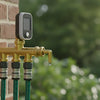
Your choice of water source impacts the design of the entire system. An outside tap provides reliable pressure for most setups, while a water butt is a sustainable alternative that may require a dedicated pump to function correctly. To make the system truly hands-off, install a Garden Irrigation Water Timer directly onto the tap. Finally, map out your main supply pipe. Use a solid, non-dripping pipe to move water from the tap across patios or paths, then switch to the drip line | efficient, targeted watering for gardens border's only once you reach the planting area.
Essential Connectors and Accessories
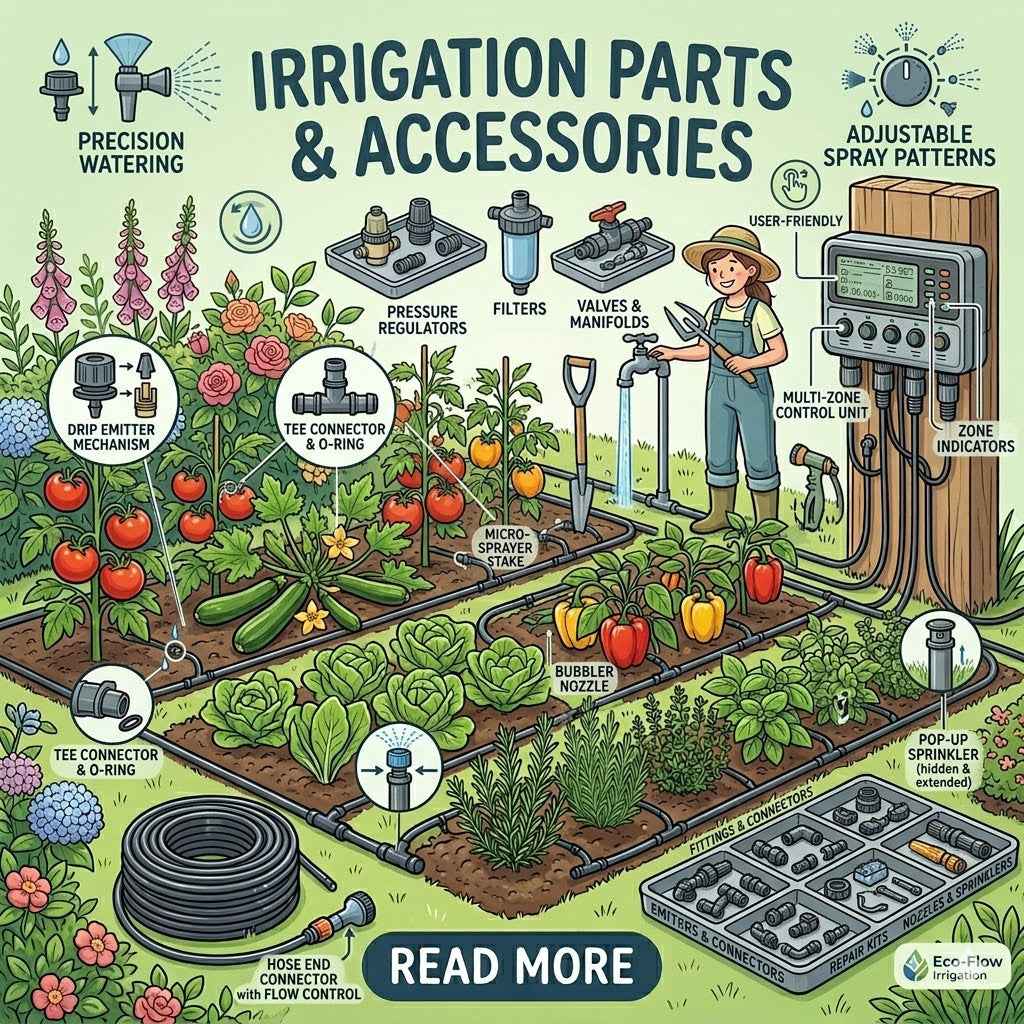
A pressure reducer is a non-negotiable component for any professional installation. UK mains pressure can often reach 5 bar, which is far too high for delicate emitters and will eventually cause the system to fail or leak. Using high-quality Hozelock Connectors ensures every joint remains watertight under pressure. Once the line is in place, secure it every metre using ground stakes. This prevents the pipe from shifting during weeding or being moved by heavy rain, keeping the water delivery exactly where you intended.
Avoiding Common Installation Mistakes
Avoid the temptation to "dead-end" your system permanently. Instead, use an end plug that you can easily remove. This allows you to flush out any grit or sediment that accumulates inside the pipe over time. You should also respect the maximum run length of your pipe diameter; exceeding 50 metres on a single 13mm line often results in poor flow at the far end of the border. It's vital to winterise your system by draining the lines and storing your timer indoors before the first hard frost hits.
View our complete Hozelock watering kits to find everything you need for a professional setup.
Top Drip Line Solutions: Hozelock and Claber Expert Picks
Choosing between the industry's leading brands often comes down to your garden's specific scale and layout. Our Drip Line Collection features curated options from Hozelock and Claber, ensuring you have access to the most reliable technology available in 2026. For those managing large UK landscapes, the Hozelock 13mm Drip Line is a standout choice. It's engineered for durability and handles the pressure requirements of long border runs with ease, making it a favorite for established shrubberies.
If your focus is on delicate flower beds or intricate container arrangements, Claber Drip Irrigation offers precision Italian engineering that is hard to beat. Their components are known for their fine-tuned flow control, which is ideal for plants that require a very specific moisture balance. When deciding on your setup, you can opt for pre-assembled kits, which are perfect for straightforward rectangular borders, or bespoke component builds. A bespoke approach allows you to tailor every turn and emitter placement to a unique garden shape, ensuring no water is wasted on empty ground.
Standalone Products for Bespoke Systems
For large-scale landscaping projects, we provide 25m and 50m drip line rolls as standalone products. These allow you to cover significant ground without the need for multiple connectors, which reduces potential leak points in the system. If you already have a 13mm supply pipe in place, you can simply integrate 'In-Line' drippers to add functionality to existing lines. This flexibility is a key reason why a drip line | efficient, targeted watering for gardens border's is so popular among professional gardeners. You can find these specialized parts in our Claber Drip Irrigation section.
Why Buy from Garden Watering?
We aren't just a retailer; we're a UK-based specialist with over 15 years of irrigation expertise. We understand the nuances of the British climate and only stock brands that can withstand our wet winters and dry summers. You can explore our Design Ideas and Plans for inspiration on how to layout your system for maximum efficiency. Every Hozelock and Claber part we sell comes with a genuine UK warranty, giving you peace of mind that your investment is protected by experts who care about your success.
Ready to transform your garden maintenance? Shop the full Drip Line collection here and take the first step toward a healthier, more sustainable garden border.
Achieve a Thriving Garden with Precision Irrigation
Mastering your garden's health starts with moving away from wasteful manual watering and embracing a more methodical approach. By choosing a high-quality drip line | efficient, targeted watering for gardens border's, you ensure that every plant receives consistent moisture exactly where it counts. You now understand the vital differences between pipe diameters and the importance of pressure compensation for maintaining uniform flow over long distances. Whether you prefer a pre-built kit or a bespoke layout, the right system will save you time and significantly reduce your water bills.
As an official Hozelock and Claber retailer with 15 years of irrigation expertise, we are here to help you succeed. We provide free UK technical support to guide you through every step of your installation. Your landscape deserves a reliable, professional-grade solution that works on your schedule and protects your plants through the driest months. Take the first step toward a lush, low-maintenance garden today.
Browse our full range of Drip Line solutions for borders and hedges at gardenwatering.co.uk and discover the difference that specialist knowledge makes.
Frequently Asked Questions
Is a drip line better than a soaker hose for garden borders?
Yes, a drip line is generally superior for borders because it provides uniform water delivery across the entire length of the pipe. Unlike soaker hoses, which rely on porous walls that often result in uneven saturation, a drip line uses pressure-compensating emitters. This ensures that plants at the end of a 50 metre run receive the same amount of moisture as those at the start. It's the professional choice for targeted root hydration.
Can I leave my drip line out over the winter in the UK?
You can leave the polyethylene piping in place throughout the winter, but you must drain the system to prevent frost damage. Water trapped inside can expand when frozen, potentially cracking the emitters or connectors. We recommend removing your water timer and storing it indoors. Before the first hard frost, open the end plugs and run the system briefly or blow air through to clear any standing water.
How many emitters do I need per metre for a flower border?
For a standard UK flower border, we recommend using a drip line with emitters spaced every 30cm. This typically translates to three or four emitters per metre. This density ensures that the wetted patterns from each emitter overlap, creating a continuous band of moisture in the soil. If you have sandy soil where water travels vertically, closer spacing is essential to avoid dry patches between your plants.
Do I need a pump to run a drip line from a water butt?
Yes, a dedicated pump is usually required because most drip systems need at least 1 bar of pressure to function correctly. Gravity alone from a standard water butt rarely provides enough force to open the emitters, especially on longer runs. Using a solar or electric pump allows you to utilize harvested rainwater while maintaining the efficiency of your drip line | efficient, targeted watering for gardens border's without relying on mains water.
Can I bury my drip line under soil or mulch?
Covering your line with 5cm to 10cm of mulch or bark is highly recommended as it hides the system and reduces evaporation. However, you should be cautious about burying it directly in soil. If you do, ensure you use a pipe with anti-siphon emitters. These prevent soil particles from being sucked back into the line when the water is turned off, which would otherwise cause permanent blockages in the system.
What happens if a drip line emitter gets blocked with limescale?
Modern systems from Hozelock and Claber feature self-cleaning emitters that flush out small particles automatically. If you live in a hard water area and notice a drop in flow, you can soak the affected section in a mild descaling solution. For widespread issues, flushing the entire system by removing the end plugs often clears sediment. Regular maintenance ensures your drip line | efficient, targeted watering for gardens border's continues to perform for years.
How long should I run my drip irrigation system each day?
Most borders thrive with 20 to 30 minutes of watering, two or three times a week during the summer. Since drip emitters deliver water slowly, usually between 1.6 and 2.4 litres per hour, they require longer run times than traditional sprinklers. It's better to water deeply and less frequently to encourage deep root growth. Always adjust your schedule based on recent rainfall and the specific moisture needs of your plants.
Do I need a special permit or check-valve for my outside tap?
You don't need a permit, but UK water regulations require a double check valve on your outside tap to prevent backflow into the mains supply. Most modern outside taps already have these built in. If yours doesn't, you should install a screw-on backflow preventer before connecting your timer. This keeps your drinking water safe and ensures your irrigation setup remains fully compliant with local water authority guidelines.
`-
Posted in
Claber, Drip Irrigation, drip line | efficient, Garden Borders, Garden Watering, Gardening Guide, Hosepipe Ban, Hozelock, Irrigation Systems, targeted watering for gardens border's, Water Saving