Garden Irrigation Systems with Timer - Whats available
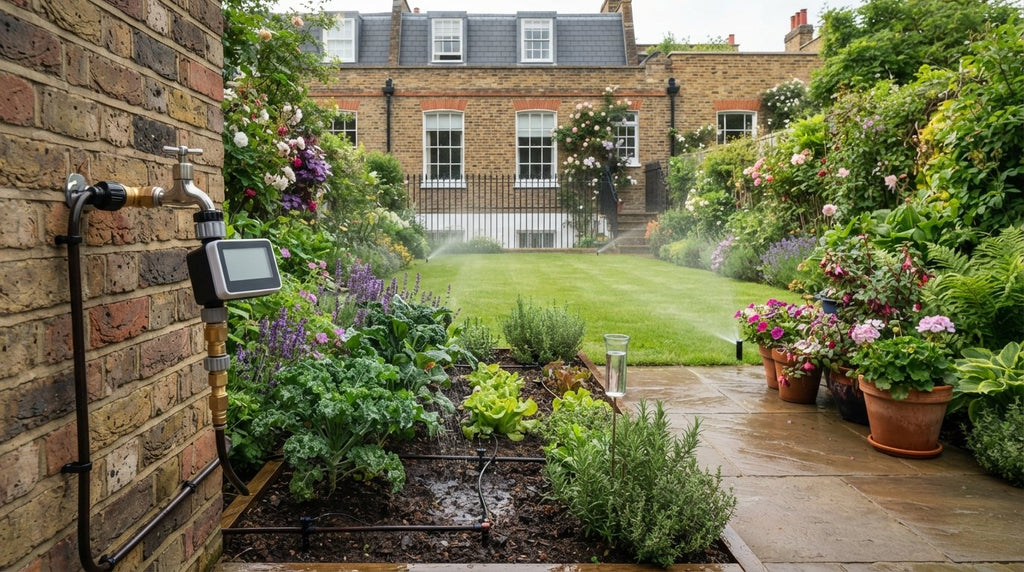
A standard garden hose running unattended can consume up to 1,000 litres of water in a single hour, yet targeted drip lines use up to 70% less water while delivering moisture straight to plant roots. If you've hesitated to invest in garden irrigation systems with timer controls because of confusing UK tap thread sizes or the fear of a blown pipe flooding the patio while you're away on holiday, you aren't alone. Balancing fluctuating mains water pressure with delicate tubing can easily feel overwhelming.
Fortunately, automating your garden care doesn't require complicated plumbing or guesswork. In this guide, you'll discover how to choose the perfect timed watering system to keep your borders, containers, and lawns thriving automatically while protecting your metered water bills. We'll walk you through what's available across the UK market, comparing proven tap timers, essential pressure regulators, and modular drip kits so you can build a reliable, leak-free setup with complete confidence.
Key Takeaways
- Learn how garden irrigation systems with timer controls use dependable solenoid valves and tailored schedules to automate daily plant hydration.
- Discover the right tap connectors and double check valves needed to fit controllers safely onto standard UK outside threaded taps.
- Find out how to match delivery methods to your layout, pairing targeted micro-drip emitters with patio containers and popup sprinklers with lawns.
- Understand the vital role of pressure-reducing valves in protecting pipe fittings from popping off under fluctuating mains water pressure.
- Explore modular garden watering kits and proven Hozelock automatic watering systems that eliminate sizing guesswork for a leak-free setup.
Understanding Garden Irrigation Systems with a Timer: How They Work
Setting up an automated watering network transforms garden maintenance from a daily chore into an efficient background routine. At its core, garden irrigation systems with timer units join an exterior water supply directly to targeted distribution lines. Instead of losing moisture to surface runoff or midday evaporation, an automated timer opens an internal valve at pre-set times, releasing measured water volumes directly to plant roots. Modern irrigation controllers rely on electromechanical or digital solenoid valves to maintain precise control without manual intervention.
To see how these hardware components function together across different garden layouts, watch this visual guide:
The Anatomy of a Timed Garden Watering Setup
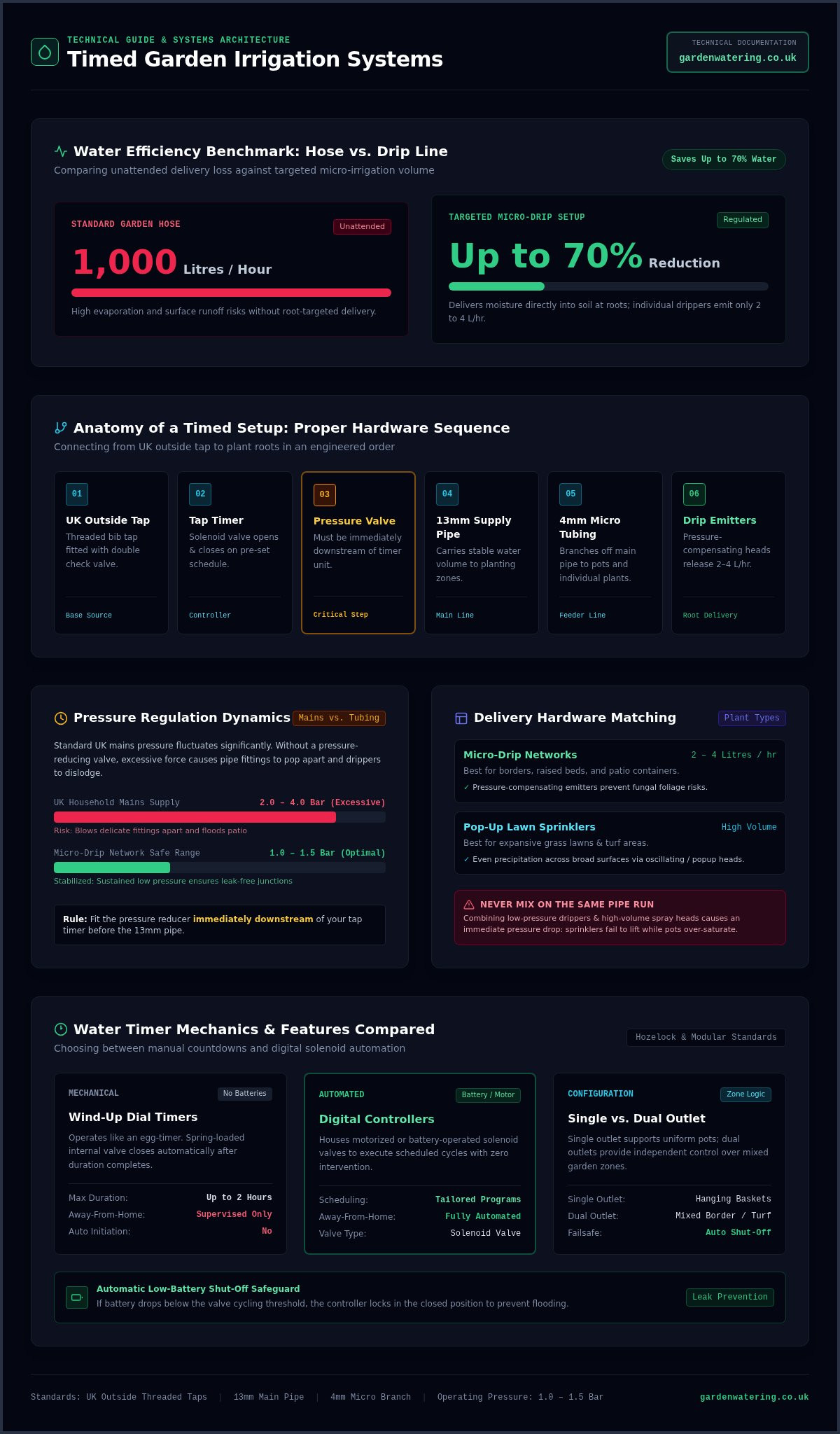
Every successful layout follows a deliberate sequence to protect pipe integrity and sustain steady water flow. The run starts at your threaded exterior bib tap, where you attach your dedicated controller from a range of garden irrigation water timers. Immediately downstream from the timer, you must fit a pressure-reducing valve. UK household mains supply often delivers between 2.0 and 4.0 bar, but micro-drip networks operate safely between 1.0 and 1.5 bar. Without a regulator, excessive pressure will blow fittings apart and cause drippers to pop off their lines. A 13mm supply pipe then carries water to planting areas, branching into flexible 4mm micro tubing for individual pots and shrubs.
Automated Drip Kits vs. Lawn Sprinkler Systems
Choosing the right delivery hardware depends on the vegetation you want to hydrate:
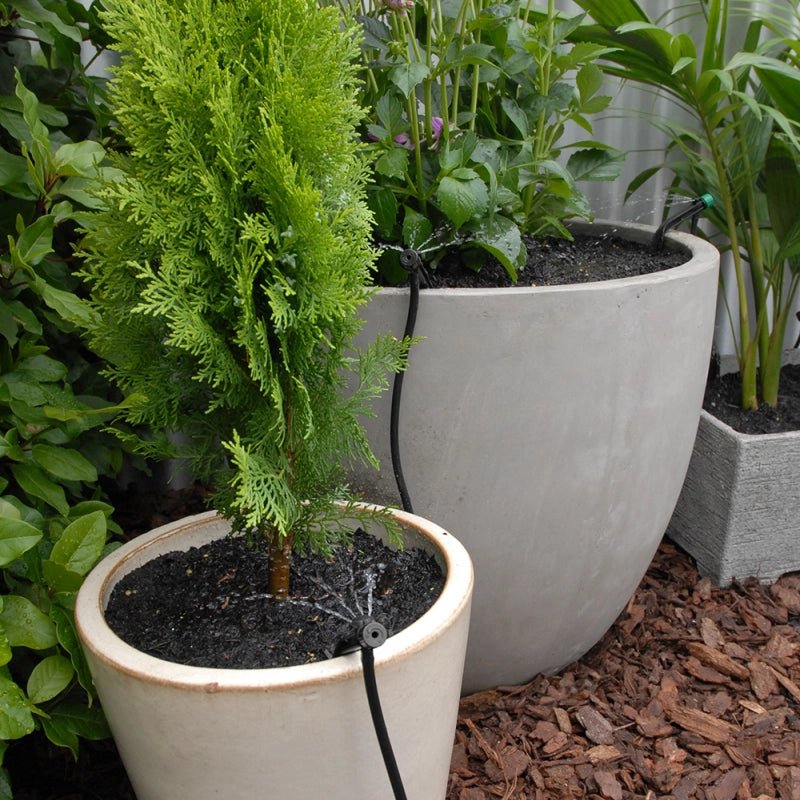
- Targeted micro-drip networks: Best for borders, raised beds, and patio pots. Engineered drip irrigation systems use pressure-compensating emitters that release 2 to 4 litres per hour straight into soil, eliminating foliar fungal risks and cutting waste.
- High-volume lawn sprinklers: Best for turf. Expansive grass lawns require matched pop-up lawn sprinkler systems or oscillating units to distribute even precipitation over broad surfaces.
Never mix low-pressure drippers and high-volume spray heads on the same pipe run. Running them together causes an immediate pressure drop, leaving lawn heads unable to lift while over-saturating delicate container roots.
Key Features to Compare When Choosing an Irrigation Water Timer
Selecting the right controller dictates how smoothly your watering routine operates day to day. While all garden irrigation systems with timer hardware serve the same fundamental goal of automating outdoor taps, the internal mechanics and programming controls vary widely. Choosing between simple mechanical clocks, electronic dial timers, and multi-zone controllers depends on the complexity of your planting schemes and how much hands-on adjustment you want to avoid.
Manual Wind-Up Dials vs. Digital Electronic Controllers
Mechanical countdown timers function like kitchen egg-timers. You twist a dial to run water for up to two hours, after which an internal spring-loaded valve shuts off mechanically without requiring batteries. These are handy for supervised garden top-ups, but they cannot initiate cycles automatically while you're away. Digital controllers solve this by housing motorized or battery-operated solenoid valves that open and close based on stored schedules. Quality electronic units include an automatic shut-off safeguard; if battery power dips below the threshold needed to cycle the valve, the timer stays locked in the closed position to prevent unattended garden flooding.
Single-Outlet vs. Dual-Outlet Tap Timers
If you're irrigating a uniform layout such as a row of matching hanging baskets, a single-outlet timer handles the task easily. Mixed gardens, however, benefit from dual-outlet timers that provide independent control over two discrete lines. This lets you schedule a high-frequency morning soak for thirsty greenhouse tomatoes on one line, while programming twice-weekly cycles for hardy perennial borders on the other. Alternatively, fitting a threaded brass two-way splitter directly beneath your tap lets you dedicate one port to an automated timer while keeping the second port free for a standard wash-down hosepipe.
Water Conservation and Weather Sensor Compatibility
Water efficiency increases significantly when you pair digital programming with environmental inputs. Guidelines established for smart irrigation controllers show that adapting watering routines to ambient conditions prevents root saturation and limits excess consumption. Many digital tap units feature dedicated ports for optical rain sensors, which immediately halt timed cycles as soon as rainfall begins. Daylight-sensing timers take another approach, triggering run cycles automatically at sunrise or sunset when atmospheric evaporation is lowest.
To establish a balanced setup that protects your plants during warm spells without manual hassle, browse our curated collection of best-selling irrigation timers and kits to find a dependable match for your garden tap.
Matching Irrigation Systems to Your Garden Layout
Every garden presents unique physical challenges, from stepped patio terraces to lengthy perimeter borders. Designing effective garden irrigation systems with timer automation requires matching your pipe sizing and emitter types directly to the planting zone. As highlighted in the RHS guide to garden watering, applying moisture precisely where root structures can absorb it prevents weed growth while maintaining healthy soil biology.
Patio Pots, Hanging Baskets, and Raised Planters
Containers dry out rapidly during warm afternoons and need targeted delivery. Run a discreet 13mm supply pipe along decking edges or behind pots, then branch off with 4mm micro tubing to each container. Always fit pressure-compensating drippers here. These emitters ensure that the first pot receives the exact same volume of water as a hanging basket positioned at the far end of the run. Sturdy support stakes keep the drippers anchored firmly above the root ball so water never splashes onto paving.
Vegetable Plots, Flower Borders, and Hedging
Long borders generate friction loss over extended distances, reducing pressure at the tail end. To maintain consistent output across 20 or 30 metres of planting, lay your 13mm supply pipe in a continuous closed loop around the bed rather than running a single dead-ended line. For densely planted beds, inline drip pipe with pre-spaced internal emitters offers far greater precision than porous soaker hoses, which tend to weep unevenly on slopes. Installing inline mini shut-off valves lets you isolate empty vegetable patches once harvesting wraps up, without interrupting watering across neighbouring borders.
Greenhouse Automation and Seedling Care
Enclosed glasshouse environments demand a delicate balance of moisture and humidity. Overhead inverted micro-sprayers and fine misting jets protect fragile seedlings by keeping compost damp without dislodging tender roots. Pair these emitters with digital garden irrigation systems with timer controls capable of running multiple short cycles, such as two-minute bursts repeated three times throughout hot afternoons. You can discover high-performance irrigation kits among our curated best-selling watering systems to configure a tailored layout for your glasshouse staging or outdoor borders.
Installation Essentials: Connecting to UK Taps and Preventing Common Errors
Connecting garden irrigation systems with timer controls requires proper physical alignment at the tap to prevent nuisance leaks or catastrophic pressure blowouts. UK plumbing standards have specific requirements that protect both your home drinking supply and downstream pipework. Getting these foundational connections right ensures your automated network runs reliably whenever you step away from home.
Tap Connection, Pressure Regulation, and Backflow Safety
Most outdoor bib taps across the UK feature standard 3/4-inch BSP (British Standard Pipe) threads, measuring roughly 26.4mm across the outer thread diameter, though older properties occasionally use 1/2-inch BSP fittings. Always check that the internal rubber washer sits squarely inside the tap adaptor before tightening it hand-tight.
Under the UK Water Supply (Water Fittings) Regulations 1999, permanent watering systems are classified as a Fluid Category 3 risk. You must fit a compliant double check valve to prevent stagnant garden water from siphoning backward into your household drinking water. Thread your timer directly onto this fitting, followed immediately by an inline filter and a pressure-reducing valve. Regulating high mains pressure down to a steady 1.5 bar prevents joint separation and stops fine emitters from blowing off the line.
Laying Out Pipework Without Kinks or Pressure Drop
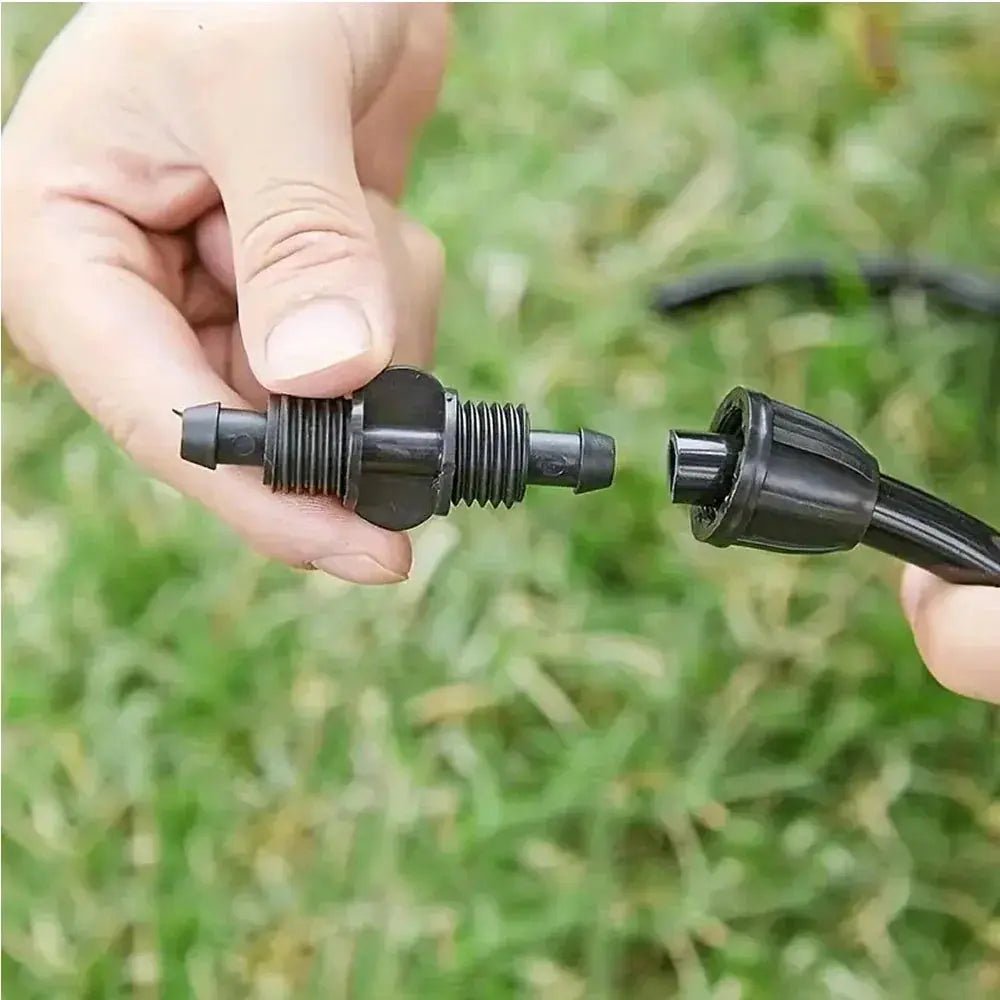
Coiled black supply pipe can feel rigid straight out of packaging. Unroll the tubing across warm paving or grass for twenty minutes before installation, as solar warmth softens the plastic and prevents frustrating kinks. When inserting barbed fittings into 13mm supply pipe or 4mm feeder lines, dip the cut pipe ends into a mug of hot water for five seconds. This softens the tubing wall just enough to slide barbed joiners completely home, forming a watertight grip that won't leak under pressure.
Winterising and Maintenance for Long System Lifespan
Expanding ice during winter frosts remains the number one cause of cracked timer bodies and ruptured internal diaphragms. Water trapped inside the solenoid chamber expands as it freezes, splitting internal seals beyond repair. Follow this simple late-autumn checklist:
- Remove the timer from the outdoor tap before the first November frost and store it in a shed or garage.
- Take out the batteries to eliminate internal terminal corrosion over the damp winter months.
- Uncap line end-plugs to allow gravity drainage across all low-lying pipe runs.
To secure your tap setup with reliable fittings engineered for fluctuating mains pressures, explore our best-selling garden watering components to assemble a leak-free system with total confidence.
Featured Irrigation Solutions: Proven Automatic Systems for Every Garden
Sizing individual connectors, pipe diameters, and flow emitters from scratch can feel daunting if you're new to technical garden setups. Choosing pre-configured garden irrigation systems with timer hardware simplifies the entire process by ensuring every component is hydraulically matched straight out of the box. Whether you're safeguarding container displays while away or establishing a reliable lawn schedule, selecting a coordinated setup prevents pressure loss and protects root health.
Complete Automatic Watering Kits for Quick Setup
Turnkey kits take the guesswork out of garden hydration. Quality boxed setups bundle programmable tap controllers, pressure regulators, 13mm distribution hoses, flexible microbore pipe, and adjustable drippers into a single package. Because these systems rely on intuitive push-fit joiners, you don't need specialised plumbing tools or solvent cements to assemble a leak-free network.
Modular flexibility is the biggest advantage of a kit-based approach. As your borders expand or you introduce new patio pots next spring, you can easily splice additional branch lines into your existing network without replacing the timer or regulator. For proven durability, genuine Hozelock watering kits provide standardised fittings and universal component compatibility, ensuring spare parts and extensions remain readily available over time.
Specialist Drip and Lawn Irrigation Collections
Different areas of your garden require distinct hardware approaches to achieve healthy growth without wasting metered water:
- Dedicated drip irrigation systems: Calibrated micro-drippers release slow, measured moisture directly beneath the plant foliage canopy. This direct root delivery protects delicate flower petals from scorch and fungal spotting while keeping surrounding soil dry to suppress weed growth.
- Discreet pop-up lawn sprinklers: Sub-surface pipe runs connect to sprinkler heads installed flush with your lawn surface. Under timed water pressure, they lift smoothly to broadcast uniform coverage across grass turf before retracting out of the way of your lawnmower.
Drawing on over 15 years of specialist UK irrigation expertise, we help you avoid incompatible parts by recommending matched components built to withstand fluctuating water pressures. Explore our best-selling garden irrigation range to find reliable automatic watering systems engineered to keep your garden thriving season after season.
Upgrade to Smarter Garden Watering Today
Achieving a lush, flourishing landscape no longer requires standing on the lawn with a hose every evening. Selecting the right setup comes down to understanding your garden's layout, maintaining steady pressure regulation at the tap, and pairing the right delivery method to your planting zones. When you connect targeted micro-drip emitters for patio pots and borders to an automated controller, you safeguard your plants against dry spells while significantly reducing household water waste.
With over 15 years of dedicated retail expertise across the UK, Garden Watering makes choosing garden irrigation systems with timer controls straightforward and stress-free. As an authorised stockist of genuine Hozelock automatic watering systems, precision drip kits, and pop-up sprinklers, we offer proven solutions built to withstand fluctuating water pressures without leaks. Explore our curated best-selling garden irrigation systems with timers to automate your watering today, and enjoy healthy, vibrant greenery all season long.
Frequently Asked Questions
Can I leave a garden irrigation timer connected to the tap all summer?
Yes, tap timers are designed to stay connected outdoors throughout spring and summer under constant mains water pressure. The tap stays turned on while the internal solenoid valve holds back the water flow until scheduled runtimes. Just inspect the tap washer periodically for minor weeping and ensure fresh alkaline batteries are installed at the start of the season so the shut-off mechanism functions reliably.
Do I need a plumber to install a garden irrigation system with a timer?
No, you don't need a plumber to install garden irrigation systems with timer controls. Modern setups use hand-tightened BSP threaded adaptors that screw directly onto your standard outdoor tap without specialist plumbing tools. Distribution pipes and micro drippers use push-fit barbed connectors that push together cleanly by hand. Just confirm your outside tap has an inline or integral double check valve to satisfy UK water fittings regulations.
Will an automatic garden watering system work during a UK hosepipe ban?
Yes, timed drip irrigation systems are generally exempt from UK water undertaker Temporary Use Bans. To meet statutory exemption rules, the system must be fixed in place, controlled by a timer, regulated with a pressure-reducing valve, and deliver water directly to or beneath the soil surface without misting or airborne spray. In contrast, high-volume lawn sprinklers connected to mains water remain strictly prohibited during bans.
How long should I set my garden irrigation timer to run each day?
Most patio pots and hanging baskets thrive on 5 to 15 minutes of watering once or twice daily, depending on weather and container volume. Established borders connected to low-flow inline drip lines generally need 30 to 45 minutes two or three times a week for thorough root soaking. Schedule your timer for early morning or dusk to reduce evaporation and give plants time to absorb moisture.
What water pressure is required to operate an automatic irrigation timer?
Standard electronic tap timers require a minimum pressure of roughly 0.5 to 1.0 bar to operate their internal diaphragm valves reliably. UK domestic mains supply typically delivers between 2.0 and 4.0 bar, which easily satisfies this requirement. When running micro-irrigation lines downstream, fit a pressure-reducing valve directly below the timer to step incoming pressure down to a safe operating level between 1.0 and 1.5 bar.
How do I protect my garden watering timer and pipes from freezing in winter?
Protect your controller by removing it from the outdoor tap in late autumn before the first freeze arrives. Trapped moisture inside the solenoid valve expands during cold snaps, splitting internal seals beyond repair. Store the timer indoors in a shed or cupboard and take out the batteries. You don't need to dig up distribution pipes; simply remove end-stops so water drains away naturally by gravity.
`-
Posted in
automatic watering, drip irrigation, garden care, garden irrigation, Garden Irrigation Systems with Timer, garden maintenance, water conservation, water timers