MDPE to Garden Hose Adapter: How to Choose the Right Fitting
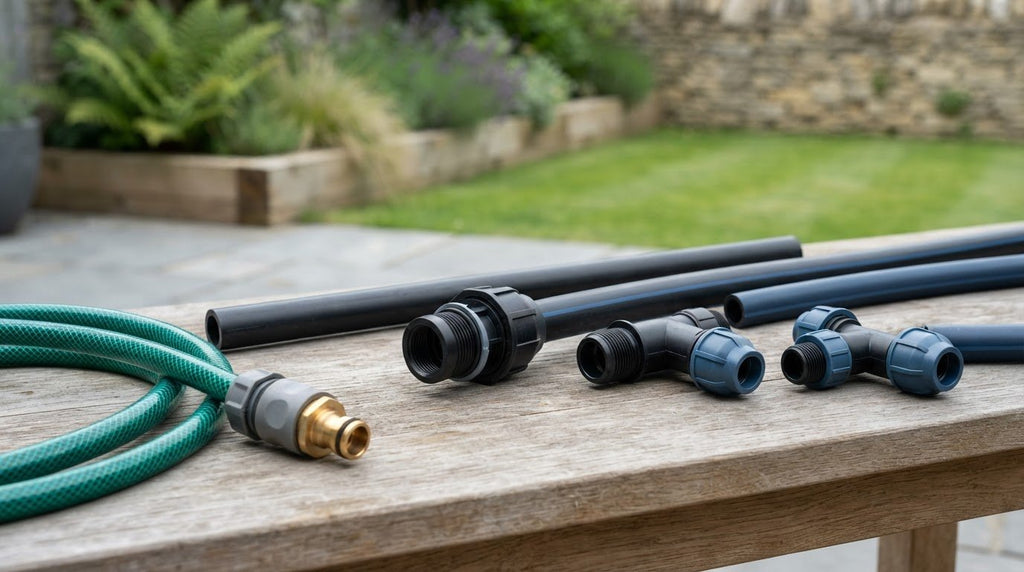
Could a fitting that looks right still leave your irrigation connection leaking or impossible to join? It can, especially if you’ve mistaken 20 mm MDPE for 25 mm or chosen a male thread when the existing connection needs a female one. Choosing the right mdpe to garden hose adapter means checking both ends before you buy, not relying on appearance alone.
It’s easy to focus on pipe size and overlook the thread or fitting shape. Matching the MDPE pipe, thread type and route the water needs to take helps you avoid ordering a fitting that won’t suit your garden setup.
This guide explains how to identify your pipe size and connection threads, including male and female ends, then choose a straight, elbow or tee fitting for your layout. You’ll also learn what to check when connecting an irrigation main supply or pop-up sprinkler setup, so you can make an informed choice before ordering.
Key Takeaways
- Identify the MDPE pipe size before choosing a fitting. Don’t assume 20 mm and 25 mm options are interchangeable.
- Check whether the receiving connection needs a male or female thread, and confirm its thread size and type.
- Choose an mdpe to garden hose adapter by matching both connection ends to the component you’re joining.
- Consider whether a straight, elbow or tee fitting best suits the irrigation route and layout.
- Dry-fit and check every connection before concealing pipework. Compare the listed fittings with your confirmed setup.
What does an MDPE to garden hose adapter connect?
An mdpe to garden hose adapter is a fitting intended to join an MDPE pipe end to a compatible threaded irrigation connection. Choose the MDPE side to suit the pipe’s diameter, then match the other end to the connection it will screw into. MDPE stands for Medium-density polyethylene (MDPE), a type of polyethylene used to make pipes and fittings.
The phrase “garden hose adapter” can refer to different connection arrangements. Some fittings have a thread for joining irrigation components, while a separate connector may be needed to attach a hose. Identify the part your pipe needs to connect to before choosing a fitting.
A garden hose quick connector works with its matching connection parts. This video shows one example of a hose quick-connect set, but it doesn’t confirm that a particular MDPE adapter will connect directly to it.
Which parts of the connection need to match?
Check the two ends separately. First, measure or confirm the MDPE pipe diameter. Then identify the receiving connection and its thread. A 20 mm or 25 mm measurement describes the pipe side, not the thread on the adapter’s other end. These are different dimensions, so matching one doesn’t guarantee the whole fitting will suit your setup.
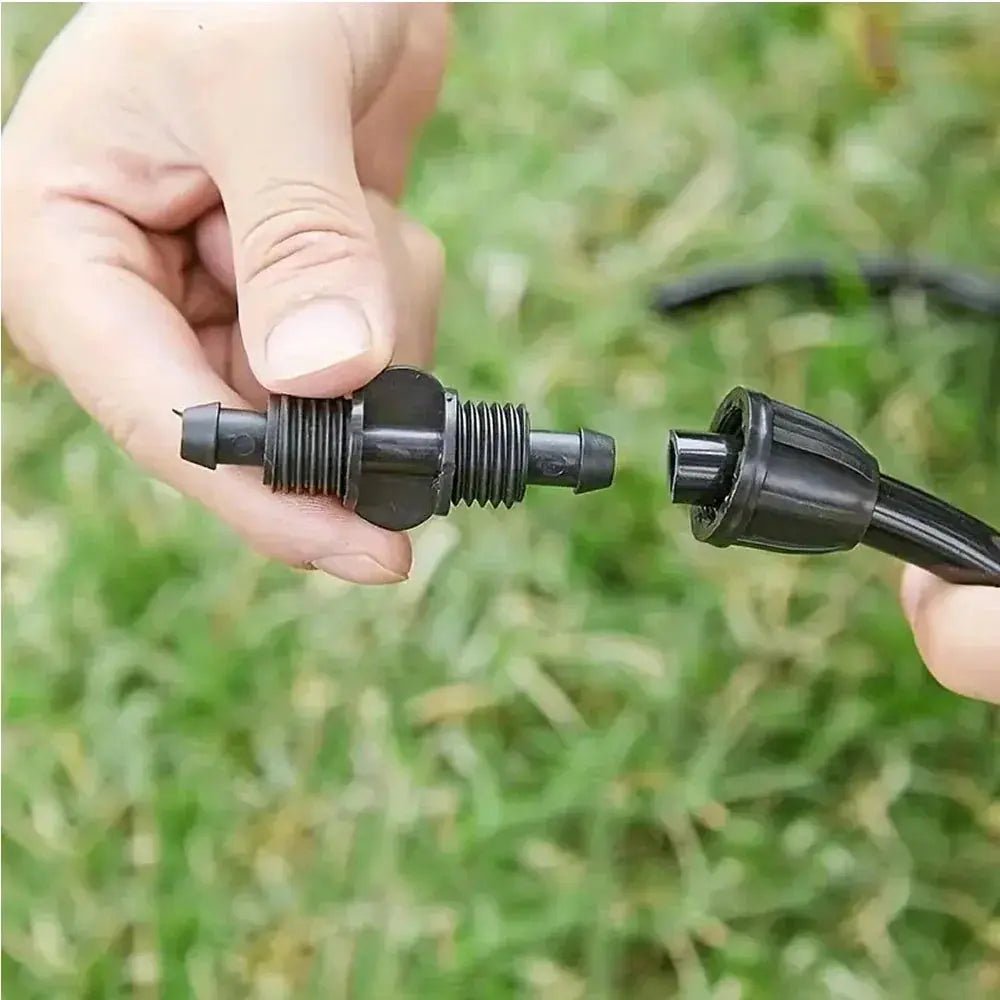
Also check whether the receiving part has a female thread, with threads inside, or a male thread, with threads on the outside. Neither is automatically the right choice. The adapter must have the corresponding end, with the correct thread size and type. Read the fitting description and manufacturer details before ordering, and check whether you’ll need anything else to complete the connection.
Is an MDPE adapter always a direct garden hose connector?
No. The word “adapter” alone doesn’t tell you whether a fitting provides a push-fit connection for a hose or whether its threaded end is intended to join an irrigation main supply or another component. The exact matching part depends on your existing system. Check both interfaces and confirm the stated use rather than assuming a familiar-looking thread or connector will fit.
If you’re planning a drip irrigation setup, explore the Claber drip irrigation range. Check the specific product details alongside your pipe and receiving fitting to verify the connection before choosing.
How to choose the right MDPE to garden hose adapter
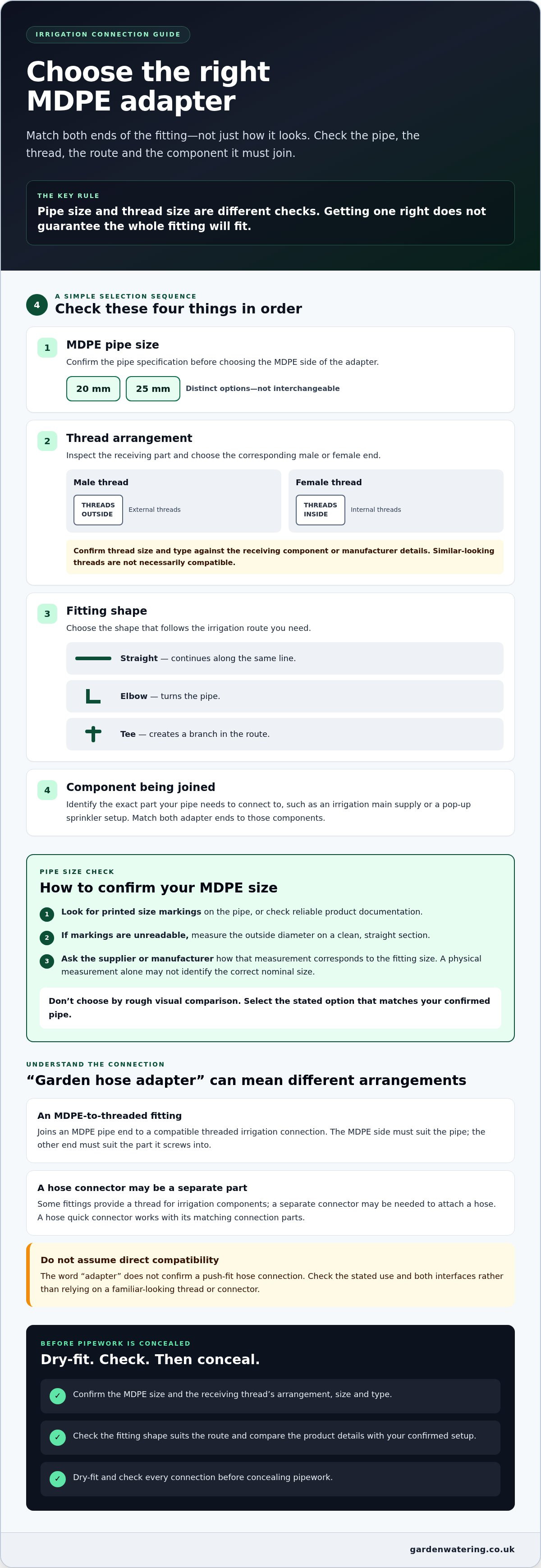
Choose the fitting by checking four things in order: the MDPE pipe size, the thread on the other end, the fitting shape and the component it needs to connect to. A mismatch at either end can leave you with a fitting that won’t join your setup, even if the product description sounds close.
Start with the pipe, then check the receiving connection’s thread size and type. Finally, decide whether the pipe route needs a straight connection, a change of direction or a branch. This sequence makes it easier to compare an mdpe to garden hose adapter with the actual parts in your irrigation system.
How do I measure an MDPE pipe and identify its size?
Look for size markings printed on the pipe, or check reliable product documentation for the pipe specification. The collection includes specified 20 mm and 25 mm MDPE fitting options. Treat these as distinct sizes, not interchangeable choices. Select only the option stated to match your pipe.
If the markings aren’t readable, measure the pipe’s outside diameter on a clean, straight section and ask the supplier or manufacturer to confirm how that measurement corresponds to the fitting size. A physical measurement alone may not identify the correct nominal size. Don’t choose based on a rough visual comparison.
How do I match the thread and fitting shape?
Inspect the part the adapter will join. An external thread is male; a thread inside a fitting is female. Choose the corresponding thread arrangement, then verify the thread’s stated size and standard against the receiving component’s documentation. Similar-looking threads aren’t necessarily compatible, so don’t rely on appearance alone. Technical resources from the Plastics Pipe Institute offer broader background on plastic piping, but confirm your particular fitting against its manufacturer’s specifications.
Next, match the fitting shape to the route your pipe needs to follow:
- Straight: for a connection that continues along the same line.
- Elbow: where the pipe needs to turn.
- Tee: where a branch is needed from a main line.
These shapes serve different layout needs. Confirm the specific product description before assuming a fitting offers the connection or direction your design requires. For related options, browse the irrigation fitting adaptors collection and compare the stated ends with your existing components.
Once you’ve confirmed the size, thread, shape and receiving part, compare the MDPE adapter options with your setup. Check both connection interfaces in the product details before ordering.
Which MDPE adapter fittings suit your irrigation layout?
The right fitting depends on more than pipe diameter. Match the MDPE size and thread to the receiving component, then choose a shape that suits the route or branch your irrigation layout needs. The options below show the specified details for five Claber and Plasson fittings. A threaded connection does not, by itself, confirm that a fitting attaches directly to a garden hose connector.
Polyethylene pipe is used in irrigation alongside other piping types. Clemson University Cooperative Extension explains some common piping for irrigation systems. For your own setup, rely on the fitting manufacturer’s specifications to verify each connection.
| Fitting | MDPE size | Thread description | Shape | Connection to check |
|---|---|---|---|---|
| Claber 90421 25mm MDPE to 3/4" Male Thread | 25 mm | 3/4-inch male thread | Straight adapter | Receiving component with a matching female thread |
| Claber 90420 MDPE 25mm Male 1" Thread | 25 mm | 1-inch male thread | Straight adapter | Receiving component with a matching female thread |
| Plasson MDPE 20mm x ¾" Male BSP Adaptor | 20 mm | ¾-inch male BSP thread | Straight adapter | Component specified to accept the matching male BSP thread |
| Claber 90418 | 25 mm | 3/4-inch thread; verify thread details | Threaded tee | Matching threaded component for the tee connection |
| Claber 90423 | 25 mm | 3/4-inch female thread | Elbow | Component with a matching male thread |
When should I choose a straight male-thread adapter?
Choose a straight option when the pipe can continue directly to the receiving component. The Claber 90421 has a 25 mm MDPE connection and a 3/4-inch male thread, while the Claber 90420 has a 25 mm MDPE connection and a 1-inch male thread. The Plasson option differs at the pipe end: it is specified for 20 mm MDPE and has a ¾-inch male BSP thread. These sizes are not interchangeable. Check the receiving part’s thread size and standard before selecting an mdpe to garden hose adapter.
When is a tee or female-thread elbow more suitable?
Use a tee where the layout needs a branch, and consider an elbow where the pipe route needs to turn. The Claber 90418 is specified as a 25 mm MDPE threaded tee with a 3/4-inch thread. The Claber 90423 is a 25 mm MDPE elbow with a 3/4-inch female thread. Confirm the tee’s thread configuration and the exact installation arrangement against manufacturer details before choosing.
How to avoid leaks and mismatches when fitting MDPE adapters
A connection that appears to fit can still be wrong for the pipe or irrigation component. Before assembly, check the product instructions and confirm that the parts are intended to join. This matters especially if the pipework will be buried or hidden, because a leak may be harder to find and reach later.
What common MDPE adapter buying mistakes should I avoid?
Don’t select a fitting by its thread size alone. The MDPE end must also match the pipe, and the receiving component must suit the adapter’s thread configuration and standard. A male thread has threads on the outside; a female thread has them inside. Similar-looking threads can still differ, so compare product and manufacturer details rather than relying on appearance.
Another common mix-up is assuming a threaded irrigation adapter is automatically a direct hose connector. It may need a separate compatible fitting to connect to a hose or another part of the system. Before choosing an mdpe to garden hose adapter, confirm what the adapter connects to on both ends and whether any additional component is required.
What should I check before the system goes into use?
Lay out the parts and dry-fit them to check that the connection arrangement suits the intended irrigation route. Don’t force components together or use extra sealing materials or methods unless the manufacturer’s instructions specify them. Follow the assembly and sealing instructions for each fitting, as requirements can vary by product.
Before covering or concealing pipework, test the assembled system as directed by the product instructions. Inspect each connection during the test for signs of leakage, and resolve any issue before proceeding. If a connection doesn’t seat as expected, stop and recheck the pipe size, thread details, fitting orientation and receiving part. Don’t try to overcome a mismatch by applying more force.
Keep the full layout in mind, too. A fitting can match the pipe and still be unsuitable for the way the system needs to branch or turn. If the arrangement is uncertain or complex, seek advice from a suitably qualified professional rather than guessing.
If you’re planning a related watering setup, explore the Claber drip irrigation collection and check product details against your components. Once you’ve confirmed the connection requirements, compare MDPE adapter options for your setup.
Choose your MDPE adapter and complete the irrigation connection
A suitable mdpe to garden hose adapter must match the pipe as well as the component it joins. Before choosing, confirm the MDPE size, the thread size and type, the fitting shape, and the exact receiving part. Checking all four helps you compare options with your actual irrigation layout rather than relying on a product name alone.
Which fitting should I shortlist first?
Start with the pipe size shown on its markings or confirmed in its documentation. Then compare product details for the thread and shape you need. The five Claber and Plasson fittings listed here are options for irrigation connections, but don’t assume they all suit the same pipe or receiving component.
- Shortlist a 20 mm or 25 mm option only after confirming your MDPE pipe size.
- Choose between a male-thread adapter and the female-thread elbow by checking the thread on the component it will join.
- Consider the tee only if your planned layout needs a branch, and verify its thread details against the product information.
A straight fitting, an elbow and a tee serve different layout needs. The right shape depends on where the pipe runs and what it connects to. Confirm the manufacturer’s specifications for both ends before ordering, especially if you expect the adapter to join a hose connector directly.
Where can I browse the MDPE adapter options?
Checking dimensions before browsing can help you rule out a mismatch early. Keep the receiving component’s details to hand, including whether it needs a male or female thread and the thread standard it accepts. For broader planning around an automatic watering setup, read the garden watering systems guide.
Garden Watering has more than 15 years of experience providing irrigation product advice. Compare the five Claber and Plasson fittings with your confirmed setup, using the listed product details, and check both connection interfaces before making your choice.
Browse MDPE adapters once you’ve confirmed the pipe size, thread, fitting shape and receiving component.
Make your irrigation connection with confidence
A suitable mdpe to garden hose adapter depends on the complete connection, not just the pipe. Confirm the MDPE size, the receiving component’s thread type and size, and whether a straight, elbow or tee fitting suits your layout. Then check the product details and manufacturer instructions before assembly.
The five fittings listed from Claber and Plasson have different pipe sizes, thread configurations and shapes. Compare their stated details with your confirmed setup, and don’t assume a threaded adapter connects directly to a garden hose without a compatible matching part.
Garden Watering has more than 15 years of experience providing irrigation product advice. Check both connection ends, then browse the MDPE adapter collection to compare the options. With the right details to hand, you can choose a fitting with greater confidence and move ahead with your irrigation plan.
Frequently Asked Questions
How do I connect an MDPE pipe to a garden hose?
Use an adapter that matches the MDPE pipe at one end and the hose connection arrangement at the other. First confirm the pipe size, then identify the receiving fitting and its thread or connector type. A threaded MDPE fitting may need a separate compatible hose connector, so don’t assume it attaches directly to the hose. Follow the fitting manufacturer’s assembly instructions and check the connection for leaks before concealing pipework.
How do I know whether I need a 20 mm or 25 mm MDPE adapter?
Check the MDPE pipe’s printed markings or reliable product documentation for its stated size. The 20 mm and 25 mm descriptions refer to different pipe-size options, so don’t treat them as interchangeable. If markings are unclear, measure the pipe as directed by the supplier or manufacturer and ask them to confirm which nominal size applies. A visual estimate alone may not give you enough certainty to select a fitting.
What is the difference between a male and female MDPE adapter?
A male thread has its threads on the outside of the fitting; a female thread has them on the inside. The correct choice depends on the part you’re joining: the two connection ends need to match in a way that allows them to screw together. Check the product description for thread direction, size and standard, then compare those details with the receiving component. Neither type is automatically right for every irrigation setup.
Can an MDPE adapter connect directly to a standard garden hose?
Not necessarily. “MDPE adapter” describes a fitting for a particular pipe connection, but it doesn’t confirm that the other end is a direct hose connector. Some adapters have a threaded end intended for an irrigation component and may need a separate compatible connector to join a hose. Check the exact fitting description and the hose connection you have before ordering, rather than relying on a similar appearance or a general product label.
What does 3/4-inch BSP mean on an MDPE adapter?
It indicates a 3/4-inch thread described as BSP, or British Standard Pipe. The measurement and standard identify the thread connection, not the MDPE pipe diameter. Check whether the adapter has a male or female thread and confirm that the component it will join is specified for the corresponding BSP connection. Don’t assume that a thread with a similar stated size but a different standard will fit or seal correctly.
When should I use an MDPE elbow or tee fitting?
Choose an elbow when the pipe route needs to change direction, and consider a tee when the layout needs a branch from the main line. The correct fitting also has to match the MDPE pipe and every connected thread. Check the product specifications and plan how each end will join the rest of the system before choosing. A tee or elbow won’t suit every layout, so base the decision on the route and connection points.
How can I prevent an MDPE adapter connection from leaking?
Confirm that the pipe size, thread type, thread size and receiving component all match before assembly. Follow the fitting manufacturer’s instructions for connecting and sealing it, since methods can differ between products. Don’t force mismatched threads or add sealing materials unless the instructions call for them. Test the assembled irrigation system as directed and inspect the connections for leaks before burying or concealing the pipework. If a connection doesn’t fit as expected, stop and recheck the specifications.
`-
Posted in
DIY irrigation, garden hose adapter, garden plumbing, garden watering, irrigation systems, MDPE fittings, mdpe to garden hose adapter, pipe connectors