Quick Release Hose Connectors: The Specialist Guide to Leak-Free Watering
You’ve just turned on the tap, only to feel a cold spray soak your shoes because a coupling failed to hold. It’s a common frustration that turns a peaceful gardening session into a battle with spray and lost water pressure. Most gardeners have dealt with the annoyance of fittings that pop off or drip constantly, but it doesn't have to be this way. By choosing the right quick release hose connectors, you can build a professional-grade irrigation system that stays bone-dry and secure, even under high pressure.
We know that selecting garden fittings can be confusing, especially when you are trying to distinguish between a standard 3/4 inch BSP tap and various hose diameters. As specialists with over 15 years of experience in Hozelock systems, we’ve seen how the right components prevent wasted water and save your sanity. This guide explains how to master the clicking world of hose fittings. You will learn how to identify the correct sizes the first time, understand the vital difference between standard and Aquastop connectors, and create a reliable system that performs perfectly every time you step into the garden.
Key Takeaways
- Understand the "click" mechanism and how spring-loaded sleeves ensure a secure, locking connection between your hose and accessories.
- Learn the critical difference between standard and Aquastop fittings to prevent getting soaked when swapping spray guns or sprinklers.
- Compare the benefits of UV-stabilised plastic and premium brass quick release hose connectors to choose the best material for your garden's specific demands.
- Master a simple installation process that ensures a flush, watertight fit and prevents connectors from popping off under high water pressure.
- Discover why system compatibility is the secret to building a professional-grade irrigation setup that remains reliable and leak-free for years.
What are Quick Release Hose Connectors and How Do They Work?
Quick release hose connectors are the essential link that transforms a simple hosepipe into a high-performance irrigation system. These fittings allow you to switch instantly between accessories like spray guns, sprinklers, and pressure washers without the need for tools or complex threading. By using a standardised "click-to-connect" interface, you can move from hand-watering your flowerbeds to setting up a lawn sprinkler in seconds.
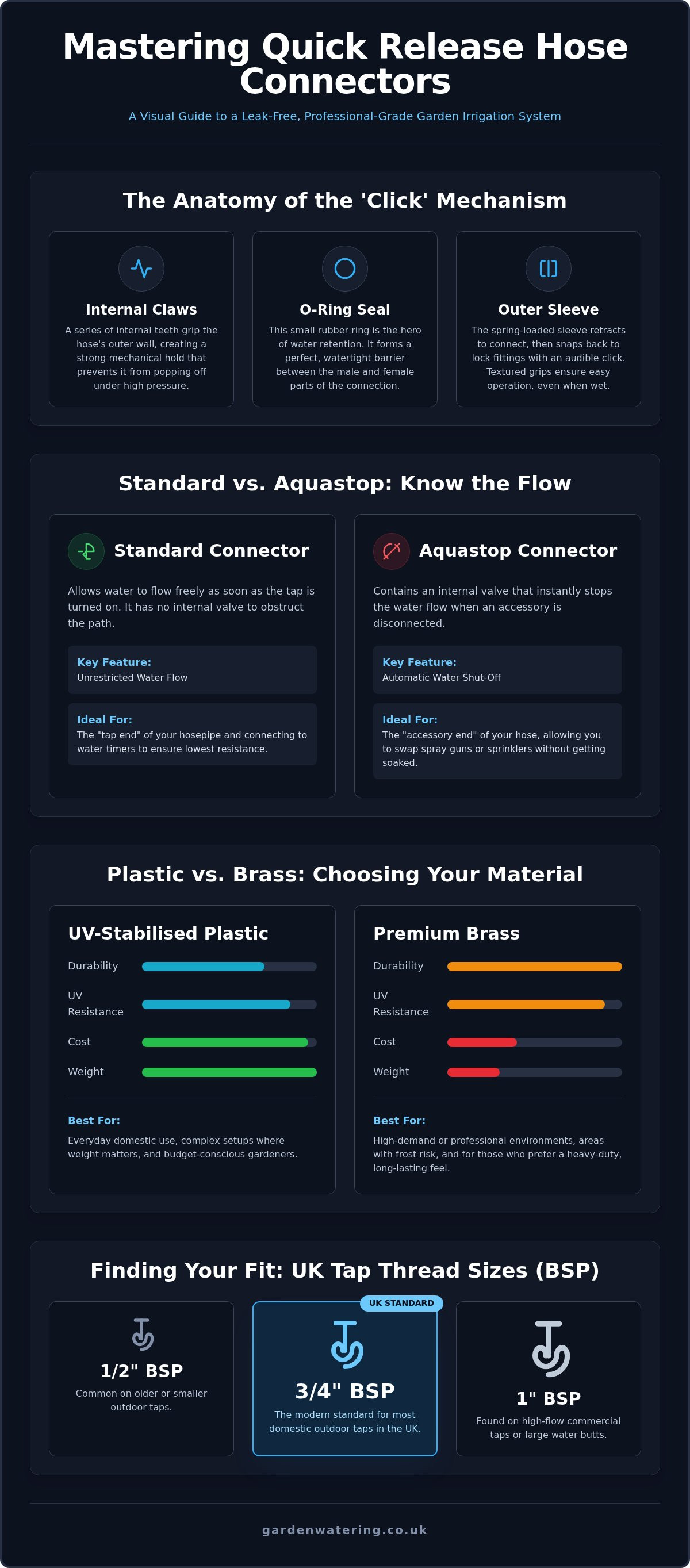
The genius of the design lies in the "click" mechanism. This system uses a spring-loaded outer sleeve that, when retracted, allows a male nipple to enter the coupling. Once released, the sleeve snaps back into place, locking the components together with a secure, audible click. While various hose coupling types exist globally, the Hozelock-style pattern has become the de facto standard in the UK. This uniformity ensures that your components work together seamlessly, which is vital for building reliable automatic watering systems or multi-zone irrigation setups.
The Anatomy of a Hose Coupling
Understanding how a connector is built helps you maintain a leak-free system. Inside the connector, a series of internal teeth or "claws" grip the outer wall of the hosepipe when the end nut is tightened. This mechanical grip is what prevents the hose from blowing off under high pressure. You should always ensure the hose is pushed fully past these teeth before tightening to achieve a secure hold.
The real hero of water retention is the O-ring seal. This small rubber ring creates a watertight barrier between the male and female parts of the connection. If your fitting drips, the O-ring is usually the first thing to check for wear or debris. Finally, the outer sleeve is designed with ergonomics in mind. Quality quick release hose connectors often feature soft-touch grips or textured surfaces, making them easy to operate even when your hands are wet or cold.
BSP Threads and Tap Compatibility
A reliable system starts at the tap. Most UK outdoor taps use British Standard Pipe (BSP) threads, which is the universal standard for plumbing and gardening across the country. BSP refers to a standard set of thread sizes used to connect pipes and fittings, ensuring compatibility between different manufacturers. Choosing the correct tap connector is the foundation of your entire irrigation setup. It provides the secure male connection point that your hosepipe clicks onto, ensuring that the primary point of pressure remains stable and dry.
You will typically encounter three sizes of tap threads in UK gardens:
- 1/2" BSP: Common on older or smaller outdoor taps.
- 3/4" BSP: The modern standard for most UK domestic outdoor taps.
- 1" BSP: Often found on high-flow commercial taps or large water butt outlets.
Identifying your tap size before purchasing ensures you get a leak-free fit the first time, preventing the common frustration of mismatched threads and wasted water.
Standard vs. Aquastop: Choosing the Right Functionality
Choosing between different types of quick release hose connectors involves more than just picking a colour. The internal mechanics of your fittings determine how your water flows and how much control you have at the end of the line. Most specialist setups rely on a strategic mix of standard and Aquastop connectors to ensure maximum efficiency and convenience. While they may look identical from the outside, their roles in your irrigation system are very different.
Using the wrong connector in the wrong location is a common mistake that can lead to unnecessary pressure on your equipment. For instance, placing an Aquastop fitting directly at the tap can cause backpressure issues, potentially damaging a water pump or a connected timer. Understanding where each valve belongs is the secret to a professional-grade system that lasts for years.
When to Use a Standard Connector
A standard connector allows water to flow through the coupling freely whenever the tap is open. Because there is no internal valve to obstruct the path, these fittings offer the lowest possible resistance. This makes them the ideal choice for the "tap end" of your hosepipe. They are also the best option when connecting to Hozelock water timers, as they ensure the timer's internal valves aren't fighting against additional mechanical resistance in the connector.
If you are building long irrigation lines or multi-zone systems, using standard connectors at every junction helps maintain a high flow rate. This ensures your sprinklers have the pressure they need to reach the corners of your lawn without drop-offs in performance. They are simple, reliable, and essential for the foundation of your watering setup.
The Benefits of the Aquastop Valve
The Aquastop connector is designed specifically for the "accessory end" of your hosepipe. It features an internal, spring-loaded valve that automatically shuts off the water flow the moment you disconnect a tool. This clever feature means you can swap between Hozelock spray guns and lances without having to walk all the way back to the tap to turn off the water.
Beyond the convenience, Aquastop valves are essential for preventing water waste. When you disconnect a sprinkler to move to a different area, the water stops instantly, keeping your feet dry and your water bill lower. It's a small technical detail that makes a significant difference in your daily gardening routine. If you're ready to upgrade your setup, you can explore our full range of professional hose fittings to find the perfect match for your garden.
Plastic vs. Brass: Which Material is Best for Your Garden?
Deciding which quick release hose connectors to buy often comes down to a choice between modern polymers and traditional metals. While brass is frequently associated with premium quality, high-grade plastic has been engineered to meet the specific demands of the UK climate. Choosing the right material isn't just about how the fitting feels in your hand; it's about ensuring the long-term health of your entire irrigation system.
One specialist detail that is often overlooked is the physical weight of the components. Heavy brass connectors offer incredible durability, but their mass can put unnecessary strain on plastic tap threads or the delicate internal valves of a water timer. If your setup relies on an automatic controller, lightweight components are often the smarter choice to prevent structural fatigue and potential leaks at the source.
The Case for High-Quality Plastic
Modern fittings manufactured from UV-stabilised Polypropylene are designed to thrive outdoors without becoming brittle under the sun. High-quality plastic components, such as those found in Hozelock’s range, feature a triple-locking system. This engineering ensures the connector remains firmly anchored to the hosepipe, even when subjected to the high-pressure spikes common in domestic water systems.
Lightweight plastic is also more forgiving during everyday tasks. If you drop a plastic connector while washing the car, it won't chip the paintwork or crack a paving stone. Furthermore, plastic is naturally resistant to limescale. In hard water areas across the UK, this prevents the internal "click" mechanism from seizing, ensuring the sleeve remains easy to operate year after year.
When to Invest in Brass Fittings
For professional landscaping or environments where equipment is handled roughly, brass remains the gold standard. These fittings provide superior crush resistance, making them ideal for areas where they might be stepped on or run over by garden machinery. Brass also excels in extreme weather. While some plastics can contract or become stiff in the winter, brass maintains its mechanical integrity in sub-zero temperatures, which is essential for year-round outdoor plumbing.
Brass is the perfect partner for permanent installations. They work seamlessly with irrigation fitting adaptors to create robust, hard-plumbed systems that require minimal maintenance. For the average domestic user, a hybrid approach often works best: use a brass connector at the tap for a rock-solid foundation, and high-quality plastic at the accessory end for a lightweight, ergonomic experience. This strategic mix gives you the best of both worlds, ensuring your quick release hose connectors perform reliably regardless of the task at hand.
How to Install and Maintain Your Hose Connectors
Installing your quick release hose connectors correctly is the difference between a dry garden and wet feet. It’s a simple process, but precision matters for a professional-grade seal. Follow these four steps to ensure your system stays together even under high pressure.
- Step 1: Start with a clean cut. Use sharp secateurs or a utility knife to cut the hosepipe perfectly square. A jagged or angled edge won't sit flush against the internal seal, which is a leading cause of slow drips.
- Step 2: Prepare the fitting. Unscrew the end nut from the connector body and slide it onto the hosepipe first. It's easy to forget this step, but it's essential for the final assembly.
- Step 3: Connect the body. Push the hosepipe firmly into the connector until it goes past the internal teeth. You should feel it seat against the internal stop.
- Step 4: Secure the connection. Tighten the nut back onto the connector body. You'll feel increasing resistance as the internal teeth grip the hose wall. Continue until it's firm; many high-quality fittings will reach a hard stop when fully secured.
Preventing Leaks and Pop-Offs
Even the best quick release hose connectors require occasional inspection to maintain peak performance. Periodically check the small rubber O-ring on the male end of your fittings. If you see cracks or trapped debris, the seal will fail. Hand-tightening is almost always better than using pliers. Over-tightening with tools can crack the plastic or strip the threads, leading to permanent damage. It's also vital to ensure your connector matches your hose diameter. While 12.5mm is the most common UK standard, 15mm hoses require specific larger-diameter fittings to ensure the internal teeth can actually bite into the hose wall effectively.
Winter Care and Maintenance
Frost is the enemy of any watering system. When water freezes inside a connector, it expands and can crack the casing or the internal Aquastop valve. Before the first frost arrives, drain all your connectors and store them in a dry place like a shed or garage. You can also apply a small amount of silicone lubricant to the spring-loaded sleeve to keep the mechanism moving smoothly for the next season. For a complete checklist, refer to our guide on how to winterise your garden watering system. If you need to replace worn components before the next season, you can buy professional-grade Hozelock connectors here to ensure a leak-free setup.
The Hozelock Advantage: Why System Compatibility Matters
Hozelock pioneered the quick-connect system that has now become a standard across Europe. While many generic brands claim universal compatibility, they often fall short on the microscopic tolerances required for a truly watertight seal. When you invest in Hozelock watering kits, you are benefiting from decades of precision engineering. This ensures that every click is secure and every seal remains dry, even when your system is left under constant pressure from an automatic timer.
Beyond the technical fit, the user experience is a primary focus of genuine components. Features like soft-touch grips are not just for aesthetics; they provide the necessary friction to operate the sleeve comfortably with wet or soapy hands. This 15-year legacy of thoughtful design is something generic alternatives simply cannot match. Cheaper imitations often use lower-grade resins that result in stiff mechanisms, which become difficult to operate after just one season in the sun.
Building a Complete Watering System
A reliable set of quick release hose connectors serves as the backbone for more advanced garden setups. These fittings allow you to bridge the gap between your main outdoor tap and sophisticated drip irrigation systems, which provide targeted hydration to borders and pots. Because these systems often run on timers, the connection at the tap must be absolute to prevent flooding or pressure loss while you are away from home.
Similarly, these connectors are the primary link for pop-up lawn sprinkler systems. In these setups, maintaining high pressure is critical for the sprinkler heads to rise and rotate correctly. At Garden Watering, our 15 years of specialist experience allows us to provide expert advice, ensuring every component in your multi-zone system works in perfect harmony. We help you avoid the frustration of mismatched parts that lead to system failure.
Choosing the Right Accessory
Expanding your system often requires specialised accessories that go beyond the basic hose end. Double male connectors are invaluable for joining two shorter hoses together to reach the furthest corners of a large garden. This is a cost-effective way to extend your reach without purchasing an entirely new, longer hose reel.
If you need to run an automatic timer and a manual hose simultaneously, Y-junctions allow you to split a single tap into two independently controlled outlets. These accessories use the same standardised clicking interface, making them easy to integrate into your existing setup. To see how these components can transform your outdoor space, you can explore the full range of Hozelock connectors available in our specialist shop. By choosing genuine parts, you guarantee a professional-grade finish that remains leak-free for years.
Build Your Perfect Leak-Free Watering System
Mastering your garden irrigation starts with the small details that make a big difference. By choosing the right quick release hose connectors for each end of your line, you ensure maximum pressure and zero waste. Whether you opt for the robust feel of brass or the ergonomic efficiency of UV-stabilised plastic, your system will perform reliably when you follow correct installation and seasonal maintenance routines. It's the easiest way to ensure your plants get the hydration they need without the hassle of constant leaks or wet feet.
As an official Hozelock specialist retailer with over 15 years of irrigation expertise, we’re here to help you build a setup that lasts. Investing in genuine components prevents the common frustrations of popping couplings and structural fatigue. You can explore our expert-curated selection and benefit from free UK delivery on qualifying orders to get your garden ready for any season. Our team is dedicated to providing the technical support you need to choose the right fittings the first time.
Ready to upgrade your irrigation setup? Shop the Full Hozelock Connector Range at Garden Watering today.
We look forward to helping you achieve a perfect, professional-grade watering system for your home.
Frequently Asked Questions
What is the difference between a hose connector and an Aquastop connector?
A standard hose connector allows water to flow freely through the pipe whenever the tap is open. In contrast, an Aquastop connector contains an internal spring-loaded valve that automatically halts the water flow when you disconnect an accessory. This allows you to swap between spray guns or sprinklers without walking back to the tap. For the best results, use standard fittings at the tap and Aquastop fittings at the accessory end.
Will Hozelock connectors fit other brands of hosepipe?
Yes, Hozelock connectors are designed to be compatible with most standard garden hosepipes regardless of the brand. The "click-to-connect" system is the universal standard across the UK and Europe. However, it's vital to choose a connector that matches the internal diameter of your hose, which is typically 12.5mm or 15mm. Using the correct size ensures the internal teeth can grip the hose wall securely to prevent leaks.
Why does my hose connector keep leaking at the tap?
Leaking at the tap is usually caused by a worn or damaged rubber O-ring on the male tap connector. This small ring is the primary seal; if it becomes cracked or flattened over time, water will spray out under pressure. Another common cause is a mismatched thread size. Ensure your tap connector is screwed on straight and tightened firmly by hand. Avoid using pliers, as over-tightening can permanently distort the plastic threads.
Are brass hose connectors better than plastic ones?
Brass connectors provide superior durability and crush resistance, making them ideal for professional environments or high-traffic areas. However, high-quality quick release hose connectors made from UV-stabilised plastic are often better for domestic gardens. They are lightweight, which prevents strain on plastic water timers and tap threads. Plastic is also naturally resistant to limescale, ensuring the locking mechanism remains smooth in hard water areas without seizing over time.
What size hose connector do I need for a standard UK garden tap?
Most modern UK outdoor taps require a 3/4 inch BSP tap connector. This is the universal standard for domestic outdoor plumbing. Some older or smaller taps may use a 1/2 inch BSP thread, while larger commercial outlets often require a 1 inch fitting. Measuring the external diameter of your tap’s threaded outlet before you buy will help you achieve a secure, watertight foundation for your irrigation system the first time.
Can I use quick release connectors with a high-pressure power washer?
You can use these connectors with power washers, but you must use a standard connector rather than an Aquastop version at the machine inlet. The internal valve in an Aquastop fitting can restrict the high volume of water required by the power washer's pump, potentially causing it to overheat. Using a genuine Hozelock fitting ensures a secure connection that can withstand the vibrations and pressure spikes common during heavy-duty cleaning tasks.
How do I stop my hose connector from popping off under pressure?
Connectors usually pop off because the hosepipe wasn't pushed far enough past the internal gripping teeth during installation. To fix this, ensure your hose is cut perfectly square and push it firmly into the connector body until it hits the internal stop. Tighten the end nut until you feel a firm resistance. Using quick release hose connectors with a triple-locking system provides a significantly stronger mechanical grip that prevents the hose from blowing out.
How long do garden hose connectors typically last?
A professional-grade connector typically lasts between 5 and 10 years depending on maintenance and UV exposure. The most common cause of failure is frost damage, which occurs when water freezes and expands inside the fitting. To maximise the lifespan of your components, always drain them and store them in a frost-free shed or garage during the winter. Occasionally lubricating the spring-loaded outer sleeve with silicone spray will also keep the mechanism clicking smoothly.
`-
Posted in
Aquastop, brass hose fittings, garden maintenance, gardening tips, hose fittings, Hozelock, leak-free watering, quick release hose connectors, watering system