
Solenoids and Manifolds: The Professional Choice for Large Irrigation Projects
Your garden has officially outgrown the capabilities of a standard tap timer. You've likely noticed that as your landscape expands, those simple battery-operated units struggle to provide the flow rate needed for multiple zones, often leaving distant corners parched. It's a common challenge for ambitious gardeners, but the solution lies in upgrading to solenoid and manifolds - perfect for the larger irrigation project. These professional-grade components move the control from the tap to a centralized hub, allowing you to manage high-flow demands without the risk of system failure.
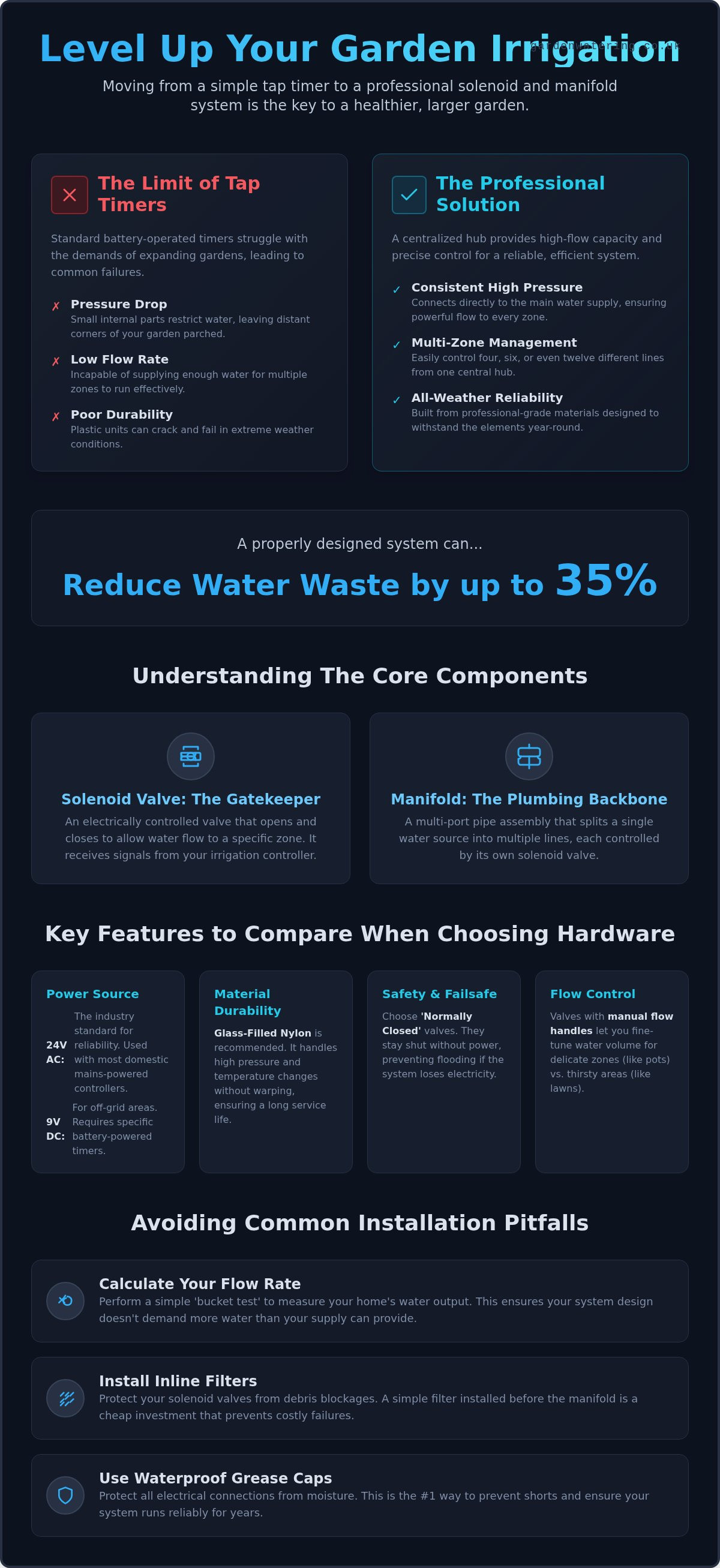
We understand that the shift toward wiring and electrical valves can feel daunting at first. However, making this transition is the most effective way to achieve a high-performance system that covers your entire garden while potentially reducing water waste by up to 35%. This article will guide you through the selection process with the confidence of a specialist. You'll learn exactly which manifold ports and solenoid voltages suit your needs, ensuring you can plan a professional layout that keeps your plants healthy and your system running reliably for years to come.
Key Takeaways
- Learn how to accurately calculate your flow rate using a bucket test to ensure your system meets the specific water demands of every garden zone.
- Gain clarity on technical hardware requirements, including the choice between 24V AC and 9V DC power sources for your irrigation controller.
- Discover why solenoid and manifolds - perfect for the larger irrigation project provide the high-flow capacity needed to reach the furthest corners of your landscape.
- Protect your investment by mastering professional installation tips, such as using waterproof grease caps and inline filters to prevent electrical failure and debris blockages.
- Compare the benefits of custom-built configurations against pre-assembled manifold kits to find the most efficient solution for your unique project requirements.
Why Solenoids and Manifolds are Essential for Larger Irrigation Projects
When your garden design expands beyond a few pots and a small lawn, your watering requirements change fundamentally. A large-scale landscape needs a high volume of water delivered with precision, something that standard domestic setups often can't provide. Transitioning to a professional setup involving solenoid and manifolds - perfect for the larger irrigation project allows you to move away from the limitations of your outdoor tap. By installing these components, you create a dedicated control center that manages high-pressure water flow across multiple distinct zones without the risk of system failure or uneven coverage.
Moving Beyond the Traditional Tap Timer
Standard Hozelock water timers are excellent for smaller plots, but they have physical flow rate limitations. The internal aperture of a tap timer is often quite small, which creates a significant bottleneck. In a large garden, this leads to a "pressure drop" where the water simply doesn't have the strength to reach the furthest sprinklers. A manifold system solves this by connecting directly to your main water supply with larger pipework, ensuring that the volume of water remains consistent from the first zone to the last. Professional solenoids are also built for durability; they're designed to stay outside year-round, handling the elements far better than battery-operated units that might crack or fail in extreme weather.
The Core Components: Solenoids and Manifolds Explained
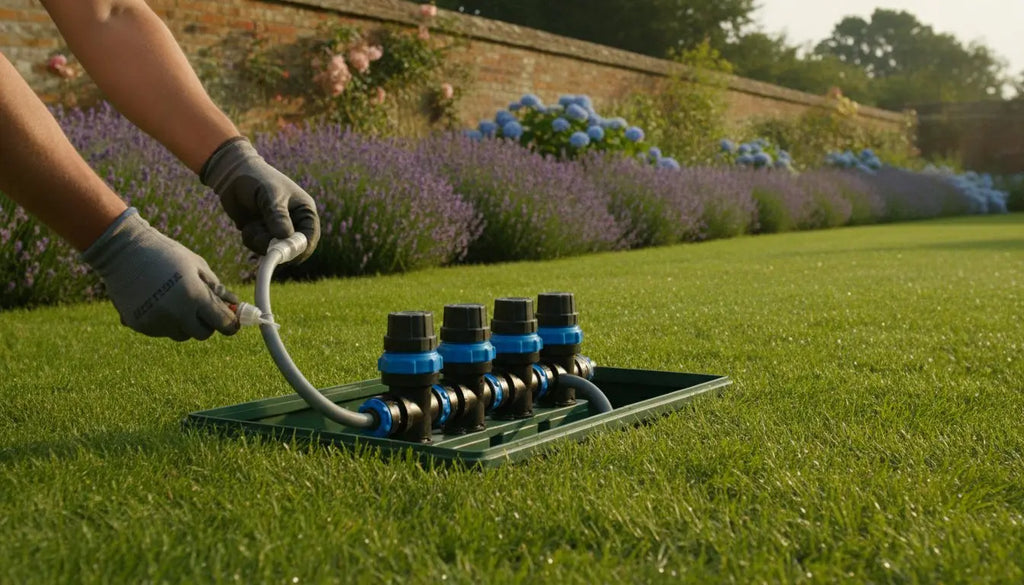
To build a reliable system, you need to understand how these two parts work in tandem. The solenoid valve acts as the "gatekeeper" for each individual zone. It stays closed until it receives an electrical signal from your controller, at which point it opens to let water through. Understanding how solenoid valves operate is key to seeing why they are so much more reliable than mechanical timers. While the solenoid handles the flow, the manifold acts as the "plumbing backbone" that holds everything together. An irrigation manifold is a multi-port pipe assembly used to distribute water to various zones. This centralized hub allows you to split a single high-pressure water source into four, six, or even twelve different lines, each controlled by its own dedicated solenoid.
Investing in solenoid and manifolds - perfect for the larger irrigation project means you're no longer relying on a single plastic timer to do all the heavy lifting. Instead, you have a robust, modular system that can be expanded as your garden grows. This setup not only provides better performance but also offers the peace of mind that comes with using professional-grade hardware. It's the most effective way to ensure your landscape stays healthy while maintaining the high standards of efficiency that a modern garden requires.
Key Features to Compare When Choosing Your Irrigation Hardware
Selecting the right hardware is what separates a professional installation from a temporary fix. When you are investing in solenoid and manifolds - perfect for the larger irrigation project, you need to match your components to your controller's output. Most domestic controllers use 24V AC solenoids. These are the gold standard for reliability. For off-grid areas, 9V DC latching versions are available, but they require specific battery-powered timers. Having 15 years of expert irrigation advice has taught us that getting the voltage right at the start saves hours of troubleshooting later.
Physical durability is just as important as electrical specs. We recommend looking for valves made from glass-filled nylon, which handles high pressure and temperature changes without warping. If you have areas with varying water needs, choose solenoids with manual flow control handles. This feature lets you throttle the water volume for delicate zones, ensuring your pots don't get over-saturated while your lawn gets the full flow it requires. With our collection of 21 specialized solenoids and manifolds, we've curated the most dependable hardware for every scenario.
Normally Closed vs. Normally Open Solenoids
Safety should be your primary concern when designing an automated system. 'Normally Closed' solenoids are the industry standard for gardens because they stay shut until they receive an electrical signal. This prevents your garden from flooding if the power goes out or a wire is damaged. 'Normally Open' valves are rare in landscaping and are typically reserved for specialized agricultural needs where water must flow unless a signal stops it. For any residential project, always specify Normally Closed valves to keep your water usage under control.
Manifold Port Options and Expandability
The layout of your hub depends entirely on your garden design ideas. Manifolds are available in 2, 3, and 4-port versions, and they are modular by design. You can join them together to create as many zones as your water supply can support. We always advise using manifolds with swivel nut connectors. These make maintenance straightforward; you can unscrew a valve for cleaning or replacement without disturbing the rest of the setup. It's also a smart move to install a manifold with an extra port and cap it off. This small step makes future expansion easy if you decide to add more zones later. If you need help choosing the right configuration, you can explore our specialist irrigation supplies to see what fits your space.
Planning Your System: Calculating Zones and Flow Rates
A successful installation begins with accurate data rather than guesswork. Before you select your hardware, you must perform a 'Bucket Test' at your primary water source. Simply time how many seconds it takes to fill a 10-litre bucket from your tap. This calculation determines your flow rate in litres per minute, which is the most critical figure for your design. If your source provides 20 litres per minute, the total demand of all sprinklers or emitters in a single zone must stay below this threshold. Exceeding this capacity leads to poor spray patterns and dry patches in your landscape.
Once you know your available volume, you can begin grouping your plants into specific zones. Large landscapes often suffer from pressure loss due to friction within long pipe runs or changes in elevation. By choosing solenoid and manifolds - perfect for the larger irrigation project, you gain the ability to split your garden into manageable sections that run independently. This ensures that even the furthest corner of your property receives the same water pressure as the area closest to the tap. We've spent 15 years providing expert irrigation advice to help gardeners overcome these hydraulic challenges with professional-grade layouts.
Determining Your Garden's Zonal Requirements
Efficiency is highest when you group plants with similar hydration needs. For instance, you should always separate pop-up lawn sprinklers onto their own dedicated solenoid zone because they require high flow and pressure to operate correctly. In contrast, flower borders and vegetable beds are better served by drip irrigation systems, which deliver water slowly at a much lower flow rate. Using different solenoids for these distinct zones allows you to tailor the watering schedule for each, preventing soggy borders while keeping your lawn lush and green.
Managing Water Pressure Across Large Distances
Strategic placement of your hardware can significantly improve system performance. In very large gardens, it's often better to run a single high-pressure "mainline" pipe to a manifold located closer to the actual watering zones. This reduces the pressure drop that occurs when water travels through smaller lateral pipes. For an extra layer of security, consider installing a "master valve" before your manifold. This solenoid acts as a fail-safe that only opens when the system is active, protecting your garden from major leaks if a pipe further down the line is damaged. For detailed layout inspiration and technical diagrams, you can refer to our Hozelock Automatic Watering System guide, which covers professional configurations in depth.
Avoiding Common Installation Pitfalls for Large-Scale Systems
Even the most carefully planned layout can fail if the physical installation lacks attention to detail. When you move to a professional setup, you're dealing with components that are designed to last for years, but they require a clean environment to function correctly. One of the most frequent causes of a zone failing to shut off is a tiny piece of grit trapped in the solenoid diaphragm. To prevent this, you must install a high-quality filter before the water reaches your manifold. This simple step protects the delicate internal parts of your solenoid and manifolds - perfect for the larger irrigation project, ensuring that every valve opens and closes with precision every time.
Before you commit to burying your lines, take a moment to test each zone manually. Most professional solenoids feature a manual 'bleed' screw or a lever that allows you to open the valve without using the electrical controller. Turning this screw lets you check for leaks at the manifold and ensure the sprinklers are popping up as expected. Doing this early saves you from the frustration of digging up a finished lawn to fix a loose fitting or a blocked nozzle. With our specific collection of 21 solenoids and manifolds, we provide the hardware you need to build a system that stands up to these real-world challenges.
Waterproofing Electrical Connections
Corrosion is a significant risk for any 24V irrigation system. While the voltage is low, the damp environment of a garden will quickly degrade exposed copper wiring, leading to intermittent electrical failures. You must use waterproof wire connectors, often called grease caps, which are filled with silicone sealant to keep moisture out. We also recommend using multi-core cables specifically designed for direct burial. These have a thicker outer jacket that resists damage from soil acidity and garden tools. A pro-tip from our 15 years of experience: label both ends of every wire. Knowing which wire controls the lawn vs. the vegetable patch will make future troubleshooting much faster.
Proper Manifold Housing and Accessibility
Think of your valve box as the engine room of your landscape. It should never be buried directly in the soil. Instead, place your manifold inside a dedicated valve box with a generous gravel base at the bottom. This allows any water that leaks during maintenance to drain away quickly, keeping your solenoids clean and dry. In the UK, you must also consider frost protection. During winter, standing water inside a manifold can freeze and crack the plastic housing. For a detailed walkthrough on protecting your investment, refer to our Garden Watering Systems UK guide for essential winterisation tips. If you're ready to start building, you can shop our professional manifold collection to find the right hub for your project.
Standout Solutions for Your Next Professional Irrigation Project
Top-Rated Solenoids for Reliable Performance
Professional 24V solenoids are the heart of any reliable automated system. Look for models that include a manual override feature, which is essential for testing and maintenance without needing to access your controller. Modern valves often feature internal self-cleaning filters to prevent debris from interfering with the diaphragm's movement. These components are fully compatible with industry-leading brands like Claber and Hozelock, ensuring your system remains modular and easy to upgrade. 24V AC solenoids are the industry standard for mains-powered garden controllers in 2026. This standard ensures that your hardware will remain compatible with the latest smart controllers and moisture sensors for years to come.
Professional Manifolds for Easy System Expansion
A modular manifold system allows your irrigation to grow alongside your garden. If you decide to add a new flower bed or a greenhouse next year, a modular setup lets you simply screw on an additional port. To ensure these connections remain leak-free under high pressure, we recommend using high-quality irrigation fitting adaptors. These professional-grade connectors provide a much tighter seal than standard domestic fittings, reducing the risk of water waste and pressure loss.
Building a complex system requires more than just parts; it requires a strategy. With 15 years of experience as a Hozelock specialist, we are here to help you navigate the technical details of flow rates and wiring. Our solenoids and manifolds collection is designed specifically to handle the demands of larger landscapes. If you feel unsure about which port configuration or voltage is right for your garden, don't hesitate to reach out for design help. Browse our full collection of solenoids and manifolds to start your project with the confidence of an expert partner. This approach ensures your solenoid and manifolds - perfect for the larger irrigation project will provide reliable service for many seasons.
Building a Landscape for the Future
Transitioning to a centralized control hub is the most effective way to ensure your garden thrives as it grows. By mastering flow rate calculations and choosing the right voltage for your controllers, you've taken the first step toward a truly automated landscape. Professional-grade solenoid and manifolds - perfect for the larger irrigation project provide the durability and zonal control that standard tap timers simply can't match. They offer the high-flow performance necessary to keep every plant healthy, from the closest flower border to the furthest lawn edge.
With over 15 years of expert UK irrigation experience, we specialize in providing the technical support needed for complex garden designs. Our dedicated collection features high-quality hardware from trusted brands like Hozelock and Claber, ensuring your system remains efficient and leak-free. We're committed to helping you navigate the technical requirements of your project so you can enjoy the peace of mind that comes with a professional installation. Ready to upgrade your garden setup? Shop our Solenoid and Manifold Collection for Larger Projects and start building a system you can rely on. Your garden is an investment; we're here to help you protect it with the best hardware available.
Frequently Asked Questions
Do I need a special controller for solenoids and manifolds?
Yes, you need a multi-zone irrigation controller to operate this type of setup. Unlike basic tap-mounted timers, these controllers connect to a mains power supply and use low-voltage wiring to signal each valve when to open. This centralized control is what makes solenoid and manifolds - perfect for the larger irrigation project, as it allows you to manage complex watering schedules across several different garden zones from one interface.
Can I mix different brands of solenoids on the same manifold?
You can mix brands as long as the thread sizes and electrical specifications are compatible. Most professional manifolds and valves use a standard 1-inch BSP thread. If your hardware shares this threading and uses the same voltage, typically 24V AC, they'll work together perfectly. This flexibility allows you to choose the most reliable components from specialist manufacturers like Hozelock or Claber for your specific needs.
What size pipe should I use with a professional irrigation manifold?
We recommend using a 25mm or 32mm MDPE pipe for your main water supply line. Using a larger diameter pipe ensures that the volume of water reaching the manifold is high enough to power demanding components like pop-up sprinklers. This prevents the significant pressure drops that often occur when trying to run a large-scale system through a standard, narrow garden hose or 13mm supply pipe.
How many solenoids can I run at once from a single manifold?
You should generally only run one solenoid at a time. While a manifold can hold many valves, your domestic water source has a finite flow rate. Opening multiple zones simultaneously usually drops the pressure so low that your sprinklers won't pop up or your drip emitters will only trickle. It's much more efficient to program your controller to run each zone in a sequence.
Is it difficult to wire a 24V solenoid valve?
Wiring is straightforward and doesn't usually require an electrician for the low-voltage side. Each solenoid has two wires; one connects to the specific zone terminal on your controller, and the other joins a "common" wire that is shared by all the valves in the system. Just ensure you use waterproof grease caps to protect every connection from the damp soil, as this prevents corrosion and electrical failure.
What happens if a solenoid valve gets blocked by dirt?
A blocked valve will often fail to shut off completely, leading to a constant leak or a zone that won't stop watering. Tiny particles of grit can get trapped in the internal diaphragm, preventing it from forming a watertight seal. If this happens, you can usually unscrew the valve bonnet, clean the diaphragm, and reassemble it. Installing an inline filter before the manifold is the best way to prevent this.
Can I use solenoids with a gravity-fed water system?
Standard solenoids usually won't work with gravity-fed setups because they require a minimum pressure to function. Most professional valves are "pilot-operated," meaning they use the water's own pressure to help the internal diaphragm close securely. Without at least 0.5 to 1 bar of pressure, the valve may stay permanently open. For low-pressure tanks, you'll need specialized zero-pressure solenoids or motorized ball valves instead.
Do solenoids and manifolds need to be removed in the winter?
No, these components are designed for permanent outdoor installation and don't need to be uninstalled. However, you must drain the water from the system before the first hard frost. If water stays inside the manifold and freezes, the expanding ice can crack the plastic housing or damage the solenoid's internal seals. Using a drain valve at the lowest point of your system is an easy way to protect your hardware.
`-
Posted in
DIY Irrigation, Garden Irrigation, Irrigation, Irrigation System, Landscape Maintenance, Manifolds, solenoid and manifolds - perfect for the larger irrigation project, Solenoids, Water Conservation