Hose to Hose Fittings: A Guide to Leak-Free Connections
The weakest point in any garden irrigation system is rarely the tap or the sprinkler; it's the connection where two lines meet. If you've ever struggled with hose to hose fittings that pop off under pressure or spray water everywhere but the flowerbed, you know how quickly a simple task can turn into a soaking mess. It's a common frustration that usually stems from a misunderstanding of hose diameters or using components that aren't built for high-performance standards.
We understand that choosing between 12.5mm and 15mm fittings feels unnecessarily complicated when you just want a reliable way to extend your reach. This guide provides the expert advice you need to build a high-pressure, leak-free system that stands the test of time. You'll learn how to select the right materials for your specific needs, whether you prefer the heavy-duty longevity of brass or the precision of high-quality Hozelock components. We'll show you exactly how to secure your connections so you can water your garden with total confidence and professional-grade efficiency.
Key Takeaways
- Identify the specific components needed to either extend your reach across the lawn or repair a damaged section of hose.
- Master the terminology of hose to hose fittings so you can choose between joiners, couplers, and the versatile double male connector.
- Evaluate the performance differences between brass and UV-stable plastic to determine which material best suits your garden's water pressure.
- Solve persistent leaking issues by checking for worn rubber seals and ensuring your fittings match your hose diameter of 12.5mm or 15mm.
- Gain confidence by using specialist Hozelock expertise to build a reliable watering system that outperforms general DIY store alternatives.
What are Hose to Hose Fittings and Why Do You Need Them?
At its simplest level, hose to hose fittings are components designed to bridge two separate hose pipes or repair a section that has suffered a puncture or tear. While it might seem like a minor accessory, the quality of this connection determines the overall performance of your watering system. A secure fitting is critical for maintaining water pressure at the nozzle; even a small leak at the join can significantly reduce the reach of your sprinkler or spray gun.
In the UK, most systems rely on the "Quick Connect" mechanism. This click-lock standard allows you to swap components in seconds without tools or technical knowledge. Understanding different Hose coupling types helps you build a more versatile setup that can grow with your garden. Whether you are navigating a large landscape or salvaging a damaged pipe, having the right Hozelock connectors on hand ensures your garden stays hydrated without wasting water through inefficient joins.
Extending Your Reach: The Hose Joiner
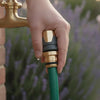
When your standard hose length isn't enough to reach the far corners of your garden, a hose joiner is the most efficient solution. The most common tool for this task is the "Double Male" connector. This small but sturdy component features two male ends that click directly into the female connectors already attached to your hoses. It's a highly versatile tool that allows you to link multiple hoses together in seconds to create a custom length.
For a more permanent or semi-fixed extension, you might choose a screw-down joiner. These are excellent if you don't plan on disconnecting the hoses frequently throughout the season. One expert tip is to manage the weight of your hoses carefully. Long, water-filled hoses are heavy; if the connection point is suspended or pulled over a sharp edge, the tension can cause the fittings to pop off. Try to keep your joins on flat, level ground to minimize stress on the internal seals.
Repairing a Damaged Hose Pipe
Accidents happen, whether it's a stray garden fork or a nip from a lawnmower. Before you consider replacing the entire length, check if the rest of the pipe is still supple and UV-stable. If the damage is localized, a repair is far more sustainable and cost-effective than a total replacement. You can easily cut out the leaking section and restore the integrity of the line using a specialist repair fitting.
A Hose Mender is a permanent internal coupling for two cut ends.
Unlike a joiner that uses the click-lock system, a mender usually involves internal barbs and an outer nut that grips the hose wall tightly. This creates a slim, permanent repair that won't snag on bushes or garden furniture as you move the hose around. By using high-quality hose to hose fittings for repairs, you ensure the mended section is just as strong as the original pipe, maintaining high-pressure performance across the entire length.
The Different Types of Hose Connectors and Couplings
Understanding the specific terminology used by irrigation specialists helps you choose the right part for the job. While people often use these terms interchangeably, there are distinct differences between joiners, couplers, adaptors, and menders. Most hose to hose fittings you'll encounter in a domestic garden are part of the "Quick Connect" family, designed for speed and ease of use. However, a dedicated hose mender is a permanent fix for a cut pipe, whereas a coupler is typically used to link two hoses that already have end-connectors attached.
The Double Male Connector is arguably the most versatile tool in your watering kit. It features two identical male ends that allow you to snap together two hoses that both have standard female fittings. This simple component is the key to creating a modular system where you can add or remove lengths of hose as needed. If you need to manage multiple areas at once, a three-way Y-junction connector allows you to split one hose into two separate lines. This is particularly useful for running two different sprinklers from a single supply without losing significant pressure. If you're dealing with non-standard setups, our collection of technical irrigation fittings can bridge the gap between almost any two components.
Standard 12.5mm vs. Large Bore 19mm Fittings
Most UK gardens use a standard 12.5mm (1/2 inch) hose pipe. It's lightweight and provides enough flow for most domestic tasks. However, larger gardens or professional irrigation systems often use a 19mm (3/4 inch) "Large Bore" hose to maintain high flow rates over long distances. Diameter matters because a narrow hose creates more friction, which drops the water pressure by the time it reaches your nozzle. You can identify your hose size by checking the printed markings on the side of the pipe. If you need to connect a thick supply pipe to a standard garden hose, a reducing joiner is the essential component to bridge those two sizes without creating a bottleneck.
Quick-Connect vs. Threaded Fittings
Standard snap-on connectors offer unmatched speed. You can swap from a spray gun to a sprinkler in seconds with a simple click. These are perfect for daily gardening where flexibility is your priority. Explore our range of Hozelock connectors to see how these precision-engineered parts create a reliable seal. For irrigation lines that stay under constant pressure or are tucked away in a permanent popup system, threaded couplings are often superior. They provide a secure mechanical bond that doesn't rely on plastic teeth. This makes them less likely to fail during an unexpected pressure spike or when the system is left unattended for long periods.
Plastic vs. Brass Hose Fittings: Which Material is Best?
Choosing the right material for your hose to hose fittings is more than just a matter of price. It's about matching the component to your garden's specific environment and how often you'll be handling the equipment. While the initial investment for brass is higher, its longevity often appeals to those who want a "fit and forget" solution. Conversely, modern engineering plastics provide a level of handling comfort and UV resistance that shouldn't be overlooked.
Environmental factors play a huge role in this decision. In the UK, frost is a major enemy of irrigation systems. If water is left inside a fitting during a freeze, the expansion can crack plastic or even distort metal. However, high-quality engineering polymers are designed to be slightly more flexible than metal, which can sometimes prevent terminal damage. Direct sunlight is another concern; cheap generic plastics often become brittle after one summer, whereas brand-name components are treated to resist UV degradation for years.
When to Choose Brass Connectors
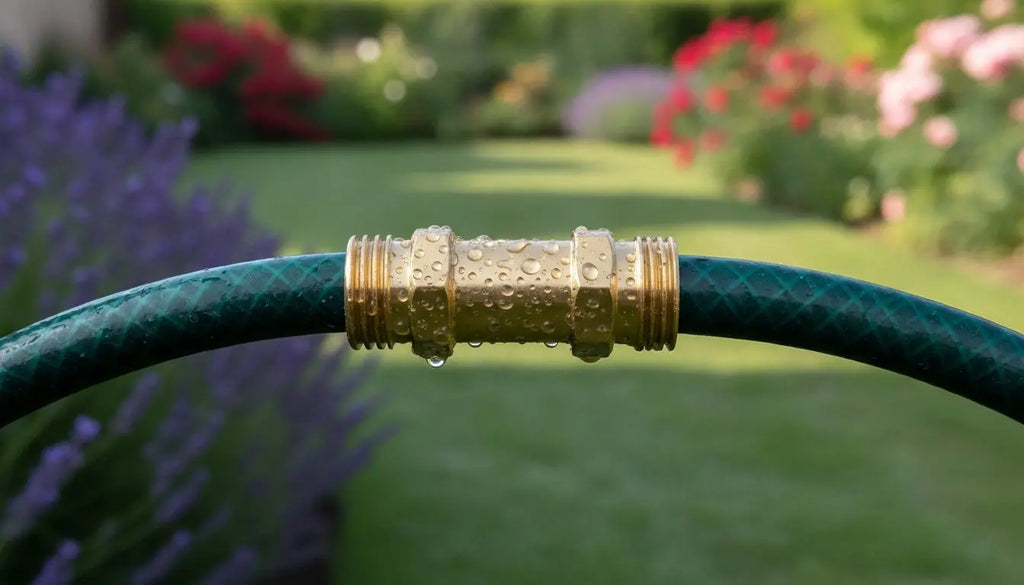
Brass is the traditional choice for professional landscapers and heavy-duty domestic use. It's incredibly resilient to mechanical impact. If your connection point sits on a driveway where it might be stepped on or run over by a car, brass is the only sensible choice. These fittings also pair perfectly with professional-grade rubber hoses, which are heavier and require a more robust mechanical grip to stay secure under high pressure.
Because brass won't rust or corrode in the same way as some metals, it's ideal for permanent installations. If you're building a system that requires specific transitions between different pipe types, you can view our irrigation fitting adaptors to find the right heavy-duty match. Brass provides a level of "heft" that feels dependable, especially when you're managing high-performance spray guns or oscillating sprinklers.
The Case for High-Quality Plastic (Hozelock)
It's a mistake to group all plastic together. While bargain-store connectors often leak from day one, Hozelock uses high-grade engineering polymers that are designed for precision and performance. These materials are lightweight, making them much easier to use if you're frequently moving your hose around the garden. They don't get as cold as metal in the winter, and they don't get painfully hot when left in the midday sun.
One major advantage of these modern hose to hose fittings is the inclusion of "Soft Touch" grips. These ergonomic additions make it much easier to click and unclick connectors with wet hands, a common struggle with smooth metal fittings. Plastic is also the preferred choice for delicate tasks. If you're building a drip irrigation system, plastic components offer the precision and lightweight handling needed for intricate layouts without putting unnecessary strain on thin-walled pipes.

Troubleshooting: Why Your Hose Fitting is Leaking
Even the best hose to hose fittings can develop issues over time. Most problems aren't terminal; they usually result from simple wear or a slight mismatch in setup. It's a common frustration when a watering session is interrupted by a sudden spray from a loose join. The most frequent culprit is the black rubber O-ring located on the male end of the fitting. If this seal is nicked, flattened, or missing, water will spray out the moment you turn on the tap. Keeping a small pack of spare seals is a simple way to maintain a professional-standard system without needing to replace entire components.
Another common issue is using a fitting that doesn't match your hose diameter. While 12.5mm is the standard for most UK gardens, 15mm hoses are becoming more frequent. If you try to force a 12.5mm connector onto a 15mm hose, the internal compression teeth won't be able to bite into the material correctly. This leads to the "popping off" phenomenon where the hose flies out of the fitting the second the water pressure builds up. You can find more detail on this in our guide on fixing leaking Hozelock fittings which covers these common mechanical failures.
To ensure a watertight seal, you must properly tighten the compression nut. This is the screw-on cap at the back of the fitting that grips the hose pipe. You should tighten it firmly by hand until you feel significant resistance. This force pushes the internal plastic teeth into the hose wall, creating a mechanical bond that resists high pressure. If the hose still feels loose after tightening, you might need to trim the end of the hose to provide a fresh, uncompressed surface for the teeth to grip.
Step-by-Step: Fixing a Leaking Join
Start by unscrewing the compression nut and pulling the hose out. Inspect the internal teeth of your quick-connect fitting for any signs of snapping or distortion. If the teeth are healthy, focus on the O-ring. Replacing an O-ring is a 30-second fix that saves you from discarding a perfectly good connector. For threaded joins, such as where a connector meets a tap or a fixed repairer, applying a few wraps of PTFE tape to the threads can provide an extra layer of security against weeping leaks. This is a standard practice among irrigation specialists to ensure a dependable finish.
Preventing Pressure Blowouts
High pressure is the most common reason for hose to hose fittings failing during use. You should never leave a hose pressurised under a hot sun. Heat causes the water inside to expand and the hose material to soften, making it much easier for the fitting to slide off. If your home has exceptionally high mains pressure, consider selecting "Pro" range fittings. These often feature metal sleeves that provide a much stronger grip than standard plastic alternatives. For a system you can rely on year-round, browse our selection of high-performance Hozelock connectors to find the right match for your garden's pressure requirements.
Building Your System with Hozelock Specialist Expertise
Hozelock has become the trusted UK standard for a reason. Their components are engineered to work together seamlessly, ensuring that the "click" you hear when connecting your system is a guarantee of a watertight seal. When you invest in high-quality hose to hose fittings, you aren't just buying a plastic or metal part; you're joining an ecosystem where every connector, timer, and spray gun is designed to fit. This compatibility is what makes the Hozelock ecosystem so recognizable and reliable for domestic gardeners and professionals alike.
Buying from a specialist like Garden Watering offers a distinct advantage over a general DIY warehouse. While a large retailer might stock a few generic options, we focus exclusively on technical irrigation. This allows us to provide a level of support that generalists simply cannot match. We understand the nuances of water pressure and flow rates that determine whether your system succeeds or fails. Our promise is simple: we provide the expert advice to ensure you buy once and buy well, saving you the frustration of trial and error with inferior components.
A well-designed garden isn't static. As your landscape evolves, your watering system should too. By using a modular approach, you can start with a single line and gradually add more complexity. You can integrate splitters, timers, and specialized nozzles without ever needing to replace your core hose to hose fittings. This flexibility ensures that your initial investment remains valuable for years, allowing your irrigation setup to grow alongside your plants.
Complete Watering Kits for Beginners
Pre-assembled kits are the ideal starting point for those new to irrigation. They take the guesswork out of connector compatibility by providing everything you need in one package. You don't have to worry about matching diameters or choosing between different seal types because every part is matched for performance. You can browse Hozelock watering kits to find a setup that fits your garden's size. For a deeper dive into modern irrigation technology, check out our Hozelock Automatic Watering System: The Ultimate 2026 UK Guide.
Bespoke Advice for Complex Gardens
Large or oddly shaped gardens present unique challenges that standard off-the-shelf solutions might not solve. We leverage our 15 years of specialist experience to help you plan an irrigation layout that covers every corner efficiently. Choosing the right hose pipe is just as important as the fitting itself, as the material and wall thickness affect how well your connectors grip under pressure. You can find more information on this in our sibling article, The Essential Guide to Garden Hose Pipes. We are here to act as your dedicated partner in creating a healthy, vibrant landscape through precise water management.
Build a Watering System You Can Trust
Achieving a perfectly extended reach in your garden doesn't have to involve soaking wet shoes or wasted water. By selecting the correct hose to hose fittings for your specific hose diameter and prioritizing high-quality materials, you create a foundation for long-term reliability. We've seen how simple maintenance, such as replacing a worn O-ring or tightening a compression nut, can instantly restore a high-pressure system to peak performance.
As specialists in Hozelock Automatic Watering with over 15 years of irrigation expertise, we are dedicated to helping you choose the right components the first time. Whether you're repairing a puncture or planning a complex modular layout, our UK-based team is here to provide the expert support you need for a thriving landscape. Don't settle for generic alternatives that fail under pressure; invest in precision-engineered solutions that simplify your gardening routine.
Shop our expert-selected range of Hozelock Connectors and enjoy the confidence of a leak-free garden today.
Frequently Asked Questions
Do all garden hoses have the same fittings?
No, garden hose fittings vary significantly based on the internal diameter of the pipe and the connection standard used. While most UK domestic systems use the universal "Quick Connect" click-lock standard, the fittings must be sized specifically for 12.5mm, 15mm, or 19mm hoses. Using a connector meant for a standard hose on a large-bore pipe will lead to immediate leaks. Always verify your hose diameter before selecting new components to ensure a secure, watertight fit.
How do I connect two hoses together without a connector?
It is not recommended to join hoses without a proper fitting as it almost always leads to pressure loss and messy leaks. For a reliable result, you should use a dedicated joiner or a permanent hose mender. In an absolute emergency, a short piece of rigid copper pipe can act as an internal bridge secured with metal jubilee clips. However, this lacks the flexibility of professional hose to hose fittings and may eventually tear the hose material.
Why does my hose connector keep popping off the tap?
This issue is usually caused by worn internal plastic teeth or a compression nut that hasn't been tightened sufficiently. If your mains water pressure is particularly high, it can force the hose out of a fitting that isn't making a perfect mechanical bond. Trimming a small section off the end of your hose can provide a fresh, uncompressed surface for the fitting to grip. If the problem persists, consider upgrading to a "Pro" range connector with a metal sleeve.
What is the difference between a hose joiner and a hose mender?
A hose joiner is designed to link two separate hoses that already have female connectors attached, typically using a "Double Male" component. A hose mender is a permanent repair tool used to bridge two cut ends of a single pipe where a leak has been removed. While a joiner allows you to disconnect the hoses quickly for storage, a mender creates a slim, semi-permanent connection that won't snag as you pull the hose across the lawn.
Can I use brass fittings with plastic Hozelock connectors?
Yes, brass and high-quality plastic fittings are fully cross-compatible because they both utilize the same universal "Quick Connect" standard. You can snap a brass spray gun into a plastic Hozelock connector with total confidence in the seal. This allows you to mix and match materials, perhaps choosing heavy-duty brass for high-traffic tap connections while using lightweight, UV-stable hose to hose fittings for the rest of your modular irrigation layout.
How do I know what size hose pipe I have?
You can identify your hose size by checking the printed text on the outer wall of the pipe, which usually lists the diameter in millimeters. If the text is missing, measure the internal diameter of the hose rather than the external width. A standard UK garden hose is 12.5mm, while professional or "large bore" versions are typically 15mm or 19mm. Matching your fittings to this internal measurement is essential for maintaining a high-pressure, leak-free system.
What is an "Auto-Stop" connector and do I need one for joining hoses?
An Auto-Stop connector contains an internal valve that automatically halts the water flow when an accessory like a spray gun is disconnected. These are incredibly useful at the very end of your hose line to prevent you from having to run back to the tap. However, they aren't necessary for joining two hoses in the middle of a run. In fact, standard "open" connectors are often better for mid-line joins as they offer less internal water resistance.
How can I extend my hose pipe for a very large garden?
The most efficient way to extend your reach is by linking multiple hoses using Double Male connectors. For gardens requiring lengths over 50 meters, we recommend using a 19mm "Large Bore" supply hose for the first section to maintain high water pressure before stepping down to a standard 12.5mm hose. Using specialist hose to hose fittings ensures that even the furthest sprinkler receives enough flow to operate effectively without any weeping leaks at the joins.
`-
Posted in
brass fittings, DIY, garden hose, garden maintenance, gardening tips, hose fittings, hose repair, hose to hose fittings, hozelock, irrigation