Automatic Watering for UK Balcony Gardens: A Guide
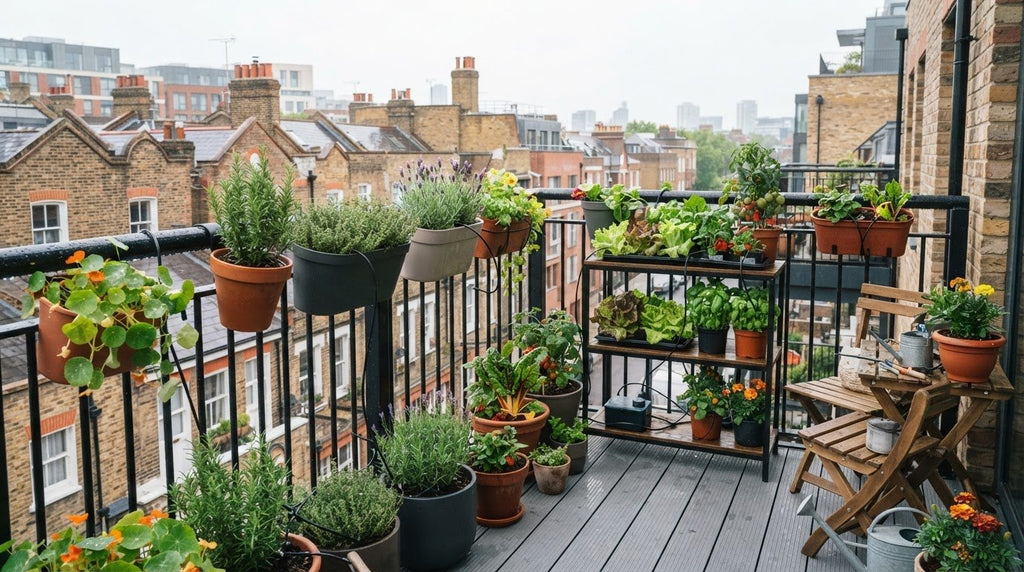
What if keeping balcony pots watered consistently depended less on buying a complex system and more on matching it to your space? If you’ve been searching for “automatic watering for a balcony garden uk”, start with practical details: how much sun and wind your plants get, how many containers you have and where you can access water.
Balcony pots can dry out quickly in sunny or exposed positions, while watering each one by hand takes time and is easy to forget. Limited floor space, drainage and water storage can make choosing a system feel harder. A well-planned setup can make routine watering more manageable.
This guide explains how to choose an approach for your containers, plan a layout and adjust it to your plants’ needs. You’ll also learn what to consider when tap access is limited and how drip irrigation can supply a group of pots. Garden Watering offers expert advice informed by over 15 years of experience to help you choose a setup suited to your balcony.
Key Takeaways
- Choose a watering approach based on the number of pots, water access and how much flexibility your layout needs.
- Drip irrigation carries water through tubing to individual containers, unlike overhead watering.
- Map your pots, group plants with similar needs and test water delivery before relying on a schedule.
- For automatic watering for a balcony garden uk, adjust timer settings to suit rainfall, temperature and compost moisture.
- Check tubing, connections and emitters regularly, especially after moving containers.
Why automatic watering for a balcony garden in the UK needs a tailored approach
Automatic balcony watering uses a system to deliver water to containers, reducing the need to water each pot by hand. The aim isn’t to switch it on and forget about it. Balcony watering works best when the system reflects each container’s needs and its exposure to sun and wind.
Unlike garden beds, pots hold a limited volume of compost, so their moisture levels can change relatively quickly. Small containers, actively growing plants and pots in sunny or windy positions may dry out sooner. A larger pot may retain moisture for longer, while a sheltered container can dry at a different rate from one at the balcony edge.
Consistent watering doesn’t mean giving every plant the same amount on the same timer setting. It means establishing a reliable routine while allowing for differences between groups of pots. Drip irrigation systems deliver water through tubing to plants, making them worth considering when containers are spread across a balcony. The right arrangement depends on what you’re growing and where the pots sit.
What makes balcony containers different from garden beds?
A row of balcony pots may include a sunny corner, a sheltered spot beside a wall and a breezy position near the railing. These microclimates affect how quickly compost dries. Group plants with broadly similar watering needs, taking their positions as well as their species into account. This gives you a more useful basis for planning zones and adjusting outlets than treating the balcony as one uniform growing space.
Which balcony constraints should you assess first?
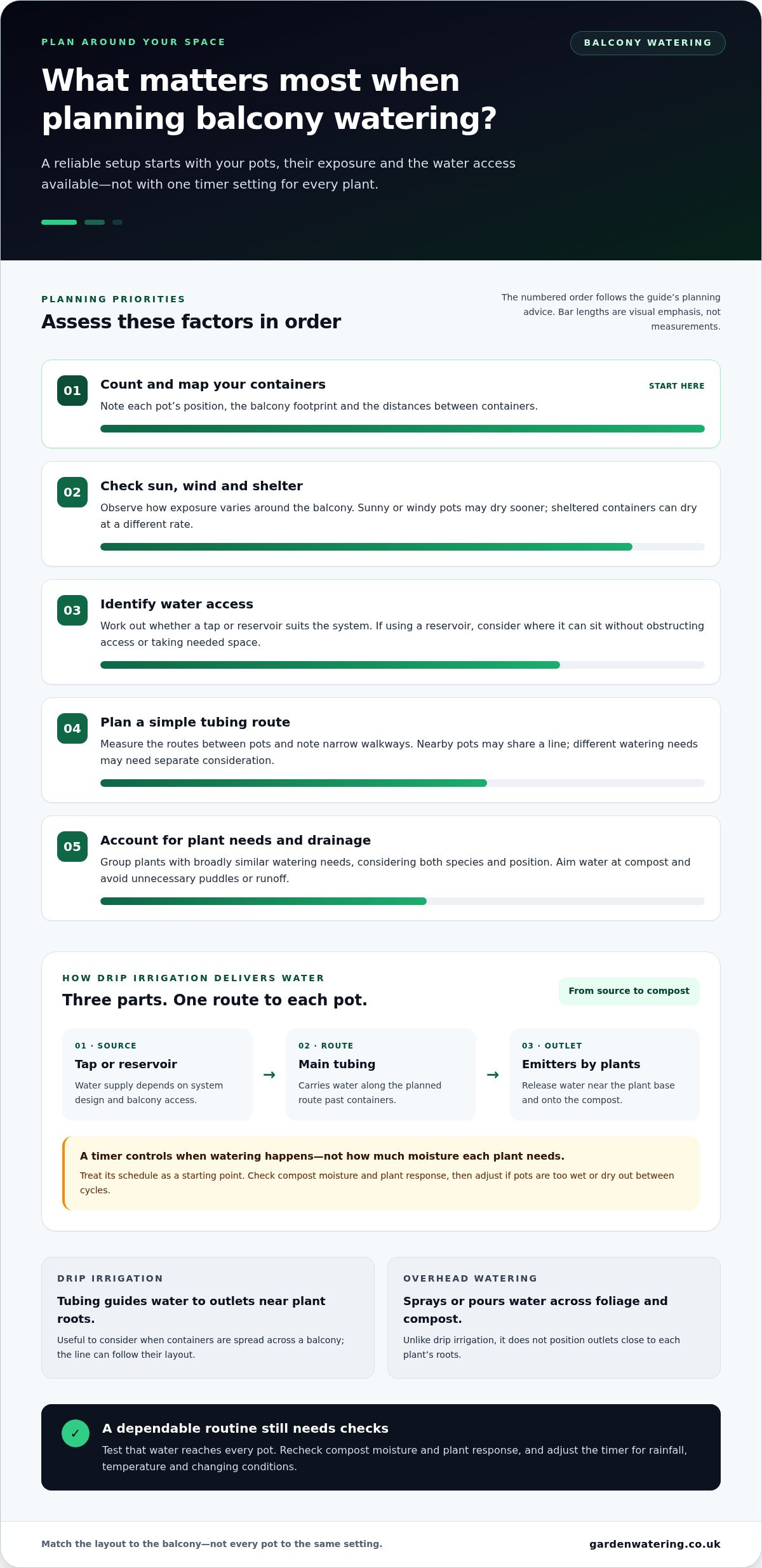
Start by counting your containers and mapping their positions. Note the balcony footprint, the distances between pots and any narrow routes where tubing could get in the way. Identify where water is available and, if you’re considering a reservoir, where it could sit without obstructing access or taking up needed space. Observe which areas receive sun and wind at different times of day rather than assuming every position has the same exposure.
These details turn a general idea into a practical layout. Several nearby pots with similar needs may share a tubing route, while containers with different watering needs may need separate consideration. Keep drainage in mind: water should reach the compost without creating avoidable puddles or runoff on the balcony.
Once you’ve assessed your containers, water access and exposure, you can compare options with a clearer picture of what will fit. Explore the Hozelock automatic watering systems for different watering requirements. Matching the system to your balcony is the first step towards automatic watering for a balcony garden uk that’s easier to manage and better suited to your plants.
How automatic watering for balcony plants delivers water to each pot
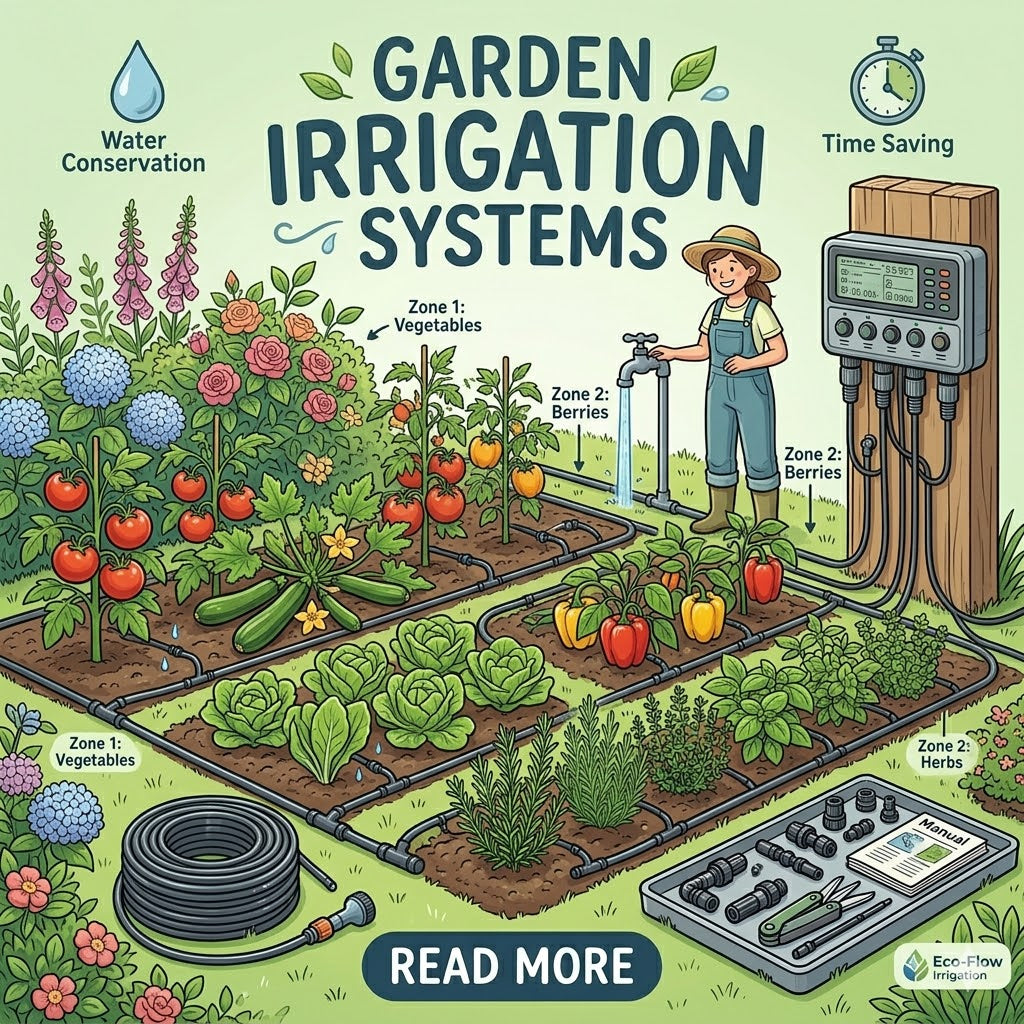
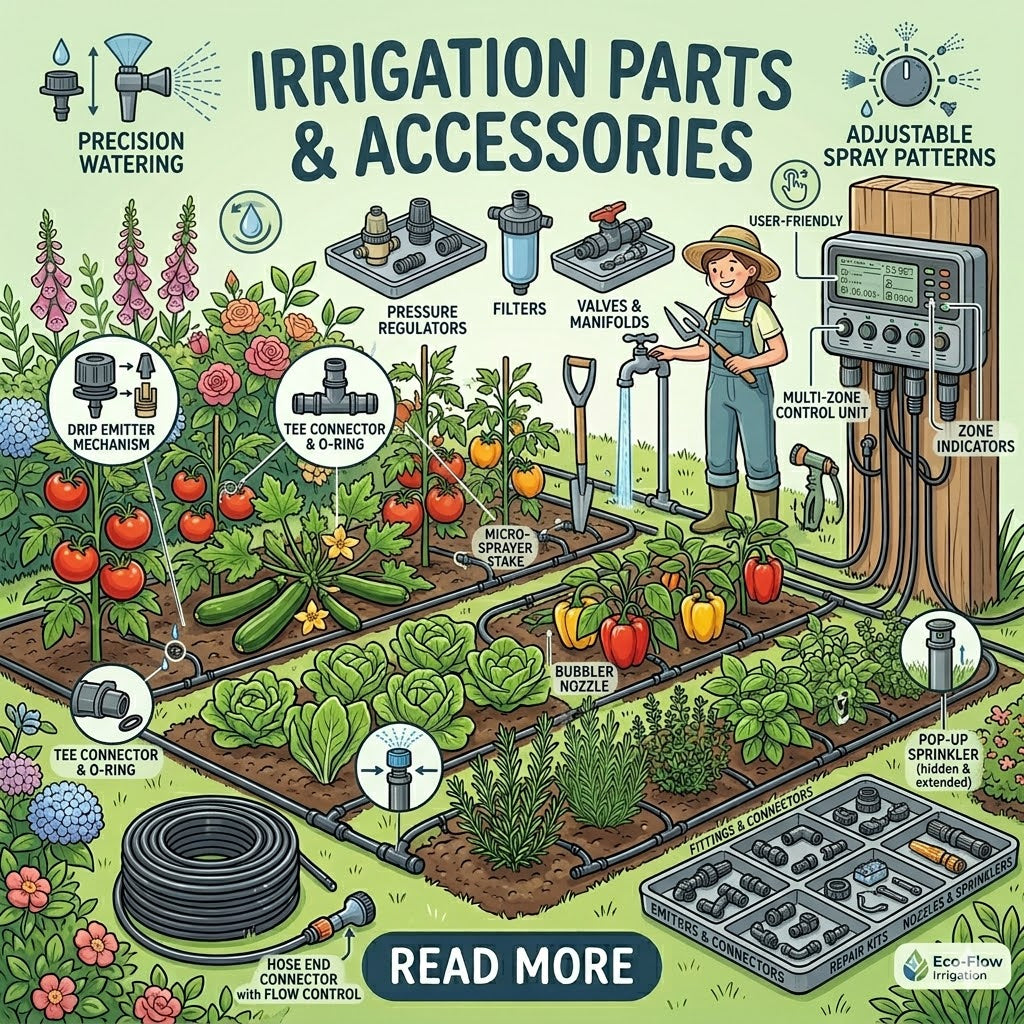
A typical automatic watering setup has three parts: a water source, a route for the water and outlets positioned at the plants. Water travels from a tap or suitable reservoir into a main tube, then through smaller tubing or outlets to individual containers. A drip system guides a controlled flow through tubing to outlets close to plant roots.
This differs from overhead watering, which sprays or pours water across foliage and the compost surface. With drip irrigation, outlets sit near the soil to deliver water where the plant can take it up. It can be useful when pots are grouped closely together, as tubing can follow their layout instead of relying on a broad spray. The best arrangement depends on the plants, pots and system instructions.
What does a drip line do for balcony pots?
A drip line carries water along a route past one or more containers. Small outlets, often called emitters, release water near a plant’s base. Position each outlet close to the pot it serves so you can see which containers are connected and direct water onto the compost. A line can supply a group of pots, but its layout should take their different needs into account.
A long planter and several separate pots, for example, may need different outlet positions even if they share a water source. Keep the tubing route simple and avoid placing outlets where water will miss the compost or run straight through a drainage hole. Browse drip irrigation systems to explore this approach to container watering.
How do timers and water sources affect a setup?
A timer controls when watering happens, not how much moisture each plant needs. It can schedule watering at chosen intervals, but settings still need to reflect the containers, plants and current conditions. After setting a schedule, check compost moisture and plant response, then adjust if pots remain too wet or dry out between cycles.
A connected water supply can feed the system directly, while a reservoir-based arrangement draws from stored water. Which option works depends on the system’s design and the water access available on your balcony. A reservoir also needs a practical position and enough capacity for the intended routine. Not every timer or watering kit works with every water source.
Read the selected system’s instructions before connecting it. They explain the intended water source, operating limits and correct assembly, including how the timer fits into the flow. This is useful when comparing garden irrigation water timers with a setup that uses a reservoir. For automatic watering for a balcony garden uk, treat the timer as a helpful control, then keep checking the plants. A scheduled cycle is a starting point, not a substitute for confirming that water reaches each pot.
Which automatic watering method suits your UK balcony?
The right option depends on how many containers you have, how they’re arranged and how much time you want to spend watering. Hand watering gives you direct control, while drip irrigation carries water along tubing to selected pots. A timer can automate the schedule as part of a watering system, but you’ll still need to check how the plants respond.
For just a few pots, hand watering may be simplest, particularly if you enjoy checking each plant as you go. A compact row of similar containers may suit a straightforward drip layout. If pots are spread across the balcony or have different watering needs, a modular arrangement can give you more flexibility in positioning outlets.
When is drip irrigation a practical choice for containers?
Drip irrigation can make watering a group of pots easier to organise: tubing follows the layout, with outlets positioned close to each container. Targeted delivery may be more practical than overhead watering when pots are close together, foliage is dense or spray could reach nearby areas. The best choice still depends on the plant types and container arrangement. Balcony-suitable drip irrigation systems offer one option for planned, targeted watering.
How should water access shape your decision?
First identify whether you can use a suitable tap or need to draw water from a reservoir. A reservoir needs a workable position and regular refilling, so consider the space it takes up and the effort involved. Not every timer or watering kit supports every source. Check the selected system’s instructions for water-source requirements and operating limits before choosing a setup.
For automatic watering for a balcony garden uk, compare your current watering routine with the practicalities of a system: container count, tubing route, water access and ongoing checks. A simple arrangement may be enough for a small collection, while a varied group of pots may benefit from more adaptable delivery. The best fit depends on the balcony.
How to plan and set up automatic watering on a balcony
A careful setup starts with the plants, not the tubing. Plan where water needs to go, then test the system while you’re nearby. This helps you catch misplaced outlets or leaks before relying on automatic watering and makes it easier to adjust the layout to your balcony.
How do you map pots and route tubing?
Sketch the balcony and mark each pot, water source and likely tubing route. Note which plants have broadly similar watering needs and group them where practical. Plan a route that reaches each container without crossing a walking path or creating snag points. Keep the sketch handy as you assemble the system, and follow the manufacturer’s instructions for cutting, joining and positioning components.
- Map the containers. Record pot positions and identify which plants should be treated as a group. Include containers that are difficult to reach by hand.
- Plan the route. Work out how tubing can travel from the water source to each group of pots. Choose a practical path that won’t obstruct access or get caught as you move around the balcony.
- Position outlets. Place each outlet close to the plant it is meant to water. Direct the flow onto the compost rather than leaves, balcony flooring or the outside of the pot.
- Connect the components. Assemble the water source, tubing, outlets and any timer according to the system’s instructions. Use only components and connections specified for that setup.
- Test water delivery. Run the system and inspect every outlet and connection. Check several pots for moisture, including containers at different points along the tubing route, before relying on the system while you’re away.
A tidy layout is easier to inspect and maintain. If you regularly move pots, leave enough flexibility in the tubing to reposition outlets without pulling on connections. Check that the tubing stays in place and water reaches the intended compost. For a Hozelock setup, the Hozelock watering range includes systems to consider for your planned layout.
How can you test the system before leaving it unattended?
Watch the system through a full watering cycle. Look for blocked outlets, loose joins, leaks or water landing outside a pot. Then check the compost in several containers rather than judging by the first outlet alone. If delivery seems uneven, make small changes to outlet positions or timer settings, then observe the results before adjusting anything else.
A successful first test doesn’t mean the setup needs no further attention. Plant growth, pot movement and changing conditions can affect how the system performs. Make sure containers aren’t receiving more water than they can drain, and check that excess water isn’t creating runoff. A tested setup is a more dependable starting point for automatic watering for a balcony garden uk.
How to keep balcony automatic watering reliable through UK weather changes
UK weather can shift from rainy spells to warm, breezy days, so timer settings may need to change with it. A sheltered balcony and an exposed one can respond differently to the same forecast. Treat the schedule as adjustable: use rainfall, temperature, exposure and compost moisture to guide changes instead of relying on one setting throughout the year.
How should watering change with rainfall and warmer spells?
Rain may reduce the need for scheduled watering, but it won’t necessarily reach every pot, especially if containers sit beneath an overhang. During a warmer spell, exposed pots may dry more quickly. Before changing the timer, feel the compost in several containers and observe how the plants are responding. Adjust gradually, then check again rather than making a lasting change in response to a brief shift in conditions.
There’s no single watering frequency or volume that suits every balcony plant. Container size, plant needs and position all affect how quickly compost dries. Check pots in different locations, including sheltered spots and those exposed to more sun or wind. When conditions change, reassess the plants and compost before adjusting the watering cycle.
What should you check during routine system care?
Inspect tubing, connections and outlets periodically. Look for loose joins, leaks, kinks or emitters that appear blocked or have shifted away from their pots. After moving containers or changing the tubing route, run the system and check delivery at each outlet. Confirm that water reaches the intended compost, and inspect several pots rather than assuming one well-watered container represents the whole setup.
Seasonal care depends on the system. Follow the manufacturer’s instructions for cleaning, storage, shutdown or any steps needed before colder weather. Don’t force components apart or use an unapproved cleaning method; the guidance for your specific equipment is the safest reference. Make a quick visual check part of your routine, and revisit the settings whenever plant positions or balcony conditions change.
For a wider overview of choosing and managing a system, read this Hozelock automatic watering guide. It can help you consider the system as a whole alongside the specific needs of your containers. Reliable automatic watering for a balcony garden uk comes from regular observation, sensible adjustments and equipment suited to the layout.
Garden Watering’s specialist advice, informed by over 15 years of experience, can help you choose a system to suit your balcony layout and water access. Explore the Hozelock watering range to compare options.
Take the next step towards easier balcony watering
Your balcony doesn’t need a complicated setup to make watering more manageable. Start with an approach that suits your plants and water access, then refine it as you see how the system performs. A good match should fit your space as well as your routine.
Choosing between watering options can feel technical, particularly if your containers are spread across different positions. Garden Watering offers specialist watering-system advice informed by over 15 years of experience to help you select suitable irrigation for your balcony layout.
Explore the options for automatic watering for a balcony garden uk. Explore automatic watering systems for your balcony garden and find a practical starting point for easier plant care.
Frequently Asked Questions
Can automatic watering work on a balcony without an outdoor tap?
Yes, some setups can draw water from a reservoir rather than an outdoor tap. Check the system instructions to see which water sources it supports and whether it has particular operating requirements. Before choosing, consider where a reservoir could sit securely, how you’ll refill it and whether it can hold enough water for your routine. A balcony without a tap can still support automatic watering for a balcony garden uk if the setup suits its space and water access.
How often should I water balcony plants with an automatic system?
There isn’t one schedule that suits every balcony plant. Start with the system guidance, then check the compost and plants after watering cycles. Compare a pot in a sheltered corner with one exposed to sun and wind; they may need different settings. Adjust in small steps and check again rather than changing several settings at once. Reduce or pause scheduled watering if compost stays wet, and investigate if plants appear stressed.
Can I use a water butt to supply balcony irrigation?
Possibly, if the watering system is designed to work with a water butt or another stored-water source. Don’t assume a standard setup will draw water from every container: the required source and operating limits depend on the system. Follow the manufacturer’s instructions before connecting it. Consider where the water butt can be positioned safely, how you’ll fill it and how you’ll monitor its level so the supply doesn’t run out unnoticed.
Will automatic watering stop balcony plants drying out while I am on holiday?
It can help maintain a watering routine while you’re away, but it can’t guarantee that plants won’t dry out. Test the setup before travelling, check that every pot receives water and make sure the water source will last for the period you’re away. Consider how forecast conditions could affect exposed containers. If possible, arrange for someone to check the system and plants during a longer absence, especially after a change in weather.
Can one automatic watering system water different types of balcony plants?
One system may serve different plants, but they might not all suit the same schedule or delivery. Group plants with similar needs where practical, and use separate zones or adjustable outlets if the system supports them. For example, leafy plants and drought-tolerant herbs may need different treatment. Check the system instructions for adjustment options, then monitor each group after watering. Keep plants with very different needs on separate routines if necessary.
Do I need to adjust automatic watering during a UK hosepipe restriction?
Follow current local water restriction rules before operating an irrigation system. Temporary restrictions can differ, and an exemption may depend on how a system is set up. Don’t assume that a timer or drip line is automatically permitted. Follow the applicable guidance for approved watering methods and any conditions that apply, and adjust or pause your routine as required.
How do I know if a balcony drip outlet is blocked?
A blocked outlet may deliver noticeably less water than neighbouring outlets, or leave the pot’s compost dry after a watering cycle. Compare several containers, then inspect the outlet for visible debris or a kinked tube. Turn the system off before checking or removing components, and follow the manufacturer’s cleaning instructions. After clearing or repositioning anything, run another test and confirm that water reaches the intended pot without leaks.
`-
Posted in
automatic watering, automatic watering for a balcony garden uk, balcony gardening, container gardening, drip irrigation, garden irrigation uk, plant care tips, urban gardening