
Hozelock System Pressure Regulator Problems: Causes and Fixes
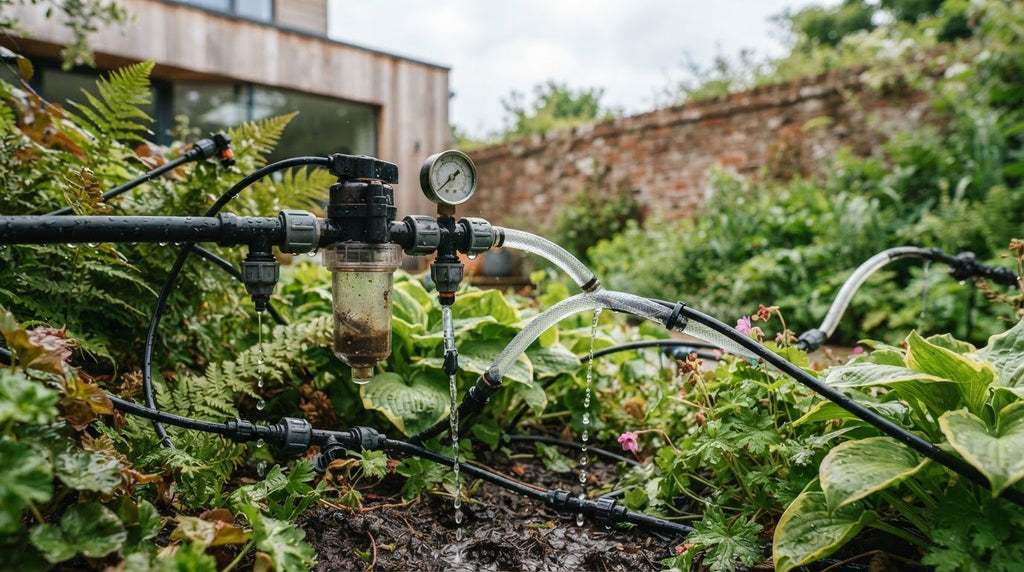
Could the pressure regulator be the least likely cause of your Hozelock system’s weak water flow? It’s easy to suspect the regulator when watering becomes uneven, but a clogged filter, kinked hose or blocked dripper can cause similar symptoms. These hozelock system pressure regulator problems are easier to narrow down when you check the flow path before changing settings or parts.
Start with simple checks that don’t require dismantling equipment. Pressure and flow aren’t the same: a blockage can restrict the amount of water reaching your plants even when the pressure is high. Changing pressure without finding the cause may not solve the issue, so check one thing at a time.
This guide explains how to distinguish regulator trouble from common filter, hose and system issues. You’ll learn how to check for visible blockages or leaks safely, when a pressure reading may help, and why model-specific instructions matter. The aim is steadier watering without guesswork or unnecessary adjustments.
Key Takeaways
- Hozelock system pressure regulator problems can resemble issues elsewhere in the watering setup, so trace the flow path before deciding what needs attention.
- Compare affected outlets with those working normally to help distinguish a local branch problem from a wider supply issue.
- Use symptoms such as uneven watering or visible leaks to guide simple checks, not as a diagnosis on their own.
- Clean an accessible filter or fitting when appropriate, and consider replacement only when checks point to a damaged or persistently faulty component.
- Follow the relevant Hozelock instructions for model-specific cleaning, adjustment or replacement steps.
Hozelock system pressure regulator problems: what the symptoms can mean
A pressure regulator helps control the water pressure reaching compatible equipment further along a watering setup. Its role differs from a filter, which catches debris, or a hose, which carries water to the watering lines. For a general explanation, see How a pressure regulator works.
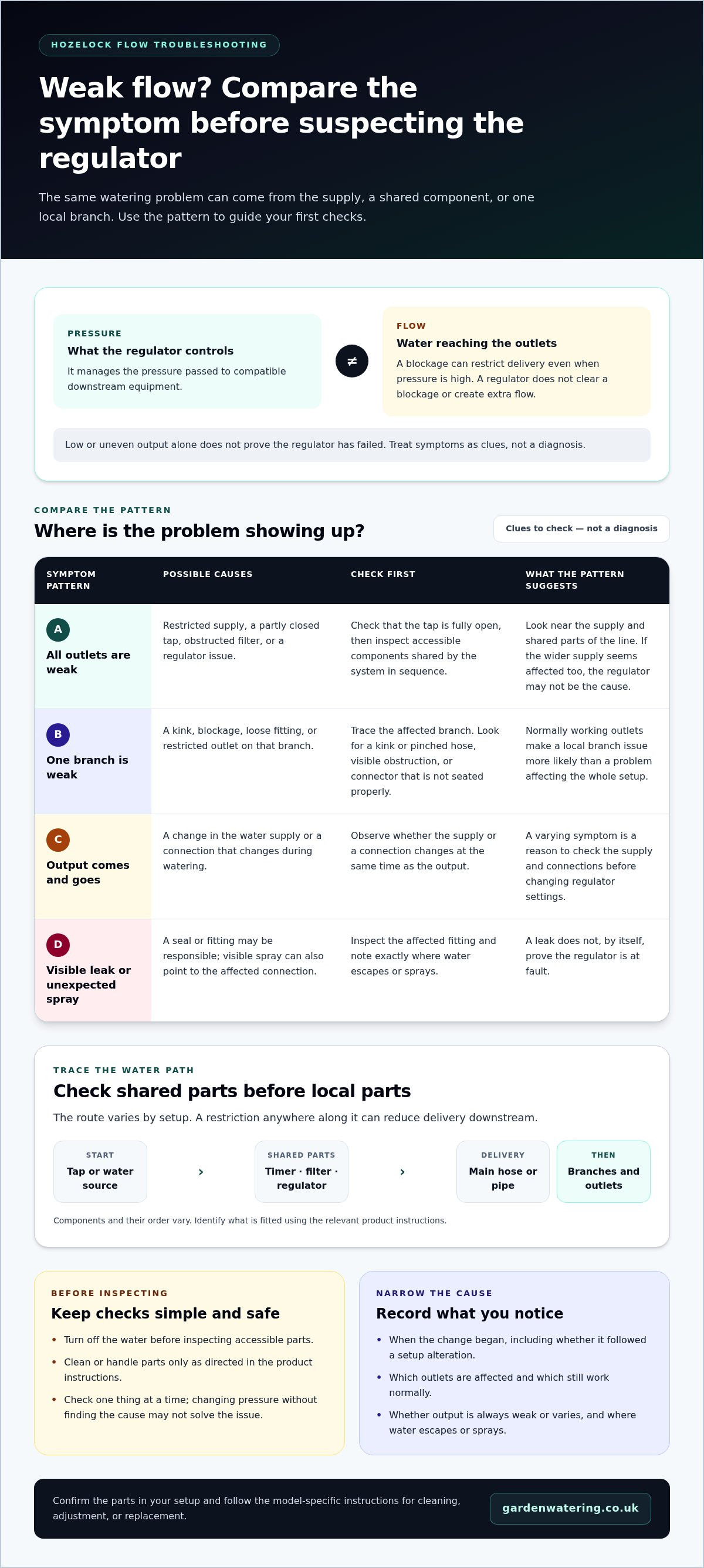
Low or uneven output doesn’t, on its own, mean the regulator has failed. A partly closed tap, restricted filter, kinked hose or blocked outlet can cause similar symptoms. A leak may come from a seal or fitting rather than the regulator. Treat symptoms as clues, and identify the parts in your setup using the product instructions before inspecting or changing anything.
If you’re getting to know how the parts of your setup fit together, this Hozelock automatic watering system guide provides helpful context.
What does a pressure regulator do in a Hozelock system?
Think of a regulator as a control point between the water supply and compatible downstream equipment. It manages the pressure passed on, rather than creating extra water flow or clearing a blockage. Its position and purpose can vary with the setup, so don’t assume every Hozelock arrangement uses the same component order. Check your system and parts instructions to confirm what’s fitted and how it should be connected.
Which pressure symptoms should you look for?
Notice whether the problem affects the whole system or only certain outlets. Consistently weak watering everywhere may point to a shared supply or upstream restriction. One weak branch beside normally working outlets suggests a more local issue. Output that comes and goes is a reason to check the supply and connections. Leaks or unexpected spray warrant an inspection of the affected fitting, but don’t prove the regulator is at fault.
Before troubleshooting, make a brief note of:
- When the change began, including whether it followed a setup alteration.
- Which outlets are affected and which still work normally.
- Whether output is weak all the time or varies during watering.
- Where any visible water escapes or sprays unexpectedly.
These details help narrow down hozelock system pressure regulator problems without replacing parts by guesswork. Start with the water supply and visible flow path, then use the checks below to locate the likely cause.
How the regulator, water supply, and irrigation fittings affect flow
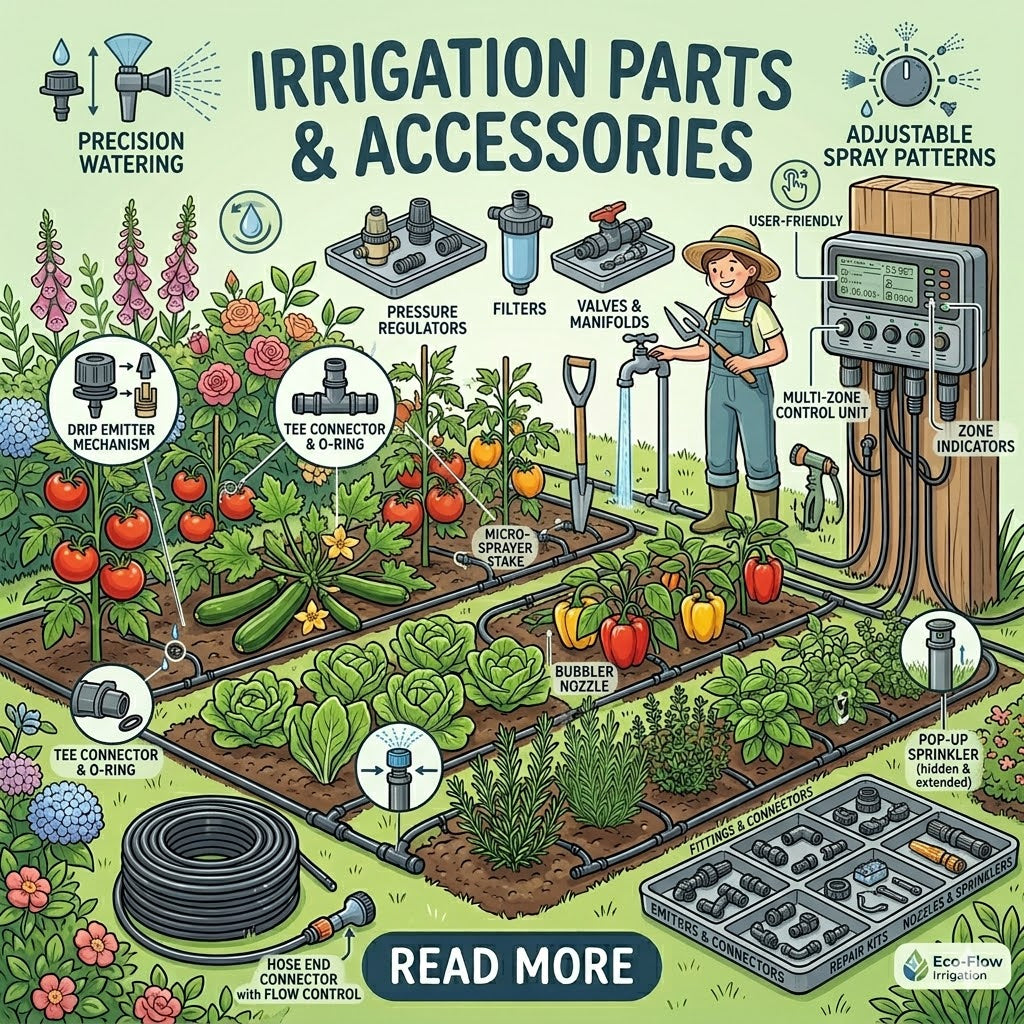
Water passes through connected parts of the setup before it reaches the plants. Depending on the system, the route may include a tap or other water source, timer, filter, pressure regulator, main hose or pipe, and branches. The order and components vary, so use your product instructions to identify what’s fitted. A restriction anywhere along this route can reduce delivery downstream and make hozelock system pressure regulator problems seem more likely than they are.
Use the location of the symptom to focus your checks. If every outlet is weak, start near the supply and shared parts of the line. If one branch is affected while the others work normally, focus on that branch, its connectors and its outlets. This comparison helps avoid changing a component that may be working correctly.
How can a blocked filter or fitting look like a regulator fault?
Debris in an accessible filter, or a restricted passage in a fitting, can limit water reaching the lines beyond it. A restriction in a shared section may weaken several outlets; one further along the system may affect only a branch. Turn off the water before inspecting accessible parts, and clean or handle them only as directed in the product instructions.
Check that connectors are seated properly and look for visible damage or obstruction. If a connection needs attention, compare it with suitable Hozelock connectors; for a restricted join or change in line size, browse irrigation fittings and adaptors. Match parts to your system rather than forcing a connection.
Why do water source and layout matter?
Start at the tap. Check that it’s fully open and, where practical, whether another connected outlet receives water normally. If the wider supply seems affected too, the regulator may not be the cause. Next, follow the watering line and look for kinks, pinching or a hose that has shifted. Longer or branching layouts can also mean outlets don’t behave identically, particularly if a section is restricted.
- All outlets are weak: inspect the tap and components shared by the whole system.
- One branch is weak: trace that branch for a kink, blockage or loose fitting.
- Output changes during watering: observe whether the supply or a connection changes at the same time.
Compare what you find with the system’s stated requirements before altering the layout or replacing parts. Checking the supply and each section of the flow path is a more reliable starting point than assuming the regulator is at fault.
Low flow, uneven watering, or leaks: compare the likely causes
One symptom can have several causes, so use these checks as clues rather than a diagnosis. First note whether the problem affects every outlet or only part of the system. This pattern helps distinguish a shared supply or component issue from a local blockage, kink or connection fault.
| Symptom | Likely cause | Simple check | Next action |
|---|---|---|---|
| Low flow across all outlets | Restricted supply, partly closed tap or control point, obstructed filter, or a regulator issue | Check the tap and accessible shared components in sequence | Follow the product instructions to clean accessible parts; don’t dismantle a sealed or unfamiliar regulator |
| One weak branch or outlet | Local blockage, kinked tubing, loose connector or a restriction in that branch | Compare it with an outlet that works under the same setup | Inspect the affected line and visible fittings, then clear an accessible obstruction as directed |
| Output that varies | Intermittent supply, a restricted filter, or a connection that isn’t secure | Observe whether the change affects all outlets or only one section | Check the relevant supply point or branch before considering a regulator fault |
| Visible leakage | Loose or damaged connection, seal or fitting; a regulator fault is also possible | With watering paused, locate where water escapes | Check the fitting and its instructions; avoid tightening or adjusting parts beyond the manufacturer’s guidance |
What causes weak flow throughout the system?
If every outlet is affected, begin with the shared parts: confirm the supply is open, then check accessible filters and control points. A restricted filter or supply can resemble a regulator problem because less water reaches the whole system. The regulator may be involved, but the symptom alone can’t confirm that. Check one accessible component at a time, following its instructions, and don’t open a sealed assembly.
Why is only one line or outlet affected?
A single weak outlet more often points to a local issue, such as a kinked tube, blocked outlet or loose connection. Compare it with a working outlet in the same setup, then trace the affected branch back towards its connection. For context on how system parts fit together, read the Hozelock automatic watering system guide.
These symptom-led checks can help narrow down hozelock system pressure regulator problems before you change a component. If the cause remains unclear, use the relevant manufacturer instructions to guide further checks.
How to troubleshoot a Hozelock pressure regulator safely
A careful check can help narrow down hozelock system pressure regulator problems without taking equipment apart or changing several things at once. Pause the watering cycle before inspecting the setup. If you’ll handle a connection, turn off the water supply first and follow the instructions for your timer and other components.
A simple first-check sequence for pressure problems
- Record the symptom. Note when the change began and whether all outlets are affected or only one branch.
- Check the supply and timer. Confirm the tap is open and look for any obvious change in how the timer operates. If practical, compare the supply with another connected outlet.
- Inspect visible lines. Follow the hose or tubing and look for kinks, pinching or signs of damage. Check accessible connections for looseness, visible blockage or leakage.
- Compare outlets. If one is weak, compare it with an outlet that works normally under the same setup. This helps show whether the restriction is local or shared.
- Test one change at a time. Clean only accessible, user-serviceable parts and only as their instructions allow. Restore the setup and briefly test the flow before moving on to another check.
This measured approach makes it easier to see which check changes the symptom. Avoid adjusting the regulator just to see what happens. An apparent improvement may not identify the original cause, and settings can be model-specific.
When should you stop troubleshooting?
Stop if the regulator appears damaged, continues to leak, or you can’t confidently identify the component. Don’t force fittings, open a sealed assembly or alter a setting without the correct product instructions. Cleaning, adjustment, disassembly and replacement procedures can vary by model, so follow the manufacturer’s guidance before attempting them.
If checks point to a faulty part, confirm replacement compatibility against the system instructions rather than choosing a component by appearance alone. If the fault remains unclear or you’re unsure how to proceed safely, pause and follow the manufacturer’s guidance for that component.
Once you’ve identified the relevant parts and requirements, you can explore Hozelock watering systems to understand how system components fit together.
When to clean, replace, or rethink your Hozelock watering setup
After checking the supply, visible lines and connections, use what you found to decide on a sensible next step. Cleaning an accessible filter or fitting may help if you’ve identified an obstruction. Replacement should come later, not as the first response to weak flow. This measured approach can prevent unnecessary changes when hozelock system pressure regulator problems have another cause.
How can you tell whether cleaning may be enough?
If an accessible filter or fitting appears obstructed, follow its product instructions to see whether it can be cleaned safely. Don’t prise open sealed components or use a cleaning method the manufacturer doesn’t recommend. After cleaning and refitting the part as instructed, test the same outlets under similar conditions. If flow improves, that points to a restriction in the flow path, but it doesn’t necessarily mean the regulator was faulty.
If there’s no change, avoid repeating the same cleaning or making several adjustments at once. Recheck which outlets are affected and consider whether the restriction may be elsewhere in the line.
What should you check before choosing a replacement?
Consider replacement only when checks indicate that a component is damaged or remains faulty. Identify the part and how it fits into your existing setup, then use the manufacturer’s instructions to check compatibility and any model-specific replacement procedure. A part that looks similar may not suit your system, so don’t rely on appearance alone.
If the issue continues across several outlets, or your watering layout has changed, review how the wider system is arranged. Explore Hozelock watering systems as part of that review, and compare your setup with the relevant product guidance before choosing a different component or system.
For more context before deciding on your next step, explore our Hozelock watering advice.
Restore steady watering with a careful check
Uneven or reduced flow doesn’t automatically mean your Hozelock pressure regulator has failed. A partly closed supply, blocked filter, kinked line or loose fitting can create similar symptoms, so compare affected outlets and trace the flow path first. Clean only accessible parts as their instructions allow, and don’t adjust, dismantle or replace a regulator without the correct model guidance.
Taking one check at a time helps you narrow down hozelock system pressure regulator problems without unnecessary changes. If a component appears damaged or the cause remains unclear, use the manufacturer’s instructions to guide your next step and confirm that any replacement suits your setup.
Garden Watering provides specialist advice on Hozelock automatic watering systems, backed by more than 15 years of experience. Explore Hozelock watering systems and advice to review your setup and find a suitable watering solution. With a clear diagnosis and careful checks, you can take the next step towards more consistent watering.
Frequently Asked Questions
Is a faulty pressure regulator the only cause of low flow in a Hozelock system?
No. A faulty regulator is only one possible cause of low flow in a Hozelock system. A partly closed tap, restricted filter, kinked tubing, blocked outlet or loose fitting can produce a similar result. Pause watering and check the supply first, then inspect accessible filters, tubing and connections according to their instructions. Compare outlets before concluding the regulator is faulty, especially if only one branch is affected.
Can I adjust a Hozelock pressure regulator myself?
Only if the specific component is designed to be adjusted and its instructions explain how. Some regulators may not have a user adjustment, and procedures can vary by model. Identify the regulator and read the relevant Hozelock product instructions before changing a setting. Don’t force a fitting, open a sealed assembly or guess at an adjustment. Stop if the part or correct procedure isn’t clear.
How do I know if my Hozelock pressure regulator is blocked?
Reduced flow after the regulator can be a clue to a blockage, but it doesn’t prove the regulator itself is blocked. A dirty filter, restricted fitting, kinked hose or limited supply can have the same effect. Pause watering, check the tap and inspect only accessible parts. Clean user-serviceable components only as their instructions allow, then retest the same outlets to see whether the output changes.
What should I check first when my Hozelock watering system has weak pressure?
Start at the source and work downstream. Check that the tap is fully open, then confirm the timer is operating as expected. With watering paused, look along visible hose or tubing for kinks, and inspect accessible fittings for looseness or visible blockage. Check an accessible filter according to its instructions. Compare a weak outlet with a working one, changing only one thing before testing again.
Can a blocked filter cause the same symptoms as a pressure regulator problem?
Yes. A blocked filter can restrict water moving through the system, reducing flow beyond it and mimicking regulator trouble. The same symptom may also come from the tap, tubing, a fitting or an outlet, so flow alone can’t identify the faulty part. Turn off the supply before inspecting an accessible filter, and clean it only as directed. Retest the same outlets afterwards to check whether the restriction was contributing.
Should I replace a Hozelock pressure regulator if one outlet is weak?
Not on that evidence alone. If one outlet is weak while others work normally, the cause may be local, such as a kinked tube, blocked outlet or loose connection. Pause watering and compare the affected outlet with a working one, then inspect that branch and its accessible fittings. Consider replacement only if checks indicate a damaged or persistently faulty component, and confirm compatibility using the system instructions.
What should I do if my Hozelock pressure regulator is leaking?
Pause the watering cycle and turn off the water supply before inspecting the area. Check visible connections for looseness or damage, without forcing or dismantling fittings. Leakage at a join may come from a connector or seal rather than the regulator. If water continues to escape, the regulator appears damaged, or you can’t identify the source confidently, stop troubleshooting and follow the relevant manufacturer instructions for that component.
`-
Posted in
drip irrigation, garden irrigation, garden maintenance, Hozelock, hozelock system pressure regulator problems, low water pressure, pressure regulator, watering system troubleshooting