Choosing the Right Garden Hose: Supply, Soaker, Sprinkler, and Dripline Explained
Your standard green garden hose is likely the biggest obstacle to a healthy, low-maintenance garden. It's easy to feel overwhelmed by technical jargon when you're just trying to keep your borders alive during a dry spell. You've probably experienced the frustration of a system that clogs after a single season or wastes more water on the pavement than on your plants. Understanding the specific roles of all hoses - supply hose, soaker hose, sprinkler hose and dripline is the key to moving beyond basic watering and into professional-grade irrigation.
We're here to help you build a system that's both durable and efficient for 2026. By matching the right pipe to your specific soil and plant density, you can create a drought-proof landscape while significantly lowering your water bills. This guide breaks down the differences between the robust backbone of your system and the targeted delivery methods that ensure every drop counts. We'll examine how each hose functions, why quality matters for long-term performance, and how to choose the right components for a maintenance-free garden.
Key Takeaways
- Learn why a dedicated supply hose serves as the essential non-porous backbone for a reliable system, far outperforming standard garden hoses in permanent setups.
- Discover the technical differences between the "sweating" action of porous soaker hoses and the precision-engineered internal emitters found in modern driplines.
- Master the dual-purpose utility of sprinkler hoses to efficiently water both open lawns and dense borders with a simple directional adjustment.
- Gain the specialist knowledge to correctly identify all hoses - supply hose, soaker hose, sprinkler hose and dripline for a professional-grade 2026 garden setup.
- Understand how to seamlessly integrate these delivery methods with Hozelock water timers for a fully automated and water-efficient irrigation system.
The Foundation: Understanding Irrigation Supply Hoses
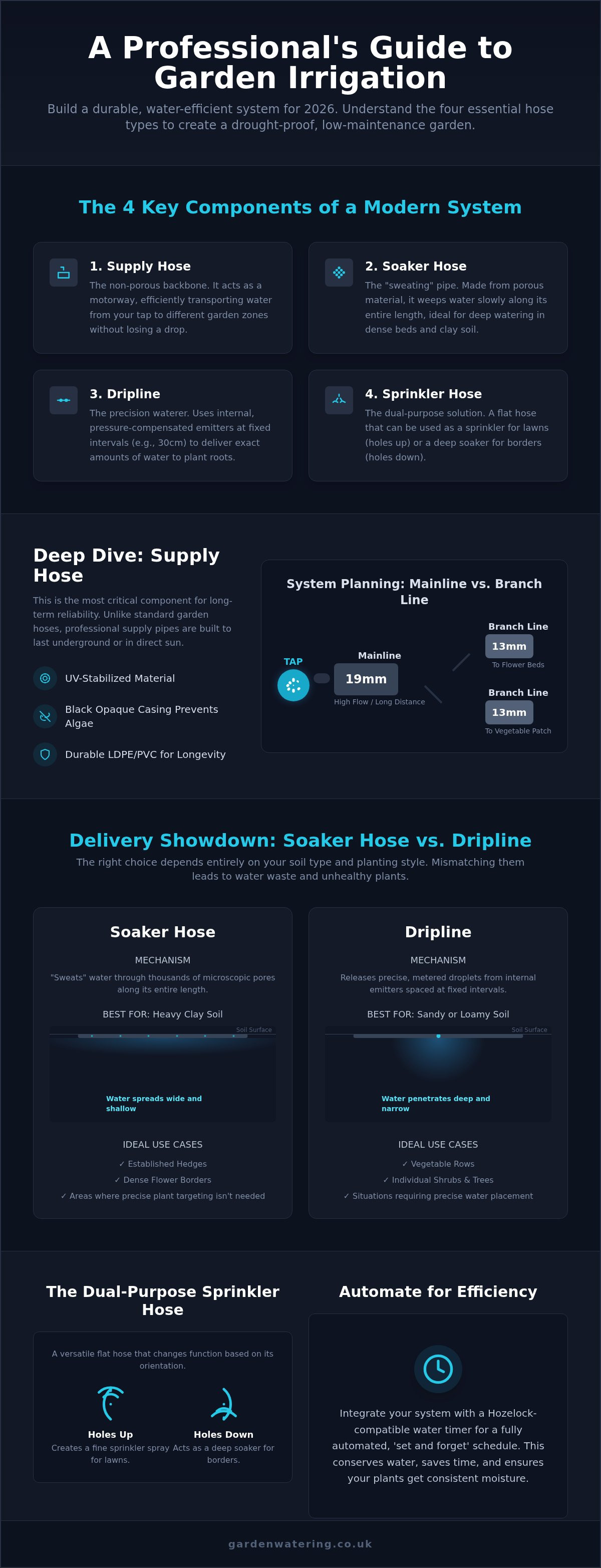
Every professional irrigation system starts with a robust backbone. Think of the supply hose as the motorway that carries water from your tap to the rest of your garden. Unlike the delivery components in a collection of all hoses - supply hose, soaker hose, sprinkler hose and dripline, the supply pipe is non-porous. Its job is to move water efficiently without losing a single drop along the way. While it's tempting to use a standard garden hose for this, those pipes aren't designed for permanent outdoor exposure. They often lack UV stabilization, meaning they'll become brittle and crack after a few summers in the sun. Standard hoses also allow light to penetrate the casing, which encourages algae to grow inside the pipe and eventually clog your emitters.
Professional supply pipes are typically made from black, UV-stabilized materials. This protects the pipe from the elements and keeps the water flow clean. In the UK, most systems rely on two specific sizes: 13mm (standard 1/2 inch) and 19mm (3/4 inch). Choosing the right size is essential for maintaining the pressure needed to run your sprinklers or drippers effectively. A 13mm pipe is usually sufficient for most residential borders, while the 19mm version is better suited for high-flow requirements or very long runs.
Flexible vs. Rigid Supply Pipes
Flexible PVC supply hoses are a great choice for smaller gardens with complex shapes. You can easily route them around tight corners or through dense foliage without needing extra elbow joints. For larger, more permanent installations, rigid LDPE (Low-Density Polyethylene) is the specialist's choice. It offers superior long-term durability and handles higher water pressures with ease. Whichever you choose, always secure your pipes with ground stakes and use high-quality irrigation fittings to prevent leaks at the joints.
Mainline vs. Branch Line Planning
Efficient system planning usually involves a two-tiered approach. Use a 19mm pipe for your "mainline" to carry high volumes of water over long distances. This prevents the pressure loss that occurs when water travels through narrower pipes. You can then use 13mm "branch lines" to carry water from the main run into specific flower beds or vegetable patches. This structure ensures that even the furthest plant receives the same amount of water as the one closest to the tap. For more inspiration on how to map out your garden, check our design ideas and plans.
Soaker Hose vs. Dripline: Which Delivery Method is Best?
Once you've established your supply line, you need to decide how to deliver that water to your plants. This is where most gardeners face a choice between two very different delivery methods. While they might look similar at a glance, the technology inside determines how effectively they'll hydrate your landscape. When comparing all hoses - supply hose, soaker hose, sprinkler hose and dripline, the soaker hose and dripline represent the most popular choices for targeted, low-volume irrigation.
Soaker hoses, often called porous pipes, are typically made from recycled rubber. They function through a "sweating" mechanism where water seeps through thousands of tiny pores along the entire length of the hose. In contrast, professional driplines use sophisticated internal emitter technology. These small plastic components are welded inside the pipe at fixed intervals, usually every 30cm or 50cm. Instead of sweating, they release water in precise, metered droplets. This distinction is vital because it affects how water interacts with your specific soil type.
Soil texture plays a massive role in your system's success. In heavy clay soil, water naturally spreads sideways through capillary action. Soaker hoses excel here; the slow, continuous sweating allows the dense clay to absorb moisture deeply without surface runoff. If you have sandy soil, water tends to drain straight down. In this scenario, a dripline is much more effective because it places water directly above the root zone, ensuring the moisture reaches the plant before it vanishes into the subsoil. You may have heard that these systems clog easily, but that's largely a myth. By installing a simple 100-mesh filter at the start of your system, you'll protect the pores and emitters from fine sediment for years of reliable service.
The Benefits of Soaker Hoses
Soaker hoses are the ideal solution for established hedges and dense flower borders where you don't need to target individual plants. They're incredibly simple to install. You just lay the pipe on the soil surface, weave it through your plants, and pin it down with stakes. Because they're manufactured from recycled materials, they're a cost-effective way to provide deep, consistent soaking across large areas without a complex technical setup.
Why Choose Professional Dripline?
If your garden features slopes or long runs of pipe, you should consider a professional drip irrigation system. High-quality driplines often feature pressure-compensating emitters. This ensures that every plant receives exactly the same amount of water, whether it's at the start of the line or 50 metres away. This precision also helps reduce weed growth. By delivering water directly to the root zone and keeping the surrounding soil surface dry, you deny weed seeds the moisture they need to germinate.
Sprinkler Hoses: The Underrated Solution for Lawns and Borders
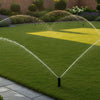
While the previous delivery methods focus on ground-level moisture, the sprinkler hose offers a unique, versatile approach. It's often the missing piece for gardeners looking to bridge the gap between targeted irrigation and broad coverage. When you look at the full range of all hoses - supply hose, soaker hose, sprinkler hose and dripline, the sprinkler hose stands out due to its flat, perforated design. It features three rows of tiny holes along its length that produce a fine, gentle spray rather than a heavy jet.
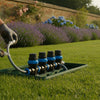
One of its most practical features is its dual-purpose nature. When you lay it with the holes facing upwards, it acts as a linear sprinkler, throwing a soft mist into the air. If you flip the hose over so the holes face the ground, it functions similarly to a soaker hose, delivering water directly into the soil. This flexibility makes it a specialist's tool for narrow garden borders or long strips of lawn where a standard oscillating sprinkler would simply waste water on your fence or garden path. The fine mist it creates is particularly beneficial for new beds; it prevents the soil compaction that often occurs with heavy droplets from traditional spray guns.
Best Uses for Sprinkler Hoses
Sprinkler hoses are the perfect choice for establishing a new lawn. Whether you've just laid fresh turf or scattered seed, the gentle spray ensures the ground stays damp without washing away the seeds or creating muddy puddles. They're also excellent for watering long, straight vegetable rows or narrow side-path borders that are difficult to reach with other systems. In the height of summer, some of our customers even use them as a temporary cooling solution for greenhouses or polytunnels, where the fine mist helps maintain humidity levels during peak heat.
Managing Pressure and Length
It's important to understand that sprinkler hoses require higher water pressure than a standard soaker hose to function effectively. Because the water needs to be pushed up through the perforations to create a spray, a low-pressure tap might only result in a weak dribble. We generally advise against "daisy-chaining" too many lengths together. As the water travels further from the source, the pressure drops, which can lead to a vigorous spray at the start and almost nothing at the end. To ensure a secure, leak-free setup, always use high-quality Hozelock connectors when joining your sprinkler hose to your main supply line.
Technical Integration: Connectors, Timers, and Hozelock Compatibility
When building your system, you might worry that specialist components won't work together. We want to reassure you that almost all professional irrigation hoses are fully compatible with standard Hozelock fittings. This interoperability allows you to mix and match delivery methods to suit your garden's specific layout. Whether you're connecting a porous pipe to a rigid supply line or attaching a sprinkler hose to a tap, the "click-fit" nature of these systems makes assembly straightforward. This ease of use is central to the Hozelock Automatic Watering philosophy, which aims to give you a thriving garden with minimal manual effort.
To create a truly professional setup, you need to understand how to integrate all hoses - supply hose, soaker hose, sprinkler hose and dripline into a single, cohesive network. This requires a few essential fittings to manage the flow effectively:
- End Plugs: These seal the end of your hose runs to maintain internal pressure.
- T-Junctions: Use these to split a single supply line into two different directions for better coverage.
- Elbow Joints: These allow for sharp 90-degree turns without kinking the pipe and restricting flow.
The real magic happens when you add a Water Timer. Automation removes the guesswork from gardening and ensures your plants are watered at the best possible time, usually at sunrise when evaporation is lowest. You can browse our full range of automatic water timers to find the right match for your tap setup.
Pressure Regulators and Filters
A common mistake is connecting a dripline directly to high-pressure mains water. Most dripline emitters are designed to operate at around 1.5 to 2 bar. Using a pressure reducer protects these delicate components from damage and prevents connections from popping off under stress. Similarly, an inline filter is a small investment that pays off by stopping limescale or grit from clogging your soaker hose. These components usually feature a standard click-fit connection, making it easy to disconnect and store your timer safely indoors during the winter months.
Automating Different Hose Types
Different delivery methods require different schedules. Soaker hoses and driplines work best with long, slow watering sessions, perhaps 30 to 60 minutes once or twice a week. This encourages deep root growth by allowing moisture to penetrate the subsoil. Sprinkler hoses, however, deliver water much faster and might only need 10 to 15 minutes to saturate the surface. If you're managing multiple zones, consider a multi-outlet timer. This allows you to run a supply line to your hedges on one schedule and a sprinkler hose for your lawn on another. For more detailed layout advice, refer to our guide on garden watering systems.
Buying Guide: Choosing Your Perfect Hose from Our 2026 Collection
With over 15 years of expert irrigation experience, we've curated a selection of 30+ hoses to meet every garden requirement. Selecting the right components from all hoses - supply hose, soaker hose, sprinkler hose and dripline ensures your system performs reliably for years to come. While supermarket alternatives might seem cheaper initially, they often lack the UV stabilization and wall thickness required to survive British winters. Investing in professional-grade reels saves money over time by preventing the leaks and splits that plague lower-quality systems.
For those looking for the best performance in specific areas, our specialists recommend dripline for hedges to ensure deep, targeted root hydration. If you're watering dense flower borders, a soaker hose is the most efficient choice for low-volume soaking. For maintaining lush grass or narrow side strips, the sprinkler hose remains the best option for a gentle, even mist. Each of these delivery methods serves a distinct purpose in creating a drought-proof garden.
Standout Products in Our Collection
Our 2026 range includes several specialist options designed for maximum durability. Our heavy-duty supply hose is specifically engineered to be kink-free and UV-resistant, making it the perfect permanent backbone for your garden. For borders, the "Porret" style soaker hose features high-porosity rubber that allows for consistent, efficient deep-watering without the spray effect seen in cheaper pipes. If precision is your priority, our professional drip line comes with pre-installed emitters every 30cm, ensuring a perfectly metered flow across your entire hedge line.
Final Selection Checklist
Before you make a final decision, take a few minutes to verify your garden's requirements. Measure your total run length carefully, and remember to account for any vertical rises up walls or steep slopes. It's also wise to check your tap pressure. You can perform a simple bucket test by timing how long it takes to fill a 10-litre container; if it takes longer than 60 seconds, you may need to adjust your system design. Once you have your measurements, you can browse our full collection of hoses and irrigation pipes to find your perfect match.
Build a Resilient Garden for 2026
A well-planned watering system is the best investment you can make for a healthy, vibrant landscape. You now have the knowledge to distinguish between the durable backbone of a supply pipe and the targeted delivery of specialized hoses. Whether you're nourishing a new lawn with a fine mist or providing deep hydration to an established hedge, choosing the right tool ensures every drop of water reaches its destination. This precision not only protects your plants during dry spells but also helps keep your water bills under control.
With over 15 years of expert irrigation experience, we're here to help you navigate the technical details of all hoses - supply hose, soaker hose, sprinkler hose and dripline. As UK specialists in Hozelock and automatic watering, we only stock professional-grade products designed for longevity and performance. Our curated collection ensures you have access to the same components used by professional landscapers to create maintenance-free systems.
Frequently Asked Questions
Can I bury a soaker hose under mulch or soil?
How long can I run a single length of dripline or soaker hose?
Most soaker hoses and driplines have a maximum effective run length of 30 to 50 metres. Beyond this distance, you'll likely notice a drop in water pressure, leading to uneven watering where the end of the line receives very little moisture. If you need to cover a larger area, it's best to use a 19mm supply pipe as a mainline and create shorter branch lines to maintain consistent pressure.
Do I need a pump to run these irrigation hoses from a water butt?
You will generally need a dedicated water butt pump to run these systems from a rain barrel. Most soaker and drip systems require at least 1 bar of pressure to push water through the emitters or pores effectively. Gravity alone rarely provides enough force to ensure even distribution across the entire length of the hose, especially if the water level in the butt is low.
Will my Hozelock connectors fit these professional irrigation pipes?
Yes, your standard Hozelock connectors are fully compatible with the professional-grade pipes we stock. Whether you are using 13mm or 19mm variants, the click-fit system works seamlessly across all hoses - supply hose, soaker hose, sprinkler hose and dripline. This makes it easy to integrate new delivery methods into your existing garden setup without needing specialized tools.
How often should I run my soaker hose during a UK summer?
During a typical UK summer, running your soaker hose for 30 to 60 minutes twice a week is usually sufficient for most borders. The goal is to provide a deep soak that reaches the root zone rather than a shallow daily sprinkle. In periods of extreme heat or for newly planted hedges, you might need to increase this frequency to three times a week to keep the soil consistently moist.
Can I leave these hoses outside during the winter?
You can leave professional-grade irrigation hoses outside year-round if they are UV-stabilized and properly drained before the first frost. Water expanding as it freezes can split pipes, so we recommend disconnecting the system from the tap and letting any trapped moisture drain out. You should always store your automatic water timers indoors to protect their internal valves from ice damage.
What is the difference between a garden hose and a supply hose?
A supply hose is a specialized, non-porous pipe designed to stay outdoors as the permanent backbone of an irrigation system. Standard garden hoses are built for manual use and flexibility, but they often lack the UV protection and wall thickness of a dedicated supply line. Using the correct pipe prevents algae growth inside the line and ensures your system lasts for many years without becoming brittle.
How do I stop my soaker hose from leaking at the connection point?
To stop leaks at the connection point, ensure you're using a high-quality hose connector with a secure internal grip. Many leaks are caused by high tap pressure forcing the hose off the fitting or through the pores too quickly. Installing a pressure reducer at the start of your system will balance the flow and create a much more reliable, leak-free connection for your entire irrigation network.
`-
Posted in
all hoses - supply hose, Dripline, Garden Hose, Gardening, Irrigation Systems, soaker hose, Sprinkler Hose, sprinkler hose and dripline, Water Conservation, Watering Tips