Garden Irrigation Kits: The 2026 Guide to Easy DIY Setup & Efficient Watering
Did you know that as much as 50% of residential outdoor water is wasted through evaporation, wind drift, and inefficient manual spraying? It's a common frustration for gardeners who spend their weekends dragging heavy hoses, only to find their plants parched after a short holiday. If you've ever felt confused by incompatible fittings or struggled with dying shrubs during a heatwave, you're not alone. Investing in the right garden irrigation kits | easy diy setup & efficient watering doesn't have to be a technical headache. Our expertise helps you reclaim your time while ensuring every drop of water reaches the root zone with absolute precision.
We believe that a thriving garden should be a source of relaxation, not a constant demand on your schedule. This guide will show you how to choose a DIY system that protects your plants and helps lower your water bills. We'll look at specialist solutions from Hozelock and Claber, explaining how these scalable kits can grow alongside your landscape. You'll learn how to move from manual guesswork to a dependable, automated setup that keeps your garden green with minimal effort. It's time to build a professional watering system that works for you.
Key Takeaways
- Learn how switching from manual hoses to automated delivery saves hours of work and ensures your plants thrive even while you're away on holiday.
- Understand the functional differences between drip and micro-sprinkler systems to choose garden irrigation kits | easy diy setup & efficient watering tailored to your specific garden layout.
- Master a logical five-step planning process to map your system from the tap to the furthest corner, ensuring total coverage without wasting a drop.
- Discover why the water timer is the most critical component for precision and how using standard 13mm and 4mm pipes allows your system to expand over time.
- Gain insights into specialist solutions from Hozelock and Claber designed to handle unique UK gardening challenges with professional-grade reliability.
What is a Garden Irrigation Kit and Why Choose DIY?
A garden irrigation kit is a pre-bundled set of components including distribution tubing, drippers, and connectors designed for automated plant hydration. Essentially, a DIY irrigation kit is a modular system designed for tool-free installation by homeowners. By selecting garden irrigation kits | easy diy setup & efficient watering, you transition from the manual 'hose-and-gun' approach to a method of precision delivery. This shift is particularly vital in the UK, where summer dry spells and the threat of hosepipe bans require a more responsible approach to water usage. It's about ensuring your garden thrives without wasting a single drop.
To see how straightforward the assembly process can be, watch this helpful step-by-step demonstration:
The Benefits of Automated Watering
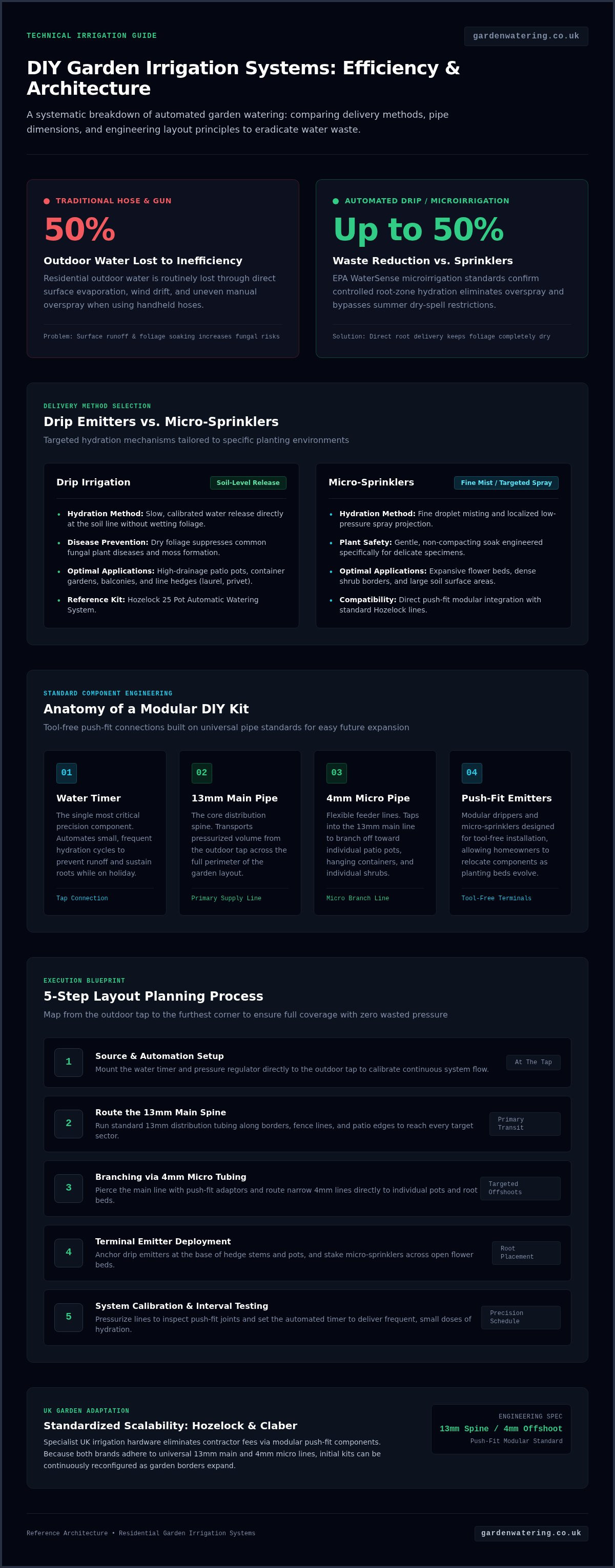
Consistent hydration is the foundation of a healthy garden. Plants generally prefer frequent, smaller amounts of water rather than one massive weekly soak. This mimics the natural principles of drip irrigation, which focus on delivering moisture directly to the root zone. This method reduces evaporation and surface runoff, ensuring your plants stay vibrant while you reclaim the hours usually spent standing with a hose. It's a more efficient way to manage your landscape's long-term health, especially during peak summer temperatures.
Why DIY Kits Beat Custom Professional Installs
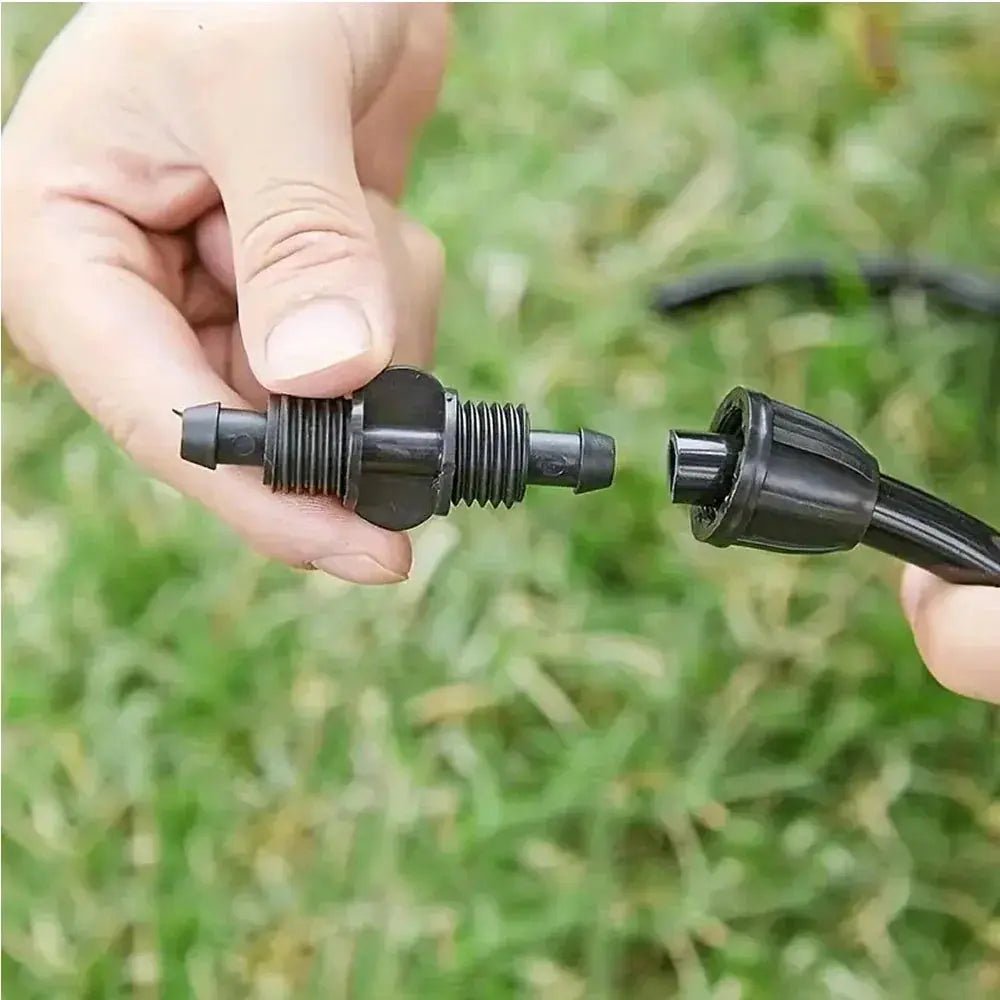
Cost-effectiveness is a major advantage when choosing a self-installed system. You avoid the high labor fees associated with professional contractors, which is ideal for most standard residential layouts. Modern Hozelock watering kits are designed with simple push-fit technology, making them accessible even if you aren't naturally technical. These systems also offer great flexibility. As your garden grows or you decide to redesign a border, you can easily move or expand the components. It's a scalable solution that puts you in total control of your watering schedule.
Comparing Irrigation Kit Types: Drip vs. Micro-Sprinkler
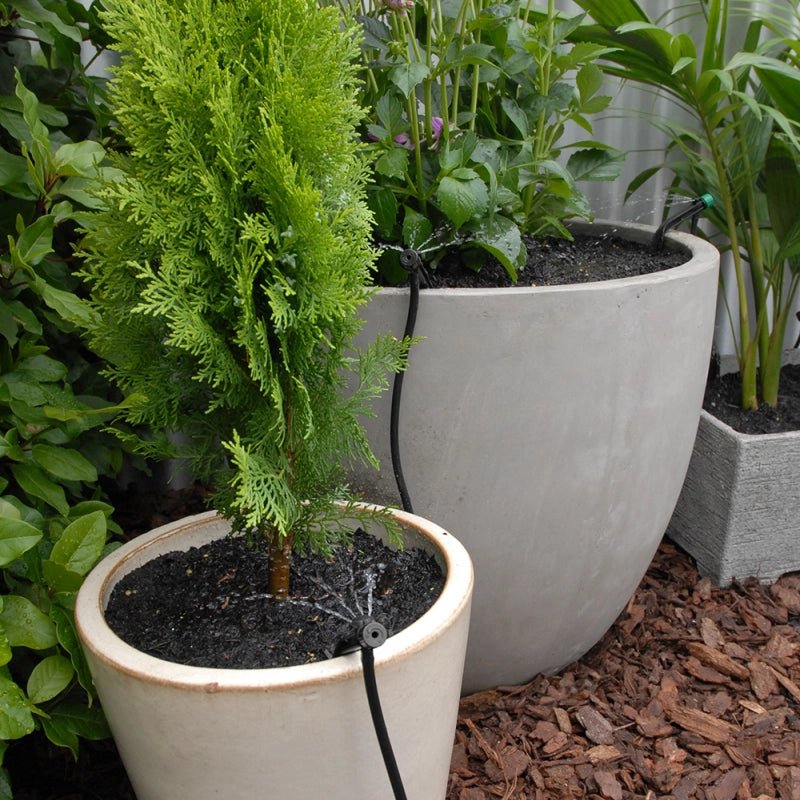
Choosing the right delivery method is the first step toward a thriving garden. Most garden irrigation kits | easy diy setup & efficient watering utilize either drip emitters or micro-sprinklers to manage hydration. Drip irrigation functions through a slow, controlled release of water directly at the soil level. This method ensures that moisture reaches the root zone without wetting the foliage, which helps prevent fungal diseases. In contrast, micro-sprinklers produce a fine mist or targeted spray. These are better suited for covering larger surface areas or providing a gentle soak for delicate plants. Both delivery styles are fully compatible with Hozelock watering kits, giving you the flexibility to build a modular system that adapts to your landscape.
Drip Irrigation: Best for Pots, Containers, and Hedges
Drippers are the most efficient tools for managing individual plants in high-drainage environments. They prevent water wastage by delivering moisture exactly where it's needed most. This precision is a key reason why EPA WaterSense microirrigation recommendations highlight these systems for their ability to cut water waste by up to 50% compared to traditional sprinklers. Drip systems are particularly effective for balcony gardens and patio pots where over-watering can lead to messy runoff. They are also the superior choice for line-watering established hedges, such as laurel or privet, where deep root penetration is required. The Hozelock 25 Pot Automatic Watering System serves as an excellent starting point for anyone looking to automate their container garden with professional-grade components.
Micro-Sprinklers: Best for Flower Beds and Greenhouse Care
Micro-sprinklers offer a different set of benefits, primarily through their ability to simulate a soft, natural rainfall. This "soft" watering is vital for seedlings and delicate blooms that might be flattened by a standard hose. When you incorporate these into garden irrigation kits | easy diy setup & efficient watering, you gain the ability to achieve uniform coverage across wide garden borders or densely planted flower beds. These components are also the preferred choice for greenhouse care. They don't just hydrate the soil; they also increase ambient humidity, which is essential for tropical species and successful propagation. Because they are easy to adjust and reposition, they remain a favorite for seasonal displays. If you're ready to upgrade your garden layout, you can browse our specialized drip irrigation systems to see which delivery heads best suit your planting style.
Key Features to Look for in an Efficient Irrigation Kit
When you're comparing garden irrigation kits | easy diy setup & efficient watering, durability is just as important as the initial price. Quality components from brands like Claber or Hozelock are manufactured with high-grade UV resistance. This ensures that distribution lines don't become brittle or crack after a single summer in the sun. You should also look for kits that include a pressure regulator. Standard UK mains pressure is often too high for delicate emitters; a regulator prevents drippers from leaking or popping off the line. This maintains a steady, efficient flow across the entire system regardless of your home's water pressure.
Standardization is another essential feature that shouldn't be overlooked. A well-designed kit uses standard 13mm main supply pipes and 4mm micro-tubing. This allows you to add more zones or individual drippers as your garden evolves. It's much easier to scale a modular system using irrigation fitting adaptors than to replace a proprietary setup that doesn't fit standard connectors. By choosing a system with universal compatibility, you ensure your investment lasts for years to come.
Selecting the Right Water Timer
The water timer acts as the brain of your automated system. While simple manual dial timers are effective for basic schedules, digital programmable controllers offer much more precision for complex layouts. Some advanced models even feature sensor-based technology. These trigger watering only when the sun goes down or if soil moisture levels drop below a certain threshold. This level of control is what makes garden irrigation kits | easy diy setup & efficient watering so effective at reducing waste. You can explore our full range of garden irrigation water timers to find the right level of automation for your needs.
Eco-Friendly Watering and Water Butt Integration
Sustainability is a growing priority for UK gardeners, and your irrigation setup should reflect that. Many modern kits are now compatible with water butts. This allows you to use harvested rainwater instead of mains supply, which is better for both the environment and your plants. Because water butts lack the pressure of a tap, you'll need a gravity-fed kit or a solar-powered pump to move the water through the lines. Claber offers specialist solutions for eco-conscious users that work perfectly in these low-pressure environments.
Understanding the technical differences between micro-sprinklers versus drip systems is particularly important when using harvested water. Drip emitters typically require less pressure to function effectively than spray heads, making them the ideal partner for a water butt system. Using harvested water doesn't just lower your utility bills; it provides a nutrient-rich source of hydration that your plants will genuinely appreciate.
How to Plan Your Garden Irrigation Layout in 5 Steps
A successful installation starts with a clear strategy. By mapping your garden before unrolling any pipe, you prevent dry spots and ensure every plant receives the correct amount of moisture. When selecting garden irrigation kits | easy diy setup & efficient watering, you should always start your plan at the outside tap and work your way to the furthest corner of the garden. For the best results, use a combination of 13mm 'mainline' pipe for the primary distribution and 4mm 'feeder' pipe to reach individual pots or shrubs. This balanced approach maintains optimal water pressure across the entire system. If you need a visual starting point, explore our design ideas and plans for inspiration.
Step 1: Map Your Watering Zones
Efficient watering requires grouping plants by their specific needs. Thirsty vegetables in raised beds should be on a different branch than drought-tolerant shrubs or established hedges. Measure the exact distance from your tap to your furthest container to ensure you have enough tubing. Don't forget to identify obstacles like paths or patios. In these areas, you'll need 'blank' pipe without emitters to transport water without creating puddles where they aren't wanted. This foundational step ensures your system remains scalable as your garden grows.
Step 2: Choosing and Laying the Pipework
Lay your 13mm supply pipe along the perimeter of your garden beds. To prevent the pipe from kinking or tangling, let it sit in the sun for a short while to soften before you begin. You can keep the system discreet by hiding pipes under a layer of mulch or decorative gravel. When you need to navigate sharp corners or divide a single line into two, use irrigation fitting adaptors to ensure a leak-proof connection. Using the correct fittings prevents pressure drops and protects the integrity of the system.
Step 3: Installing Emitters and Testing
Once the mainline is in place, use a hole punch tool to insert your drippers or micro-sprinklers. Listen for a distinct 'click' which confirms the component is securely seated. Every branch of your system must finish with an end plug. This is vital because it maintains the internal pressure required to force water through the emitters. Before you bury any lines or secure them with stakes, perform a 'dry run' test. Turn on the tap and check that every dripper is functioning correctly and that there are no leaks at the joints. You can find everything you need to get started in our collection of Hozelock watering kits to build a system that lasts.
Standout Garden Irrigation Kits from Our 2026 Collection
Selecting the right hardware is essential for a reliable system. We've curated our 2026 collection to solve specific UK gardening challenges, focusing on kits that offer both durability and simplicity. Whether you manage a small balcony or a sprawling estate, these garden irrigation kits | easy diy setup & efficient watering provide the precision required to keep your plants healthy without constant manual intervention. By choosing established brands like Hozelock and Claber, you benefit from our 15 years of specialist experience in these specific technical systems. It's about finding a solution that fits your unique landscape perfectly.
The Hozelock 25 Pot Automatic Watering System
This kit is often described as the ultimate 'holiday insurance' for patio and balcony gardeners. It's a complete solution that includes everything needed to hydrate up to 25 containers, including a dedicated pressure regulator to prevent leaks. The beauty of this system lies in its accessibility; it's easy to install in under 30 minutes with no special tools required. It's a perfect entry point for those who want to protect their potted displays while they're away from home, ensuring your plants receive consistent care without any guesswork.
Hozelock 2804: The All-Rounder for Borders and Veg Patches
For gardens with a more varied layout, the Hozelock 2804 is a highly versatile choice. It combines drip and micro-spray options in a single package, making it perfect if you have a mix of thirsty flower beds and vegetable rows. This kit's scalable design means it works seamlessly with Hozelock automatic watering systems. You can easily expand your coverage as your planting areas grow, ensuring your garden irrigation kits | easy diy setup & efficient watering remain a long-term asset to your landscape. It's an adaptable system that evolves alongside your garden.
Claber Drip Kits for Specialist Landscapes
If you're looking for high-durability Italian design, Claber is the preferred choice for many specialist landscapes. These kits are engineered for larger estates or complex layouts where precision is vital. The Claber Drip Irrigation range is particularly noted for the accuracy of its drippers, which is essential for sensitive plant species that require exact hydration levels. These components are built to last, providing a dependable solution for gardeners who prioritize performance and build quality. To find the ideal setup for your specific garden layout, we encourage you to browse our full Garden Irrigation Kits collection today.
Reclaim Your Garden with Precision Watering
Transitioning to an automated system is the most effective way to protect your landscape while reducing water waste. By understanding the functional differences between drip emitters and micro-sprinklers, you can build a modular layout that meets the specific needs of every plant. Whether you're securing holiday insurance for your patio pots or automating a large vegetable patch, the right hardware makes all the difference. It's about moving away from the guesswork of manual hoses toward a professional, dependable solution.
Our curated range features high-performance garden irrigation kits | easy diy setup & efficient watering from industry leaders like Hozelock and Claber. As a specialist retailer with 15+ years of expert irrigation experience, we're here to help you select a system that grows with your garden. You can also benefit from free UK delivery on qualifying orders to get your project started. Browse the Full Collection of Garden Irrigation Kits today and enjoy a thriving, green garden with minimal effort.
Frequently Asked Questions
Is it easy to set up a garden irrigation kit myself?
Yes, setting up garden irrigation kits | easy diy setup & efficient watering is a straightforward task that most homeowners can complete without professional help. Most systems use push-fit connectors that don't require any tools. You can often have a basic patio kit running in less than 30 minutes. We focus on providing the hardware and expert advice you need to build confidence in your own technical abilities, ensuring a successful and leak-free installation.
Can I expand an irrigation kit later if I add more plants?
Yes, the modular design of these systems makes expansion very simple. You can add more 13mm mainline pipe or 4mm feeder tubing whenever you introduce new plants or containers to your garden. Because these kits use standardized sizes, you can easily incorporate additional drippers or micro-sprinklers from Claber or Hozelock. This flexibility ensures your initial setup remains a valuable asset even as your landscape evolves and grows over several seasons.
Do I need a water pump for my irrigation system to work?
You generally don't need a water pump if you are connecting your system directly to a standard UK outside tap. Mains water pressure is typically more than sufficient to power dozens of drippers or several micro-sprinklers across a residential garden. However, if you intend to run your irrigation from a water butt that isn't elevated for a gravity-fed setup, a small solar-powered pump may be necessary to ensure water reaches every emitter effectively.
Will an irrigation kit work with my water butt?
Yes, many garden irrigation kits | easy diy setup & efficient watering are fully compatible with harvested rainwater. To make this work, you'll need either a specialist gravity-fed kit or a solar-powered pump, as water butts don't provide the same pressure as a mains tap. Using a water butt is an excellent eco-friendly choice that provides nutrient-rich water for your plants while helping you stay resilient during periods of high water demand or dry spells.
How do I protect my irrigation kit during the winter?
Protecting your system during the winter is a simple but essential task to prevent frost damage. You should always drain the water from the pipes and remove your water timer from the outside tap to store it in a frost-free environment like a garage or shed. While the pipes themselves are durable and UV-resistant, ice expansion inside plastic components can cause cracks. Taking these precautions ensures your system is ready for the following spring.
What happens to my irrigation system during a hosepipe ban?
During a hosepipe ban, mains-connected systems are usually restricted. However, systems using water butts or greywater remain a legal way to irrigate your plants. It's best to check your local water company's specific rules, as they can vary by region. Using a water butt with your irrigation setup allows you to maintain your garden's health without relying on the mains supply, making your garden more resilient during the peak of summer.
How many drippers can I run off a single outside tap?
Most standard UK taps can support roughly 30 to 50 drippers on one line, depending on your local water pressure. If you need to water more plants, it's better to split the system into separate zones using a multi-way tap distributor. This ensures that the pressure doesn't drop too low at the end of the line. Planning your layout in zones helps maintain the precision delivery that makes automated systems so efficient for larger gardens.
Are Hozelock and Claber components compatible with each other?
Most Hozelock and Claber components are compatible because they utilize industry-standard pipe sizes, such as 13mm and 4mm. While the main distribution pipes and drippers often work together perfectly, you might occasionally need specific adaptors for certain tap connectors or timers. As specialists in both brands, we can help you identify exactly which fittings you need to create a hybrid system that leverages the best features of both manufacturers for your specific garden layout.
`-
Posted in
automated watering, DIY gardening, drip irrigation, garden irrigation, garden irrigation kits | easy diy setup & efficient watering, garden maintenance, gardening, micro sprinklers, water conservation