Hozelock Sprinkler & Soaker Hose Buying Guide
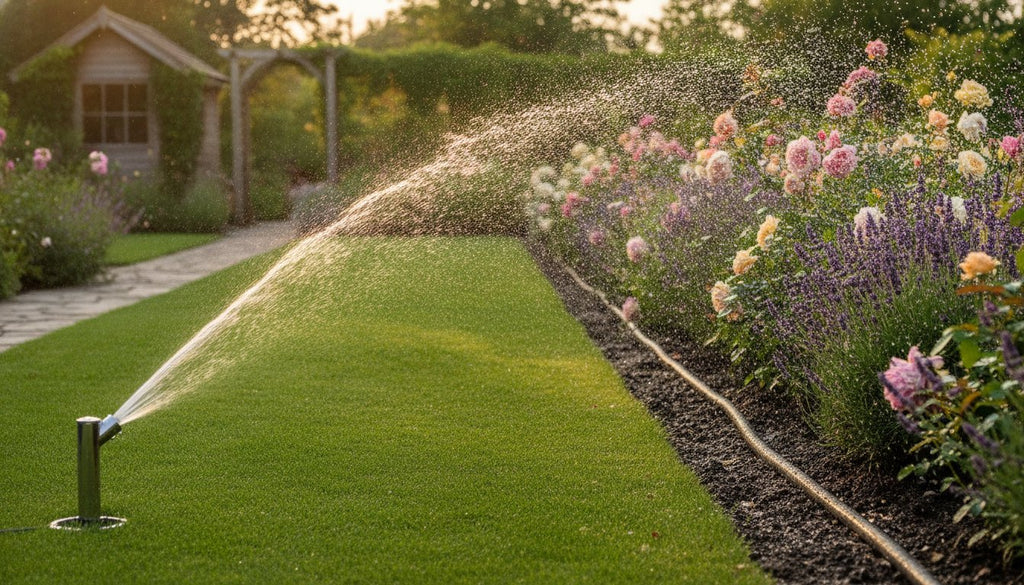
The most common mistake in garden care isn't under-watering; it's watering the wrong way. Most gardeners find that manual hosing is a time-consuming chore that often leads to significant water waste and shallow root growth. You've likely felt the frustration of watching your borders wilt during a dry spell or worried about how to keep your lawn green under the widespread 2026 hosepipe restrictions affecting much of England and Wales. It's exhausting to balance a busy schedule with the precise needs of your plants while trying to keep costs down.
We understand that you want a lush, thriving garden without the daily effort or the high water bills. This guide will help you choose the ideal hozelock sprinkler/soaker hose to transform your irrigation routine into a professional, efficient system. By targeting water exactly where it's needed, you can reduce waste by up to 50% compared to traditional methods. We will explain the technical differences between "sweating" hoses for deep root hydration and sprinklers for surface coverage. This ensures your Hozelock setup is perfectly matched to your soil type and garden layout for years of reliable performance.
Key Takeaways
- Understand the fundamental differences between a hozelock sprinkler/soaker hose to ensure you select the right method for root-level or surface-level watering.
- Learn how to assess your garden’s water pressure and soil type to avoid over-saturating clay or under-watering sandy borders.
- Explore the benefits of UV-stabilized materials that prevent your irrigation system from degrading during intense summer heat.
- Gain practical installation knowledge on softening and securing your hose to maintain a tidy, efficient garden layout.
- Identify the best-performing Hozelock models for 2026, tailored for everything from small flower beds to expansive garden borders.
Hozelock Sprinkler vs. Soaker Hose: Understanding the Basics
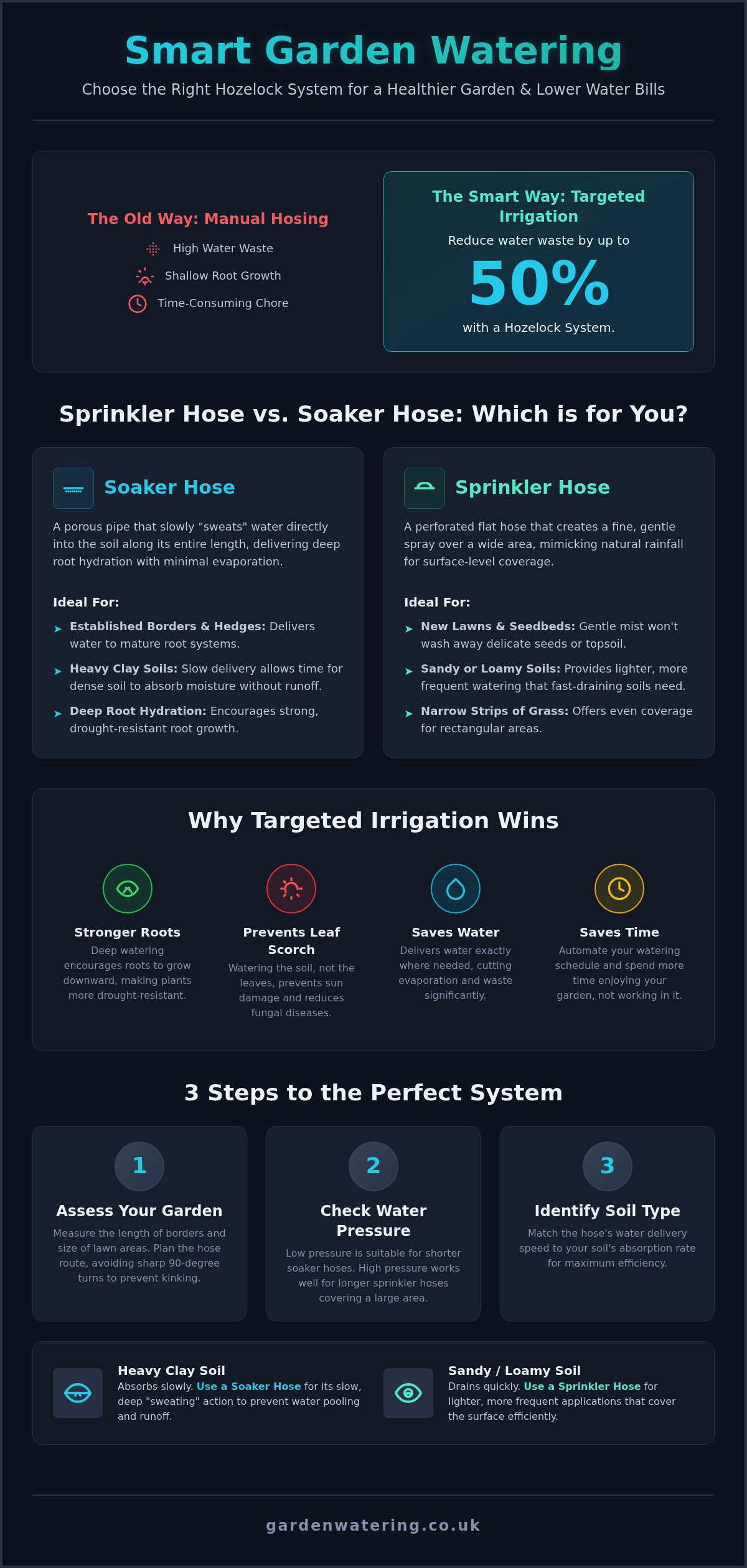
Choosing the right hozelock sprinkler/soaker hose depends on how you want water to reach your plants. A Hozelock Soaker Hose is a porous pipe that "sweats" water directly into the soil, providing deep hydration where it's needed most. In contrast, a Hozelock Sprinkler Hose is a perforated flat hose that creates a gentle rain effect, which is ideal for surface-level coverage. The primary goal of both systems is targeted irrigation. By delivering water precisely, you can reduce evaporation and waste by up to 50% compared to traditional manual hosing.
We recommend Hozelock because of the brand's long-standing reliability and universal compatibility. These hoses are designed to integrate perfectly with a Hozelock Automatic Watering System, allowing you to build a cohesive network that manages itself. Whether you're connecting to a simple tap or a sophisticated timer, the fittings remain consistent and leak-free.
To better understand how these systems function in a real garden setting, watch this helpful demonstration:
The Three Main Types of Hozelock Irrigation Hoses
Understanding Irrigation sprinkler basics is the first step in designing an efficient layout. Hozelock offers three distinct technologies to suit different parts of your landscape:
- Porous Soaker Hose: This is the ideal choice for established borders and hedge lines. It delivers water slowly at the base of plants, which is perfect for heavy clay soils that need time to absorb moisture.
- Sprinkler Hose: These are best for narrow lawn strips and germinating seeds. They provide a fine, misty spray that covers the surface without washing away delicate topsoil or new seeds.
- Dripper Hose: These are often used within Drip Irrigation Systems for highly targeted delivery to specific plants, such as those in containers or high-value specimen shrubs.
Why Targeted Irrigation Beats Traditional Hand Watering
Hand watering often feels like a relaxing chore, but it's rarely efficient. Using a hozelock sprinkler/soaker hose ensures direct-to-root delivery. This prevents common issues like leaf scorch, which happens when water droplets on foliage act like tiny magnifying glasses in the midday sun. By keeping the leaves dry, you also significantly reduce the risk of fungal diseases. Deep soaking encourages plants to develop stronger, more drought-resistant root systems because the water penetrates further into the earth. It also saves you a tremendous amount of time. You can set your system and walk away, knowing your garden is receiving consistent moisture even during the peak of summer heat.
Matching Your Garden Needs: Which Hozelock Hose is Best for You?
Determining the right hozelock sprinkler/soaker hose starts with a simple assessment of your landscape. First, measure the total length of your borders or the specific dimensions of your lawn. You'll also need to check your water pressure at the tap. Low pressure might struggle to push water through a 25m porous hose, while high pressure is perfect for the misty output of a sprinkler hose. Understanding these variables ensures you don't over-invest in a system that doesn't fit your garden's physical constraints.
Your soil composition dictates the delivery speed your plants require. Heavy clay soils, common in many UK gardens, benefit from the slow "sweating" action of a soaker hose, allowing moisture to penetrate without pooling. Sandy soils drain quickly, so they often require more frequent, lighter applications that a sprinkler hose provides. Following EPA watering efficiency tips can help you time these sessions for maximum absorption. When planning your layout, remember that Hozelock hoses are designed for flexibility. You can snake them around corners and between established shrubs. Just ensure you avoid sharp 90-degree turns to prevent kinking and maintain consistent flow.
Best for Borders and Vegetable Patches
The Porous Soaker Hose is often considered the "gold standard" for vegetable rows and deep borders. Because it delivers water directly to the soil surface, it's incredibly efficient. For the best results and a tidy look, you can bury the hose under a 2-inch layer of organic mulch. This hides the pipe and further reduces evaporation. If you have unplanted gaps between shrubs, you can use standard Hozelock connectors and plain garden hose to bridge the spaces. This setup ensures you don't waste water on bare earth where no roots are present.
Best for Lawns and Narrow Flower Beds
Using a hozelock sprinkler/soaker hose for narrow lawn strips allows you to maintain green coverage without a bulky oscillating unit. The sprinkler hose produces a gentle, rain-like spray that is perfect for delicate seedlings. High-pressure sprays can often wash away topsoil or damage new growth, but this perforated flat hose keeps everything in place. A standard sprinkler hose typically covers a width of up to 3 meters. This makes it ideal for the perimeter of a lawn or a long, thin border where a traditional circular sprinkler would over-spray onto paths or fences.
If you're unsure which length or type fits your space, you can browse our full range of Hozelock watering solutions to find the perfect match for your garden size.
Key Features and Technical Specifications to Compare
Choosing the right hozelock sprinkler/soaker hose requires looking at more than just the physical length. While price is always a consideration, the technical build of the hose determines how well it performs under the pressure of a British summer. Hozelock hoses feature high-grade UV stabilization, which is a critical feature that prevents the material from becoming brittle or cracking after prolonged exposure to sunlight. Many generic alternatives lack this protection, leading to leaks and splits within a single season. By investing in a stabilized hose, you ensure your irrigation system remains a durable part of your garden for years.
Technical performance also depends on your ability to manage water flow. You can adjust the intensity of the "sweat" or "spray" rate directly at the tap, giving you complete control over how much moisture your plants receive. Whether you select a 10m, 15m, or 25m variant, you're getting a product designed for precision. Larger gardens often require the 25m porous pipe to cover expansive borders, while the 10m sprinkler hose is perfect for targeted lawn maintenance. Using genuine Hozelock Connectors ensures a leak-free fit, maintaining the necessary internal pressure for the hose to function correctly across its entire length.
The Unique "Flip" Action of the Hozelock Sprinkler Hose
The Hozelock Sprinkler Hose offers a clever design feature that provides two watering methods in one product. If you lay the hose with the perforations facing up, it creates a fine, misty spray that is ideal for surface-level watering of lawns or narrow beds. When you flip the hose over so the holes face down, it acts as a deep-soaking tool that delivers water directly into the soil to hydrate roots. This dual-action capability makes the 6765 model the most versatile choice in the range for gardeners who need flexible irrigation options.
Extending Your System
For larger landscapes, you can easily join multiple hoses together to cover long garden perimeters. You'll need to maintain adequate pressure if your total run exceeds 50 meters, as long extensions can lead to a drop in flow at the far end. If you're planning a complex layout that branches into different zones, use Irrigation Fitting Adaptors to customize the network. This allows you to connect different hose types or navigate around obstacles like garden sheds and patios without losing efficiency. A well-planned extension ensures that even the furthest corners of your garden receive consistent hydration with zero daily effort.
Installation Tips for Maximum Watering Efficiency
Correct installation is the key to getting the most out of your hozelock sprinkler/soaker hose. A poorly positioned system leads to dry spots and wasted water. Follow these five practical steps to ensure your garden receives uniform hydration with minimal effort.
- Step 1: Soften the hose. Before you attempt to lay your hose, leave it out in the sun for 30 to 60 minutes. The warmth makes the material significantly more pliable, allowing you to navigate tight corners and garden curves without the hose fighting back.
- Step 2: Secure with garden pegs. Once you've positioned the hose, use plastic or metal garden pegs every meter. This prevents the hose from shifting or "creeping" as the water pressure changes, keeping the spray or soak exactly where you intended.
- Step 3: Automate the system. Connect your hose to a Garden Irrigation Water Timer. This removes the need for manual intervention and ensures your plants never miss a drink, even when you aren't home.
- Step 4: Conduct a flow test. Turn the water on and walk the entire length. You might need to adjust the tap pressure to ensure water reaches the very end of the run. If the start is too high, the end might be too low.
- Step 5: Mulch for efficiency. If you're using a soaker hose, cover it with a layer of bark or mulch. This hides the pipe from view and prevents the water from evaporating before it reaches the roots.
Automating Your Watering Schedule
The most efficient time to water is at dawn or dusk. During these hours, the air is cooler and the wind is usually calmer, which minimizes evaporation. Many modern timers allow you to "pulse" water, delivering it in short bursts. This is particularly helpful for heavy soils that need time to absorb moisture before more is added. You can also pair your hozelock sprinkler/soaker hose with a rain sensor. These clever devices pause your schedule during wet spells, preventing over-watering and reducing your water bills during the unpredictable British summer.
Maintenance and Winter Care
Sediment and lime-scale can build up inside porous pipes over time. To prevent this, flush your hose twice a year by removing the end plug and running the water at high pressure for several minutes. When autumn arrives, it's vital to drain your hoses completely. Water trapped inside can freeze and expand, causing the material to split. Store them in a shed or garage until spring. If you do encounter a puncture or a leak, don't worry. You can quickly fix the issue using standard Hozelock repair connectors to join the two clean ends back together.
Ready to build your own custom setup? Explore our full range of Hozelock Watering Kits to find everything you need to get started.
Top Hozelock Sprinkler and Soaker Hose Solutions for 2026
Selecting the right hozelock sprinkler/soaker hose is the final step toward a self-sustaining garden. After 15 years of specializing in irrigation systems, we've identified the specific models that deliver the most consistent results for UK landscapes. These solutions are designed to work in harmony with your existing setup, ensuring your plants thrive even when water restrictions are in place. By choosing a system tailored to your garden's scale, you eliminate the guesswork and physical strain of manual watering.
Our Top Recommendation for Beginners
For those new to automated irrigation, the Hozelock Sprinkler Hose 10m (6765) is the most practical starting point. It's a versatile all-rounder that provides immediate results for flower beds and narrow borders without requiring complex planning. You'll find it incredibly easy to use; simply lay it out and connect it to your tap. This model offers exceptional value for money when compared to the cost of replacing plants lost to drought. It's particularly effective for those who want a lush garden but don't have the time to spend every evening with a traditional spray gun.
The Professional Choice for Landscaped Borders
If you're managing expansive borders or permanent landscaping, the Porous Soaker Hose (25m) is the superior option. Professionals prefer this model for permanent installations because it's built for longevity and can be discreetly hidden. When tucked under a layer of mulch, it provides a quiet, "hidden" watering capability that delivers moisture directly to the root zone. This encourages deep rooting and resilience. For more design ideas on how to integrate these into a larger plan, consult our Garden Watering Systems Guide to see how to achieve a thriving garden with minimal waste.
For more complex layouts, the Dripper Hose acts as a vital component in an integrated "Water Network." It allows you to branch off from your main supply to reach specific, high-needs plants in containers or isolated beds. This level of customization ensures that every drop of water is used efficiently. This is especially important during the dry spells we've seen across the UK in 2026, where targeted delivery is the only way to maintain a healthy landscape responsibly.
Ready to upgrade your garden's health? Browse the full Hozelock Sprinkler & Soaker Hose collection here to find the perfect match for your borders and lawns.
Transform Your Garden with Smarter Irrigation
Achieving a lush, healthy landscape doesn't have to be a daily struggle against the weather. By choosing the right hozelock sprinkler/soaker hose, you can ensure your plants receive precise hydration while reducing water waste by up to 50%. We've explored how surface-level sprinklers protect delicate seedlings and how porous pipes provide the deep soaking necessary for established borders. These systems don't just save time; they build a more resilient garden that can withstand the driest British summers.
At Garden Watering, we bring over 15 years of specialist irrigation experience to help you plan the perfect setup. We stock a full range of genuine Hozelock accessories and offer fast UK delivery on all irrigation kits to get your system running quickly. Our expert advice is always available to ensure you find the exact components for your soil type and garden layout. Take the first step toward a thriving, low-maintenance outdoor space today.
Shop the Hozelock Sprinkler & Soaker Hose Collection
Your garden deserves the best care, and we're here to help you achieve it with confidence.
Frequently Asked Questions
Can I bury a Hozelock soaker hose under the soil?
Yes, you can bury a Hozelock soaker hose under the soil or a layer of mulch. In fact, burying it about 5cm deep or covering it with bark helps to reduce evaporation significantly. This ensures that water goes directly to the roots where it's needed most. It also protects the hose from UV damage and keeps your garden borders looking tidy by hiding the irrigation pipework from view.
How long should I run my Hozelock sprinkler hose for each day?
Most gardens benefit from running a hozelock sprinkler/soaker hose for 15 to 30 minutes during each session. However, this depends on your soil type and the current weather conditions. Clay soils retain moisture longer and require less frequent watering, while sandy soils may need daily attention. We recommend checking the soil moisture about 10cm deep after the first run to see if the water has penetrated sufficiently.
Do Hozelock soaker hoses work with low water pressure or water butts?
Hozelock soaker hoses generally require a minimum amount of pressure to push water through the porous walls effectively. They don't typically work well with gravity-fed systems like standard water butts unless the butt is raised significantly or paired with a pump. For the best performance across the entire length of the hose, a mains water connection is recommended. This ensures that the "sweating" action remains consistent throughout the entire run.
Can I connect two Hozelock soaker hoses together to make a longer run?
You can connect two hoses together using standard Hozelock connectors to extend your reach. It's important to keep the total length under 50 meters to maintain adequate pressure. If the run is too long, you might notice that the water flow drops off towards the far end. For very large gardens, it's often more efficient to create separate zones using a manifold rather than one excessively long continuous hose.
What is the difference between a dripper line and a soaker hose?
A soaker hose is a porous pipe that "sweats" water along its entire length, making it perfect for dense borders. A dripper line features specific holes or emitters spaced at regular intervals to deliver water to individual plants. While both are efficient, the soaker hose is better for general area coverage, whereas a dripper system is the professional choice for precise, plant-by-plant hydration in vegetable rows or specific container networks.
Will a soaker hose work on a slope or uneven ground?
Yes, these hoses work on slopes, but gravity will affect the water distribution. Water naturally flows more easily to the lowest point, so you might find the bottom of the slope receives more moisture than the top. To combat this, try to lay the hose across the slope in an "S" shape rather than straight up and down. This helps to equalize the pressure and ensures more even hydration for all your plants.
How do I stop my soaker hose from getting blocked over time?
To prevent sediment or lime-scale build-up, you should flush your hozelock sprinkler/soaker hose at least twice a year. Simply remove the end cap and run water through the system at high pressure for a few minutes. This clears out any fine particles that have settled inside the pipe. If you live in a hard water area, this maintenance is essential to keep the porous walls "sweating" at their maximum efficiency.
Do I need a special connector to attach these hoses to my outdoor tap?
You don't need any specialized equipment beyond a standard Hozelock threaded tap connector. These hoses are designed to be fully compatible with the existing Hozelock range, so they click into place just like a regular garden hose. If you want to automate the process, you can fit a water timer between the tap and the hose. This allows you to set a schedule and ensures your garden stays hydrated without any manual effort.
`-
Posted in
Buying Guide, Garden Watering, Gardening Tips, Hozelock, hozelock sprinkler/soaker hose, Irrigation Systems, Soaker Hose, Sprinklers, Water Conservation