The Ultimate Guide to Choosing a Sprinkler and Soaker Hose in 2026

What if the very tool you use to keep your garden alive is actually starving your plants while inflating your water bill? It's a common frustration to watch water evaporate before it hits the soil, especially when you are trying to decide which sprinkler and soaker hose setup is best for your specific soil type. You want a lush, healthy garden, but you don't want to waste resources or feel confused by local watering restrictions. We understand that managing a landscape requires a balance of expert knowledge and the right equipment to ensure every drop of water reaches the roots.
This guide will help you discover the technical differences between these two essential tools so you can provide precise hydration while saving water. We will show you how each system functions and where they perform most efficiently in your garden. We'll also preview how these hoses integrate with Hozelock timers to create a seamless, automatic watering experience. By the end of this article, you'll have the confidence to build an irrigation setup that keeps your plants thriving and your utility costs low throughout 2026.
Key Takeaways
- Understand the technical distinction between the surface-level "rain" effect of a sprinkler hose and the deep, subterranean hydration provided by a porous soaker hose.
- Learn how to adapt your watering strategy based on your soil texture to prevent water waste and ensure moisture reaches the root zone efficiently.
- Discover how to plan a precise layout for your sprinkler and soaker hose, whether you are targeting straight flower borders or dense clusters of shrubs.
- Get professional tips for a smooth installation, including how to use natural heat to make hoses more pliable and how to integrate them with automatic water timers.
- Identify the specific products best suited for your garden's layout, from high-performance 15m sprinkler hoses to heavy-duty porous pipes for deep bed hydration.
Sprinkler vs. Soaker Hose: Understanding the Technical Differences
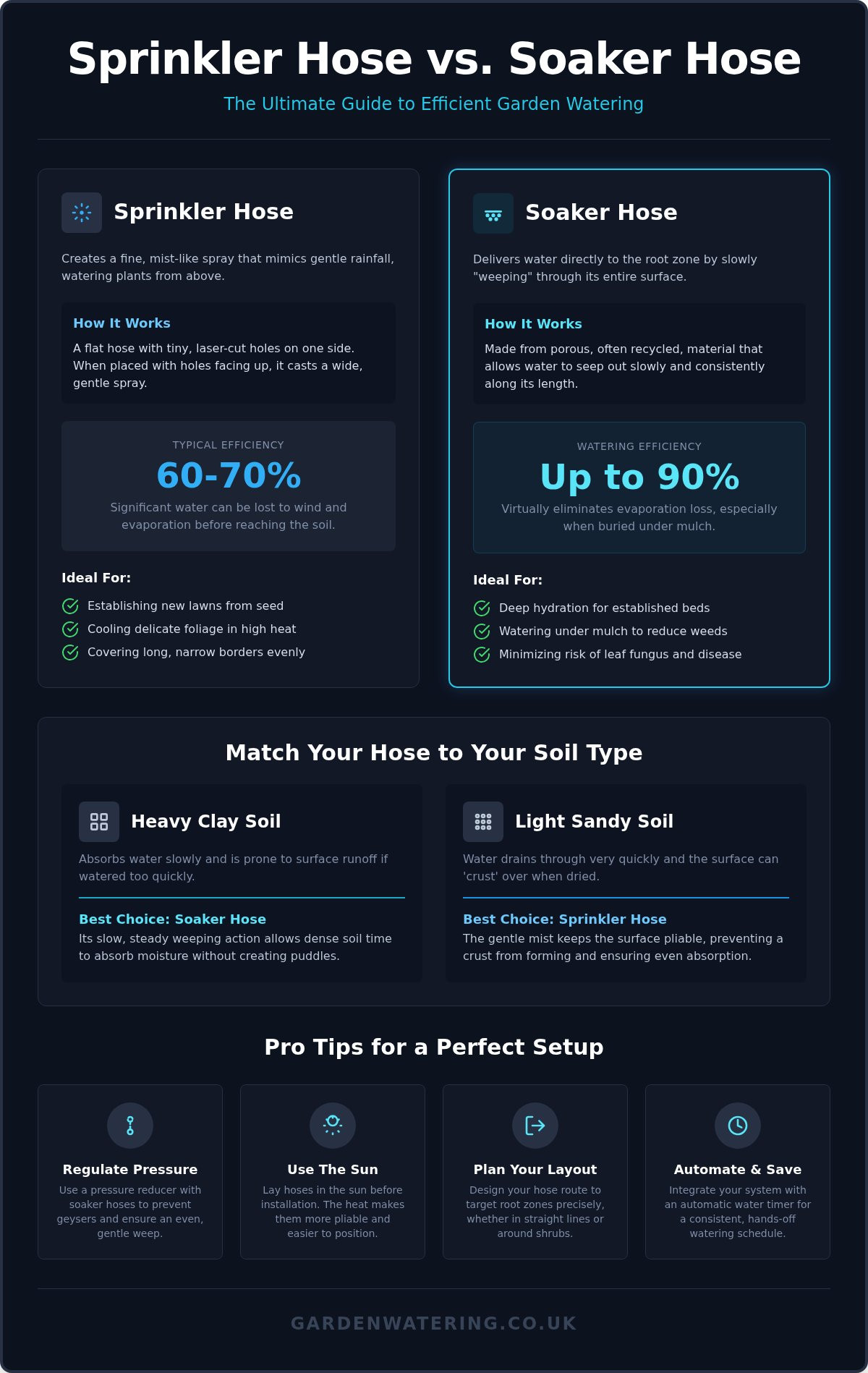
Choosing the right sprinkler and soaker hose starts with understanding that these tools are designed for completely different tasks. While they might look similar on a retail shelf, their mechanical delivery of water is fundamentally different. A sprinkler hose is essentially a flat pipe with tiny laser-cut holes on one side. It creates a fine, mist-like spray that mimics natural rainfall. In contrast, a soaker hose, often called a porous pipe, is made from porous recycled rubber that allows water to "weep" or sweat through its walls directly into the earth. As specialists with 15 years of experience, we've seen how choosing the wrong type can lead to plant stress or wasted water.
The Mechanics of a Sprinkler Hose
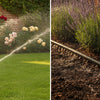
A sprinkler hose is designed to be used with its perforations facing upwards. This orientation allows it to cast a gentle spray across a specific surface area, making it an excellent choice for establishing new lawns or cooling delicate foliage during high heat. These systems are particularly effective for rectangular zones or long, narrow borders where traditional Irrigation sprinkler systems might be too powerful or imprecise. One of the primary benefits is the immediate visual feedback; you can see exactly where the water is landing, ensuring no corner of your new turf is left dry. We often recommend these as a practical middle ground for gardeners who want more automation than a hand-held lance but aren't ready for a full underground installation.
The Mechanics of a Soaker Hose
Soaker hoses operate on a different principle entirely. They require low water pressure to function correctly, allowing moisture to seep slowly and steadily through the pipe walls. This method is the gold standard for established beds and borders because it delivers hydration directly to the root zone. Because the water doesn't fly through the air, you can bury these hoses under a layer of mulch. This virtually eliminates water loss through evaporation, which is a major concern during dry spells. Data from 2026 shows that while traditional spray methods often achieve 60-70% efficiency, localized delivery like this can reach up to 90% efficiency. By keeping the foliage dry, you also significantly reduce the risk of leaf diseases and fungal growth. For a truly hands-off approach, these hoses are easily integrated into Hozelock watering setups using simple connectors and timers.
The Science of Seepage: Soil Types and Water Delivery
How water behaves once it leaves your sprinkler and soaker hose depends entirely on the texture of your soil. This movement, known as capillary action, determines whether moisture reaches the deep roots or simply pools on the surface. Understanding this science is vital for garden health. For instance, in heavy clay soils, water spreads wider laterally but moves much slower into the ground. Conversely, in sandy soils, water tends to move vertically, draining away quickly and requiring closer hose spacing to ensure full coverage. Reviewing various watering options for home gardens highlights that matching your equipment to your soil profile is the most effective way to prevent plant stress.
Matching Hose Type to Your Soil Profile
Heavy UK clay soils are notorious for poor drainage and surface runoff. We recommend using a soaker hose here because its slow "weeping" action allows the dense soil enough time to absorb moisture without creating puddles. For those dealing with sandy beds, a sprinkler hose is often superior. Sandy soil can "crust" over if watered too aggressively; the gentle mist from a sprinkler hose keeps the surface pliable and prevents this sealing effect. To get the best results, calculate your soak time based on plant needs. Established shrubs in clay may only need one long session per week, while thirsty perennials in sandy soil might require shorter, more frequent bursts. You can easily manage these different schedules by using garden irrigation water timers to automate the process.
Pressure Regulation and Flow Rates
Uniformity is the biggest challenge when laying out long irrigation runs. If your water pressure is too high, you'll see geysers near the tap and dry spots at the far end of the hose. Using a pressure reducer is essential for porous soaker hoses to maintain a steady, even flow across the entire length. Most soaker hoses perform best at approximately 10-15 PSI for optimal weeping. If you notice the end of your 25m run is bone dry, it's a clear sign that your pressure is either too low or your hose run is too long for your tap's flow rate. Balancing these technical factors ensures that every plant, from the first to the last in the line, receives the precise hydration it needs to thrive in 2026.
Design Layouts: Planning Your Irrigation System
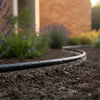
Designing your layout is the bridge between choosing your equipment and enjoying a thriving garden. While a sprinkler and soaker hose both offer efficiency, their physical properties dictate how you should position them for the best results. Sprinkler hoses are generally best used in straight, parallel lines to achieve uniform edge-to-edge coverage. Because they spray water upwards, they are ideal for long, thin borders where you want a consistent "rain" effect across the foliage and soil surface. Soaker hoses, however, offer much more flexibility. You can snake them around the base of individual shrubs or lay them in a tight grid for dense plantings like vegetable patches.
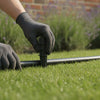
Securing your system is just as important as the layout itself. We recommend using heavy-duty garden pegs every meter to prevent the hose from shifting or kinking as it expands and contracts with water pressure. This stability is crucial when you integrate these components into a Hozelock automatic watering system. A secure hose stays exactly where you placed it; this ensures that your automated timers deliver water precisely to the root zones you've targeted without manual intervention.
The "S-Curve" vs. The Grid Layout
For established perennial borders, the "S-curve" is the most effective pattern. By snaking the hose between plants, you ensure each root ball receives adequate moisture. In contrast, use a grid layout for allotments or vegetable beds. Laying parallel lines roughly 30cm apart creates a uniform zone of moisture. This approach relies on drip and soaker irrigation principles to allow water to spread laterally through the soil. To calculate the total length you need, simply measure the width of your bed and multiply it by the number of passes required to cover the area at 30cm intervals.
Connecting to Your Main Water Supply
Efficiency often depends on how you manage your water source. Using high-quality Hozelock connectors allows you to switch between your standard garden hose and your dedicated irrigation lines quickly and without leaks. If you have a large garden with diverse needs, consider using a multi-way manifold at your tap. This lets you run different zones from a single source. For example, you can connect a lawn sprinkler for your grass while your soaker hose handles the deep hydration for your flower beds. This modular approach gives you total control over your garden's environment while saving time and effort.
Installation, Maintenance, and Water Efficiency
Setting up your sprinkler and soaker hose correctly from the start prevents technical headaches later. When you first unpack your hose, lay it out in the sun for at least 30 minutes. The natural heat makes the material much more pliable, allowing you to position it around corners or between plants without the hose fighting back or kinking. Once you've achieved your desired layout, connect it to your tap and run a full flow test. It's much easier to spot a leak or a blocked perforation now than after you've covered the system with a layer of mulch or soil.
Long-term performance relies on simple, twice-yearly maintenance. Every spring and autumn, remove the end cap and flush the system with high-pressure water for several minutes. This process clears out mineral deposits and sediment that naturally accumulate inside the pipe. As winter approaches, you must winterise your system to prevent frost damage. Porous rubber hoses are particularly susceptible to cracking if water freezes inside them. Drain the lines completely and store them in a shed or garage to ensure they're ready for the next growing season.
Maximising Water Efficiency in the UK
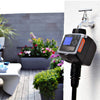
In the UK, timing is everything when it comes to conservation. Watering at dawn or dusk can reduce evaporation by up to 50%, ensuring that moisture actually reaches the soil rather than disappearing into the air. Using garden irrigation water timers is the most reliable way to manage this schedule. These devices prevent over-watering and protect your plants from root rot by delivering precise volumes. Regarding 2026 regulations, soaker hoses and drip systems are frequently exempt from temporary use bans (hosepipe bans) because of their high efficiency. However, traditional sprinkler hoses that spray water into the air usually remain restricted, so always check your local water provider's specific guidelines during a drought.
Troubleshooting Common Issues
Even the best systems occasionally need a quick fix. If you notice a "geyser" shooting from your sprinkler hose, don't discard the whole unit. You can easily cut out the damaged section and rejoin the ends using simple repair couplings. In hard water regions, soaker hoses may eventually stop "sweating" as calcium builds up in the pores. A quick soak in a mild vinegar solution or a high-pressure flush often restores the flow. If you suspect a blockage but can't see it, perform a simple flow test by timing how long it takes to fill a bucket at the end of the run compared to the start. If the difference is significant, it's time for a thorough flush.
Choosing Your Perfect Sprinkler or Soaker Hose
Selecting the right sprinkler and soaker hose depends on your garden's specific layout and your long-term goals for water conservation. If you are managing an expansive lawn or a long, straight flower border, the 15m Sprinkler Hose is the ideal choice for its uniform surface coverage. For those focused on deep bed hydration and established shrubbery, the Heavy-Duty Porous Soaker Hose provides the slow, steady seepage required to reach deep root systems. We also offer Hozelock-compatible kits that include all necessary fittings, making them the best option for gardeners who value versatility and ease of setup. Buying from a specialist like Garden Watering ensures you aren't just getting a product; you're gaining 15 years of expert irrigation advice from a team that focuses exclusively on high-performance systems.
Standout Products from Our Collection
Our Sprinkler and Soaker Hose collection includes 10m and 25m lengths to suit everything from small urban plots to large country gardens. These premium hoses are crafted from UV-stabilised materials to prevent degradation under the summer sun, ensuring they remain flexible and effective for years. If you have a complex garden shape or unique watering requirements, we provide a wide range of irrigation fitting adaptors for custom setups. This allows you to bridge the gap between different hose types or extend your system as your garden grows without needing to replace your existing pipework.
Final Expert Recommendation
We advocate for a "set and forget" strategy to achieve the best results with minimal effort. By combining a soaker hose with a Hozelock water timer, you create an automated environment that protects your plants even when you're away. Investing in quality components now saves significant money on plant replacements later; a single lost specimen often costs more than a high-quality irrigation kit. This methodical approach ensures your garden receives the precise hydration it needs while maintaining high water efficiency standards. Browse our full range of Sprinkler and Soaker Hoses today to find the perfect match for your landscape.
Cultivate a Resilient Garden for 2026
Choosing the right sprinkler and soaker hose setup is the most effective way to ensure your garden thrives while keeping your water bills manageable. You now understand how to match your irrigation method to your specific soil profile and how to maintain your system for year-round reliability. By integrating these tools with automatic timers, you'll achieve a professional-grade watering schedule with minimal daily effort. This balanced approach protects your plants from stress and ensures every drop of water is used efficiently.
As an official Hozelock retailer with over 15 years of specialist expertise, we're dedicated to helping you find a dependable technical solution. We provide free UK expert advice to ensure you select the components that best fit your landscape's unique needs. Our team is here to support you in creating a sustainable, beautiful environment that stands up to the changing climate. Shop our expert-selected Sprinkler and Soaker Hose collection today to upgrade your garden's irrigation. With the right equipment in place, you can spend less time worrying about hydration and more time enjoying your lush, healthy outdoor space.
Frequently Asked Questions
Can I bury a soaker hose under the soil or mulch?
Yes, burying the hose is highly recommended. It protects the rubber from UV degradation and virtually eliminates water loss from evaporation. You should place it 5cm to 10cm deep under mulch or soil. This ensures moisture goes directly to the root zone where it's needed most. It's a standard practice for integrated permanent installations where you want the system to remain discreet while providing maximum efficiency for your plants.
How long should I run my soaker hose for each day?
Most gardens require 30 to 60 minutes of run time, two or three times a week. The exact duration depends on your soil type; clay soil holds moisture longer than sandy soil. Instead of daily watering, deep sessions encourage roots to grow further down into the earth. It's best to check the soil moisture 10cm below the surface after a session to ensure the water has reached the necessary depth for your plants.
Will a soaker hose work with a water butt or gravity-fed system?
Soaker hoses generally require a minimum pressure of 10 PSI to weep effectively, which most gravity-fed systems can't provide. While some low-pressure variants exist, a standard water butt usually lacks the "head" height needed to push water through the porous walls. If you want to use harvested rainwater, you'll likely need a small pump to create the necessary pressure for a consistent and uniform flow across the entire hose length.
Can I connect multiple soaker hoses together for a longer run?
You can connect multiple hoses, but we recommend a maximum total length of 50 meters from a single water source. Beyond this, the water pressure drops significantly, leading to uneven watering where the far end remains dry. If you have a large garden, use a multi-way manifold at the tap to run separate lines. This ensures each sprinkler and soaker hose section receives the pressure required for optimal performance.
What is the best way to clean a clogged porous soaker hose?
The most effective method is to perform a high-pressure flush by removing the end cap and letting water run through for several minutes. In hard water areas where calcium builds up, you can soak the hose in a large container with a mild white vinegar solution. This helps dissolve mineral deposits that block the tiny pores. Regular maintenance like this ensures your system continues to "sweat" water evenly throughout the growing season.
Do I need a special connector to attach a sprinkler hose to my Hozelock system?
No special tools are required because most modern irrigation hoses are designed to be Hozelock-compatible. You simply need a standard quick-connect hose end connector to bridge the gap between your main supply and the irrigation line. As specialists, we ensure our kits include the necessary adaptors to make integration seamless. This allows you to switch between a hand-held spray gun and your automated system in just a few seconds without any technical difficulty.
Is a soaker hose more efficient than a traditional garden sprinkler?
Yes, a soaker hose is significantly more efficient because it delivers water directly to the soil rather than spraying it into the air. Traditional sprinklers can lose up to 30% of their water to evaporation and wind drift before it even hits the ground. By using a sprinkler and soaker hose combination appropriately, you target the roots specifically. This reduces waste and lowers your water bills while keeping the foliage dry to prevent disease.
How do I prevent my sprinkler hose from kinking during installation?
The best way to prevent kinking is to unroll the hose and let it sit in the sun for about 30 minutes before you start positioning it. The warmth makes the material more flexible and easier to manipulate around corners. Once you've laid it out, use plastic garden pegs to secure the hose every meter. This keeps the line straight and prevents it from shifting or twisting when the water pressure is turned on.
`-
Posted in
Garden Tips, Gardening, Hozelock, Irrigation, Soaker Hose, sprinkler and soaker hose, Sprinkler Hose, Water Conservation, Watering Systems