
Pop Up Irrigation Systems: The Complete 2026 Guide to Discreet Lawn Watering
Did you know that landscape irrigation accounts for nearly one-third of all residential water use, yet much of that water is often lost to evaporation before it reaches the roots? It's a frustrating reality for many gardeners who spend their evenings untangling heavy hoses or moving manual sprinklers to avoid yellow patches on the grass. You likely want a vibrant, healthy lawn, but the mess of trailing pipes and the technical confusion surrounding Pop Up Irrigation Systems can make a professional setup feel overwhelming. We understand these challenges, and with 15 years of experience as Hozelock specialists, we're here to simplify the process for you.
This guide will help you achieve a professional, automated lawn watering setup that remains completely hidden when it's not in use. You'll discover how to select the right components and design a layout that ensures every inch of your lawn receives precise hydration. We'll explore how smart technology can reduce water waste by up to 50% and provide the expert knowledge you need to choose the best kits for your unique space. By the end, you'll have a clear roadmap to a lush garden that looks after itself, leaving you more time to enjoy your outdoor sanctuary.
Key Takeaways
- Learn how Pop Up Irrigation Systems use underground networks to provide a completely invisible watering solution that only appears when needed.
- Understand the technical requirements of water pressure and flow rates to ensure your sprinkler heads activate and retract reliably every time.
- Master the "Bucket Test" to accurately measure your garden's water capacity and choose the right components before you start your installation.
- Discover why head-to-head coverage is the essential design principle for eliminating dry spots and achieving a professional, uniform finish.
- Get expert tips on seasonal maintenance and winterising techniques to protect your investment from frost damage and long-term wear.
What are Pop Up Irrigation Systems and Why Does Your Lawn Need One?
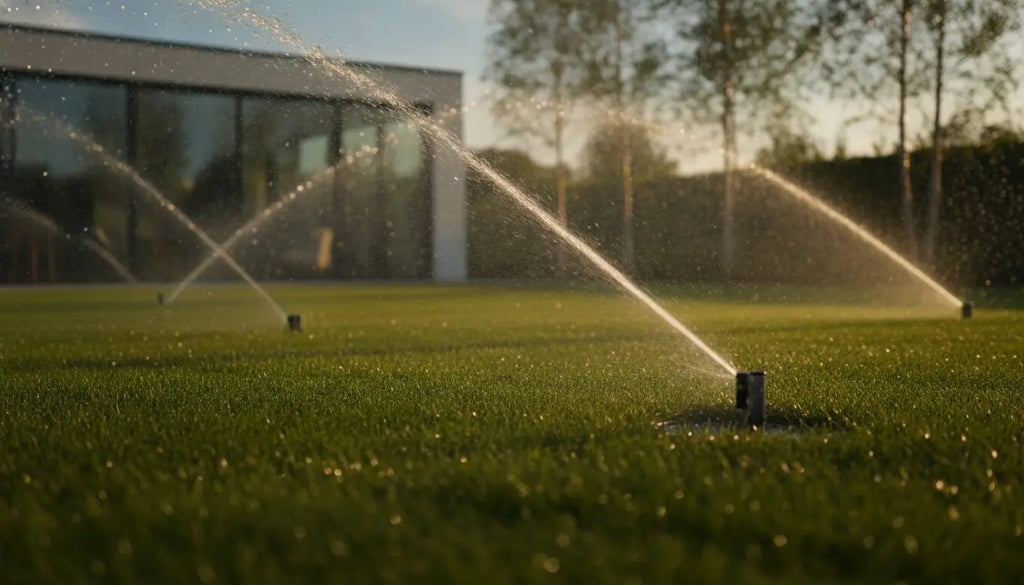
To understand why a garden transformation begins beneath the surface, we must look at the mechanics of modern watering. Pop Up Irrigation Systems are a sophisticated network of durable underground pipes connected to spring-loaded sprinkler heads that remain flush with the soil when not in use. This design means the components are invisible during the day, only emerging when the water pressure is activated to distribute a precise spray across your grass. You can explore the technical history and variations in what are irrigation sprinklers to see how these systems have evolved into essential residential assets. This setup ensures your lawn receives the exact amount of hydration it needs without the need for you to stand outside with a hose for hours.
To see exactly how these sprinkler heads function within a live environment, watch this helpful demonstration:
The Aesthetic Appeal of an Invisible System
A primary reason homeowners choose this setup is the immediate improvement in garden presentation. Traditional sprinklers often require long, tangled hoses that clutter the lawn and create unsightly yellow patches where they rest for too long. By contrast, a hidden system maintains the clean, sharp lines of a professionally landscaped garden. It also addresses a significant safety concern for families. By removing trailing pipes, you eliminate common trip hazards for children and pets playing outdoors. Even routine maintenance becomes far simpler. You don't need to move heavy equipment or drag hoses across the flowerbeds before you start mowing the grass. The mower simply glides over the retracted heads without any risk of causing damage to the system.
Automated Efficiency vs Manual Watering
Beyond aesthetics, these systems offer a level of horticultural precision that manual watering simply cannot match. When you integrate garden irrigation water timers, you can schedule your watering for the early hours of the morning, usually between 4 am and 6 am. This is the optimal time for lawn health because it allows water to soak deep into the root zone before the heat of the day causes evaporation. This targeted approach reduces water waste significantly while ensuring your grass stays vibrant and green even during the height of summer. This is why high-quality Pop Up Irrigation Systems are becoming the standard for homeowners who value both water conservation and a pristine landscape. By providing consistent, even coverage across every square inch, you prevent the stressed, dry patches that often occur when using hand-held sprayers or manual oscillating units. Pop-up irrigation is an automated, sub-surface solution for modern UK lawns that delivers a healthy, professional finish with minimal daily effort.
The Mechanics of Pop Up Sprinklers: From Pressure to Precision Nozzles
The reliability of Pop Up Irrigation Systems depends on a simple yet effective balance between water pressure and mechanical resistance. Inside every sprinkler unit sits a heavy-duty stainless steel spring. When you turn on your water supply, the resulting pressure overcomes the tension of this spring, forcing the internal riser to emerge from the ground. Once the water flow stops, the spring instantly pulls the riser back down below the soil line. This movement is the core of a "discreet" system; it ensures your garden hardware only appears when it has work to do. Understanding the specific components of a lawn sprinkling system is the first step toward building a setup that lasts for years rather than just a single season.
Every unit consists of two main parts: the sprinkler body and the interchangeable nozzle. The body is the outer shell buried in the soil, while the nozzle is the small component at the top of the riser that determines the spray pattern. This modular design is incredibly helpful for long-term maintenance. If a nozzle becomes blocked by lime scale or debris, you can simply unscrew it and fit a replacement without having to dig up the entire sprinkler body. High-quality systems also rely on a "wiper seal," a specialized gasket that cleans the riser as it retracts. This seal prevents grit and dirt from entering the body, which is a common cause of mechanical failure in cheaper, less robust models.
Understanding Sprinkler Bodies and Risers
Risers come in various heights to suit different types of turf and landscaping. A 4-inch riser is the standard choice for most UK lawns because it clears the height of the grass even if you've missed a week of mowing. Shorter 2-inch risers are sometimes used for very low-cut ornamental turf or along the edges of hard landscaping. Choosing the right height ensures the spray isn't blocked by the grass blades themselves. It's also vital to select bodies made from impact-resistant plastics. These materials withstand the constant dampness of UK soil and the weight of garden machinery passing over them. If you're ready to explore professional-grade hardware, you can view our full range of pop-up lawn sprinkler systems designed for durability.
Nozzles and Spray Patterns
The nozzle you choose dictates how effectively you cover your lawn. Adjustable arc nozzles are incredibly versatile, allowing you to set the watering radius anywhere from 0 to 360 degrees. This is ideal for curved borders or irregular garden shapes. For standard 90-degree corners or 180-degree edges, fixed arc nozzles offer a very stable and wind-resistant spray. The most important technical concept here is "matched precipitation." This ensures that every sprinkler in a specific zone delivers the same amount of water over a given area, regardless of whether it's spraying a full circle or a narrow wedge. This precision prevents some areas of your lawn from being flooded while others remain thirsty, resulting in the uniform, lush green carpet every gardener desires.
Pop Up vs Traditional Sprinklers: Making the Right Choice
Choosing between a portable sprinkler and Pop Up Irrigation Systems often comes down to how you value your time and the long-term health of your landscape. Traditional oscillating or pulsating sprinklers are inexpensive and easy to buy, but they demand constant attention. You have to drag them out, untangle the hose, and remember to move them frequently to avoid flooding one spot while leaving another parched. This manual approach rarely achieves the uniform "head-to-head" coverage that professionals recommend for a perfect lawn. By contrast, a hidden system provides a "set and forget" level of accuracy that ensures every blade of grass receives the same amount of water without you lifting a finger.
The initial investment for an underground system is naturally higher than a basic plastic sprinkler. However, you are trading a one-time setup effort for years of automated convenience and precision. Underground components are shielded from UV degradation and frost, which typically brittle and crack surface-level hoses over time. Expert guidance on irrigation system maintenance suggests that while these systems require a simple winterising routine, their lifespan far exceeds that of traditional portable units. When you consider the cost of replacing cheap sprinklers and the water wasted through inefficient manual spraying, Pop Up Irrigation Systems often prove to be the more economical choice over several seasons.
When to Choose a Pop Up System
If your lawn is medium-to-large in size, manual watering can quickly become an exhausting daily chore. These systems are also the ideal choice for new builds or major garden renovations. It is far more efficient to lay your pipework before the final turf is laid down, ensuring a clean finish without disturbing established grass. For homeowners who travel frequently, an automated system is a necessity rather than a luxury. It ensures your investment in your lawn is protected, even when you aren't there to monitor the weather or move a manual sprinkler around.
The Hozelock Advantage in Pop Up Technology
We've found that Hozelock automatic watering systems are particularly effective for UK gardens because of their user-friendly design. They focus on modularity, meaning their components are compatible with standard hose fittings you likely already own. This simplifies the DIY installation process significantly. By using a recognized brand with decades of UK presence, you gain access to a reliable ecosystem of garden watering kits and timers. This compatibility takes the guesswork out of planning, allowing you to build a high-performance system that integrates perfectly with your existing outdoor taps and connectors.

Planning Your System: Pressure Testing and Pipework Layout
Planning is the foundation of any successful Pop Up Irrigation Systems installation. Before you dig a single trench, you must understand your garden's hydraulic capacity. The most reliable way to do this is the "Bucket Test." Simply take a standard 10-litre bucket and time how long it takes to fill from your outside tap at full power. Divide the bucket's capacity by the number of seconds it took to fill, then multiply by 60 to find your flow rate in litres per minute (LPM). If it takes 30 seconds to fill a 10-litre bucket, your flow rate is 20 LPM. This figure is the "budget" you have for your sprinkler heads.
Once you know your flow rate, you can sketch your lawn. Professional designers always aim for "head-to-head" coverage to avoid dry spots. Head-to-head coverage means each sprinkler should reach the base of the next one. This overlap ensures that the area directly around the sprinkler head, which often receives less water, is covered by the throw of its neighbor. If your flow rate is too low to power all heads at once, you'll need to divide the system into "zones" using a multi-way water timer. This ensures each section receives full pressure for optimal performance.
Calculating Flow and Pressure
While the bucket test measures volume, a pressure gauge tells you the force behind it. Most UK residential taps provide between 2 and 4 bar of pressure. Higher pressure allows for longer pipe runs and more powerful nozzles, but you must account for friction loss. As water travels through pipes, it loses energy. Using a 25mm pipe instead of 20mm for your main supply line can significantly reduce this loss, ensuring your last sprinkler pops up with just as much vigor as the first one. Our specialists recommend 25mm for any run exceeding 25 metres to maintain consistent spray patterns.
Laying Out the Pipework
Your system will consist of a main line that stays under pressure and lateral lines that carry water to the sprinklers. To ensure a leak-free setup, use high-quality irrigation fitting adaptors to connect your pipework to valves and heads securely. When it's time to install, use a sharp spade to cut a "V" shaped trench in your turf. This method allows you to peel back the grass, lay the pipe, and replace the turf with almost no visible evidence of the work. If you need help choosing the right components for your specific flow rate, you can explore our complete garden watering kits that take the guesswork out of the planning process.
Maintaining and Winterising Your Irrigation Investment
Protecting your Pop Up Irrigation Systems from the elements ensures they remain a reliable asset for your garden for many years. While the underground components are naturally shielded from the sun's UV rays, they are still vulnerable to the expansion of freezing water during a typical UK winter. Neglecting this seasonal care can lead to hairline cracks in pipes or damage to the internal springs of your sprinkler heads. By following a simple maintenance routine, you can avoid avoidable repairs and keep your lawn looking its best through every season.
The most critical step in your maintenance calendar is winterising. Before the first hard frost arrives, you must clear all standing water from the pipework. Many systems include automatic drain valves at the lowest points of the line; these open when the pressure drops to let water seep into a gravel sump. If your layout doesn't have these, you can use a small air compressor to "blow out" the lines. This involves pushing low-pressure air through the system until the nozzles mist, indicating that the liquid has been cleared. It's a straightforward process that provides peace of mind when temperatures plummet.
Don't forget to inspect your control center during this time. We recommend removing the batteries from your garden irrigation water timers over the winter months to prevent corrosion. When spring returns, install fresh batteries and review your watering schedules. It's the perfect time to ensure your programmed run times still align with your lawn's needs after its dormant period.
Spring Start-Up and Summer Tuning
As you enter the growing season, perform a flush of the system. Remove the last nozzle on each line and run the water for a minute to clear any grit that may have settled over winter. Once reassembled, check that your spray patterns are still accurate. Plants grow and garden borders change; you might need to adjust the arcs of your nozzles to ensure you aren't watering the fence or the patio. This is also a good moment to check the wiper seals on each riser for wear, ensuring they still keep debris out of the sprinkler body effectively.
Expert Advice for Long-Term Success
Choosing Hozelock watering kits provides a distinct advantage because every component is engineered for total compatibility. This eliminates the frustration of mismatched threads or leaking adaptors. At Garden Watering, we bring 15 years of specialist expertise to help you build and maintain Pop Up Irrigation Systems that work perfectly for your specific landscape. If you're ready to upgrade your garden, browse our full range of pop-up lawn sprinkler systems and start planning your dream lawn today.
Achieve a Vibrant Lawn with Invisible Precision
Investing in Pop Up Irrigation Systems is more than just a garden upgrade; it's a commitment to long-term lawn health and personal convenience. By choosing a hidden, automated solution, you eliminate the daily struggle with tangled hoses while ensuring every inch of your grass receives the precise hydration it needs. We've seen how proper pressure testing and head-to-head coverage form the foundations of a professional finish. These steps, combined with a simple winterising routine, ensure your system remains a high-performance asset for many years to come.
At Garden Watering, we bring over 15 years of irrigation expertise to help you get it right the first time. Our team provides specialist Hozelock advice to ensure you select the components that match your garden's specific flow rate. We also offer comprehensive kits that take the complexity out of a DIY setup. Shop our expert-selected Pop-Up Sprinkler Systems today and take the first step toward an effortlessly green landscape. You're just a few steps away from a garden that stays vibrant all summer long with minimal effort.
Frequently Asked Questions
Can I install a pop-up sprinkler system myself?
Yes, you can certainly install Pop Up Irrigation Systems yourself without professional help. Most modern kits use push-fit connectors that require no specialist tools or plumbing experience. By using a simple spade to cut a narrow "V" trench, you can lay the pipework with minimal disruption to your existing grass. It's a manageable weekend project for most homeowners who follow a clear design plan and flow rate calculation.
How many pop-up sprinklers can I run off one UK outside tap?
The number of sprinklers depends entirely on your flow rate, which you measure using the bucket test mentioned earlier. On a typical UK tap with a flow of 20 litres per minute, you can usually run two to four sprinklers simultaneously. If your garden requires more heads to achieve full coverage, you simply split the system into multiple zones that run at different times using an automated water timer.
Do pop-up sprinklers work with low water pressure?
They do work with lower pressure, but you must adapt your design to suit the available flow. You might need to use fewer sprinklers per zone or select specialized nozzles designed for lower bar ratings. In cases of very low pressure, splitting the lawn into smaller, more frequent watering zones ensures each sprinkler head still pops up and retracts reliably without losing spray distance.
How deep should I bury the irrigation pipes for a pop-up system?
You should aim to bury your pipes approximately 15cm to 20cm below the surface. This depth is sufficient to protect the pipework from garden forks and aerators while making the initial trenching process relatively easy. It also ensures the sprinkler body sits flush with the soil level, allowing your lawnmower to pass safely over the top without any risk of catching the heads or damaging the system.
Will my pop-up sprinklers freeze and burst in the winter?
Pipes can burst if water is left inside during a hard freeze, but this is easily prevented with proper seasonal care. Installing automatic drain valves at the lowest points of your Pop Up Irrigation Systems allows water to exit the pipes when the pressure is turned off. For extra security in colder regions, you can use low-pressure compressed air to clear the lines before the first frost arrives in autumn.
What is the best time of day to set my pop-up system to run?
The optimal time to water your lawn is between 4 am and 6 am. Watering during these early hours ensures the moisture reaches the roots before the sun rises and causes excessive evaporation. It also prevents the grass from staying wet overnight, which can sometimes encourage fungal growth. An automated timer makes this early morning schedule easy to maintain without you having to wake up.
How much does a pop-up irrigation system cost to run?
Running costs are generally very low and consist almost entirely of the water used during each cycle. Because these systems target the lawn so precisely, they often use less water than a manual hose or an inefficient oscillating sprinkler. By using smart timers that skip cycles during rainy weather, you can significantly reduce your water usage while keeping your landscape in peak condition throughout the summer.
Do I need a professional to design my lawn irrigation layout?
`-
Posted in
Automated Watering, DIY Irrigation, Garden Watering, Hozelock, Lawn Care, Pop Up Irrigation, Pop Up Irrigation Systems, Sprinkler Systems, Water Conservation