Automatic Watering for UK Raised Vegetable Beds
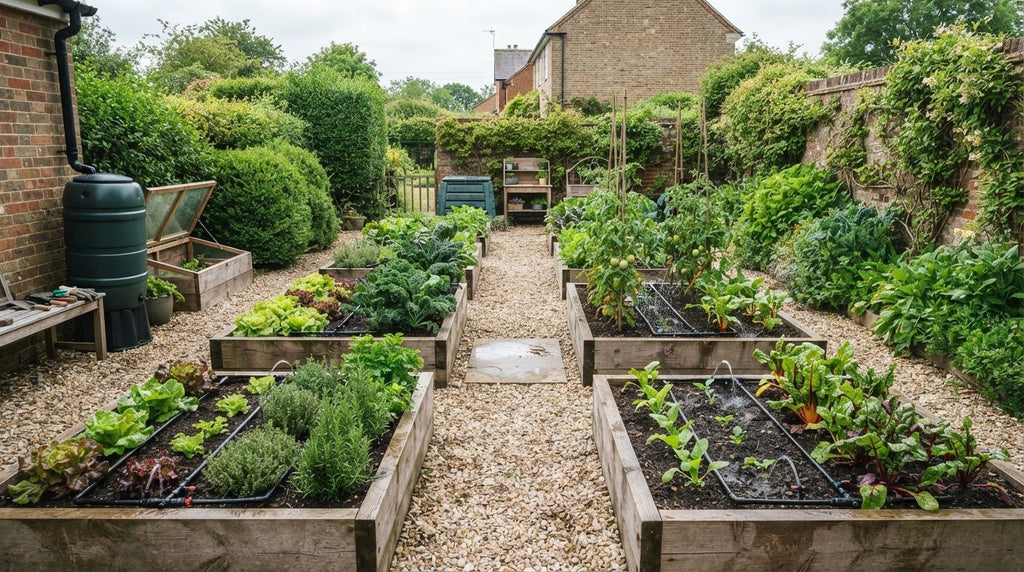
What if the key to evenly watered beds isn’t a more complicated timer, but a better layout? Hand watering takes time, especially during busy or dry spells, and it’s not always obvious how to size a system for beds with different crops. A practical approach to automatic watering for raised vegetable beds uk gardeners can use starts with the bed shape and planting plan, not the kit box.
This guide explains how to choose a watering method, map zones around your beds and position outlets to suit the planting layout. You’ll also learn how to match equipment to your plan and check that water reaches the right areas. Raised beds can dry out faster than surrounding ground, so adjust the schedule to rainfall, temperature and soil conditions. A well-planned system makes routine watering easier to manage, while still leaving you in control.
Key Takeaways
- Plan automatic watering for raised vegetable beds uk around bed dimensions, crop needs and planting rows before selecting equipment.
- Estimate pipe runs from your layout, then group crops with similar watering needs into practical zones.
- Compare drip lines, adjustable drippers and micro-jets by how they deliver water and the coverage your beds need. Never mix drip and micro-jets on the same pipe run.
- Test coverage and soil moisture before relying on a timer, then adjust watering to rainfall, temperature and crop growth.
- Match kit capacity to your plant count and layout. The Claber Orto Drip Kit 90767 is designed for up to 60 plants across six zones, and its compatible timer is not included.
Why raised vegetable beds benefit from a planned automatic watering system
Keeping several raised beds evenly watered can become a daily chore during a busy week or a dry spell. One bed may hold closely spaced salad crops, another larger plants with more room between them, and a third newly sown rows that need careful attention. Automatic watering for raised vegetable beds uk gardeners can rely on starts with delivering water where each crop needs it, rather than treating every bed as identical.
An automatic watering system uses a timer to control water delivery through pipes and outlets routed towards the beds. With drip irrigation, water is applied slowly near the soil, close to plant roots. You can plan the layout around the beds, crops and available timer. For a timer-controlled setup, explore Hozelock automatic watering systems.
Consistent delivery is not the same as a weather-proof schedule. A timer repeats a routine, but you still need to adjust it as conditions change.
What makes raised-bed watering different?
Bed depth, soil mix and drainage affect how long moisture remains available to roots. A deep bed with moisture-retentive soil may behave differently from a shallow bed with a free-draining mix. Sun, wind and the bed’s position also influence how quickly it dries, so neighbouring beds can need different watering even when they are similar in size.
Planting pattern matters too. Closely spaced salad crops may suit outlets arranged along a row, while a courgette or other larger plant needs water delivered near its own root area. Separate beds or crop groups can benefit from separate watering zones, so one bed’s routine does not dictate how much water another receives.
When does automatic watering make sense?
Automation can be useful if you’re managing several beds, short on time or regularly away from the garden. A timer repeats a planned routine, so watering doesn’t depend entirely on remembering to do it by hand. A carefully routed drip system can also make it easier to manage beds with different planting arrangements.
The system still needs your attention. Check the soil and plants to see whether the routine is delivering enough water, particularly after rainfall or a change in temperature. Hand watering remains useful for new sowings and occasional targeted attention to an individual plant. Treat the timer as a starting point, not a replacement for observing your beds.
Planning first makes it easier to choose suitable drip irrigation systems and match the pipework to your layout. Measure each bed and map where water needs to reach before deciding how to divide the system into zones.
How to plan drip irrigation for raised vegetable beds
A clear layout helps you choose equipment that fits your beds and avoid awkward pipe runs or outlets that miss the plants. Before assembling automatic watering for raised vegetable beds uk gardens, sketch the layout and plan each zone around the crops it will serve.
A watering zone is a separately controlled section of the layout, grouped so its plants can receive a suitable watering routine.
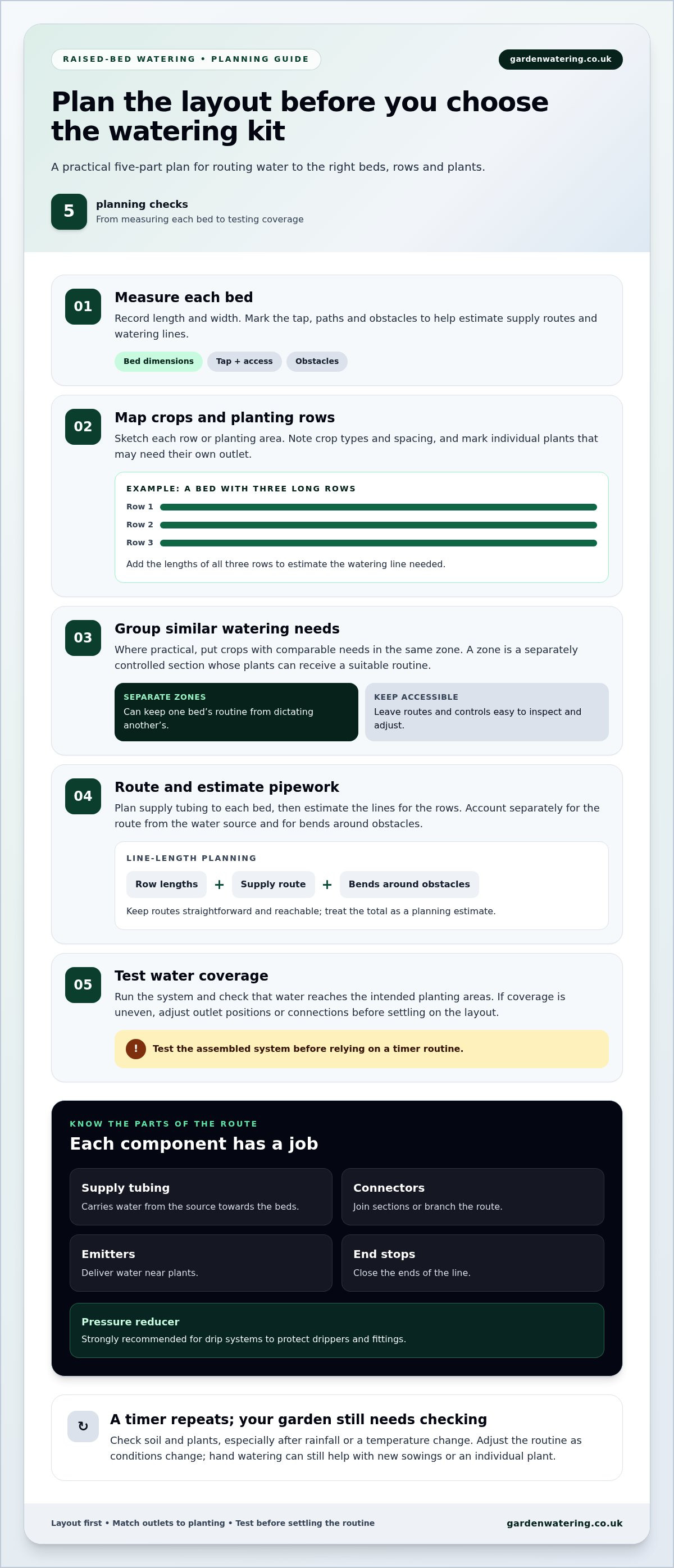
- Measure each bed. Record its length and width, then note where the tap, paths and obstacles sit. These measurements help estimate the supply route and watering lines.
- Map the crops. Sketch each row or planting area, noting crop types and spacing. Mark individual plants where outlets may need to be positioned separately.
- Group similar needs. Put crops with comparable watering requirements in the same zone where practical. Keep routes and controls accessible so you can inspect or adjust them without disturbing plants.
- Route the pipework. Plan how supply tubing will reach each bed, then estimate the line length needed for the rows. Account for paths and obstacles, and avoid routes that will be difficult to reach.
- Test the layout. Run the system and check that water reaches the intended planting areas. Adjust outlet positions or connections if coverage is uneven.
Map beds, crop rows and water routes
Draw a simple plan showing the tap, each bed, paths, crop rows and fixed obstacles such as a shed or greenhouse. For a bed with three long rows, add the length of all three rows to estimate the watering line needed, then account separately for the route from the supply tubing to the beds. Individual plants at varied spacing may be better served by adjustable drippers placed close to each root area. Longer, continuous rows can suit drip-line runs. Your sketch makes these choices clear before you cut or connect anything.
Choose fittings, pressure control and layout
Supply tubing carries water from the source towards the beds. Connectors join sections or branch the route, emitters deliver water near plants, and end stops close the line ends. A pressure reducer is strongly recommended for drip systems to protect drippers and fittings. Garden Watering recommends the Hozelock universal pressure reducer. Keep the layout straightforward and accessible, with connections you can inspect. Explore drip irrigation systems to compare components for your plan.
To estimate line length, count the planned rows and multiply each row’s length by the number of runs serving it. Add the separate supply route from the water source, plus the length needed to follow bends around obstacles. Treat this as a planning estimate, then test the assembled layout before settling on the final positions.
Drip lines, adjustable drippers or micro-jets: which suits your beds?
The right outlet depends on how your vegetables are planted and where you want water to land. To tailor automatic watering for raised vegetable beds uk growers can compare delivery patterns and practical trade-offs before choosing a method.
| Method | Delivery pattern | Suitable bed layout | Main practical trade-off |
|---|---|---|---|
| Drip line | Delivers water along a line close to the soil. | Long, planted rows or areas with a continuous planting pattern. | Best suited to defined runs; less adaptable where plants are scattered or spaced unevenly. |
| Adjustable drippers | Deliver water at individual outlets that can be positioned near plants. | Separated plants, varied spacing or beds with distinct planting points. | Each outlet needs positioning and adjustment, so a layout with many individual plants may take more attention. |
| Micro-jets | Distribute water over a wider area. | Areas where broader coverage is useful rather than a targeted outlet for each plant. | They use more water than drip irrigation and have a different flow rate. |
When are drip lines or adjustable drippers the better fit?
Choose drip lines where crops grow in clear rows and a continuous watering route makes sense. In a bed with several closely spaced rows, a line can follow each row. Adjustable drippers suit plants set apart from one another or beds where spacing varies. Position an outlet near each plant’s root area, then adjust its delivery to suit the layout. Individual adjustment offers flexibility, but it doesn’t guarantee identical moisture throughout the bed.
For a mixed layout, consider whether a row-based line or separately placed outlets will be easier to inspect and maintain as plants grow. The drip irrigation systems range can help you compare components for a targeted watering arrangement.
When should you consider micro-jets instead?
Micro-jets spread water over a wider area than a drip outlet, which may suit a bed where broader coverage is useful. They use more water than drip irrigation, so consider whether that extra coverage suits the planting arrangement. Check where the water lands and whether it reaches the areas you intend to water.
Never mix drip and micro-jets on the same pipe run. They operate at different flow rates, so combining them on one run can lead to an unsuitable delivery pattern. If both types are needed in the same garden, plan separate pipe runs for each. This keeps the layout organised and makes it easier to assess and adjust each method independently.
There’s no single best choice for every raised bed. Match the delivery method to the planting pattern, then test coverage before settling on how the system runs. A simple row layout often points towards drip line; scattered plants may call for adjustable drippers, while micro-jets are an option for wider coverage.
Set watering times, test coverage and adapt to UK weather
A timer makes a routine repeatable, but the right run time depends on what’s happening in the beds. Before relying on a programme, test the system and check that water reaches the root areas you intended. Use this sequence:
- Run the system. Start with a short test while you can observe the whole layout.
- Watch the outlets. Look for leaks, blocked emitters or water landing away from plants.
- Inspect the soil. Check around representative plants in each bed, including near the start and end of each line.
- Adjust the setup. Move emitters, clear blockages or alter the layout if coverage is uneven.
- Recheck after changes. Run the system again, then inspect the soil to see whether the adjustments improved delivery.
How can you tell whether every bed is receiving water?
Stay nearby during a test and compare what happens at different points along each line. Don’t assume the first and last outlets deliver the same amount. Check the soil around plants rather than judging only by a wet surface. If the root area remains dry, reposition the outlet or review the line. Repeat the check across beds, since a clear result in one zone doesn’t confirm that every other bed is receiving water as intended.
Include a quick visual inspection in your routine. Check connections for leaks and look for emitters that have become blocked, shifted or covered as plants grow. If one section seems drier than the rest, inspect it before increasing the timer setting for the whole system.
How should watering change through the UK growing season?
Rainfall, temperature, crop stage and soil moisture all affect how often beds need water. During a rainy spell, you may need less scheduled watering; in a dry, warm period, check soil more often. Newly established plants and mature crops may also have different needs. Treat the timer programme as adjustable, not as a season-long setting, and use soil condition and plant appearance to guide changes.
Drip irrigation is generally exempt from hosepipe bans, but this isn’t a blanket rule. Requirements can vary by water company and may depend on how the system is set up. Check current restrictions and guidance from your local water company before relying on an exemption. Follow local advice, and adjust watering to actual conditions rather than a seasonal assumption.
Once the system is tested, note the timer setting and when you last checked the beds. This gives you a baseline to compare after rainfall, a warm spell or a change in crop growth. If you’re choosing a timer for your layout, explore garden irrigation water timers to find an option suited to your setup.
Choose a raised-bed watering kit that fits your garden
Choose a kit by matching its capacity and layout to the garden you have, rather than buying on plant count alone. For automatic watering for raised vegetable beds uk gardens, consider how many beds need watering, how plants are arranged and whether different crops should be watered in separate sections.
- Bed count: Note how many beds the system needs to reach and how far each is from the water source.
- Plant count: Count the plants you want to water, then compare that figure with the kit’s stated capacity.
- Line layout: Consider whether your crops grow in rows or are spaced individually, and how the pipework will reach them.
- Outlet adjustment: Adjustable emitters can help tailor delivery to plants with different spacing.
- Timer needs: Decide whether you need a timer and check whether it’s supplied or purchased separately.
Use your bed sketch and crop map to check that the kit’s zones and outlet arrangement suit your planting plan. A kit’s maximum plant capacity is a useful guide, but layout matters too: plants spread across separate beds may need a different arrangement from the same number grouped together.
When might the Claber Orto Drip Kit suit a vegetable garden?
The Claber Orto Drip Kit 90767 is designed for vegetable gardens and waters up to 60 plants across six zones. Its six shut-off valves allow the zones to be controlled separately, while adjustable emitters let you position outlets for your planting arrangement.
The kit is compatible with a timer, but the timer isn’t included. Factor that into your equipment plan if you want timer-controlled watering. The Orto kit also carries a two-year manufacturer’s warranty.
Where can you compare suitable watering options?
Compare Claber drip irrigation kits with the number of plants and zones in your plan. For another system range, Hozelock watering systems offer options to explore. Match the equipment to your bed layout, outlet needs and timer preference.
With those details in hand, you can narrow the options to a system that suits your raised beds and the way you grow. Find a watering system for your raised beds and compare options for your garden.
Take the next step towards simpler bed watering
Turn your garden plan into a practical system choice. Use your bed layout and planting pattern to decide what needs watering, then consider how you’ll adjust the routine as weather and growing conditions change. Planning ahead makes automatic watering for raised vegetable beds uk gardeners choose easier to manage through the growing season.
Garden Watering specialises in automatic garden watering and irrigation systems, with over 15 years of experience helping customers choose products for their gardens. Explore the range to find a setup that fits your beds and planting plan.
Explore watering systems for your raised beds and choose the next step for your garden.
Frequently Asked Questions
Is drip irrigation usually exempt from UK hosepipe bans?
Drip irrigation is generally exempt, but the rules depend on your water company and the restriction in force. Before using a system during a ban, check your supplier’s current guidance for your area. Don’t assume that an exemption applies everywhere or that it will remain unchanged during a dry period. Follow any conditions set out in local guidance.
How often should I water raised vegetable beds with an automatic system?
There’s no single schedule that suits every bed. For automatic watering for raised vegetable beds uk growers should use the timer setting as a starting point, then check soil moisture and consider rainfall, temperature, crop stage and how quickly the growing mix drains. After prolonged rain, inspect the soil before the next timed run rather than assuming the usual programme is still needed.
Can one watering system serve raised beds of different sizes?
Yes, a system can be planned for several beds, provided its capacity and layout suit the job. Count the plants, measure the bed rows and consider whether separate sections need different control. A long bed of closely spaced crops may need a different line arrangement from a smaller bed with scattered plants. Check the kit’s stated plant and zone capacity before selecting it.
Do I need a pressure reducer for a raised-bed drip system?
A pressure reducer is strongly recommended for drip systems to help protect drippers and fittings. Garden Watering recommends the Hozelock universal pressure reducer. Include pressure control in your plan, then follow the instructions for the specific kit you choose. Components can vary between systems, so check what your selected kit includes rather than assuming a reducer or other fitting is supplied.
Can I leave an automatic watering system running while I am away?
A timer can run a planned programme while you’re away, but it won’t respond to every change in weather or detect every problem. Before leaving, run the system, inspect connections and confirm water reaches each bed. For a longer absence, ask someone to check the garden if possible. They can spot a leak, blocked outlet or unexpected dry spell that a timer can’t assess.
Will an automatic watering system remove the need to water by hand?
No, keep hand watering available for jobs the system may not cover well. New sowings may need gentle attention at the soil surface, while a newly planted crop or an individual plant can need targeted care. Check how plants and soil are responding, especially after changing the layout or weather. Automation makes routine watering more manageable, but it doesn’t guarantee every plant always gets the right amount.
`-
Posted in
allotment watering, automatic watering, automatic watering for raised vegetable beds uk, drip irrigation, garden irrigation uk, raised bed gardening, vegetable gardening, watering kits