How to Water a Long Narrow Garden and Check Soil Moisture
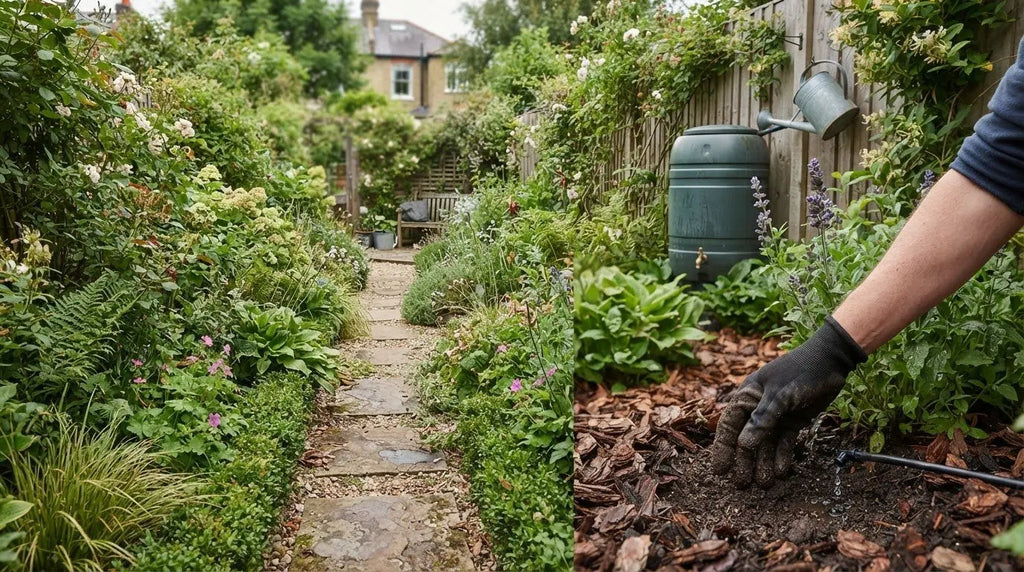
Yes, washing-up water can be used on ornamental plants, and collected rainwater can also help water the garden. To learn how to water a long narrow garden effectively, run drip irrigation along planted borders and check the soil before watering again. This helps moisture reach the roots without leaving the ground waterlogged.
Long borders can dry unevenly, particularly if water is applied at one end or runs off before soaking in. Slow, plant-level watering directs moisture where it is needed, while mulch helps the soil retain it.
This guide explains how to position drip lines, use collected water and apply mulch to conserve moisture. It also shows how to check soil dampness and adjust watering if water pools or the ground is already moist.
Key Takeaways
- Run drip lines beside planted borders to deliver water near roots, and plan the route around a practical path on one side of a narrow plot.
- Apply mulch at least 5 cm thick; the RHS recommends laying it from November to February.
- Choose a watering method to suit the planting, and reuse washing-up water on ornamental plants or collect rainwater for garden use.
- Check the soil about 2 inches down before watering, then soak borders slowly until moisture reaches around 15 cm deep.
Drip-line irrigation for long runs of planting
Map the planted border, then route drip lines along its length. In a narrow plot, keep the path accessible and direct water to the plants.
-
Set up drip lines for even watering
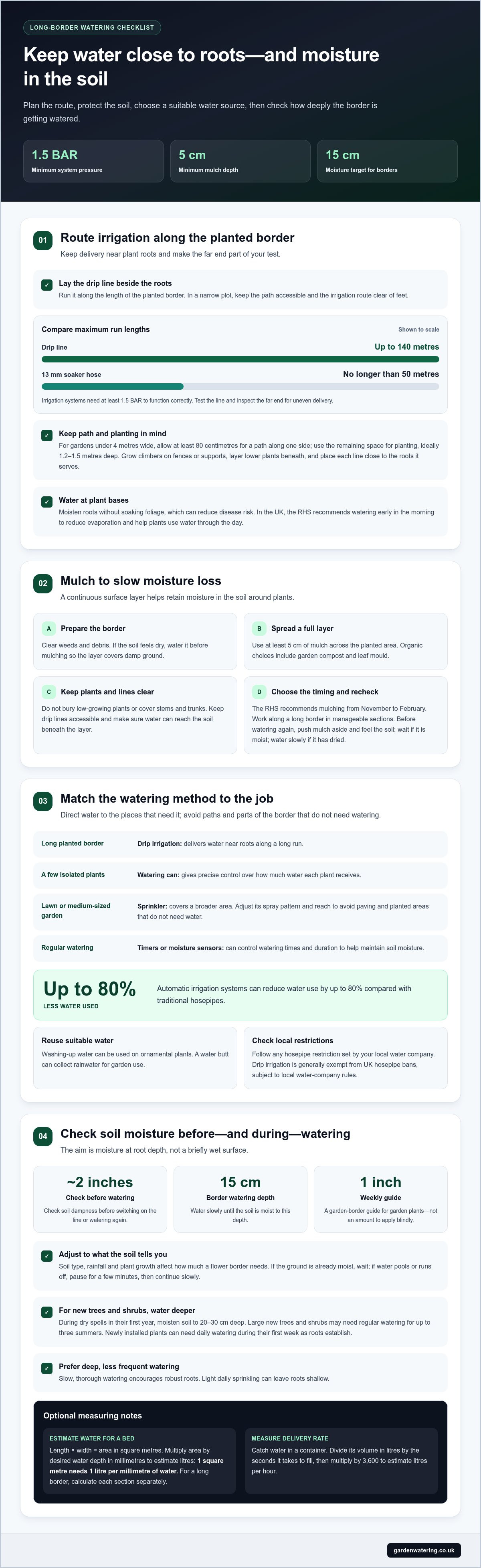
Lay the line beside plant roots and check pressure before running it. Irrigation systems need at least 1.5 BAR to function correctly. Drip line can run up to 140 metres, while 13 mm soaker hose should be no longer than 50 metres. For a long run, inspect the far end during a test so you can spot uneven delivery.
-
Maintain consistent soil moisture
Water at plant bases to moisten roots without soaking foliage, which can reduce disease risk. In the UK, water early in the morning; the RHS recommends this to reduce evaporation and help plants use water through the day. Check the soil before switching on the line, and adjust watering if the ground is already moist or water pools.
- Plan a narrow garden path along one side, leaving the opposite border for planting. For gardens under 4 metres wide, allow at least 80 centimetres for the path and use the remaining space for deeper planting, ideally 1.2-1.5 metres deep. Keep the route clear of irrigation lines to avoid stepping on them.
- Water newly planted trees and shrubs regularly during dry spells in their first year. Moisten soil to 20-30 cm deep; large new trees and shrubs may need regular watering for up to three summers. Newly installed plants can need daily watering during their first week as roots establish.
- Grow climbers on fences or supports to add planting without narrowing the path. Layer lower plants beneath them, and position each drip line close to the roots it serves.
Mulching to conserve moisture
- Clear weeds and debris from the border before spreading mulch. If the soil feels dry, water it first so the mulch covers damp ground. This helps retain moisture delivered to plant roots.
- Spread mulch across the soil surface at least 5 cm thick. The RHS defines mulch as a surface layer at least 5 cm thick. Cover the planted area evenly, taking care not to bury low-growing plants or block access to drip lines.
- Choose an organic material, such as garden compost or leaf mould, and spread it around the plants. A continuous layer helps reduce moisture loss from exposed soil. Keep mulch away from plant stems and trunks so it does not cover the point where growth emerges.
- Plan the main mulching job for late autumn to late winter. The RHS recommends applying mulch from November to February. In a long border, work in manageable sections to spread an even layer without gaps.
- Check the soil beneath the mulch before watering again. Push the mulch aside and feel the soil: a dry-looking surface can conceal damp ground. If the soil is still moist, wait. If it has dried, water the border slowly before replacing the mulch.
- Keep drip lines accessible when mulching a narrow border, and check that water can reach the soil beneath the layer. For a border that needs targeted watering, explore drip irrigation systems as a way to deliver water near plants while mulch helps conserve moisture.
Selecting water-efficient watering methods
- Match the method to the planting. Drip irrigation delivers water near the roots along a long border, while a watering can gives precise control for a few isolated plants. The best method for how to water a long narrow garden effectively depends on what needs watering and where it is.
- Use a watering can for small, targeted jobs. A watering can lets you control how much water each plant receives, while sprinklers can cover a broader area. Direct water onto the soil around plants, not onto empty paths or bare parts of the border.
- Choose a sprinkler for a lawn or medium-sized garden where broader coverage is useful. Adjust its spray pattern and reach to avoid paving and planted areas that do not need water. In mixed planting, separate areas by plant type and watering needs.
- Consider timers or moisture sensors where regular watering is needed. These can help maintain soil moisture by controlling watering times and duration. Automatic irrigation systems can reduce water use by up to 80% compared with traditional hosepipes.
- Use suitable recycled water to reduce reliance on mains water. Washing-up water can be used on ornamental plants, while a water butt can collect rainwater for garden use. Choose the source and method according to the plants being watered.
- Follow any hosepipe restriction set by your local water company. Drip irrigation is generally exempt from UK hosepipe bans, subject to local water-company rules. To decide how to water a long narrow garden effectively during restrictions, use a permitted method and apply water only where plants need it.
Watering borders thoroughly and checking soil moisture
Water the root zone, not just the surface. Check soil moisture before each session, then adjust the amount and frequency to suit the bed.
-
Calculate water needs for the bed
Measure the bed’s length and width, then multiply them to find its area in square metres. Multiply the area by the desired water depth in millimetres to estimate litres: one square metre needs one litre for each millimetre of water. For a long border, calculate each section separately so the total reflects the planted area.
To measure delivery, catch water in a container. Divide its volume in litres by the seconds it takes to fill, then multiply by 3,600 to estimate litres per hour.
-
Water borders thoroughly
Water slowly until the soil is moist to a depth of 15 cm. A garden-border guide is 1 inch of water a week for garden plants, but check the soil rather than applying that amount blindly. Soil type, rainfall and plant growth affect how much a particular flower border needs.
If water pools or runs off, pause for a few minutes to let the soil absorb it, then continue slowly. Deep, less frequent watering encourages robust roots, unlike light daily sprinkling, which can leave roots shallow.
-
Check soil moisture and watering frequency
Push a finger about 2 inches into the soil before watering. If it feels moist, wait; if it feels dry, water and check again at root depth. In the UK, there is no single schedule for every border: soil moisture and plant needs should guide how often you water.
For annual flowers, check whether soil is damp at 15 cm and water if it is dry. Keep leafy crops such as lettuce and spinach evenly moist, while established trees, shrubs and herbaceous perennials generally need water only in extreme drought.
Garden Watering: Hozelock Automatic Watering Systems
Garden Watering can help you choose products for steady, targeted coverage along a long border. Consider Drip Irrigation Systems for planted runs, or Hozelock Automatic Watering Systems and Garden Watering Kits for a broader setup. Popup Sprinkler Systems may suit areas that need overhead coverage, such as lawns.
Choose a system to suit your garden layout, planting and watering routine. Contact Garden Watering for advice on selecting the right watering products.
Make your next watering choice with confidence
To choose how to water a long narrow garden effectively, start with the areas your setup needs to reach. Consider which borders need targeted watering, whether a lawn needs broader coverage, and how you want to manage regular watering. These details help identify a system suited to your garden’s layout and routine.
Garden Watering offers Hozelock Automatic Watering Systems, Drip Irrigation Systems and Popup Sprinkler Systems. If you’re weighing up the options, share your garden’s watering needs and ask for product advice. Contact Garden Watering for advice and take the next step towards a setup that works for your space.
Frequently Asked Questions
Which method should I use?
For a long, mostly planted border, choose drip irrigation; use a sprinkler when lawn coverage is the main need. If your garden has both, keep the methods on separate pipe runs. Drip outlets and micro-jets have different flow rates, so combining them on one run can cause uneven watering. For a few pots or isolated plants, hand watering gives direct control.
Can you use rainwater butts to water a long narrow garden, and what size do you need?
Yes, a water butt can collect rainwater for garden use. No specific size is given; choose the source and watering method according to the plants being watered.
`-
Posted in
drip irrigation, garden borders, garden watering, how to water a long narrow garden effectively, long narrow garden, mulching tips, soil moisture, water conservation