Best Way to Water Hanging Baskets Automatically: A Practical UK Guide
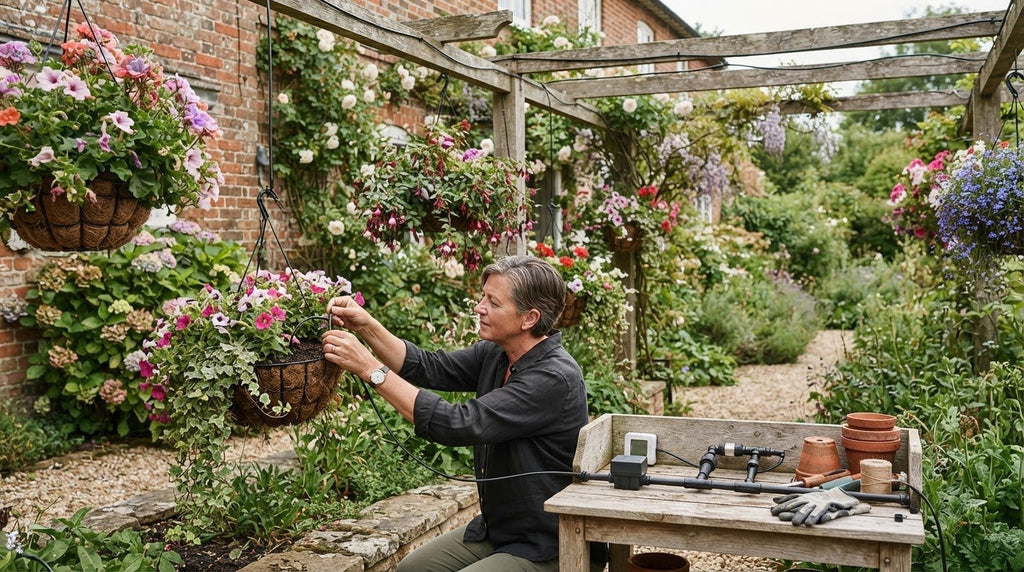
What if the best way to water hanging baskets automatically involves more than adding a timer? Baskets can dry out quickly in warm or windy weather, and high or awkwardly placed ones are easy to miss. The key is to match water delivery to each basket so moisture reaches the compost around the roots.
A drip-based setup is a practical option: drippers direct water into the baskets, while a timer helps keep watering consistent without daily hand-watering. The layout matters too. If several baskets share a line, plan an outlet for each one and check that the water reaches the compost. With over 15 years of experience advising on automatic watering, Garden Watering can help you choose components for your garden.
This guide explains how to choose drippers and a timer, plan pipework for one or several baskets, and adjust watering as the weather and plants change. You’ll also learn why a pressure reducer is strongly recommended for drip systems and what to bear in mind if local hosepipe restrictions apply.
Key Takeaways
- The best way to water hanging baskets automatically depends on their number, spacing and access, not just the timer you choose.
- Compare hand-watering, timed drip and micro-jets to find a delivery method that suits your basket layout.
- Map each basket before routing tubing, then test delivery and adjust it so water reaches the compost where it’s needed.
- Use a pressure reducer with a drip system, and keep drip and micro-jets on separate pipe runs.
- Review your watering routine as weather and plant needs change, and follow local water-company rules during restrictions.
Why hanging baskets need a more dependable automatic watering method
A hanging basket can dry out before you get a chance to water it again. Its compost is exposed to sun and wind, and reaching baskets hung high on a wall or porch can make repeated hand-watering awkward. With several baskets, remembering each one can quickly become another daily job.
Automatic basket watering delivers water through a system on a schedule or under controlled settings, rather than relying on a watering can each time. A timer helps make watering more consistent, while the delivery points determine where the water goes. The aim is to keep compost around the roots suitably moist, not to follow one fixed schedule regardless of conditions.
Drip delivers water slowly at selected points near the roots; micro-jets spray water over a wider area. That difference helps you choose a method based on the basket and its position. The drip irrigation overview explains the approach and its components, while a dedicated drip irrigation system can provide a starting point for a targeted basket setup.
Why hanging baskets dry out faster than many garden beds
A basket holds a limited volume of compost, so it has less moisture available between watering sessions than a larger garden bed. Sun and wind add to the challenge: a basket in an exposed spot can dry differently from one in a sheltered position. Plant growth matters too. A full basket with established plants may use its available moisture differently from a newly planted one.
Rather than assume every basket needs the same amount, check the compost and observe the plants. Notice whether the compost feels dry and whether the plants appear stressed, then consider the basket’s position and recent weather. These checks give you a more useful basis for adjusting watering than a universal timetable.
What automatic watering can and cannot solve
Automation reduces the need to remember every watering session, which is especially helpful when baskets are awkward to reach or grouped around the garden. A timer controls when water is delivered, but it can’t fix a layout that misses a basket or an outlet that is blocked.
After setting up a system, check that water reaches the compost in each basket. Adjust the timing or delivery as weather, plant growth and basket conditions change. Automatic watering still benefits from occasional attention.
The best way to water hanging baskets automatically is therefore a matched setup, not simply a timer: choose delivery that suits the basket layout, then use plant and compost checks to fine-tune it over time.
How drip irrigation and timers deliver water to hanging baskets
A timed watering system moves water from its source through connected components to each basket. The timer controls when a compatible system runs; supply tubing carries water along the route, and feeder tubes take it to individual outlets. At each basket, a dripper releases water slowly into the compost near the roots, directing delivery rather than spraying a wider area.
A drip emitter is an outlet that releases water in a controlled way at a selected point, directing moisture towards a plant’s root zone. Position it so water can enter the compost, rather than trickling outside the basket or onto foliage. This targeted approach is useful when you want to water individual baskets along a tubing run.
What the timer, tubing and drippers each do
Think of the system as a route with a control point. Water passes through the timer when it runs, travels along the main supply tubing, then reaches basket-level outlets through feeder tubing. The timer sets the watering schedule, while the tubing layout determines which baskets receive water. Drippers provide the final, targeted delivery, but the amount each basket needs depends on its plants and conditions.
For example, tubing can follow a wall or support and branch towards baskets at different points. Check that every branch reaches its intended basket and that each outlet sits where water can soak into the compost. A timer can control when watering starts and how long the system runs, but it can’t make up for a route that misses a basket. Test the delivery and adjust it based on what you observe.
A pressure reducer is strongly recommended for drip systems to help protect drippers and fittings from excessive pressure. Include it in the system plan rather than treating it as an optional detail. Choosing compatible components helps the system deliver water as intended.
Drip delivery or micro-jets: choose one method per pipe run
Drippers release water at selected points near plant roots. Micro-jets spray water over a wider area and use more water than drip delivery. Choose based on whether you want targeted watering into basket compost or broader coverage around plants.
Never mix drip and micro-jets on the same pipe run. They operate at different flow rates, so combining them on one run can result in uneven delivery. If your garden needs both methods, keep them on separate pipe runs. For a targeted basket setup, explore drip irrigation systems as a practical starting point.
The best way to water hanging baskets automatically is to match the timer, tubing and outlets to the positions of the baskets, then check the system in operation. A timer provides scheduled control, but the delivery points still need to serve each basket. Garden Watering’s experience advising on automatic watering can help you choose components that work together for your layout.
Which automatic watering approach suits your basket layout?
The right setup depends on more than how many baskets you own. Consider how far apart they are, whether you can reach them easily, and whether they receive similar amounts of sun and wind. One accessible basket may be straightforward to water by hand, while several baskets at different heights or along a long wall can benefit from planned tubing and timed delivery.
The best layout follows the positions of your baskets and their watering needs. Use this comparison to narrow down the approach, then consider how it fits your garden.
| Approach | May suit | Keep in mind |
|---|---|---|
| Hand-watering | One accessible basket or a small number of baskets close together | You need to remember each session and reach every basket. |
| Timed drip | Several baskets where targeted delivery to the compost is useful | Plan tubing and outlets around every basket; check delivery after setup. |
| Micro-jets | Situations where wider-area spraying is preferred | They use more water than drip delivery and must be on a separate pipe run from drippers. |
One basket, several baskets or a longer run
For one easy-to-reach basket, hand-watering may remain practical. If you want scheduled delivery, an automatic watering point can reduce the need to carry a watering can each time. With several baskets, sketch their positions first, then plan how tubing can reach each one without leaving an outlet short of its target.
For baskets spaced along a porch or across a garden, choose a route that is practical to access and inspect. Don’t assume a longer line will suit every arrangement without adjustment. The best way to water hanging baskets automatically is to make the route fit the actual positions, rather than forcing baskets into a convenient but uneven layout. Drip irrigation systems offer one option for targeted delivery.
Account for sun, wind and different plant needs
Baskets in similar positions and with similar exposure may be easier to manage on a shared schedule. A sunny, exposed basket can dry differently from one in shelter, so grouping every basket together may not suit them all. Consider differences in position and plant growth when deciding whether one schedule is appropriate.
Adjustable delivery points can help tailor watering where the system allows, especially if plants or basket conditions differ. After setup, check each basket’s compost and plant condition, then adjust delivery where needed. If drip and micro-jets are both part of your garden, keep them on separate pipe runs because their flow rates differ.
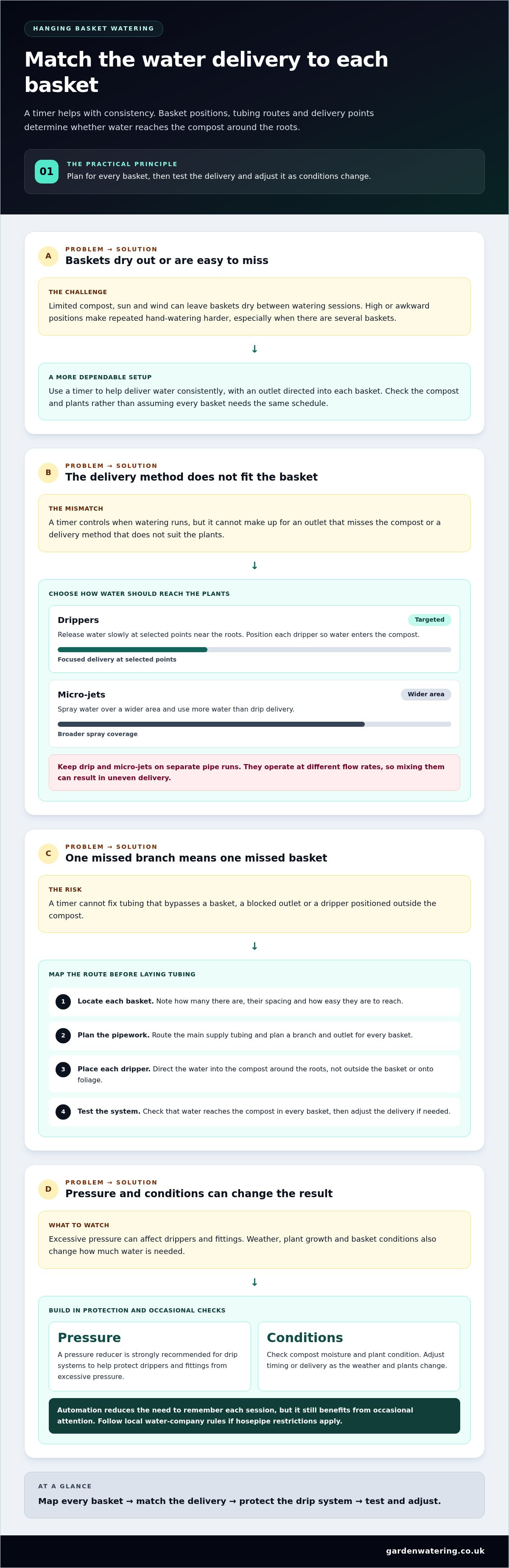
How to set up and adjust automatic watering for hanging baskets
A reliable setup starts with a clear plan, followed by a test run before you rely on it. Work through these steps in order so each basket has a route for water and you can spot problems while the system is easy to adjust.
- Map the baskets. Count them and sketch where each hangs in relation to the water source. Note which are close together, which are farther away and whether some are more exposed to sun or wind. This plan shows how the tubing needs to reach every basket.
- Choose the delivery method. Select outlets to suit the baskets and the way you want to water them. For drip systems, a pressure reducer is strongly recommended to help protect drippers and fittings from excessive pressure. Keep drip and micro-jets on separate pipe runs.
- Route the tubing. Follow your sketch, using suitable connectors and fittings to join sections and branch towards each basket. Aim for a neat route that reaches every delivery point without pulling on connections or leaving tubing awkward to access. Position each outlet to deliver water into the basket’s compost.
- Connect the timer. Fit the timer in the planned position and set it to control when the compatible watering system runs. Garden irrigation water timers provide scheduled operation, but the initial setting is only a starting point. Basket conditions will guide later adjustments.
- Test and adjust. Run the system and check every basket individually. Look for leaks at connections, tubing that has come loose and outlets that are blocked or missing their target. Confirm that water reaches the compost at each intended delivery point before relying on the schedule.
Plan the tubing route before connecting the system
Compare your sketch with the actual positions of the baskets. A route that looks simple on paper may need a connector or a change of direction around a support. Keep the tubing accessible enough to inspect, and avoid stretching it between points. Secure, well-planned runs are easier to check if a basket is moved or the layout changes.
Test delivery and refine the watering schedule
After the first run, check compost moisture and plant response in each basket rather than assuming one setting suits all. If the compost remains too dry or becomes consistently too wet, adjust the timing and observe the result. Account for current weather too: exposed baskets may need closer attention in warm, windy conditions, while cooler or wetter spells can call for a different routine.
Check regularly for leaks or blocked outlets, especially after moving a basket, changing a tubing route or adjusting a connection. These checks help keep the system delivering water where it’s intended. For practical support choosing components for your layout, explore Garden Watering’s automatic watering options.
Choose a basket-watering setup that fits your garden
The most suitable setup is the one that reaches every basket and reflects how you want to manage watering. Start with the number of baskets and where they hang, then consider whether they share similar conditions. A short run serving baskets close to the water source has different layout needs from baskets spaced along a wall or in several parts of the garden.
The best way to water hanging baskets automatically is to match the delivery method and timer to your actual layout, then keep checking how the plants respond. Garden Watering has more than 15 years of experience advising on automatic watering systems, so its specialist advice can help you choose the components for your arrangement.
A quick checklist before choosing
- Record how many baskets need watering and mark their positions in relation to the water source.
- Choose targeted drip delivery for water directed towards the compost, or consider micro-jets where wider-area spraying better suits the planting.
- Decide whether a timer fits your routine and whether adjustable delivery points would help account for differences between baskets.
- Consider exposure and access, so you can inspect the baskets and adjust the setup as conditions change.
These notes turn a broad product choice into a practical plan. For example, baskets in similar positions may be easier to manage together, while one exposed basket may need closer observation than a sheltered group. If you use drip and micro-jets in the same garden, keep them on separate pipe runs because they operate at different flow rates.
Extend the plan to pots and the wider garden
Basket watering doesn’t have to dictate how every other area is watered. Pots, containers and garden zones may have different layouts or needs, so plan them as distinct areas where appropriate. That makes it easier to select delivery points and schedules for each part of the garden, rather than relying on one arrangement to suit everything.
If you’re planning beyond baskets, the Hozelock automatic watering guide offers a starting point for considering a wider system. Keep the design manageable: map the zones, plan where tubing needs to reach and separate different delivery methods onto their own pipe runs.
Once you’ve settled on a layout, compare components with a clearer idea of what each basket needs. Garden Watering offers drip irrigation options for targeted watering, along with water timers and controllers for scheduled operation.
Make your next watering step a manageable one
Start by choosing one basket or a small group to plan around. Note where the baskets hang and how exposed they are, then use those observations to shape a setup you can check and adjust. Beginning with a clear, manageable layout makes it easier to see whether the delivery points and schedule suit your plants before extending the approach elsewhere.
The best way to water hanging baskets automatically is one that works with your garden and remains practical to maintain as conditions change. Keep an eye on the compost and plant response, and refine the system when your baskets or routine change. With more than 15 years of experience advising on automatic garden watering, Garden Watering is a UK specialist retailer of Hozelock automatic watering systems and irrigation products.
Ready to plan targeted watering for your baskets? Explore drip irrigation options for your garden and take the next step towards a watering routine that feels easier to manage.
Frequently Asked Questions
How often should hanging baskets be watered automatically?
Set the timer based on how quickly the compost dries, rather than following a fixed interval. The best way to water hanging baskets automatically is to begin with a cautious programme, then check the compost before and after a cycle and look for changes in the plants. Adjust one setting at a time so you can judge the effect. During warm, windy spells, inspect baskets more often; reassess after cooler or rainy weather.
What is the best time of day to water hanging baskets automatically?
There isn’t one time that suits every garden. Choose a timer programme that fits your routine, then assess whether the compost and plants are responding well. After a change in temperature or a spell of rain, check the baskets rather than assuming the previous programme is still appropriate. If the system allows you to change the schedule easily, make small adjustments and observe the results.
Can I use a water butt for automatic hanging-basket watering?
It depends on the pressure available and the requirements of the timer and watering components. A gravity-fed water butt may not provide enough pressure for some setups, so don’t assume a mains-water system will operate in the same way. Check the specifications for the complete arrangement, including the water source and timer. Before relying on it, test that delivery reaches every basket consistently.
Can automatic watering handle baskets in different sunny and shaded spots?
Yes, if the layout accounts for their different conditions. A basket in full sun may dry out sooner than one in a sheltered position, even if both receive water from the same system. If their needs differ, consider separate watering zones or adjustable delivery points where the system allows. After making a change, check the baskets individually so a well-watered group doesn’t hide one that’s receiving too little or too much.
Can drip irrigation be used during a UK hosepipe ban?
Drip irrigation is generally exempt from UK hosepipe bans, but rules depend on the local water company, so follow its current restrictions. Some exemptions may depend on conditions such as automated operation with a timer, a pressure-reducing valve and water reaching the soil without spray or surface run-off. Don’t assume every drip setup qualifies everywhere. Follow the requirements that apply in your area.
Do I need a pressure reducer for hanging-basket drip irrigation?
A pressure reducer is strongly recommended for drip systems because it helps protect drippers and fittings. Include it in your system plan and follow the product instructions when connecting it. During the first run, check the connections for leaks and confirm that each outlet is delivering water to its basket. If you later move tubing or change components, run another check before relying on the system’s usual schedule.
`-
Posted in
automatic watering, best way to water hanging baskets automatically, container gardening, drip irrigation, garden watering tips, hanging baskets, UK gardening, watering timer