How to Stop Sprinklers Spraying on Fences and Paths
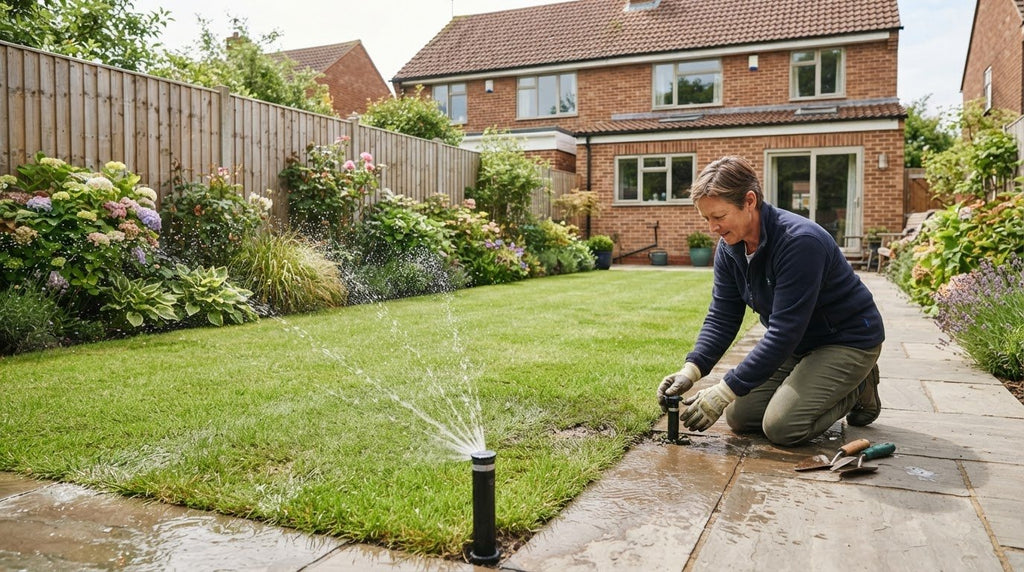
If you’re wondering how to stop sprinklers spraying on fences and paths, first find out where the water is coming from. A head aimed too widely, a spray range that extends past the lawn or a layout that doesn’t match the shape of the grass can all send water where it isn’t needed.
It’s frustrating to watch water run onto paving instead of soaking the lawn. Repeated wetting can leave paths slippery and keep fence panels damp, potentially affecting their appearance over time. But changing settings before you’ve found the cause can leave dry patches elsewhere.
This guide explains how to check the spray pattern, identify the type of sprinkler head and make a careful adjustment to its direction or reach. You’ll also learn when the issue may be sprinkler placement rather than a setting, and when targeted drip irrigation may suit planting beside a lawn. The aim is even lawn coverage, with less water landing on fences and paths.
Key Takeaways
- Learn how to stop sprinklers spraying on fences and paths by matching the fix to the cause, such as direction, range, nozzle choice or head position.
- Use a simple inspection sequence to identify which sprinkler is sending water beyond the intended area.
- Make one change at a time, then test the coverage to check that the lawn is still watered evenly.
- Recheck sprinkler direction and boundary coverage when the garden changes, and consider a planted border where the layout allows.
- Consider targeted drip irrigation for planting beside a lawn where overhead spray is unwanted.
Why is your sprinkler spraying fences and paths?
A sprinkler can wet a fence or path even while watering the lawn, but the pattern can reveal a problem with the coverage. Overspray is water that lands beyond the intended lawn or planted area. It may come from a head aimed too widely, a spray range that extends past the boundary or a sprinkler positioned poorly for the shape of the garden. First work out whether water is spraying directly onto the hard surface or reaching it after flowing across the ground. The two problems need different fixes.
Overspray is water carried beyond its intended target by a sprinkler; runoff is water that flows across the ground after it lands. Poor drainage can make runoff linger or collect, but it doesn’t explain water travelling directly from a sprinkler onto paving or fencing. A general overview of sprinkler types and how they deliver water is available from Sprinkler system Wikipedia.
To see how a spray head can be adjusted, watch this practical demonstration:
What makes a sprinkler spray beyond the lawn?
Several things can send water outside the area you want to irrigate. Check the head’s direction, the reach and shape of its spray, and its position relative to the lawn edge. Wind can also carry droplets sideways, so a pattern that stays within the lawn in calm conditions may drift towards a path or fence on a breezy day.
- A head may be aimed towards the boundary instead of across the grass.
- The spray range or pattern may not suit the lawn’s shape.
- A damaged or unsuitable component may disrupt the water pattern.
Sprinkler types differ, so adjustment options aren’t universal. Pop-up lawn sprinklers are one type of lawn watering equipment, but don’t assume every head has the same controls or can be adjusted in the same way.
Why should you keep regular spray off fences and paths?
Repeated wetting can affect some fencing materials. Wooden panels may discolour or deteriorate with ongoing exposure, while moisture and mineral deposits can affect their appearance. The result depends on the fence material, its exposure, drainage around its base and how often it gets wet. A brief splash and a regular spray pattern won’t necessarily have the same effect.
Water landing on paving doesn’t irrigate the lawn. It can leave avoidable wet patches, and a persistently wet path may become slippery. Notice where the spray lands and whether water remains after the cycle. If the ground stays wet even though the spray misses the path, runoff or drainage may also be a factor. Separating these causes is a useful first step in working out how to stop sprinklers spraying on fences and paths without compromising lawn coverage.
How to diagnose sprinkler overspray before adjusting anything
Watch the system in operation before changing its settings. It’s easy to misjudge a spray pattern when the sprinkler is off. Adjusting the wrong head could leave the original cause untouched or create a dry patch elsewhere. Observe the boundary where the lawn meets the fence or path. Is water crossing it from one head, or are several sprinklers contributing?
Before changing anything, note which head is involved, where its spray crosses the boundary, whether the pattern is consistent, the wind conditions and where any water collects. These details help distinguish a directional spray issue from water moving across the ground.
How to identify which sprinkler head is causing the problem
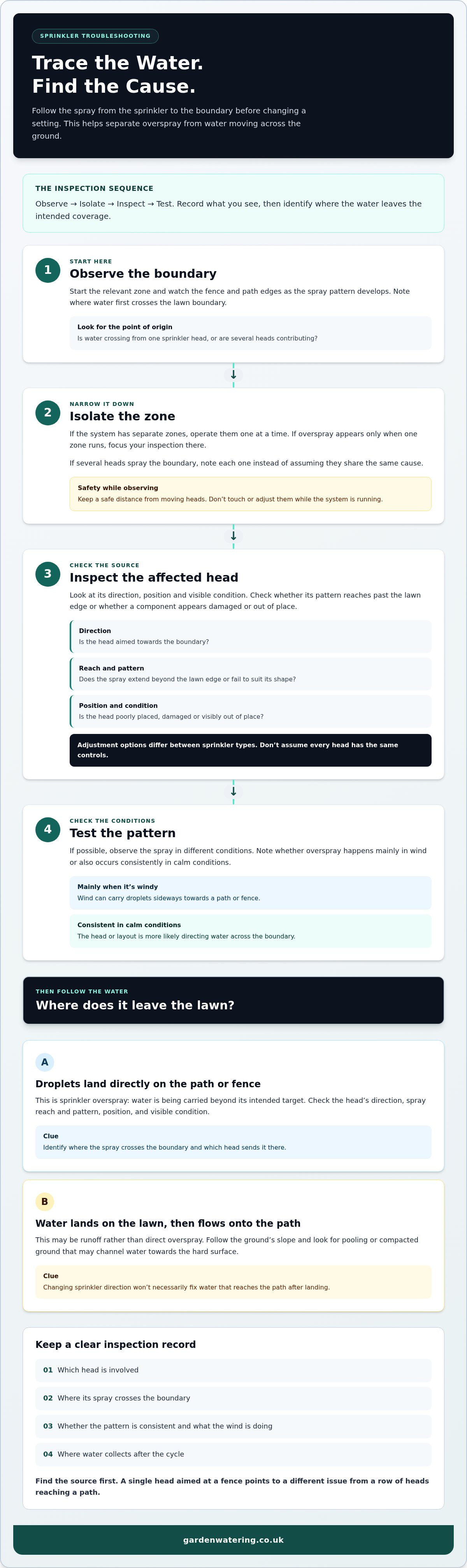
Use this sequence to narrow down the cause. Run one zone at a time if your system allows it, so you can link the overspray to a particular part of the layout. Keep a safe distance from moving heads and don’t touch or adjust them while the system is running.
- Observe: Start the relevant zone and watch the fence and path edges as the spray pattern develops. Note where water first crosses the lawn boundary.
- Isolate: If the system has separate zones, operate them one at a time. If the problem appears only when one zone runs, focus your inspection there. If several heads spray the boundary, note each one rather than assuming they have the same cause.
- Inspect: Look at the affected head’s direction, position and visible condition. Check whether its pattern reaches beyond the edge or whether a component appears damaged or out of place. Don’t assume every sprinkler has the same adjustment options.
- Test: If possible, watch the pattern under different conditions. If overspray happens mainly in wind, make a note of it. If it occurs consistently in calm conditions, the head or layout is more likely directing water across the boundary.
A single head angled towards the fence points to a different issue from a whole row of heads throwing water onto the path. Record the source before making changes so you have a clear basis for deciding what to adjust.
How to tell overspray from runoff or drainage
Follow the water’s path. If droplets land directly on paving, the sprinkler is spraying beyond its intended area. If water first lands on the lawn or soil, then travels downhill onto the path, the problem may involve runoff instead. Look for pooling, compacted ground or a slope that channels water towards the hard surface.
Changing a sprinkler’s direction won’t necessarily solve water that reaches the path after landing. In that case, consider how well the ground absorbs water and the route water takes across it. To work out how to stop sprinklers spraying on fences and paths, identify where the water leaves the intended coverage, then choose a fix that addresses that cause.
Which sprinkler adjustment can stop spray reaching fences and paths?
The right adjustment depends on the sprinkler head and the shape of the lawn. A small change to the head’s direction may be enough if the spray crosses a nearby boundary, while a head in the wrong place may need repositioning. Not every sprinkler has adjustable settings, and controls differ between models, so follow the instructions for the specific head before changing anything. Don’t force a setting or fit a nozzle that isn’t suitable for that sprinkler.
Use the symptom as a guide, then check the whole watered area after each change. An adjustment that keeps water off a fence could leave part of the lawn dry.
| Symptom | Possible adjustment | Coverage trade-off |
|---|---|---|
| Spray crosses the boundary in the wrong direction | Re-aim the head, if the model allows it | May reduce overlap with neighbouring coverage |
| Spray reaches too far along a narrow lawn edge | Reduce the range, if adjustable | Grass beyond the shorter reach may receive less water |
| Pattern doesn’t suit the lawn shape | Fit a suitable nozzle, where compatible | A different pattern may leave gaps elsewhere |
| No setting keeps spray within the lawn | Consider repositioning the head | Moving it may affect coverage around other heads |
When should you change the spray direction or range?
Re-aiming is a sensible first step when one head is clearly throwing water across a nearby fence or path. Make a small adjustment according to the model’s instructions, then run the system and watch the full pattern. If the head is aimed correctly but the spray still reaches beyond a narrow strip of grass, reducing its range may help, provided the head supports that adjustment.
Reducing the range can also leave a dry edge or interrupt overlap with neighbouring heads. Check the entire watered area after each change, not just the spot where water was landing. If the head’s settings aren’t clear, consult its instructions rather than assuming it uses a familiar screw or tool.
When is repositioning or a different watering method more suitable?
Consider the head’s position if you can’t keep the spray within the lawn using its available settings. A head too close to the boundary may be poorly placed for the shape of the grass, although moving it can change coverage elsewhere. Pop-up lawn sprinkler systems are designed for lawn watering, but the layout still needs to suit the area being covered.
For a planted border beside the lawn, targeted drip irrigation may be a better fit than directing overhead spray towards the fence. It delivers water to the planting without relying on a spray pattern across the boundary. Choose a method for the border and another for the lawn, then check that the grass remains evenly watered. This can help stop sprinklers spraying on fences and paths without creating a dry patch elsewhere.
How to stop sprinkler spray reaching a fence or path: a practical fix
Once you’ve identified the head responsible, make one controlled change and test the result before trying anything else. A small, measured adjustment is easier to assess than changing the head, nozzle and watering layout at the same time. Keep the goal in view: less water on hard edges without leaving the lawn unevenly watered.
How to make and test a small sprinkler adjustment
Follow the sprinkler manufacturer’s instructions. Turn the system off before handling or repositioning a head, and only change settings the model is designed to support. If a control or fitting isn’t clear, don’t force it; consult the instructions for that specific sprinkler.
- Mark the problem area. Note where spray crosses onto the fence or path. Place a small marker safely beside the affected edge if that helps you remember the spot.
- Choose one adjustment. Depending on the model, this could mean changing the direction, reducing the range or fitting a suitable compatible nozzle. Don’t change more than one variable at once.
- Run a coverage test. Turn the system back on and watch the affected boundary, then look across the rest of the lawn. Check whether spray still reaches the hard edge and whether any grass is now outside the coverage pattern.
- Record the result. Note whether the adjustment helped, had no effect or created a dry patch. This makes the next step clearer if another small change is needed.
Check the whole watered area, not just the spot that was getting wet. For example, shortening a head’s reach might keep water off a path but leave the far edge of the lawn too dry. A useful adjustment improves the boundary without simply moving the problem elsewhere.
What to do if the first adjustment does not work
Pause before making another change. Recheck the head’s position and spray pattern, and look for nearby obstacles that could deflect water. Then consider whether wind is carrying the spray, neighbouring heads are overlapping at the edge or water is running across the ground after it lands. Each cause calls for a different response. Don’t keep adjusting the sprinkler if runoff, rather than direct spray, is wetting the path.
If a correctly adjusted head still can’t cover the lawn without spraying beyond its edge, the layout may need a broader rethink. Consider whether the sprinkler position suits the lawn’s shape or whether planting beside the fence would be better served by targeted drip irrigation. For layout inspiration, garden irrigation design ideas can help you consider how watering zones relate to lawn edges and planted areas.
Make another change only after you’ve assessed what the first test showed. If you’re reviewing how lawn coverage is arranged, explore pop-up lawn sprinkler systems. A measured test-and-adjust process is a practical way to stop sprinklers spraying on fences and paths while preserving even coverage.
How to prevent sprinkler overspray from returning
A sprinkler setting that works today may need attention when the garden changes. Lawn edges shift, plants grow and routine garden work can disturb a head’s direction. Add a quick coverage check to your seasonal garden maintenance, and repeat it after mowing, digging or moving items around sprinkler heads. That helps you catch a changed pattern before water regularly lands on a fence or path again.
How to keep sprinkler coverage accurate through the season
Run the system during a check and watch how the spray reaches the lawn edges. A schedule tells you when watering is set to happen, but it won’t show whether a head is aimed correctly or plants are interrupting its pattern. Check that the grass is covered as well as confirming that spray stays off paving and fencing.
- Look for heads that have shifted, become obstructed or sit differently after garden work.
- Check the boundary and the full lawn, including edges that may be left dry by a changed pattern.
- Notice whether wind is affecting the spray. One test won’t show how the pattern behaves in every condition.
No single adjustment suits every garden or weather condition. A quick recheck when the layout changes can show whether the system still fits the lawn’s shape and its boundaries.
When can targeted irrigation help beside a fence?
Where space allows, a narrow planted border can separate the lawn from the fence. It also gives you a distinct area to water, rather than extending lawn spray right up to the fence. For border plants, drip irrigation systems provide a targeted approach, delivering water slowly to plant roots rather than spraying a broad area. This is an option for the planting, not a replacement for sprinklers where the lawn itself needs watering.
Keep the watering methods properly separated: drip and micro-jets must not share the same pipe run, because they operate at different flow rates. Keeping the border’s needs distinct from the lawn’s also makes it easier to see whether each area is receiving suitable coverage. If the layout changes, review the spray pattern and watering arrangement together.
Regular observation, a suitable boundary layout and targeted watering for border plants can all help reduce unwanted spray. For options to suit different garden watering needs, explore Garden Watering’s specialist watering systems.
Keep your watering pattern working as the garden grows
Garden boundaries and planting change, so review sprinkler coverage from time to time rather than treating it as a set-and-forget task. Keep a simple note of which settings work and revisit the pattern after garden work or changes to the lawn edge. That gives you a useful starting point if water begins reaching the fence or path again.
With more than 15 years of experience in garden watering and irrigation, Garden Watering offers practical expertise alongside a specialist range that includes pop-up lawn sprinklers and drip irrigation systems. The right approach depends on what you’re watering: a lawn and a planted border may need different methods.
Use what you’ve learned about your garden to choose your next step. If you’re still considering how to stop sprinklers spraying on fences and paths, look at watering options suited to lawns and planting borders, then check that coverage remains even as the garden changes.
Explore Garden Watering’s specialist watering systems to find a setup that helps keep water where it’s needed.
Frequently Asked Questions
Can sprinkler overspray damage a wooden fence?
Yes, repeated wetting may discolour or deteriorate some wooden fences, although the effect depends on the timber, its finish, exposure and how quickly it dries. Watch for persistent dampness, peeling surface treatment or visible changes near the base of panels. If you spot these signs, reduce direct wetting and let the area dry. Not every fence will respond in the same way, as materials and maintenance differ.
How do I adjust a sprinkler without leaving dry patches in the lawn?
Make a small change supported by the sprinkler’s instructions, then check its effect on neighbouring grass as well as the boundary. For example, if one head covers the lawn edge, shortening its reach may create a gap between its spray pattern and the next head’s. Mark any new dry areas and compare them with the previous pattern before deciding whether to keep or revise the setting.
Why does my sprinkler spray onto the path only when it is windy?
Wind can carry droplets sideways, pushing water onto paving even when the sprinkler’s usual pattern stays within the lawn. Compare what you observe in calm and breezy conditions, and note the wind direction relative to the head and path. If the boundary only gets wet in particular conditions, changing the head’s normal setting may reduce lawn coverage unnecessarily without addressing occasional drift.
Can I water grass beside a fence without wetting the fence?
Often, but the result depends on the lawn’s width, head placement and sprinkler pattern. Aim coverage across the grass rather than towards the fence, and check that adjacent heads reach the narrow strip without leaving a dry edge. In a very tight space, it may be difficult to keep every droplet off the fence while watering all the grass. Test the setup in calm conditions and review it again if wind affects coverage.
Is drip irrigation suitable for plants growing along a fence?
Yes. Drip irrigation can suit a planted border because it delivers water slowly to plant roots instead of spraying across a broad area. It can water fence-side plants without relying on the lawn sprinkler pattern for the border. Keep the systems correctly separated: drip and micro-jets must not share the same pipe run because they operate at different flow rates. Drip irrigation serves the plants, while the lawn may still need its own watering method.
Why is water pooling beside a path even after I adjust the sprinkler?
Pooling can continue if water reaches the path as runoff rather than landing there directly. Check whether the ground slopes towards the paving, feels compacted or absorbs water slowly. If the spray no longer reaches the path but water still collects there, further changes to the sprinkler direction may not help. Observe where the water first lands, then consider the ground’s shape and drainage separately.
How often should I check sprinkler direction and coverage?
There isn’t one schedule that suits every garden. Check coverage at the start of the watering season, then repeat the inspection after mowing, digging, moving equipment or changing the lawn edge. A quick test is also useful if you notice an unexpected dry strip or wet paving. Keep a note of any changed head positions and the result, so you can spot patterns rather than repeatedly adjusting the same setting.
`-
Posted in
DIY lawn care, garden watering, how to stop sprinklers spraying on fences and paths, irrigation systems, landscaping tips, lawn care, overspray prevention, sprinkler maintenance