How to Choose a Garden Hose: The Ultimate UK Buyer's Guide [2026]
![How to Choose a Garden Hose: The Ultimate UK Buyer's Guide [2026]](http://www.gardenwatering.co.uk/cdn/shop/articles/how-to-choose-a-garden-hose-the-ultimate-uk-buyers-guide-2026_4f1bea8c-98e0-4c06-aa4b-f1ebf385ef33.jpg?v=1788799080&width=1024)
What if the most frustrating part of your weekend gardening isn't the stubborn weeds, but the very tool you use to keep your plants alive? For many UK gardeners, a simple task often turns into a struggle against kinking coils, leaking connectors, and heavy bundles that refuse to stay tidy. Understanding how to choose a garden hose is about more than just picking a length of plastic; it's about building a reliable foundation for your entire irrigation strategy. Whether you're hand-watering prize roses or connecting a complex Hozelock automatic system, the right choice prevents water waste and protects your plants.
We know that a hose which stops flowing the moment you turn your back is a major headache. You want a setup that works with you, not against you. This guide promises to help you master the art of garden hydration by showing you exactly how to select the perfect hose for your lawn, flower beds, and automatic systems. We've drawn on 15 years of specialist irrigation expertise to simplify the technical details and build your confidence.
In this ultimate UK buyer's guide, we'll explain the differences in hose diameters, explore durable materials that resist kinking, and highlight the best storage solutions for a clutter-free garden. You'll learn how to ensure perfect compatibility with your existing fittings and discover why investing in quality components is the best way to avoid landfill waste.
Key Takeaways
- Understand the functional differences between traditional, expandable, and reinforced hoses to match the right technology to your specific garden layout and physical needs.
- Learn how to choose a garden hose with the correct 12.5mm diameter for UK taps while balancing length to maintain optimal water pressure at the nozzle.
- Prioritise durability by selecting hoses with multi-layer construction and braided reinforcement to prevent frustrating kinks and ensure high burst pressure performance.
- Extend the lifespan of your watering tools by choosing the right storage solution, such as an automatic reel, to protect components from harmful UV damage.
- Discover how a high-quality primary hose serves as the essential foundation for more complex Hozelock automatic watering systems and drip irrigation kits.
Garden Hose Types: Which Technology Suits Your Watering Style?
Selecting the right hose is the most important decision you'll make for your garden's maintenance. Knowing how to choose a garden hose starts with understanding that different technologies serve very specific purposes. You shouldn't just pick the first green coil you see. Instead, consider your storage space, physical strength, and the specific plants you need to reach. Modern hoses rely on multi-layer construction to handle the UK's fluctuating temperatures and high UV exposure, which can cause cheaper materials to crack or perish over time.
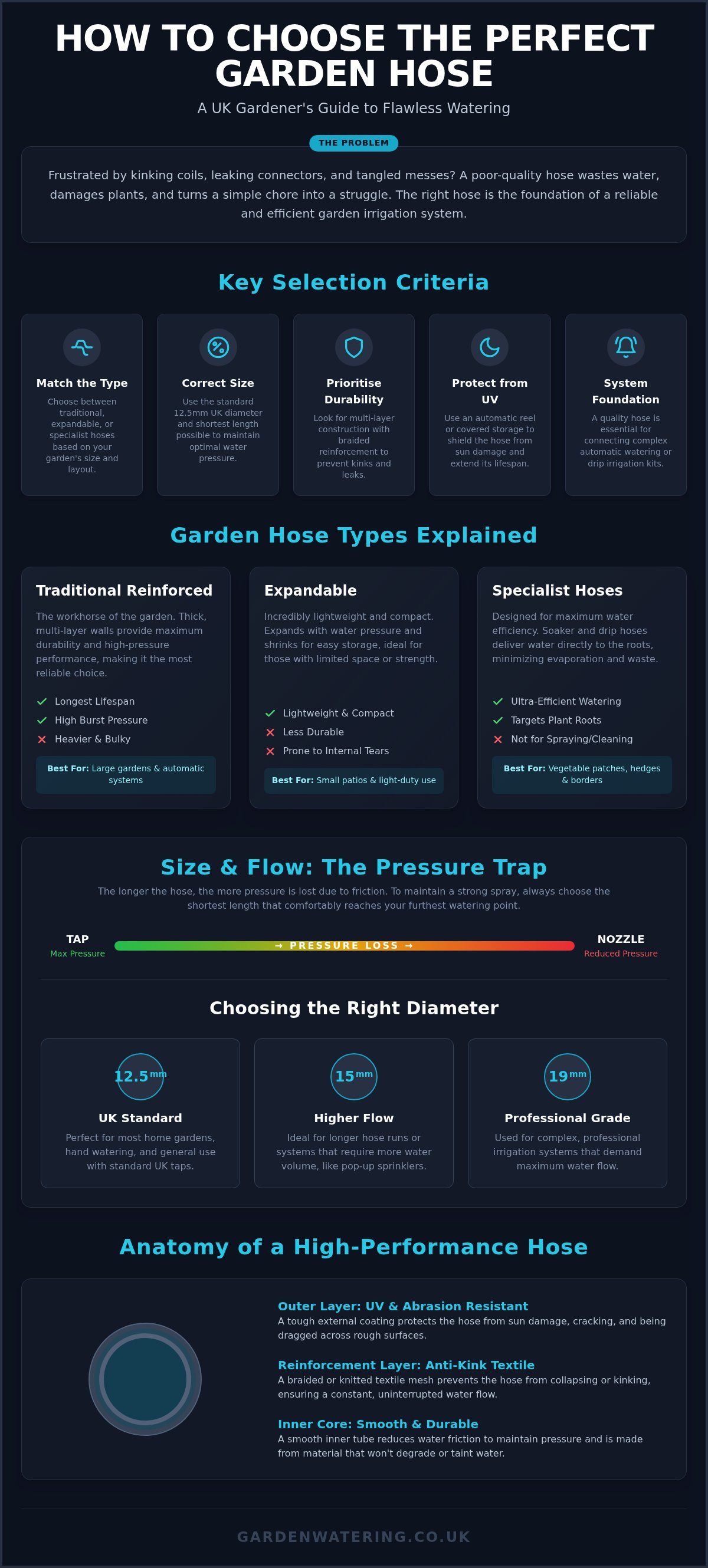
Anti-kink technology is a non-negotiable feature for any serious gardener. It usually involves a braided or knitted textile layer within the hose wall. This reinforcement prevents the tube from collapsing on itself when you pull it around corners or obstacles. It ensures a consistent water flow and protects your sanity during a busy weekend of garden care.
Traditional Reinforced Hoses vs. Expandable Hoses
Traditional reinforced hoses are the workhorses of the garden. They're the best choice if you plan to use high-pressure tools or connect to an automatic watering system. These hoses offer the longest lifespan because their thick walls can withstand constant pressure and rough handling. While they're heavier than other options, they provide a level of reliability that lighter alternatives can't match. When deciding how to choose a garden hose for a larger plot, durability should be your priority.
Expandable hoses offer a different set of benefits. They're incredibly lightweight and shrink down to a fraction of their size when the water is turned off. This makes them perfect for small courtyards or gardeners who find heavy reels difficult to manage. However, they're more delicate and prone to internal tears. If you want a tool that lasts for years and avoids contributing to landfill waste, a traditional reinforced hose is almost always the better investment.
Specialist Hoses: Drip Lines and Soaker Hoses
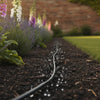
Sometimes, a standard spray isn't the most efficient way to water. Porous soaker hoses are excellent for established hedges or deep borders. They allow water to seep slowly into the ground, reaching the roots directly without wasting moisture through evaporation. For even more precision, drip irrigation systems use specialized lines with built-in emitters. These are the gold standard for targeted hydration in vegetable patches or container gardens, ensuring every drop of water is used effectively.
Size and Flow: Calculating the Right Length and Diameter
Understanding the relationship between size and water flow is central to learning how to choose a garden hose that actually performs. In the UK, the standard diameter for domestic taps is 12.5mm (half an inch). This size is perfectly adequate for hand-spraying and most garden kits. However, as the length of the hose increases, you encounter the "pressure trap." Friction occurs as water moves against the inner walls of the tube. This means a 50-metre hose will deliver significantly less pressure at the nozzle than a 15-metre hose. To maintain a strong spray, you should always choose the shortest length that reaches your furthest boundary.
Measuring your plot accurately prevents the common problem of "hose drag." This happens when you have to pull a short hose taut, often flattening delicate flower beds or snapping plant stems in the process. Walk the path you intend to take with the hose and add a small buffer for corners. If you find yourself needing extra reach only once or twice a year, it's better to use reliable connectors to join two shorter hoses rather than struggling with a heavy, oversized coil every day.
Standard vs. Heavy Duty Diameters
Professional irrigation and pop-up lawn sprinklers often require a higher flow rate than a standard 12.5mm hose can provide. If you're installing a complex system, consider upgrading to a 15mm or even a 19mm diameter. These larger sizes allow a greater volume of water to pass through, which is essential for ensuring popup heads have enough power to lift and rotate correctly. Before upgrading, check your outside tap's flow rate by timing how long it takes to fill a 10-litre bucket. If it takes more than 60 seconds, a larger diameter hose might not offer much benefit.
Choosing the Correct Length
We recommend the "plus 10%" rule. Once you've measured the distance to your furthest pot or bed, add an extra 10% to the total. This extra slack allows you to navigate around garden furniture, trees, and corners without the hose kinking. Avoid the temptation to buy the longest hose available just in case. Excess length adds significant weight, making it harder to tidy away and increasing the risk of the hose perishing in the sun. For most suburban UK gardens, a 15m to 30m hose is the sweet spot for efficiency and ease of use. You can explore our range of Hozelock watering solutions to find the perfect fit for your measured distance.
Durability and Quality: Identifying a High-Performance Hose
Choosing a hose that lasts requires looking past the glossy packaging. When you're learning how to choose a garden hose, the technical construction determines whether it survives two seasons or ten. Most entry-level hoses feature a simple 3-layer design. While affordable, these often fail under high pressure. High-performance models use a 5-layer construction, incorporating a central core, multiple reinforcement layers, and a protective outer skin. This multi-layered approach gives a hose its structural integrity and prevents the material from expanding or bursting when the water is left on at the tap.
Braided reinforcement is the critical component for daily ease of use. Unlike basic knitted mesh, high-quality braiding creates a structural skeleton that resists twisting. If you've ever struggled with a hose that curls into tight loops, it likely lacks this internal support. For those growing vegetables or fruit, check for BPA-free and Phthalate-free labels. These materials ensure that no harmful chemicals leach into the water as it sits in the sun, keeping your edible crops safe for consumption. We believe in buying right once to avoid the environmental impact of sending perished plastics to landfill.
Kink Resistance Ratings
Don't be fooled by "kink-free" marketing claims. In reality, almost every hose can kink if handled poorly, but "kink-resistant" hoses are designed to spring back into shape. The Tricoflex standard is widely regarded as the benchmark for professional-grade hoses in the UK. These hoses use a specific cellular construction that maintains its circular profile even when bent sharply. To test a hose's quality upon delivery, try to pinch it between your thumb and forefinger. A high-quality hose will resist collapsing, whereas a cheap vinyl one will flatten easily. This simple test is a great way to confirm you've made a wise investment.
Burst Pressure and UV Stability
The UK's climate is notoriously hard on outdoor plastics. Winter frosts cause cheap materials to become brittle, while summer sun can degrade the internal bonding. Understanding Bar ratings is essential for ensuring your hose can handle high-pressure domestic taps. A standard garden hose should have a burst pressure of at least 20 Bar, though professional-grade Hozelock watering solutions often exceed 30 Bar. UV stability refers to the chemical resistance of the hose material to degradation caused by ultraviolet light, preventing the outer layer from cracking or becoming sticky over time. Investing in a hose with high UV stability ensures it remains flexible and functional for years, even if left on a reel in direct sunlight.
Hose Management: Reels, Carts, and Storage Solutions
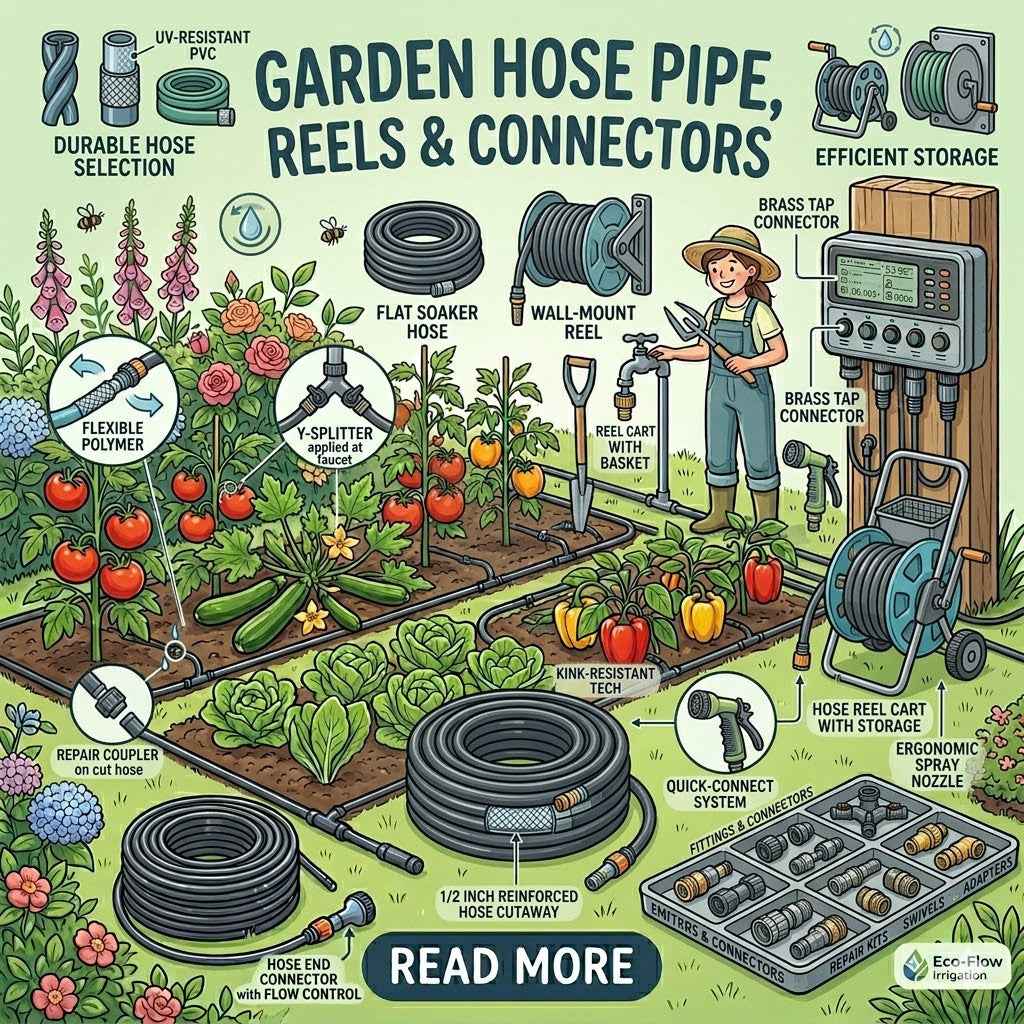
Proper storage is the most overlooked factor in hose longevity. Leaving your hose exposed to the UK sun leads to UV degradation, which makes the outer layer sticky or brittle over time. When you learn how to choose a garden hose, you must also decide how to store it. A tidy garden isn't just about aesthetics; it's about protecting your investment from the elements and accidental damage. Wall-mounted reels are ideal for small patios where floor space is limited. They keep the hose off the ground and away from lawnmowers. Free-standing carts offer mobility, allowing you to move the water source across large lawns or between front and back gardens. For those using Hozelock watering kits, choosing a storage solution that integrates seamlessly with your tap and feeders is essential for a leak-free experience. This integration is part of a wider ecosystem designed to make garden maintenance effortless.
The Benefits of Automatic Hose Reels
Automatic hose reels offer the ultimate in convenience and safety. In family gardens, a stray hose is a significant trip hazard. These reels eliminate the problem by pulling the hose back into a protective housing the moment you finish watering. The internal mechanism uses automatic layering to ensure the hose winds back evenly without overlapping or tangling. This prevents the internal structural damage that occurs when a hose is forced onto a manual reel incorrectly. By keeping the hose enclosed, you also prevent spiders and garden debris from entering the nozzle, ensuring a clean spray every time. To maintain these spring-loaded systems, avoid letting the hose snap back at full speed. Guide it in slowly to preserve the tension of the internal spring. This small habit can add years to the life of the retraction mechanism.
Fittings and Connectors: The Leak-Free Secret
Your hose is only as good as its connections. High-quality Hozelock connectors are the industry standard for a reason. They provide a secure, click-fit seal that prevents water from spraying out at the tap or nozzle. While standard plastic fittings are excellent for most domestic tasks, professional brass connectors are better for high-pressure systems. These 'Pro' fittings resist cracking and handle the weight of heavy-duty hoses more effectively. Always check the O-rings on your connectors each spring. A dry or cracked seal is the most common cause of leaks. Replacing a small rubber ring is much cheaper than replacing a whole fitting. If you want to ensure your garden stays hydrated without the mess, explore our full range of Hozelock watering solutions to find the perfect management tools for your space.
The Expert View: Integrating Hoses with Automatic Irrigation
A garden hose shouldn't be viewed as just a standalone tool. In a sophisticated garden, it acts as the primary artery that feeds your entire irrigation network. When professionals consider how to choose a garden hose, they look at how it will integrate with a wider Hozelock automatic watering system. Your main hose serves as the 'feeder' line, carrying water from the tap to secondary drip networks or porous pipes. If this feeder fails, your entire automated setup stops working, potentially risking the health of your plants while you're away on holiday.
Using garden irrigation water timers adds a layer of complexity to your choice. When a timer is attached to your tap, the hose remains under constant static pressure even when the water isn't flowing. Cheap, unreinforced hoses often struggle with this. They can 'balloon' or even burst at the connectors because they lack the structural integrity to hold back the pressure. We always recommend a high-quality reinforced hose for any system using a timer. It's a simple step that ensures long-term reliability and prevents water waste.
Hose Selection for Sprinklers and Timers
Consistency is vital for the performance of lawn sprinklers. These devices require a steady flow and specific pressure levels to achieve their advertised coverage. A hose that expands under pressure will cause the water flow to fluctuate, leading to dry patches in your lawn. By choosing a hose with a high burst rating, you ensure the pressure remains focused on the sprinkler head rather than being absorbed by the hose walls. This is particularly important if you're running a multi-zone system where a single primary hose must supply multiple outlets through various adaptors.
Expert Advice on UK System Planning
Effective planning is the secret to a successful installation. We suggest mapping out your garden to minimize the total length of hose required. Shorter runs maintain higher pressure and reduce the number of potential failure points in your system. You can find detailed design ideas and plans on our site to help you visualize a professional layout. With over 15 years of experience in Hozelock systems, we've seen first-hand that quality components prevent system failure. Taking the time to understand how to choose a garden hose that fits your automated goals is the best way to ensure a flourishing, healthy garden for years to come.
Elevate Your Garden Hydration Strategy
While a robust irrigation system handles the health of your plants, you might also consider the overall wellness of your outdoor living space. For those looking to add a touch of luxury, Palazzina Wellness offers exclusive garden saunas and hot tubs that transform any well-tended garden into a private retreat.
You now have the technical foundation to transform your outdoor space into a thriving, efficient landscape. By matching the correct hose diameter to your tap's flow rate and selecting multi-layer, reinforced materials, you've taken the first step toward a more reliable watering routine. Remember that proper storage in a high-quality reel is just as vital for the longevity of your equipment as the hose's initial burst rating. These choices prevent water waste and ensure your irrigation setup remains a helpful partner rather than a source of frustration.
Understanding how to choose a garden hose ensures that every drop of water reaches your plants effectively without the stress of kinks or leaking connectors. As an authorized Hozelock retailer with 15 years of specialist experience, we're dedicated to providing the UK-wide expert advice you need to build a professional-grade system that lasts. We believe in the value of quality components that protect both your garden and the environment by reducing landfill waste.
Explore our expert-selected range of Hozelock Watering Systems to find the perfect match for your measured requirements. With the right tools in hand, you can spend less time struggling with heavy coils and more time enjoying the beauty of your flourishing garden.
Frequently Asked Questions
What is the best garden hose diameter for UK homes?
Understanding how to choose a garden hose for UK homes starts with selecting the correct diameter, which is typically 12.5mm (half-inch). This size provides a perfect balance between weight and water flow for standard garden tasks. If you use larger irrigation systems or have exceptionally high water pressure, you might consider 15mm or 19mm options. For most suburban gardens, the 12.5mm standard ensures the best compatibility with common fittings.
Are expandable garden hoses worth the money in 2026?
Expandable hoses are a practical choice for gardeners with very limited storage or those who need an extremely lightweight tool. While they've improved significantly by 2026, they still don't offer the same longevity as a traditional multi-layer reinforced hose. If you prioritise durability and want to avoid contributing to landfill waste, a high-quality braided hose remains the superior long-term investment for your garden and your budget.
Can I leave my garden hose outside during a UK winter?
You shouldn't leave your hose outside during a UK winter because freezing temperatures cause the water inside to expand, which can split the inner lining. Frost also makes the outer plastic brittle, leading to cracks and leaks in the spring. To protect your equipment, always drain the water completely and store the hose in a shed or garage once the first frost is forecast in your area.
How do I stop my garden hose from kinking?
The best way to prevent kinking is to choose a hose with high-quality braided reinforcement rather than a basic vinyl one. When you're learning how to choose a garden hose, look for "anti-twist" or "knitted" layers in the technical specs. Additionally, always store your hose on a reel or cart. Winding it correctly prevents the internal structural memory that causes frustrating coils and loops during use.
What is the difference between a soaker hose and a drip line?
A soaker hose is made from porous material that allows water to weep slowly along its entire length, making it ideal for established hedges. In contrast, a drip line uses specific emitters placed at set intervals to deliver targeted hydration to individual plants. Drip lines are generally more efficient for vegetable patches and container gardens because they reduce water evaporation and ensure moisture reaches the roots directly.
Will Hozelock connectors fit other brands of garden hose?
Yes, Hozelock connectors are designed to be compatible with the vast majority of standard 12.5mm and 15mm garden hoses available in the UK. The click-fit system has become an industry standard, meaning you can usually mix and match Hozelock fittings with hoses from other manufacturers. For the most reliable, leak-free seal, ensure the hose end is cut squarely before pushing the connector firmly into place until it clicks.
How long should a high-quality garden hose last?
A high-quality garden hose should last between 10 and 15 years if it's maintained correctly. Lifespan is heavily influenced by how you store the product; keeping it on a reel and out of direct sunlight prevents UV degradation. Cheaper, single-layer hoses often fail within two seasons, so investing in a multi-layered reinforced model is much more cost-effective and environmentally friendly over the long term for any gardener.
Do I need a special hose for an automatic watering system?
You definitely need a reinforced hose when setting up an automatic watering system. Because these systems often use a timer, the hose remains under constant static pressure even when the water isn't flowing. A standard thin-walled hose can "balloon" or burst under this sustained pressure. Choosing a high-performance braided hose ensures your system remains reliable and leak-free, even when you aren't there to monitor the water flow yourself.
`-
Posted in
garden hose, garden tools, gardening, gardening tips, hosepipe, how to choose a garden hose, hozelock, irrigation, UK gardening