Irrigation Systems
What if the health of your entire landscape is being compromised by a single length of brittle, sun-damaged plastic? It's a common frustration for many UK gardeners who find that their Irrigation Systems fail just when the plants need them most. You've likely dealt with the annoyance of a hose that kinks every time you move it or a system where the water pressure vanishes before it reaches the end of the line. It's exhausting to spend your weekends repairing leaks instead of enjoying your outdoor space.
As specialists with over 15 years of experience, we understand that a reliable system starts with the right foundation. In this guide, you'll discover how to select professional-grade, UV-resistant supply hoses that remain flexible through harsh winters and hot summers alike. We'll explain the technical details of flow rates and pipe diameters in a way that's easy to understand. By the end, you'll have the knowledge to create a discreet, leak-free system that delivers consistent water to every plant, ensuring your garden thrives with minimal effort on your part.
Key Takeaways
- Learn why the supply hose is the critical backbone of high-performance Irrigation Systems and how it prevents common pressure drops across your garden.
- Understand the importance of UV-stabilised materials in preventing your pipework from becoming brittle and cracking under the summer sun.
- Identify the correct pipe diameters for your layout, ranging from 19mm high-flow pipes for large landscapes to 4mm micro-bore for individual containers.
- Discover how leaving strategic slack in your pipework accommodates temperature shifts and prevents joint failure throughout the seasons.
- Gain the confidence to select professional-grade components that ensure your watering network remains leak-free and efficient for years to come.
Understanding Irrigation Systems: Why the Supply Hose is the Backbone
An irrigation supply hose serves as the high-pressure main line that transports water from your external tap directly to your drippers or sprinklers. While it might look like a simple pipe, it's the structural foundation of all high-performance Irrigation Systems. Choosing a high-quality backbone ensures that water reaches every corner of your garden without losing pressure or developing frustrating leaks. A professional-grade line significantly reduces the time you spend on seasonal maintenance, allowing you to focus on the health of your plants rather than fixing plumbing failures.
When you build a system with the right materials, you create a dependable network that handles the unique demands of the UK climate. Poor quality pipes often lead to a drop in performance at the end of the line, leaving distant plants thirsty while those near the tap are overwatered. By prioritising the quality of your main supply line, you ensure consistent water delivery and long-term reliability.
Supply Hose vs. Standard Garden Hose
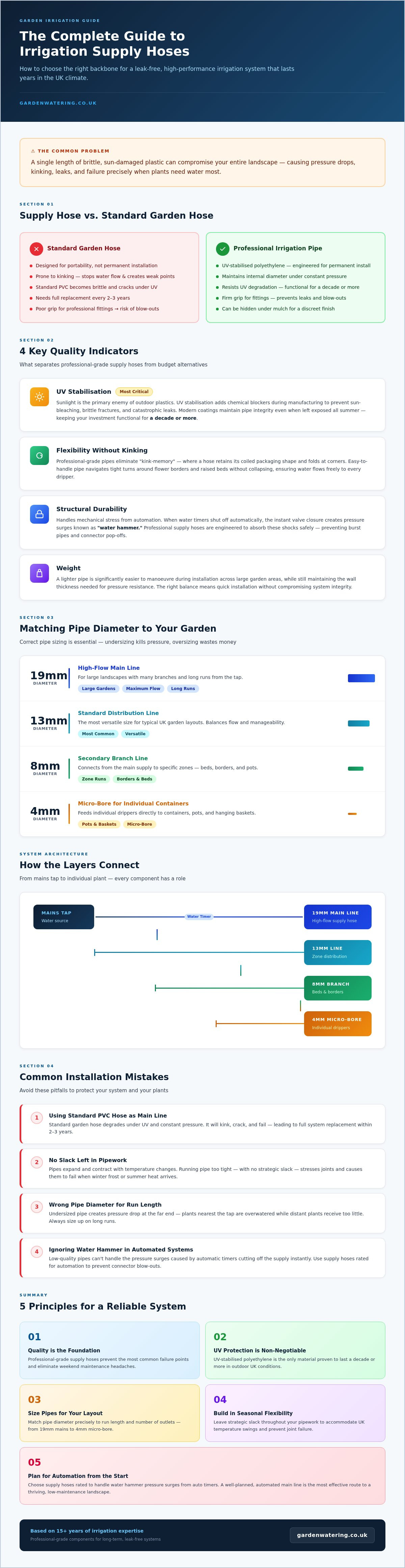
Many gardeners attempt to build their network using standard PVC garden hoses, but these often fail in permanent setups. Standard hoses are designed for portability and frequent movement. However, this flexibility makes them prone to kinking, which stops water flow and creates weak points. Over time, the sun's rays cause standard PVC to become brittle and crack. In contrast, dedicated irrigation pipe is typically made from UV-stabilised polyethylene. This material offers several benefits for your garden:
- Rigidity: It maintains its internal diameter under constant pressure, ensuring maximum flow.
- Durability: UV-stabilisation prevents the pipe from degrading or "shattering" after exposure to summer heat.
- Security: It provides a firm grip for professional fittings, reducing the risk of blow-outs.
While the initial cost of specialist pipe might be slightly higher than a budget garden hose, the cost-benefit analysis is clear. You'll avoid the expense and effort of replacing your entire layout every two or three years.
The Role of the Supply Hose in Automation
When you integrate garden irrigation water timers, your supply hose must withstand specific mechanical stresses. Automatic valves shut off instantly, which can create a pressure surge known as "water hammer." Low-quality pipes often burst or pop off their connectors under this sudden force. Professional Irrigation Systems use supply hoses engineered to absorb these shocks safely.
A dedicated supply network also allows for a much cleaner aesthetic. These pipes are designed to be pinned securely to the soil or hidden under a thin layer of mulch. This creates a discreet, professional finish that doesn't detract from your garden's natural beauty. With 15 years of experience in the field, we've seen that a well-planned, automated main line is the most effective way to achieve a thriving, low-maintenance landscape.
Key Features to Compare in Irrigation Supply Hoses
Selecting the right components for your Irrigation Systems requires looking beyond the surface. In the UK, our gardens face a specific set of challenges, from sudden spring frosts to intense summer sunlight. A high-quality supply hose must act as a reliable conduit for years, not just a single season. We look for four primary indicators of quality: UV resistance, flexibility, structural durability, and weight.
UV Stabilisation: The Secret to Longevity
Sunlight is the primary enemy of outdoor plastics. Standard hoses often suffer from the "brittle effect," where the material loses its plasticisers and develops hairline fractures that eventually lead to catastrophic leaks. UV stabilisation is the process of adding chemical blockers to the plastic during manufacturing to prevent sun-bleaching and cracking. Modern 2026 coatings are specifically engineered to reflect or absorb these harmful rays, maintaining the pipe's integrity even when left on top of the soil throughout the summer. This protection ensures that your investment remains functional for a decade or more.
Flexibility Without Kinking
There's nothing more frustrating than a pipe with "kink-memory." This happens when a hose retains the shape of its packaging, causing it to fold and stop water flow every time you try to turn a corner. Professional-grade pipes are designed to be "easy-to-handle," allowing you to navigate tight turns around flower borders and raised beds without the line collapsing. This flexibility is vital when you're manoeuvring through dense foliage. It allows you to position the water source exactly where it's needed without disturbing delicate root systems or crushing young plants.
Beyond flexibility, you need a pipe that resists accidental damage. While no plastic is entirely spade-proof, high-performance polyethylene is far more resilient to nicks and abrasions than standard alternatives. Despite this strength, modern hoses are surprisingly lightweight. This makes them ideal for large-scale setups like allotments or expansive greenhouse ranges where you might need to lay 50 or 100 metres of pipe in one go. Using a lightweight but durable hose saves your back and reduces the physical effort required for a professional-standard installation. If you're looking to start your project with the right foundations, exploring our range of Hozelock watering systems can help you see how these features work together in a complete setup.
Matching Hose Types to Your Garden Layout
Think of your garden layout like a road network. The main supply pipe acts as the motorway, while the smaller tubes are the local streets. Getting this hierarchy right is essential for efficient Irrigation Systems. If you use a pipe that's too narrow for a long distance, the friction inside the hose causes pressure to drop. This results in plants at the far end of your garden receiving a mere trickle while those closest to the tap are overwatered. Planning your layout with the correct diameters ensures every drop of water is delivered exactly where it's needed.
13Mm vs. 19mm: Which Diameter Do You Need?
The 13mm pipe, often referred to as half-inch, is the standard choice for most domestic UK gardens. It's flexible enough to hide behind a border and carries sufficient volume for a typical array of drippers or small sprinklers. However, if your garden is particularly large or you're dealing with low water pressure at the tap, you'll benefit from upgrading your main line to a 19mm pipe.
A 19mm main line carries significantly more water and experiences much less pressure loss over distance. We often suggest using this larger pipe as a central "spine" that runs through the middle of your landscape. You can then use irrigation fitting adaptors to branch off into 13mm sections for specific flower beds. This hybrid approach maintains high performance across the entire network, even in complex layouts.
Micro-Drip Supply Lines
Once your main supply network is in place, you'll use 4mm micro-bore tubing to reach individual pots, troughs, or hanging baskets. This thin, flexible pipe is designed to be as discreet as possible, making it easy to snake up a trellis or hide under a windowsill. You simply punch a hole in your 13mm pipe and click the 4mm line into place using a joiner.
To ensure the last dripper on your line performs as well as the first, it's best to keep your 4mm runs short. Ideally, these shouldn't exceed 2 or 3 metres from the main 13mm supply pipe. If you have a long row of containers on a patio, don't run a single long 4mm line. Instead, run the 13mm pipe along the back of the pots and use very short "tails" of 4mm tubing for each container. This setup keeps the pressure consistent and prevents the common problem of uneven watering in automated Irrigation Systems.
Common Installation Mistakes and How to Avoid Them
Even the most durable Irrigation Systems can fail if the installation process is rushed or misunderstood. One of the most common errors is over-stretching the supply pipe. While it's tempting to pull the line taut for a neat finish, you must leave a small amount of "slack" every few metres. Polyethylene pipe expands and contracts significantly as temperatures shift between the midday sun and overnight frost. If the line is too tight, this movement creates immense stress on joints, eventually causing them to pull apart and leak during the height of summer.
Another frequent issue involves using mismatched components. Using low-quality or generic fittings with professional hozelock connectors often leads to "blow-outs" where the water pressure simply forces the pipe off the fitting. It's also vital to avoid "dead ends" in your layout where water can sit and become stagnant. Designing your network with end-plugs that can be easily removed allows you to flush the system. This simple step prevents debris and mineral deposits from clogging your drippers and ensures your plants receive clean, consistent water all year round.
Securing Your System
Use ground pegs every metre to keep your supply hoses firmly in place. This prevents the pipe from "snaking" as it warms up and stops it from becoming a trip hazard across your lawn or paths. Securing the line also protects the delicate connections to your drippers by preventing the main line from tugging on them. As winter approaches, you must drain the system completely. Water left in the pipework will expand as it freezes, potentially splitting your hoses or damaging your internal valves. You can find more detailed advice in our guide on how to winterise your garden watering system.
Pressure Management
High mains water pressure is a common cause of system failure in UK households. If the pressure is too high, it can easily "pop" fittings off the supply hose or cause your drippers to spray uncontrollably rather than dripping gently. Most domestic irrigation systems are designed to operate at 1.5 to 2 bar for maximum efficiency. Integrating a pressure regulator at the tap is a simple way to protect your drip irrigation systems from these surges. This small addition ensures that the flow remains constant and your components aren't subjected to unnecessary mechanical stress.
Ensure your setup is built to last by selecting the right Hozelock watering system components to match your garden's specific needs.
Standout Picks from Our 2026 Irrigation Hose Collection
Our current collection represents the culmination of 15 years in the specialist irrigation industry. We've curated a selection of 13 high-performance supply hoses specifically designed to withstand the unique challenges of the UK climate. Choosing the right infrastructure for your Irrigation Systems is the most important decision you'll make for your garden's long-term health. These hoses provide a professional foundation that ensures your watering network remains efficient and leak-free for years.
The All-Rounder: 13mm Durable Supply Hose
This 13mm pipe is our most popular choice for domestic gardens. It balances high flexibility with robust UV stabilisation, making it incredibly easy to install around complex flower borders. It's fully compatible with all major UK fittings and serves as the ideal foundation for vegetable patches or standard greenhouse setups. We recommend this as the go-to starting point for any new project because it offers exceptional value without compromising on durability. It's lightweight enough for easy handling but tough enough to resist the kinking that plagues cheaper alternatives.
Professional Grade: 19mm Heavy-Duty Main Line
For larger landscapes or allotments, our 19mm pipe provides the increased wall thickness needed for maximum durability. It's specifically engineered for long runs exceeding 50 metres, where maintaining a high flow rate is critical. This pipe is the perfect choice for systems that include pop-up sprinkler systems, as it can handle the higher volumes required for lawn irrigation. Despite its heavy-duty construction, it remains remarkably easy to coil and lay, saving you hours during the installation process.
To reach your smaller plants, our 4mm micro-drip tubing acts as the perfect companion. It snakes easily into patio pots and through greenhouses, delivering water with precision. By combining these different diameters, you create a tiered network that manages pressure efficiently across your entire outdoor space. Our UV-resistant hoses represent the best value-for-money in the UK market because they're built to last for a decade, not just a single season.
Ready to Start Your Project?
The success of your garden's automation depends entirely on the quality of its infrastructure. Investing in UV-resistant, flexible hoses today prevents the frustration of brittle pipes and leaking joints tomorrow. Our collection focuses on performance and reliability, ensuring your system survives both freezing winters and scorching summers. Browse our full range of high-performance supply hoses here to find the perfect foundation for your garden.
Start Your Professional Irrigation Project Today
Building a high-performance garden network requires more than just connecting pipes; it's about creating a foundation that lasts. You now understand that the supply hose is the vital backbone of reliable Irrigation Systems. By prioritising UV-stabilised materials and selecting the correct pipe diameters for your layout, you'll avoid the common pitfalls of pressure loss and brittle, cracked lines.
Our specialist team brings over 15 years of irrigation expertise to help you succeed. We've curated a collection of 13 high-performance hoses that are specifically built for UK weather conditions. These components are lightweight and flexible, making it simple for you to achieve a professional-grade DIY installation without the need for complex tools. Don't let a poor quality hose compromise your plants' health during the next summer heatwave.
Take the first step toward a hassle-free garden. Upgrade your garden with our Durable & UV-Resistant Irrigation Supply Hoses and enjoy the peace of mind that comes with a system designed for longevity. Your garden is an investment, and we're here to help you protect it.
Frequently Asked Questions
What is the difference between an irrigation supply hose and a soaker hose?
An irrigation supply hose acts as the non-porous main line that carries water from your tap to various areas of your garden. In contrast, a soaker hose is a specific type of emitter made from porous material that "sweats" water along its entire length. While the supply hose is the structural backbone of your network, the soaker hose is the final delivery tool used directly around the roots of your plants.
Can I bury my irrigation supply hose underground?
A 13mm (half-inch) pipe is the ideal choice for most standard UK domestic gardens. This size provides the perfect balance between water volume and flexibility, making it easy to navigate around borders and garden structures. If your garden exceeds 50 metres in length or you have particularly low water pressure, you might consider using a 19mm pipe for your main run to ensure consistent delivery across the entire network.
How do I stop my irrigation fittings from leaking?
Stopping leaks starts with ensuring your pipe is cut squarely and pushed fully into the fitting until it clicks or seats firmly. Many leaks occur because the water pressure is too high for the components to handle effectively. Installing a pressure regulator at the tap ensures your Irrigation Systems operate within the recommended 1.5 to 2 bar range. Using high-quality, brand-matched connectors also prevents the "blow-outs" often seen with generic, ill-fitting alternatives.
Is 13mm or 19mm pipe better for my irrigation system?
Choosing between 13mm and 19mm depends largely on the total length of your pipework and the number of drippers you plan to use. While 13mm is sufficient for most flower beds, a 19mm pipe is better for high-flow requirements like large lawns or allotments. Using a 19mm main line as a central spine helps maintain pressure over long distances, which is crucial for the overall efficiency of complex Irrigation Systems.
How long will a UV-resistant irrigation hose last?
A high-quality, UV-stabilised supply hose is built to last for 10 years or more when properly maintained. The chemical blockers added during manufacturing prevent the plastic from becoming brittle and cracking after prolonged exposure to the sun. To maximise this lifespan, you should drain the system every autumn to prevent ice from expanding and splitting the pipework during the cold UK winter months.
Can I use standard garden hose connectors with irrigation supply pipe?
You shouldn't use standard garden hose connectors with specialist irrigation supply pipe. Standard connectors are designed for flexible PVC hoses, whereas irrigation pipes are made from more rigid polyethylene with different wall thicknesses. Using the wrong fittings will almost certainly lead to leaks or the pipe popping off under pressure. Always match your supply pipe with dedicated irrigation fittings and adaptors to ensure a secure, watertight seal across your entire garden.
Do I need a pump for my garden irrigation system?
`-
Posted in
drip irrigation, garden maintenance, garden watering, Irrigation Systems, landscape irrigation, pipe fittings, UK gardening, UV-resistant hose, water pressure