Rooftop Terrace Watering: A Practical UK Guide for 2026
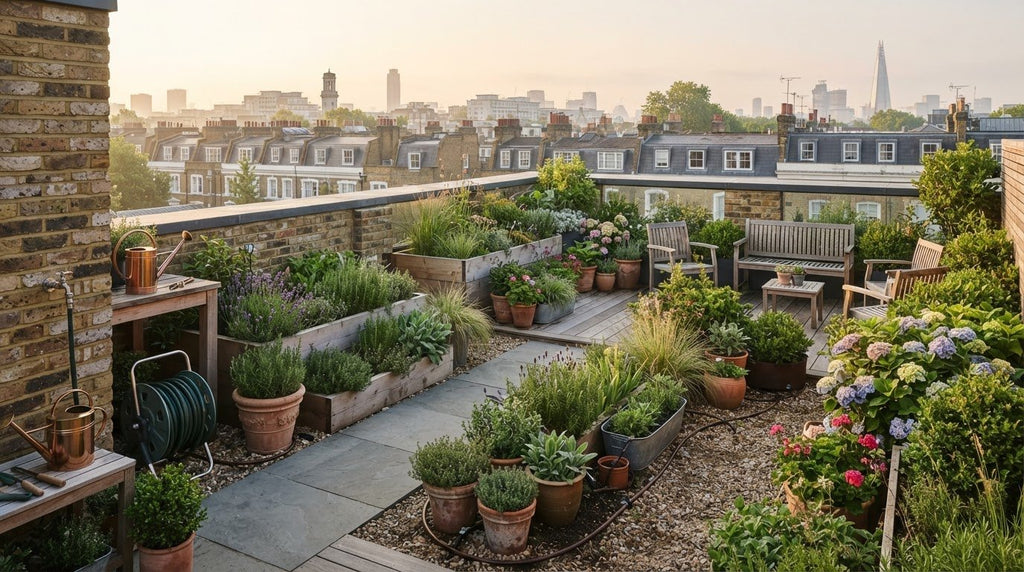
The most automated watering setup isn’t always the right one for a rooftop terrace. Sunny, exposed conditions can dry out pots quickly, while carrying water from inside can turn plant care into a chore. The best watering solutions for rooftop terraces depend on your space, containers and plants, not simply on how much equipment you use.
To choose a practical approach, consider how many pots you need to reach, how they’re arranged and how easy it is to access water. A good setup delivers water where your plants need it without making routine care more complicated.
This guide explains how to match a watering method to your terrace’s exposure and layout, then plan a straightforward system for your containers. You’ll learn when hand watering, a hose, drip irrigation or automatic watering can make sense, and why it’s important to check your local water company’s rules if a hosepipe restriction is in force.
Key Takeaways
- Assess sun, wind, container size and plant needs to identify which pots need closer attention.
- Compare watering solutions for rooftop terraces by the coverage you need and the time you can spend watering.
- Map your pots, group plants with similar watering needs and identify water access before planning a layout.
- Test water delivery and adjust your routine as rainfall, temperature and terrace exposure change.
- Use your layout and watering routine to decide whether drip irrigation or an automatic watering system is a practical fit.
Why rooftop terrace plants need a watering plan
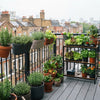
Rooftop terrace watering means matching water delivery to your containers, their growing conditions and the water access available. A few pots near a tap call for a different approach from planters spread across a sunny, exposed roof. Planning around these details helps you water consistently without making every round a long trip with a watering can.
There’s no single watering frequency that suits every rooftop. Sun, wind, container size, plant type and growing medium all affect how quickly moisture is used or lost. Treat the terrace as a collection of different growing conditions rather than assuming every pot needs the same amount of water at the same time.
What makes rooftop terrace watering different?
Terraces can be more exposed than sheltered garden beds. Sun warms pots and their growing medium, while wind can increase moisture loss from the surface and foliage. Conditions vary with the building, orientation and weather, so a protected corner may stay moist longer than pots along a bright, breezy edge.
Containers hold a limited volume of growing medium, with no surrounding ground soil to act as a larger moisture reserve. A pot can therefore dry out sooner than a plant in a bed, particularly if it’s small or exposed. Exposure and container size shape rooftop watering needs: sunnier, windier positions and smaller pots often need closer checks than sheltered, larger planters.
Rooftop planting varies, too. Some terraces have individual containers, while others include extensive or intensive green-roof areas. Green roofs and their irrigation systems offer context on how roof planting and water management can differ from container gardening. Assess the planting you actually have before choosing a watering method.
Which plants and containers need the closest attention?
Small pots contain less growing medium, so their moisture levels can change quickly. Larger planters usually provide a bigger reserve, but plants sharing a container may compete for moisture as they grow. Grouping pots can make watering easier, but check each one: a container may be more shaded, crowded or thirsty than its neighbours.
Plant type matters. Newly planted specimens may need closer observation while they establish, while established plants can have different moisture needs depending on their growth and condition. Potting mix also affects how water is held and drained, so don’t assume that two similar-looking pots will behave alike.
Build a simple check into your routine. Feel the growing medium below its surface, look for changes in leaf condition and note which pots dry first after a sunny or windy spell. Use what you observe to decide where watering needs more attention, rather than following a rigid schedule. This is a useful starting point when comparing watering solutions for rooftop terraces.
Consider water access as well as plant needs. If carrying water across your home is inconvenient, a watering system can make regular care more manageable. A terrace with grouped containers and a suitable water supply may work well with drip irrigation or automatic watering. Explore the Hozelock watering range when considering these options. The right fit depends on your layout, not simply the number of pots.
Compare watering solutions for rooftop terraces
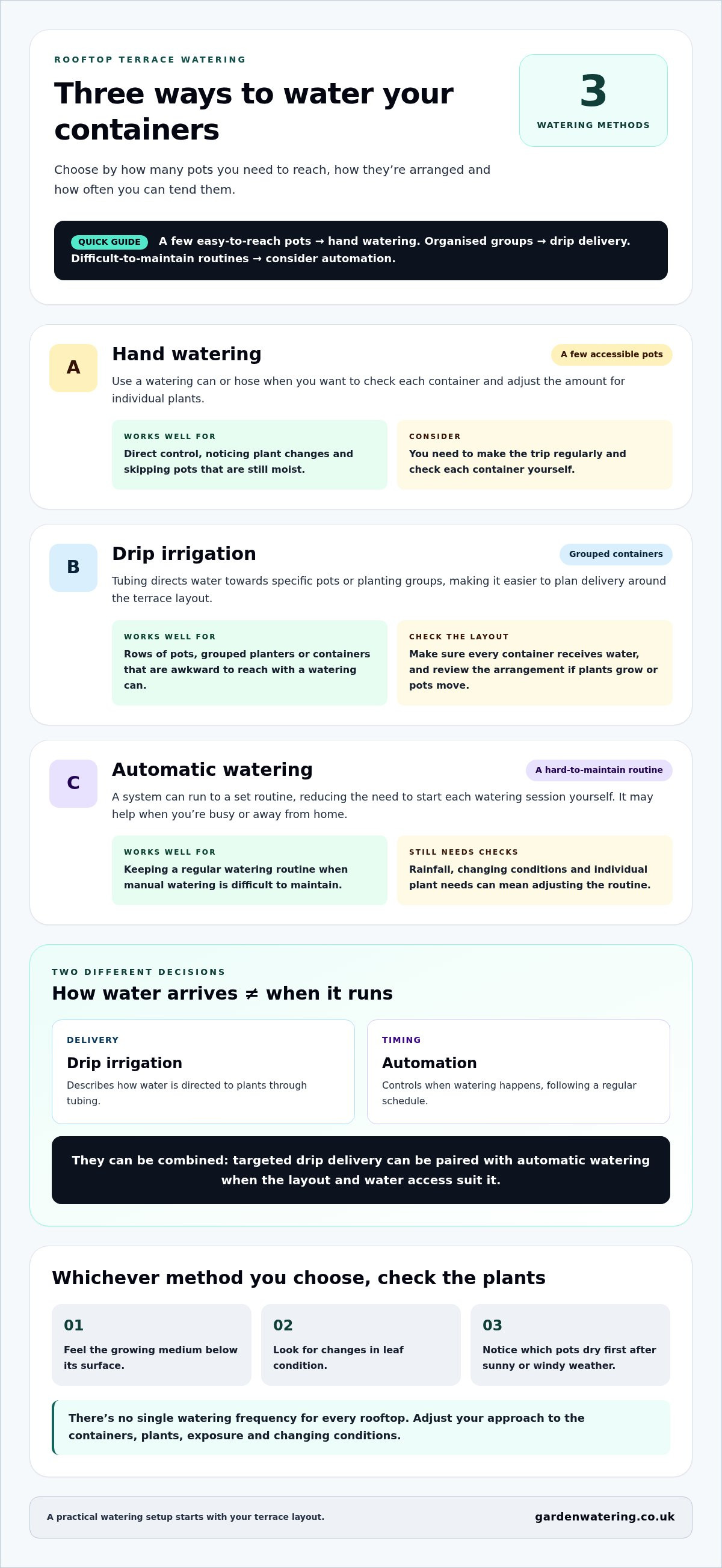
The best watering method depends on how many containers you need to reach, how they’re arranged and how often you can tend them. Hand watering gives you direct control over each pot, but takes time each round. Drip irrigation directs water through tubing to specific containers or planting groups. An automatic watering system can run to a set routine, reducing the need to start each session yourself.
Drip irrigation and automatic watering aren’t competing methods. Drip describes how water reaches plants; automation controls when delivery happens. A setup can combine targeted delivery with automatic watering, provided it suits the terrace layout and water access. As a simple rule, hand-water a few easy-to-reach pots, use drip for organised groups, and consider automation when regular manual watering is difficult.
When is hand watering enough for a rooftop terrace?
For a small collection of accessible containers, a watering can or hose may be the simplest choice. You can adjust the amount for each pot, spot changes in plant condition and avoid watering containers that are still moist. That control is useful when plants have different needs.
The trade-off is repetition. You’ll need to make the trip regularly and check each container. Before watering, assess the growing medium and plant response; don’t assume every pot needs water just because it’s your usual watering day.
When can drip or automatic watering make sense?
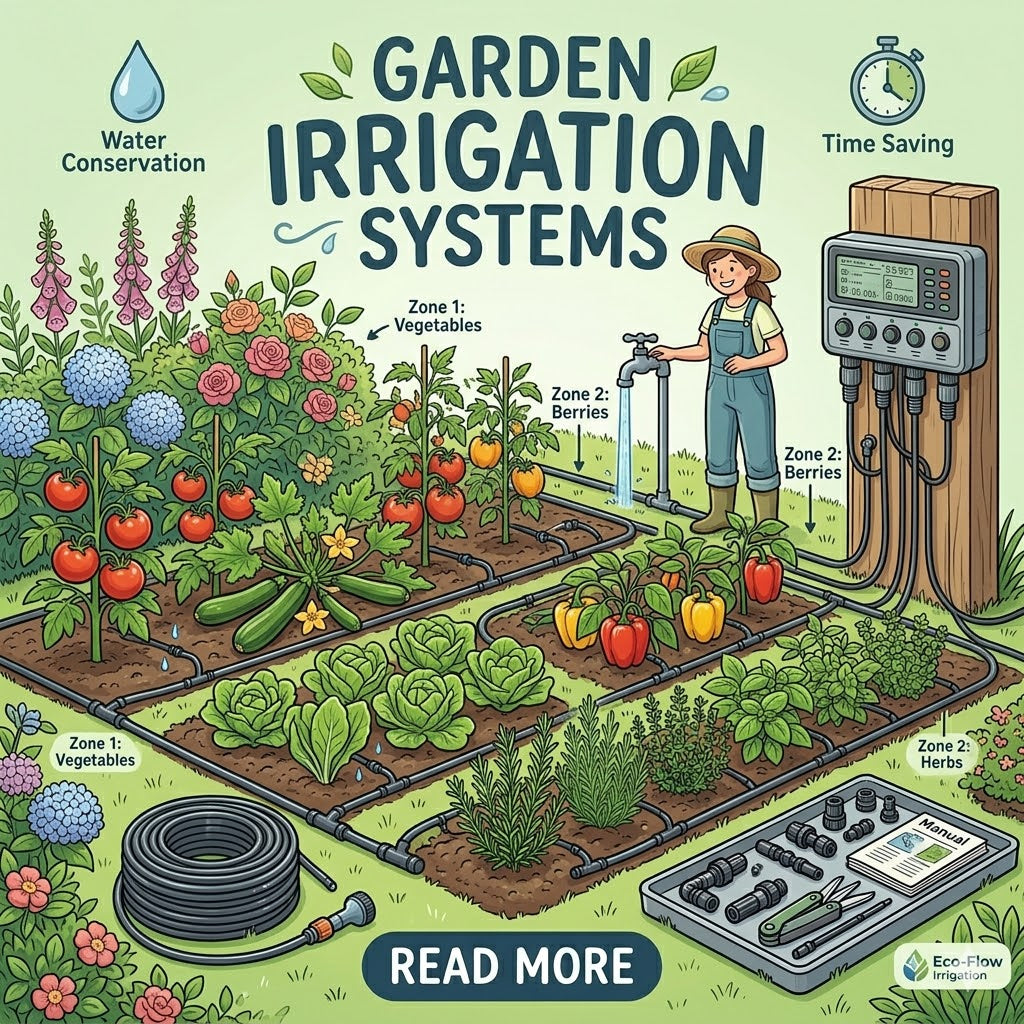
Drip delivery can work well for a row of pots, grouped planters or containers that are inconvenient to reach with a watering can. Tubing directs water towards the plants, helping you organise delivery around your layout rather than watering the whole terrace indiscriminately. Check that each container receives water and that the arrangement still works as plants grow or pots move.
Automatic watering can help when a busy routine makes regular hand watering hard to maintain, or when you’re away from home. It can follow a regular schedule, but shouldn’t replace occasional checks. Rainfall, changing conditions and individual plant needs can mean the routine needs adjusting.
Use these practical comparisons to narrow down your options:
- Hand watering: suits a small number of accessible pots and gives you hands-on control, but depends on you being available to water.
- Drip irrigation: suits grouped containers and targeted delivery, though the layout needs to reach each pot effectively.
- Automatic watering: helps maintain a regular routine with less manual effort, but still benefits from monitoring and adjustment.
If targeted delivery looks right for your container layout, explore drip irrigation systems. Choose based on the coverage you need and how much routine involvement you want, rather than assuming one method fits every terrace.
Plan a rooftop terrace watering layout that fits your space
A simple layout plan shows where water needs to go before you choose equipment or route tubing. It can also reveal practical constraints, such as a distant tap, a narrow passage or pots around furniture. Focus on how water will reach each container and where any excess will drain.
Map containers, water access and exposure
Start with a quick sketch of the terrace. Mark each pot and planter, the water source, sheltered corners and exposed edges. Note awkward turns and long distances between the source and containers. These details help you judge whether a route will be manageable and which areas need closer monitoring.
- Map every container. Mark its position and identify whether it’s an individual pot, part of a group or a larger planter. Include containers tucked behind seating or at the far end of the terrace.
- Group similar watering needs. Where the layout allows, place plants with broadly similar needs together. This can simplify tubing routes and make it easier to monitor a group without treating every pot as a separate watering zone.
- Identify water access. Mark the tap or other available source, then trace a possible route to the containers. Consider whether a hose or tubing can pass around doors, furniture and walkways without creating an obstruction.
- Test coverage. Run a short trial and check each outlet or watering point. Confirm that water reaches the intended containers, including pots at the end of a route, before settling on the arrangement.
Grouping can simplify a setup: a cluster of planters along one wall may be easier to supply and inspect than scattered pots in several corners. Don’t group plants solely for convenience if their watering needs differ considerably. Note those differences on your sketch so you can account for them when adjusting delivery.
Check drainage and test the setup carefully
Before running a system for longer, find out where excess water flows. Check the terrace surface and drainage points, and make sure water isn’t directed onto neighbouring property, doorways or walkways. A short test can reveal splashing, pooling or an outlet that misses its container. Correct the route or position before extending the run time.
Test one section at a time if your layout has several branches. Check that water reaches the intended growing medium, rather than simply confirming that the system is running. Then observe the soil and plants before making small adjustments. Changing one part of the setup at a time makes it easier to see what has helped.
Once you’ve mapped the route and identified the coverage needed, compare your plan with suitable Hozelock watering systems. Consider water access, container arrangement and how you want to manage delivery. A clear layout makes choosing among watering solutions for rooftop terraces more straightforward.
Set up and maintain rooftop watering through the UK seasons
A watering setup needs occasional attention as weather and plant growth change. Routine checks help you spot dry containers, uneven delivery or water running where it shouldn’t. Use what you see in the plants and growing medium to guide adjustments instead of relying on a fixed schedule.
After rain, a warmer spell or a change in how much sun reaches the terrace, reassess before altering your system. Rain may reduce the need for watering in some containers, while exposed pots can still dry sooner than sheltered ones. Check each pot’s moisture first. Two containers beside each other can respond differently because of their size, planting or position.
How should watering change with the weather?
Treat your routine as a prompt to inspect, not an automatic instruction to add water. After rainfall, check whether it has reached the growing medium rather than assuming every pot is moist. During warmer or sunnier conditions, look more closely at exposed containers, but check them before increasing delivery. Let the soil and plants guide gradual changes.
A practical sequence is simple: observe the plants, check the soil, run a short test of the watering system, then adjust timing or delivery if needed. For example, if one container stays wet while another in the same group dries quickly, check the outlet and consider the plants’ different conditions before changing the whole system. This keeps adjustments targeted.
What should readers check during routine maintenance?
Inspect visible tubing and connections for movement, kinks or disconnection, especially after moving pots or tidying the terrace. Check outlets for obvious blockages and confirm that each container receives water. Look at the growing medium as well as the system: water flowing from an outlet doesn’t necessarily mean it’s reaching the right place or soaking in as intended.
Watch for unnecessary runoff or pooling. If water misses a pot, collects on the terrace or reaches a walkway, reposition the outlet or adjust delivery. Make one change at a time, then test again. This makes it easier to identify the cause of uneven watering without overcorrecting for other containers.
- After weather changes: check soil moisture before increasing or reducing watering.
- During routine checks: look for displaced tubing, blocked outlets and inconsistent delivery.
- In colder periods: protect or store equipment as appropriate, following the product instructions.
Regular observation keeps watering solutions for rooftop terraces responsive to UK weather instead of tied to a one-size-fits-all timetable. If you’re considering an automatic option to support a consistent routine, explore Hozelock automatic watering systems and choose an approach that fits your containers and how you’ll monitor them.
Choose a rooftop watering solution with Garden Watering
The most suitable setup is one that fits your terrace and feels manageable to use. Before choosing equipment, consider how many containers you have, how they’re grouped, where the water source is and how much time you can spend checking them. A compact terrace with a few accessible pots may need little more than hand watering, while containers spread across the roof can benefit from a planned delivery route.
Water access matters as much as terrace size. Note the distance from the source to the furthest planter and whether tubing could reach it without crossing a busy walkway. Consider how often you can monitor the setup, too. The aim is consistent care that fits your routine, not the most complex system available.
Match the system category to your terrace
Drip irrigation can be a practical option for grouped containers that need targeted delivery. It lets you plan watering around pots and planters rather than applying water across the whole terrace. The layout still needs to reach each container, and you’ll want to check that delivery remains even as plants grow or pots move.
Garden Watering sells Hozelock automatic watering systems, which can help create a more consistent routine with less repeated manual effort. The right setup depends on your water access, planting arrangement and how you’ll check and adjust the system. For guidance on choosing an automatic setup, explore the Hozelock automatic watering guide.
Garden Watering specialises in watering systems and offers expert advice informed by over 15 years of experience. That expertise can help you assess the options, whether you’re considering drip irrigation or an automatic system for rooftop containers.
Make the next step simple
Before browsing, jot down the number of containers, which plants are grouped together and where you can access water. Note any distant or awkward pots, too. This short checklist gives you a clearer basis for comparing watering solutions for rooftop terraces and choosing a setup that matches the coverage you need.
Keep the first arrangement manageable. Once it’s in place, test the delivery and observe how the growing medium and plants respond. You can then make careful adjustments instead of trying to plan for every possible condition at once.
If you’ve assessed your terrace and want to compare options, explore Hozelock watering options. Choose a system category that fits your layout and routine, then use regular checks to keep watering consistent as conditions change.
Make rooftop watering easier to manage
Your next step doesn’t need to be a major project. Choose one area of the terrace to plan first, note which containers are hardest to water and decide what would make regular care simpler. A manageable setup that you can test and adjust is more useful than a complicated arrangement that’s difficult to maintain.
The right watering solutions for rooftop terraces should fit the way you use your space as well as the plants growing there. As your containers mature or your terrace changes, revisit the layout and adapt your approach. Small, considered adjustments can help keep plant care consistent through changing UK weather.
Garden Watering offers specialist advice informed by over 15 years of experience, alongside Hozelock automatic watering systems, drip irrigation systems and watering kits. Explore Hozelock watering options for your terrace and take the next step towards a setup that works for your plants and routine.
With a clear plan and a suitable watering approach, keeping rooftop plants watered can feel much more manageable.
Frequently Asked Questions
Can I use drip irrigation on a rooftop terrace?
Yes, drip irrigation can suit rooftop containers, particularly when several pots are arranged in a group. Before choosing a setup, check that the water source can serve the planned route and that tubing can reach every container without creating a trip hazard. Consider whether the plants share similar needs and where excess water will drain. Test delivery at each pot, then check the growing medium before relying on the system. It’s one of several useful watering solutions for rooftop terraces.
How often should I water plants on a rooftop terrace?
There’s no single watering interval that works for every rooftop terrace. A small pot in a sunny spot may dry out sooner than a large planter in a sheltered corner, and different plants use water at different rates. Check the growing medium and look for changes in the foliage before watering. Reassess after rainfall or a warmer, windier spell. If you use a timer, treat it as a prompt for routine watering, not a substitute for checking plants.
Can an automatic watering system work without an outside tap?
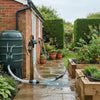
It depends on the system’s intended water source and the access available on your terrace. Don’t assume every automatic system can draw water from the same source or suit every container arrangement. Read the instructions for the system you’re considering, including any requirements for its water supply, and plan a safe route that won’t obstruct a doorway or walkway. If you’re using a stored water source, make sure the system instructions specifically support that arrangement.
How do I stop rooftop planters from drying out so quickly?
Check containers more often during warm or exposed weather, and note which positions dry out first. Grouping plants with similar watering needs can make their care easier to manage, while moving a vulnerable pot to a less exposed position may help if the terrace layout allows. Targeted watering can direct water to the planter that needs it. The right approach depends on the plants, container size and conditions, so observe moisture rather than relying on a fixed frequency.
Is drip irrigation better than hand watering for terrace pots?
Neither method is automatically better for every terrace. Hand watering gives you direct control and can be practical for a few pots close at hand, especially if their needs differ. Drip irrigation can reduce repeated manual work for grouped containers, provided the route reaches each pot and the system is checked. Compare how many containers you have, how accessible they are, your water access and how often you can monitor delivery before deciding.
How can I prevent excess water from causing problems on a rooftop terrace?
Start by understanding how each planter drains and where runoff travels across the terrace. Test the system in short runs, checking that water reaches the growing medium rather than spilling over or pooling. If it escapes onto a walkway or another area, reposition the outlet or adjust delivery and test again. Keep the terrace’s existing drainage arrangements clear, and don’t leave a watering system running unchecked while you’re still assessing its coverage.
Do rooftop terrace watering systems need seasonal adjustment in the UK?
Yes, changing rainfall, temperatures and exposure can mean that one set of watering settings won’t suit the whole year. Check the growing medium and plant condition before changing a routine, particularly after a wet spell or a sudden warmer period. During routine inspections, look for shifted tubing, loose connections and outlets that aren’t delivering evenly. In colder weather, protect or store equipment as directed in its care instructions.
`-
Posted in
automatic watering, container gardening, drip irrigation, plant care, rooftop gardening, terrace watering, UK gardening, urban gardening, watering solutions for rooftop terraces