Hozelock
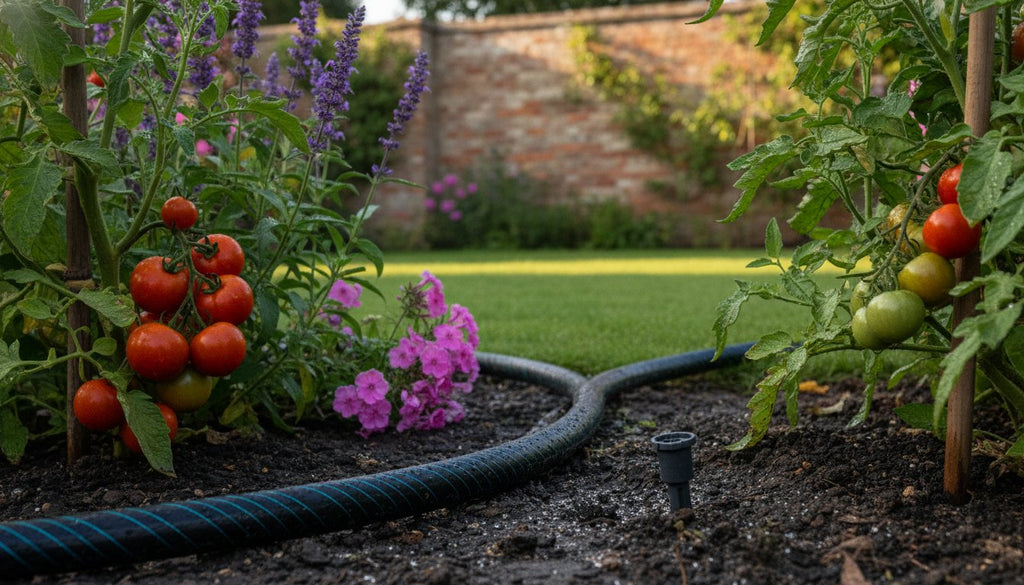
Why would you invest in a high-tech timer only to let a standard garden hose starve your plants of the water they need? It's a common mistake that leads to low pressure at the end of the line and hoses that burst under constant pressure. You've likely felt the frustration of setting up a Hozelock system only to find your furthest pots are bone dry while the tap-end is leaking. We understand that selecting the right components is difficult when you just want a reliable way to keep your garden healthy during the unpredictable UK weather.
Discover how to choose the perfect irrigation supply line to ensure your Hozelock automatic watering system performs at peak efficiency without leaks or pressure drops. Drawing on 15 years of specialist experience, we'll show you how matching the right pipe diameter to your garden layout creates a "set and forget" system that can reduce water waste by up to 90% compared to traditional methods. This guide explores our curated collection of 14 supply lines, explaining why UV-stabilised, kink-proof construction is the essential foundation for a healthy, vibrant landscape.
Key Takeaways
- Understand the critical difference between supply and micro pipes to ensure your garden's "main artery" delivers water without pressure drops.
- Learn why selecting UV-stabilised and kink-proof materials is the only way to prevent bursts and blockages during the peak of summer.
- Identify whether the standard 13mm pipe or a 25mm high-flow alternative is the right choice for your specific Hozelock system layout.
- Master simple but effective installation techniques, such as the hot water trick, to guarantee a secure and leak-free connection every time.
- Discover the best-performing irrigation hoses from our specialist 14-product collection to build a durable, "set and forget" watering network.
The Role of Supply Line Hoses in a Hozelock Automatic System
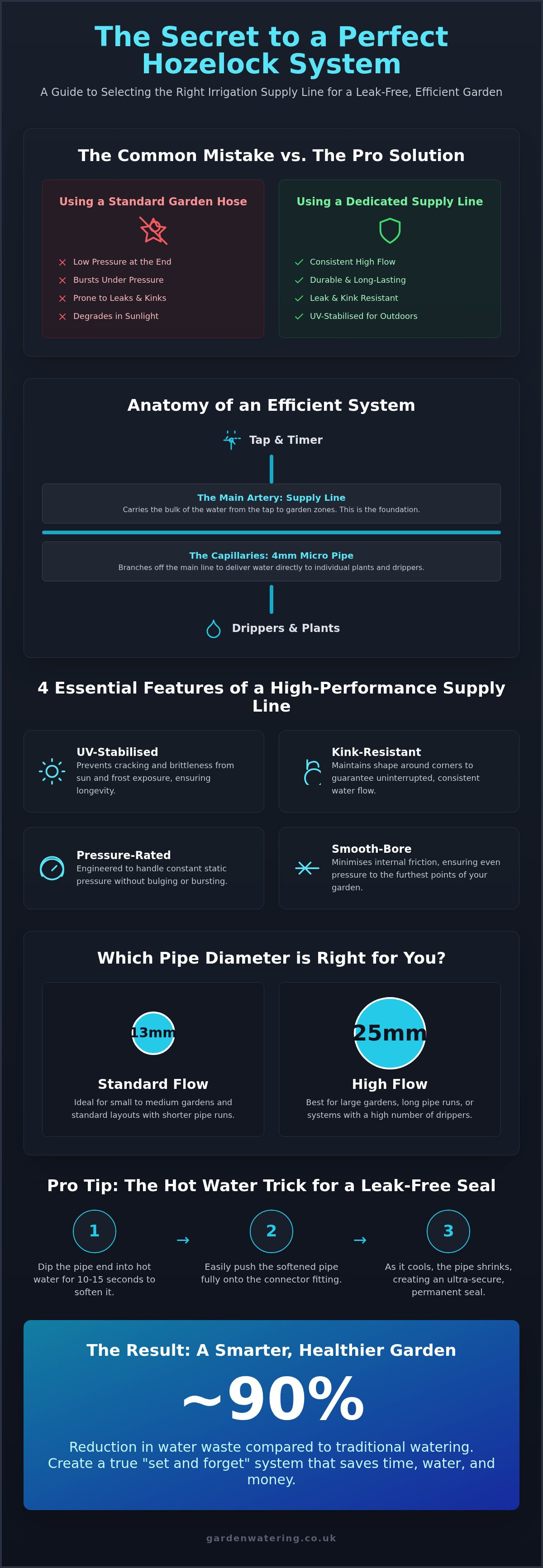
Think of your irrigation network like a circulatory system. The supply line is the main artery. It carries the bulk of the water from your tap to various zones in your garden. It's fundamentally different from the 4mm "Micro" pipes, which act like small capillaries to deliver water to individual pots. While many people try to use a standard garden hose for the main run, it's often a mistake that leads to early system failure. You need a pipe specifically designed to stay outdoors year-round.
Hozelock has a long history of innovation in garden care; you can read more about the Hozelock company history to see how they've led the market. For an automatic system, you need a pipe that can handle being "live" for long periods. Standard hoses aren't designed for constant static pressure. They eventually bulge, kink, or burst, especially during a UK heatwave when the plastic softens. Using dedicated supply lines ensures your system remains intact and leak-free for years.
To better understand how these components work together, watch this helpful video:
Why Your Irrigation System Needs a Dedicated Supply Pipe
A dedicated supply pipe is engineered to withstand the constant pressure generated when a Hozelock water timer shuts off. It also offers superior flow efficiency. Standard hoses have internal friction that slows water down over long distances. In contrast, smooth-bore supply lines ensure your furthest drippers get the same pressure as the ones nearest the tap. Plus, these black pipes are far more discreet. They vanish into the shadows of your borders, unlike a bright yellow hose that creates an eyesore across your lawn.
The Spine of the System: Connecting to the Tap
Your setup begins at the outside tap. Here, a pressure regulator is usually installed to drop the mains pressure to a level your system can handle safely. Using compatible components at this junction is vital for a leak-proof seal. The supply line serves as the high-pressure foundation for all downstream drippers, acting as the sturdy bridge between your home's plumbing and your plants. It's the difference between a system that works and one that needs constant repairs.
Key Features of High-Performance Irrigation Supply Hoses
High-performance irrigation supply lines are more than just plastic tubes. They're precision-engineered components that determine whether your garden thrives or suffers from patchy watering. When building a Hozelock system, the quality of your supply line affects everything from pressure consistency to the physical lifespan of the installation.
UV-Stabilisation and Longevity
Standard plastic hoses often fail because they aren't built for permanent outdoor exposure. Over time, solar radiation breaks down the chemical bonds in common PVC, making it brittle and prone to cracking. This is a particular problem in UK gardens where pipes must survive both intense summer sun and freezing winter temperatures. Using UV-stabilised materials ensures your network remains supple and strong for years. Our curated collection of 14 supply line solutions focuses on this durability, preventing the need for frequent, frustrating replacements. By following water-efficient irrigation practices, you can ensure your system delivers every drop exactly where it's needed without losing water to hidden cracks in degraded pipes.
Kink-Resistance and Water Flow
Nothing ruins a watering schedule faster than a hidden kink. If a pipe collapses under a layer of mulch or behind a garden shed, it creates a blockage that starves your plants. High-performance lines use specific wall thicknesses and material blends to resist kinking while maintaining enough flexibility to navigate tight corners. This balance is essential. A pipe that's too rigid is impossible to install, but one that's too soft will fail under pressure. Choosing a hose with "memory-free" properties allows you to route the line around garden features without worrying about flow restriction.
Connections are the final piece of the reliability puzzle. You'll generally choose between barbed fittings, which push into the pipe, and nut fittings, which clamp the pipe from the outside. Barbed fittings are excellent for standard setups, but nut fittings offer superior resistance to "blow-offs" if your mains pressure is particularly high. To see the full range of durable options, browse our irrigation supply line hoses to find the right fit for your project.
Achieving a leak-proof seal requires a high-quality finish on the pipe itself. A smooth internal surface reduces friction, which is vital for maintaining pressure across larger garden layouts. When your supply line functions at peak efficiency, your Hozelock drippers can perform exactly as they were designed, providing consistent hydration to every plant in your care.
Selecting the Right Hose Diameter and Length for Your Garden
Selecting the right dimensions for your irrigation network is a balancing act between water pressure and distance. If the pipe is too narrow for a long run, friction will starve your plants at the end of the line. Conversely, a pipe that is too large can be difficult to hide and more expensive than necessary. Getting this right ensures that your Hozelock automatic watering systems perform exactly as intended.
13Mm vs 25mm: Which Diameter Do You Need?
The 13mm pipe is the "sweet spot" for most UK domestic gardens. It's the standard size for the vast majority of Hozelock connectors and accessories. For pipe runs up to 50 metres, a 13mm supply line usually provides enough flow to power a standard set of drippers or micro-sprays. However, if your garden is exceptionally large or you're running high-flow equipment like popup sprinklers, you should consider a 25mm main line. This larger diameter acts as a high-capacity header, allowing you to move more water over longer distances before branching off into smaller 13mm zones.
Calculating Your Total Pipe Run
Measuring your garden requires more than a quick glance. Start by tracing the perimeter of your flower borders where the pipe will actually sit. Don't forget to account for "dead runs," which are sections of pipe that cross paths or patios where no watering happens. A common oversight is forgetting vertical rises; measure the distance from your tap down to the ground and any points where the pipe must climb over a wall or trellis. Add 10% to your final measurements to account for curves around obstacles and the inevitable adjustments made during installation.
Planning for the future is just as important as measuring for today. Buying a longer roll than you think you need is a wise move for any gardener. It's much easier to have five metres of spare pipe in the shed than it is to buy a new roll and a joiner when you decide to add a few more pots next summer. This approach allows your system to grow alongside your garden, maintaining its efficiency without requiring a complete overhaul. By ensuring you have a continuous, high-quality supply line, you protect the long-term health of your landscape while minimising water waste.
Practical Installation Tips for a Leak-Free Irrigation Network
Installing a Hozelock system is a rewarding project that pays off in healthy plants and saved time. To ensure your network remains leak-free, you can use a few simple trade secrets. One of the most effective is the "hot water trick." Before you try to push a connector into the supply pipe, dip the end of the hose into a mug of freshly boiled water for about 30 seconds. This softens the plastic, allowing the fitting to slide in with minimal effort. As the pipe cools, it contracts around the connector to create a professional, watertight seal.
Precision is vital when you're making joints. Always use a sharp pair of pipe cutters or a utility knife to ensure a perfectly square cut across the pipe. If the cut is at an angle, the internal seal won't sit flush, which is the most common cause of persistent drips. Once your line is in place, don't just leave it resting on the soil. Secure the pipe every metre using ground stakes or pegs. This prevents "pipe creep," where the plastic expands and moves as it warms up in the sun, potentially pulling connections apart over time.
Before you hide your hard work under a layer of mulch or decorative bark, you must perform a full pressure test. Turn the water on and walk the entire length of the supply line. Listen for any hissing sounds and look for damp patches around the fittings. It's much easier to tighten a loose nut or push a barbed fitting home now than it is to dig up your borders later in the season.
Planning Your Layout for Maximum Efficiency
The way you route your pipework significantly impacts your water pressure. For many gardens, a "Loop" design is the best choice. By connecting the end of your supply line back to the start or creating a continuous circle, you equalise the pressure across the whole network. This ensures that the drippers furthest from the tap perform just as well as the ones at the beginning. When you integrate drip irrigation systems, try to branch them off the main supply line using T-junctions. This "manifold" approach is far more efficient than creating one long, single chain of drippers, which often leads to a massive pressure drop at the end.
Winterisation and Maintenance
UK winters can be tough on outdoor plumbing, so proper maintenance is essential for longevity. Before the first hard frost, you should drain your system to prevent ice from expanding and splitting the pipes. Simply open the end plugs and run your timer for a minute to clear the bulk of the water. Throughout the summer, make it a habit to check your filters and individual drippers for grit or lime-scale blockages. If you're ready to build a system that lasts, explore our specialist irrigation supply line hoses to find the perfect foundation for your garden watering project.
Top Hozelock-Compatible Supply Line Solutions for 2026
Choosing the right hardware is the final step in securing a thriving garden. While general retailers offer basic tubing, we've spent 15 years testing and refining our range to ensure every product meets the high standards required for a Hozelock system. Our Irrigation Supply Line Hoses collection features 14 curated solutions designed specifically for the UK climate, focusing on durability and ease of use.
The 25m roll of 13mm UV-stabilised supply pipe remains our best all-rounder for the average domestic garden. It provides enough length to cover most flower borders or a standard greenhouse setup while remaining easy to handle during installation. For those managing larger landscapes or multi-zone networks, we recommend the 50m professional rolls. These longer runs reduce the need for joiners, which inherently minimises the number of potential leak points in your system. To ensure a perfect fit between different pipe sizes or tap types, using high-quality irrigation fitting adaptors is essential for maintaining a watertight foundation.
Our Recommended Supply Hoses for UK Gardeners
Success in the garden often comes down to the details of your equipment. We prioritise hoses with a high-density, kink-proof design. This engineering is vital when you're navigating tight corners around garden sheds or weaving through dense vegetable patches. A pipe that maintains its shape under pressure ensures your plants receive a consistent flow of water, regardless of the layout. Our leak-proof fittings provide additional peace of mind, ensuring that your water meter only spins when your plants are actually being hydrated. These hoses are built to stay flexible even after years of exposure to frost and sun, making them a reliable choice for any permanent installation.
Why Shop with Garden Watering?
We aren't just a retailer; we're a dedicated partner in your garden's success. As a specialist in Hozelock Automatic Watering Systems, we offer a level of expertise that generalist stores simply can't match. Every one of the 14 products in our supply line collection has been selected for its proficiency and long-term performance. We understand the specific challenges of UK gardening, from varying water pressures to unpredictable weather patterns. If you're feeling unsure about your layout, you can access our design ideas and plans to help visualise your project. Our goal is to provide the reliable support and high-quality components you need to create a "set and forget" watering system that lasts for years.
Build Your High-Performance Watering Network
Your irrigation system is only as strong as its foundation. By choosing the right diameter and prioritising UV-stabilised, kink-proof materials, you ensure your Hozelock automatic watering system operates at peak efficiency. We've explored how the correct supply line prevents pressure drops and why a square cut is the secret to a leak-free seal. These small details make the difference between a garden that struggles and one that truly thrives.
As a specialist UK retailer with over 15 years of expert irrigation advice, we're dedicated to helping you find the perfect fit for your landscape. Our curated collection of 14 high-quality hoses ensures you get a durable solution that withstands the variable UK weather. Don't settle for standard garden hoses when your plants deserve a dedicated, professional-grade network. It's the best way to protect your investment and your plants.
Browse our full collection of Irrigation Supply Line Hoses for efficient watering. We're here to help you create a reliable, "set and forget" system that keeps your garden vibrant and healthy all year round.
Frequently Asked Questions
Can I use a standard 1/2 inch garden hose as a supply line for my irrigation system?
Standard garden hoses are not designed for the constant static pressure found in an automated irrigation system. They often have thicker, softer walls that don't fit securely into 13mm compression fittings. Over time, the constant pressure from a timer can cause a garden hose to bulge or pop off the connectors. For a "set and forget" system, you need a dedicated supply line that maintains its structural integrity under pressure for many years.
What is the difference between 13mm and 15mm irrigation pipe?
Compatibility is the main reason to choose 13mm over 15mm. Most domestic UK fittings, including the entire Hozelock range, are designed specifically for 13mm internal diameters. Using 15mm pipe with these connectors will result in a poor fit that leaks under pressure. While 15mm might seem like it offers better flow, the lack of compatible domestic accessories makes it a difficult choice for most gardeners. Stick to 13mm to ensure a stress-free installation process.
How deep should I bury my irrigation supply line hose?
You should bury your supply line approximately 10 to 15 centimetres deep. This depth protects the pipe from accidental damage caused by garden trowels or lawn mowers while remaining shallow enough for easy access if you need to make repairs. If you live in a particularly cold part of the UK, burying the pipe slightly deeper can offer extra protection against frost. Always ensure the ground is free of sharp stones before backfilling the trench.
How many drippers can I run off a single 13mm Hozelock supply line?
You can typically run between 30 and 50 drippers from a single 13mm supply line, depending on your household water pressure. Most standard drippers use about 4 litres of water per hour. If you exceed this limit, the pressure will drop significantly at the end of the line, leaving your furthest plants dry. For very large gardens with high demands, consider splitting your layout into multiple zones to maintain consistent performance across the entire network.
Do I need to take my irrigation pipes inside during the winter?
High-quality irrigation pipes are engineered to stay in the garden throughout the year. The UV-stabilised plastic won't degrade in the sun, and the material is flexible enough to handle temperature shifts. The only critical step is ensuring the system is completely empty before winter. Ice expansion is the primary cause of damage to Hozelock components. By opening the manual drainage valves, you protect your investment without the hassle of digging up your network.
Why is water leaking from my Hozelock pipe connectors?
Leaks often occur if the internal O-rings are dry or if your mains pressure is too high. While a square cut is essential, you should also ensure the pipe is pushed fully past the first internal ridge of the fitting. If the connection feels loose, a pressure regulator might be necessary to bring the flow down to a manageable level. Checking for debris trapped inside the fitting can also resolve persistent dripping issues quickly and easily.
Can I connect a Hozelock supply line to a water butt?
You can connect to a water butt, but you will almost certainly need a dedicated pump. Gravity-fed systems rarely provide enough pressure to push water through drippers or micro-sprays effectively. A solar-powered or electric pump provides the necessary force to move water from the butt through your supply line. This is an excellent way to save water while still enjoying the convenience of an automated irrigation network for your pots and borders.
Is it better to use a soaker hose or a drip line for my flower beds?
Drip lines are generally better for flower beds because they deliver water directly to the root zone with minimal evaporation. They offer precise control over how much water each plant receives, which is vital for delicate species. Soaker hoses are useful for established hedges or long rows of vegetables, but they are less efficient. For most domestic gardens, a drip system provides superior water conservation and better long-term plant health across the seasons.
`-
Posted in
Automatic Watering, DIY Gardening, Garden Hose, Hozelock, Irrigation, Leak Prevention, Supply Pipe, Water Saving