
Troubleshooting Hozelock Watering Systems: The Expert Guide to Fixes and Parts
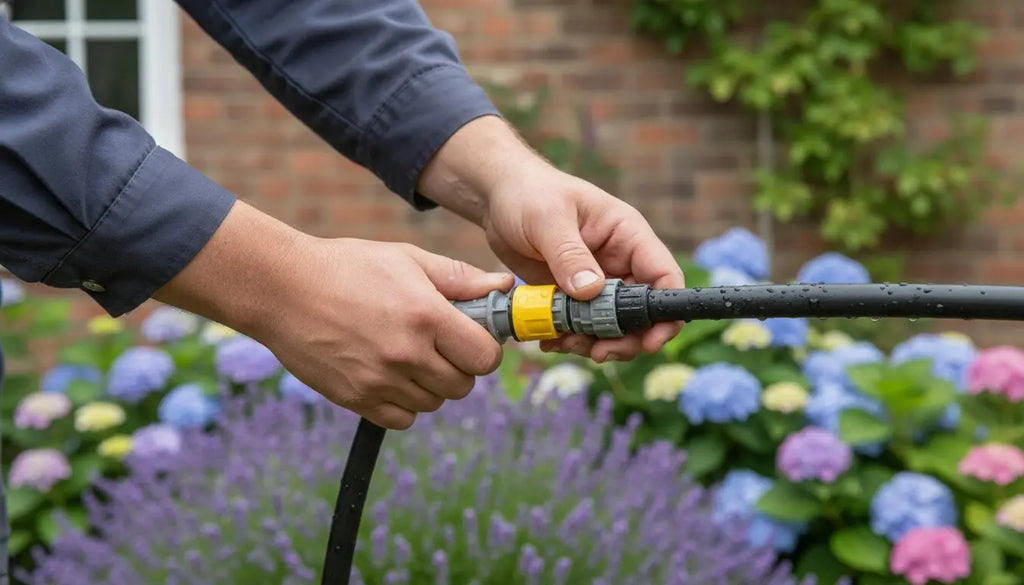
You've spent hours carefully planning your garden, only to find a puddle forming under the tap while your furthest plants start to wilt. It's a common frustration for many UK gardeners when a setup that should be "set and forget" begins to underperform. If you're currently troubleshooting hozelock watering system issues, you aren't alone; even the most reliable components can succumb to limescale buildup or high water pressure over time.
We understand how vital an efficient irrigation setup is for the long-term health of your landscape. Whether you're dealing with a persistent leak at the tap connector or a sudden system blow-out, there's always a practical solution. In this guide, we'll help you diagnose the most frequent irrigation faults and identify the specific Hozelock parts needed to restore your system's performance. You'll gain the confidence to select the right 4mm or 13mm fittings, ensuring your garden stays hydrated and healthy even while you're away on your summer holidays.
Key Takeaways
- Learn to distinguish between a complete system failure and simple underperformance by inspecting your 13mm supply pipes for kinks or damage.
- Master the art of troubleshooting hozelock watering system leaks by identifying worn seals in tap connectors and the Flowmax 3-Way Manifold.
- Stop connectors from "popping" off by installing a Hozelock Pressure Reducer, the most critical component for maintaining system stability.
- Discover how to restore flow to dry spots by efficiently cleaning or replacing blocked micro-emitters and in-line drippers.
- Build a specialist "troubleshooter’s toolkit" with UV-stable supply pipes and genuine spares to ensure your garden stays healthy and hydrated.
Common Symptoms: Diagnosing Your Hozelock System Failures
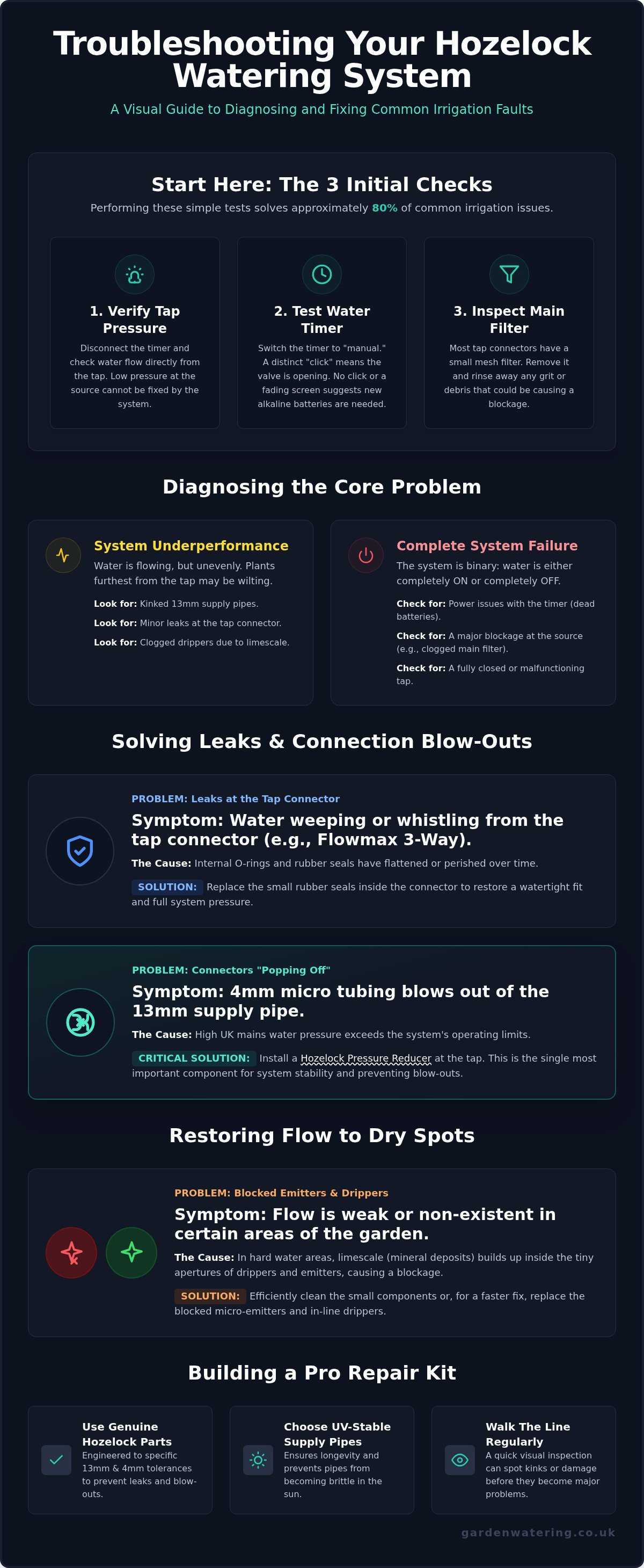
Identifying the root cause of an irrigation issue starts with distinguishing between a complete system failure and an underperforming one. A failed system is often binary; the water is either on or off. This is usually traced back to a power issue or a physical blockage at the source. An underperforming system is more subtle. You might notice that while the drippers near the tap are working, the plants at the end of the garden are wilting. When you begin troubleshooting hozelock watering system layouts, your first step should always be a visual "walk of the line."
During this inspection, look specifically for kinking in your 13mm supply pipes. While these pipes are designed for durability, they can be accidentally pinched under heavy decorative stones or twisted during garden maintenance. A single kink acts like a tourniquet, starving the rest of the system of the pressure it needs to operate. You should also check the "Tap to Timer" connection. If you see water spraying from the tap itself, the internal washers have likely perished, or the connector isn't seated correctly, leading to a significant drop in line pressure.
It is equally important to recognise the difference between a mechanical failure and simple calcification. In many regions across the UK, hard water is the silent enemy of irrigation. Limescale can slowly build up inside the tiny apertures of your drippers. If the system is clicking on but the flow is weak, you're likely dealing with mineral deposits rather than a broken component.
The First Three Checks for Every System
Perform these three simple tests before you start replacing parts. They solve roughly 80 percent of common irrigation complaints:
- Verify tap pressure: Disconnect your timer and check the flow directly from the tap. If the pressure is low at the source, the irrigation system cannot fix it.
- Test the water timer: Switch the timer to "manual" mode. You should hear a distinct "click" as the internal valve opens. If you don't hear this, or if the screen is fading, it's time for fresh high-quality alkaline batteries.
- Inspect the main filter: Most Hozelock tap connectors house a small mesh filter. Remove this and rinse away any grit or debris that has travelled through the mains.
Why Genuine Hozelock Parts Matter for Repairs
When you need to repair a section of pipe or replace a connector, the precision of the parts you choose is vital. Hozelock components are engineered to specific tolerances for their 13mm and 4mm ranges. Generic hoses often have slightly different internal diameters or wall thicknesses, which leads to "blow-outs" where the pressure causes the pipe to pop off the fitting. Using genuine components ensures your system remains leak-free and efficient throughout the summer. For a deeper look at how these components work together, read our Guide to Hozelock Automatic Watering Systems.
Fixing Leaks and Connection Blow-outs
Leaks are the most common reason for troubleshooting hozelock watering system setups. A drip at the tap might seem minor, but it can quickly starve the system of the pressure required for efficient watering techniques. Most leaks occur at the primary connection point or where the main line branches off into smaller micro-tubing. If your system is losing water before it reaches your plants, it's likely a simple mechanical issue that's easily fixed with the right part.
Sealing the Tap Connection
The Hozelock Flowmax 3-Way Tap Connector (2250) is a robust manifold, but it relies on internal washers to stay watertight. If you notice water weeping from the joints, it's often a sign that the O-rings have flattened or perished over time. Replacing these small rubber seals is a two-minute fix that restores full pressure to your lines. If your connector makes a high-pitched whistling sound, check for a loose inlet or an O-ring that isn't seated perfectly. High mains pressure can vibrate these loose parts, creating noise and wasting water. You can find replacement seals and new units in our collection of Hozelock connectors.
Securing the Micro Irrigation Line
Connection "blow-outs" often happen where 4mm micro tubing enters the 13mm supply pipe. To prevent this, ensure you use a dedicated punch tool to create a clean, round hole before inserting the joiner. Pushing the tubing in until you feel a firm "click" ensures a mechanical seal that won't fail under normal operation. However, water pressure isn't the only cause of failure. Physical stress from garden growth or pets can pull lines apart if they aren't properly anchored.
Using Hozelock 4mm Micro Tube Stakes (2781) anchors your lines firmly to the soil, preventing them from shifting. For vertical stability in pots or raised beds, Hozelock Micro Support Stakes (7029) keep drippers exactly where they're needed. When building your network, using genuine Hozelock Cross Fittings (7032) and T-Fittings (7033) provides the most secure fit. These components are designed to withstand the fluctuations of UK water pressure without popping off. If you're building a new layout or repairing an old one, keeping a few spares from our Hozelock irrigation parts toolkit will save you a trip to the shop mid-repair.
Solving Pressure and Flow Rate Issues
Pressure is the engine of your irrigation system, but too much or too little will stall your garden's growth. When troubleshooting hozelock watering system layouts, you'll often encounter "popping" connectors. This is a classic symptom of excess pressure where the force of the water exceeds the physical grip of the fittings. While earlier we discussed physical leaks, these explosive disconnections are almost always a pressure management issue rather than a faulty part.
The Pressure Reducer: Maintenance and Placement
The Hozelock Pressure Reducer (2760) is the most vital component in any automatic setup. It brings high UK mains pressure down to a steady 1.5 bar, which is the "sweet spot" for drippers and micro-sprays. If your system was working perfectly but now produces a high-pitched whistling or the connectors are frequently blowing off, the reducer may have failed or become clogged.
Always place the reducer immediately after your water timer and before the 13mm supply pipe begins. This protects every joint in your network. Inside the unit, a fine mesh filter prevents grit from entering your drippers. If you notice a sudden drop in flow across the entire system, unscrew the reducer and rinse this mesh under a tap. This simple maintenance task often restores full performance without the need for new parts.
Managing Water Delivery Across Large Borders
Low flow at the end of a long line is usually caused by "friction loss" or over-extending the system's capacity. A common mistake is "daisy-chaining" too many drippers onto a single 13mm line. Each emitter reduces the pressure available for the next one. If your garden covers a large area, you should split your layout into multiple zones to maintain efficiency.
Using the Hozelock Flowmax 3-Way Connector (2250) allows you to run separate lines to different parts of the garden. This manifold balances the load, ensuring the pots on your patio get as much water as the hedge at the far end of the border. By pairing this manifold with a multi-outlet timer from our Garden Water Timers Collection, you can schedule different zones to run at different times. This prevents the pressure drop that occurs when you try to water everything at once, keeping your system efficient and your plants hydrated.
Restoring Performance to Blocked Emitters and Sprays
A "dry spot" in an otherwise lush garden border is a tell-tale sign of a blocked emitter. When you're troubleshooting hozelock watering system layouts, these localized failures are often caused by fine grit or limescale buildup within the micro-components. While your main supply pipe might have perfect pressure, a single clogged dripper can leave a prized plant vulnerable to wilting during a heatwave. Identifying these failures early prevents the need for more extensive repairs later in the season.
Reviving Drip Emitters
Hozelock Adjustable Stake Drippers (2788) are excellent for varying water needs, but their internal channels can trap small particles. You can often revive these by unscrewing the cap completely and rinsing the components in a bucket of clean water. If you're using the End of Line Dripper 4 L/H (2785), remember that these are pressure-compensated. If the flow stops, it's usually an internal blockage that's difficult to clear manually; in these cases, replacement is the most reliable option.
When dealing with the Hozelock In-Line Dripper (2784), you'll need to decide between cleaning and swapping. If the blockage is persistent, it's often more efficient to cut the 4mm line and insert a fresh dripper. If the 13mm pipe itself has become enlarged or damaged at the insertion point, don't try to force a fit. Use a dedicated hole punch tool to create a fresh, clean aperture a few inches further down the line and seal the old hole with a blanking plug.
Fine-Tuning Micro Sprays and Sprinklers
Micro-sprays require precise positioning to be effective. The Micro Sprinkler Jet 180° (2791) and 90° (2790) are designed for edges and corners, but they can easily be knocked out of alignment. Check that the spray head is level; a slight tilt can leave half your target area dry. For delicate seedlings, the Hozelock Mist Micro Spray Jet (2797) provides a gentle fog that prevents soil erosion. If the mist becomes a weak stream, the tiny orifice is likely blocked by calcification. A quick soak in a mild descaling solution usually restores the fine spray pattern.
For larger areas, you can adjust the radius of the Hozelock Adjustable Sprinkler 360° (2787) by turning the top dial. If you notice an uneven pattern in your Hozelock Micro Spray Strip Jet (2796), use a fine needle to gently clear the narrow slot. Stability is key for these components; always use Micro Support Stakes to keep the Micro Sprinkler 360° (2792) at the correct height above the foliage. If your current emitters are beyond repair, you can find genuine replacements in our Hozelock irrigation parts collection to get your system back to peak efficiency.
The Essential Hozelock Repair and Extension Kit
Successful gardening often depends on being prepared for the unexpected. When you are troubleshooting hozelock watering system issues, having the right components on hand transforms a potential disaster into a quick ten-minute fix. We recommend every gardener maintains a "Spares Box" or a troubleshooter’s toolkit. This small investment ensures you aren't left waiting for deliveries while your plants suffer during a dry spell. A well-stocked kit usually includes a selection of O-rings, 4mm joiners, and blanking plugs to manage any sudden leaks or layout changes.
Looking ahead to the 2026 season, the durability of your main lines is more important than ever. Investing in genuine UV-stable Hozelock supply pipe is a wise choice for long-term efficiency. Unlike generic black hoses that can become brittle and crack after a single summer of high UV exposure, genuine Hozelock pipe is engineered to remain flexible. This prevents the hairline splits that often lead to frustrating pressure drops across your entire network. Because the system is entirely modular, these high-quality pipes and fittings also allow you to adapt your irrigation as your garden grows and evolves.
Standout Parts for System Maintenance
To keep your setup running at peak performance, certain "hero" parts should be at the top of your list. The Hozelock Pressure Reducer (2760) remains the ultimate protection for your fittings, preventing the high-pressure surges that cause connectors to pop off. For those managing complex gardens, the Hozelock Flowmax 3-Way Tap Connector (2250) provides versatile zone management, allowing you to isolate different areas for repair without shutting down the whole system. If you're focusing on container gardening, Hozelock Adjustable Stake Drippers (2788) offer the precision needed for individual pots. You can find these essential components and more by choosing to Shop Hozelock Watering Kits.
Next Steps: Extend and Improve
Repair time is often the best time to consider an upgrade. If you're already troubleshooting hozelock watering system connections, look for opportunities to add new zones using Hozelock T-Fittings (7033). These simple connectors allow you to branch off your main 13mm line to reach new flower beds or greenhouse benches. To achieve total "peace of mind" gardening, consider upgrading your manual tap to an automatic water timer. This ensures your plants receive consistent hydration even when you're away on holiday. By using genuine, high-standard components, you build a system that is both reliable and easy to maintain. Ready to build your own repair kit? Explore the Hozelock Irrigation Parts Collection to find everything you need for a leak-free summer.
Ensure a Leak-Free Summer for Your Garden
Maintaining a thriving landscape doesn't have to be a constant struggle against leaks and blockages. By systematically troubleshooting hozelock watering system faults, you can identify whether a simple washer replacement or a vital pressure reducer is the key to restoring flow. We've seen how managing water delivery with the Flowmax manifold and protecting your lines with UV-stable pipe creates a setup that lasts for years rather than just a single season.
With 15 years of specialist irrigation knowledge, we understand the unique water pressure challenges faced by UK gardeners. Using genuine Hozelock parts is the only way to guarantee compatibility and prevent the blow-outs that often plague generic systems. If you need assistance, our expert UK-based customer support is here to help you choose the right components for your specific layout. You can find everything you need to build or repair your setup in our specialist shop.
Fix and Upgrade Your System: Shop Hozelock Irrigation Parts
Take the first step toward a more efficient, automated garden today. With the right parts and a little maintenance, your system will provide reliable hydration for your plants for many seasons to come.
Frequently Asked Questions
Why is my Hozelock tap connector leaking even after I tighten it?
Leaking at the tap is usually caused by a perished or flattened O-ring rather than a loose connection. Over-tightening plastic threads can actually warp the fitting and make the leak worse. Inspect the black rubber ring inside the connector for cracks or signs of wear. Replacing this small seal is a quick fix that often solves the problem immediately without needing to buy a completely new tap connector.
How do I clear a blockage in my Hozelock micro drip emitters?
You can clear most blockages by soaking the emitters in a mild descaling solution or a mixture of white vinegar and water. Limescale buildup is the primary cause of failure in hard water areas across the UK. For adjustable drippers, unscrew the cap and rinse the internal channels. If the emitter is a pressure-compensated model and soaking fails, it's best to replace it to ensure consistent watering.
What is the maximum length of Hozelock 13mm supply pipe I can use?
The recommended maximum length for a single run of 13mm supply pipe is 50 metres from the tap. Beyond this distance, friction loss causes a significant drop in water pressure, meaning drippers at the far end won't function correctly. If your garden is larger, use a manifold to split the system into multiple shorter zones. This ensures every plant receives the correct amount of water regardless of its location.
Can I use Hozelock parts with other brands of irrigation systems?
Hozelock components use industry-standard 13mm and 4mm sizing, so they are generally compatible with other systems. However, different manufacturers use varying wall thicknesses for their pipes. For the most reliable results and to avoid leaks, we recommend sticking to genuine parts. When troubleshooting hozelock watering system connections, using matched components ensures the tightest tolerances and prevents the tubing from slipping under pressure during the height of summer.
Do I really need a pressure reducer for a small drip system?
A pressure reducer is essential for every drip system, regardless of its size. UK mains pressure can often exceed 5 or 6 bar, while micro-irrigation components are designed to operate at 1.5 bar. Without a reducer, the high pressure will eventually cause 4mm tubing to pop off its fittings or damage the delicate diaphragms inside your drippers. It's the most effective way to prevent system blow-outs and wasted water.
How do I stop my 4mm micro tubing from popping off the connectors?
Frequent disconnections are a sign that your system pressure is too high or the tubing is under physical tension. First, ensure you have a pressure reducer installed at the tap. To create a more secure join, dip the end of the 4mm tube in warm water for a few seconds before pushing it onto the connector. This softens the plastic, allowing it to shrink-fit tightly as it cools down.
Why is my Hozelock water timer not turning on at the scheduled time?
The most common cause for a timer failing to trigger is low battery voltage. Even if the screen is visible, there might not be enough power to physically move the internal valve. Always use high-quality alkaline batteries rather than rechargeable ones, as they provide a more consistent peak voltage. You should also check the mesh filter at the timer inlet for grit or debris that might be stalling the mechanism.
How often should I flush my Hozelock irrigation lines?
You should flush your irrigation lines at least twice a year to maintain peak performance. Perform the first flush in early spring before the growing season starts and another before you winterise the system. Simply remove the end plugs from your 13mm pipes and run the water for two minutes. This clears out any sediment, algae, or small insects that have settled in the lines, preventing future blockages.
`-
Posted in
DIY Garden Repair, Garden Maintenance, Garden Watering, Hozelock, Hozelock Spares, Irrigation Systems, troubleshooting hozelock watering system, Watering System Troubleshooting