Irrigation Pressure Reducers - Why Should I use One
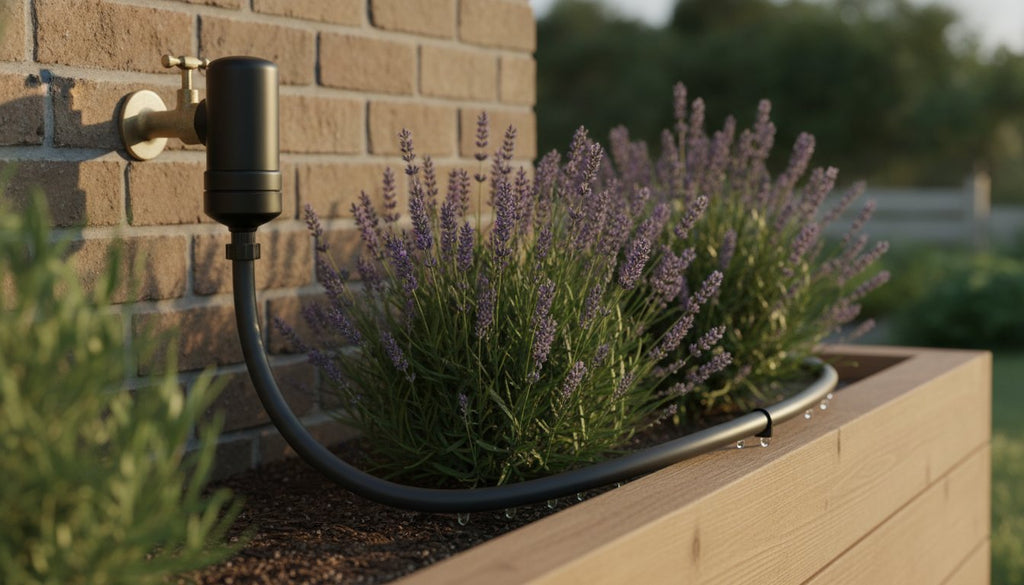
Imagine spending your afternoon carefully pinning down a drip line, only to have a connector burst the moment you turn on the tap. It's a common headache caused by high mains water pressure, which can easily overwhelm delicate components. This is exactly why an irrigation pressure reducer is the most vital part of any automatic watering setup. By installing a reliable antelco pressure reducer, you can stop drippers from popping off and prevent those annoying leaks that waste up to 60% of your garden water.
We understand how frustrating it feels to juggle PSI and Bar ratings while trying to make technical parts fit a standard Hozelock or brass tap. You want a system that works without constant maintenance or sudden blowouts. This guide will show you how to master your garden water pressure for a stable, leak-free experience. We'll explain how to choose the right model to protect your plants and simplify your connection process, ensuring your irrigation system performs with the precision of a professional installation. By bridging the gap between technical Antelco parts and consumer-friendly fittings, you can finally achieve the perfect flow for even your most delicate plants.
Key Takeaways
- Protect your drip irrigation system from damage by reducing high mains pressure to a safe level between 1.0 and 2.0 Bar.
- Selecting the right irrigation pressure reducer or antelco pressure reducer means you won't have to worry about drippers popping off or wasteful leaks.
- Maintain a precise and constant flow for your plants by using Australian-engineered components that handle pressure fluctuations with ease.
- Bridge the gap between technical parts and consumer kits by using 3/4" BSP adapters to connect your reducer to standard Hozelock snap-on fittings.
- Prolong the life of your equipment by always installing the reducer after your water timer and tightening plastic threads only by hand.
What is an Irrigation Pressure Reducer and Why Do You Need One?
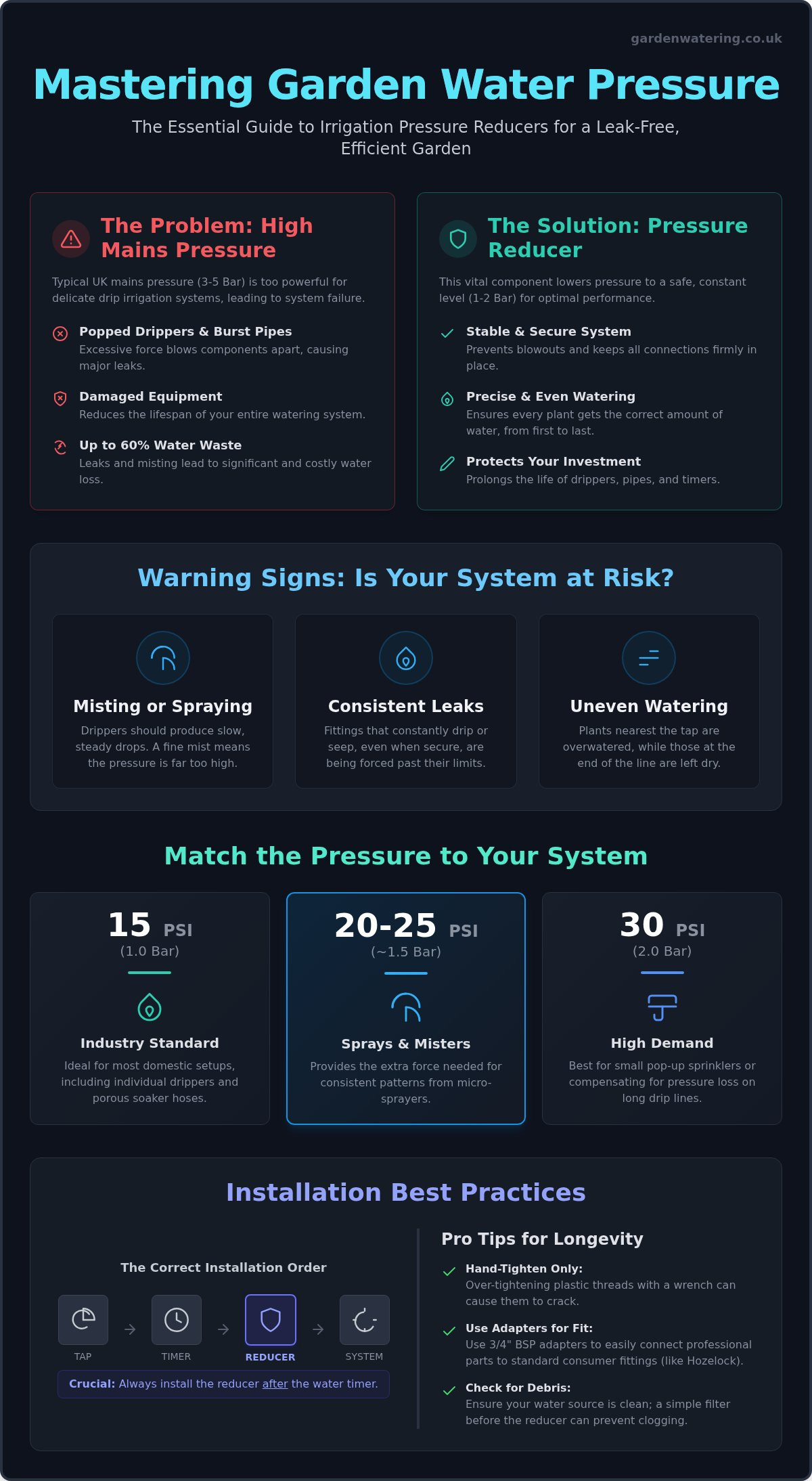
An irrigation pressure reducer is a specialized valve designed to lower high mains water pressure to a level that's safe for your garden equipment. Most UK homes receive water at a pressure of 3 to 5 Bar. While this is great for a powerful shower, it's far too high for micro-irrigation components. Drip irrigation systems are typically engineered to operate within a specific range of 1.0 to 2.0 Bar. Without regulation, this excessive force leads to blowouts, where drippers and joiners literally pop off the pipe, wasting water and potentially damaging your plants. Using a high-quality antelco pressure reducer ensures your system stays intact and delivers water precisely where it's needed.
The Science of Pressure in Micro-Irrigation
Understanding what a pressure regulator is helps explain why small-bore 4mm and 13mm pipes struggle without one. High mains pressure exerts immense stress on the thin walls of these tubes and the friction-fit connectors used in most drip irrigation systems. You might think that simply turning the tap down halfway solves the problem. However, turning the tap only restricts the flow, which is the volume of water, not the static pressure. Once the system is full and the water stops moving, the pressure builds back up to the full mains level. It waits there, ready to blow your fittings apart the moment you walk away. A dedicated irrigation pressure reducer maintains a constant, safe output regardless of how much you open the tap or how much the mains pressure fluctuates throughout the day.
Signs Your System Needs a Regulator
If you aren't sure whether your garden needs a regulator, look for these common warning signs that suggest your setup is under too much strain. High pressure often reveals itself through the physical performance of your drippers and connectors.
- Misting or Spraying: Drippers should release water in steady, calm droplets. If they're producing a fine mist or a forceful spray, your pressure is likely too high for the emitter's internal mechanism.
- Consistent Leaks: Fittings that drip or seep under load, even after being pushed firmly into place, are often being pushed past their design limits. This leads to wasted water and puddles where you don't want them.
- Uneven Watering: Without regulation, plants closest to the water source receive a high-pressure blast. Meanwhile, those at the end of the line get very little because the pressure has dropped too sharply across the distance.
Installing an antelco pressure reducer provides the quiet confidence that every plant, from the first to the last, receives exactly the right amount of hydration without the risk of a sudden system failure.
Key Features to Compare When Buying a Pressure Reducer
Choosing an irrigation pressure reducer isn't just about picking any valve. It's about matching the tool to the specific needs of your plants and pipework. While many generalist suppliers provide a basic list of ratings, a specialist approach looks at the specific requirements of the components of a typical drip irrigation system. You need to balance the output pressure with the flow rate of your drippers while ensuring the materials can withstand the UK's changing weather. High-quality units are typically made from UV-stabilised plastics to prevent them from becoming brittle in the sun, though brass options exist for heavy-duty applications.
Understanding PSI Ratings: 15, 20, or 30?
Pressure is measured in either PSI (pounds per square inch) or Bar. In the UK, 1 Bar is roughly equivalent to 15 PSI. Choosing the correct rating depends entirely on what's at the end of your hose. If you use the wrong rating, you'll either continue to have blowouts or find that your drippers barely trickle.
- 15 PSI (1 Bar): This is the industry standard for most domestic micro-drip setups. It's the ideal setting for individual drippers and porous soaker hoses, providing enough force to move water without stressing the joints.
- 20 to 25 PSI: If your garden layout includes micro-sprays or misters, you'll need slightly more force to achieve a consistent spray pattern.
- 30 PSI (2 Bar): This higher setting is best for small pop-up sprinklers or exceptionally long runs of drip line where friction loss might otherwise cause the pressure to drop too low by the end of the circuit.
Inlet and Outlet Compatibility
Most high-quality options, like an antelco pressure reducer, feature threaded ends. It's vital to check whether you need male or female threads to interface with your tap timer or manifold. BSP threads are the UK standard for garden taps. If you're using a standard Hozelock system, you might find that the technical threads on a reducer don't immediately click into your existing setup.
This is where irrigation fitting adaptors become essential. They act as the bridge between the precision engineering of a pressure valve and the convenience of snap-on connectors. Always ensure the flow rate capacity of the reducer matches your total number of drippers. If the water volume required by your plants exceeds what the reducer can handle, the pressure regulation will become inconsistent. If you're unsure which rating fits your layout, our team provides expert advice to help you select the perfect drip irrigation systems for your space.
Why the Antelco Pressure Reducer is the Industry Gold Standard
Antelco has earned its reputation as a world leader in micro-irrigation through decades of precision engineering in the harsh Australian climate. Their components are designed to withstand extreme conditions, which makes them incredibly reliable for UK gardeners. When you choose an antelco pressure reducer, you aren't just buying a simple plastic valve; you're investing in a piece of equipment that maintains a perfectly steady output even when your local mains pressure spikes or drops throughout the day.
One of the most practical benefits of these units is their compact footprint. They're designed to be unobtrusive, making them easy to install directly behind garden irrigation water timers without creating a bulky, awkward setup at your tap. Because they're manufactured from high-quality, UV-stabilised materials, they won't become brittle or crack after a few seasons in the summer sun. This longevity is why many specialists consider Antelco the premier choice for any serious irrigation project.
The Antelco 15 PSI Reducer for Drip Systems
The 15 PSI model is the go-to choice for domestic gardens and greenhouse watering. It provides the ideal balance for micro-irrigation, ensuring that water flows gently through both 4mm and 13mm micro-pipes without stressing the joints. In areas with hard water, calcification can often clog cheaper valves, but the internal pathways in an Antelco irrigation pressure reducer are designed to resist mineral buildup. This ensures your plants receive consistent hydration year after year without the need for constant troubleshooting or replacements.
Specialist Antelco Fittings and Reliability
The reliability of these reducers comes from a sophisticated internal diaphragm design. This mechanism doesn't just manage pressure; it also helps prevent the "water hammer" effect, which is that jarring thud you sometimes hear when an automatic valve closes quickly. By smoothing out the flow, the reducer protects the internal valves of your timer and the long-term integrity of your pipe joints.
Antelco parts are also highly versatile. They integrate seamlessly with other professional-grade brands like Claber and Rainbird, allowing you to build a custom system that fits your specific landscape. Landscape professionals frequently choose Antelco because they know the components won't fail under load, providing a dependable foundation for garden health. Whether you're setting up a small patio kit or a complex border layout, these reducers offer the quiet confidence that your system is protected by the best in the business.
Adapters and Converters: Fitting Your Reducer to Your System
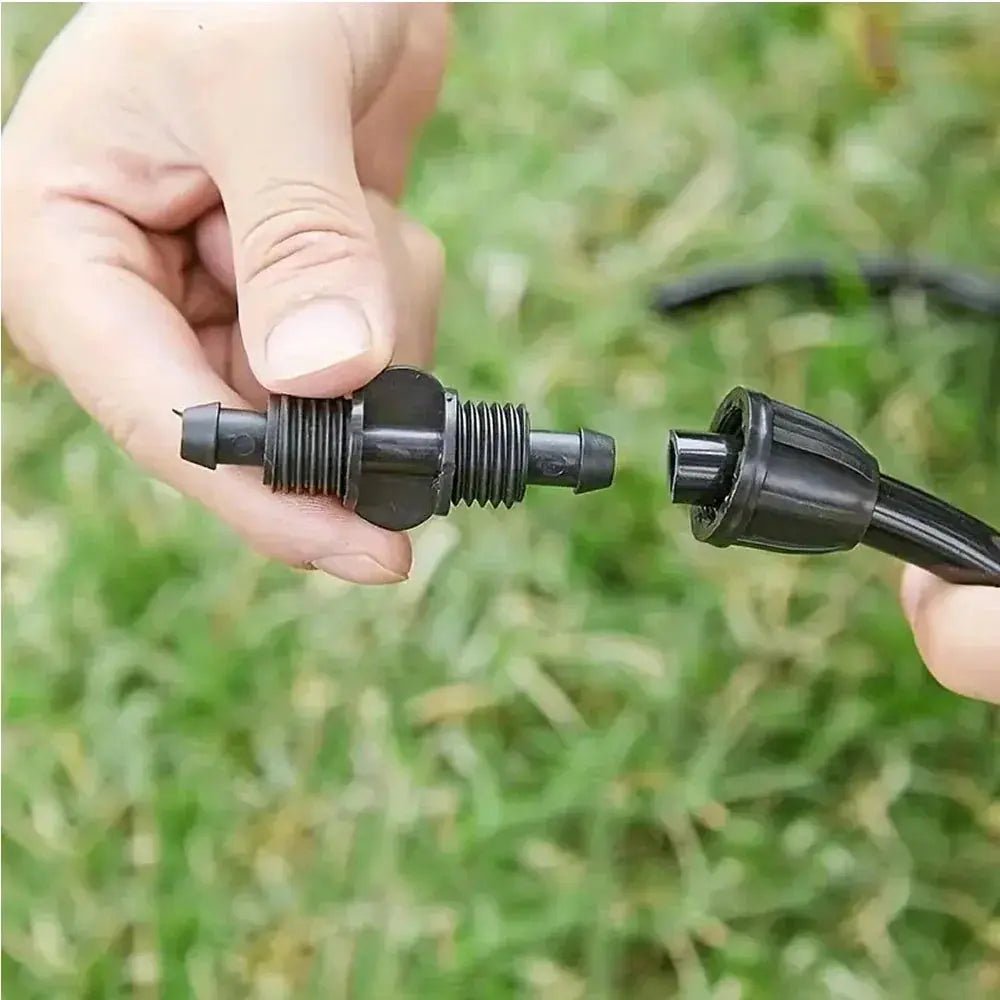
Most professional-grade equipment, such as an antelco pressure reducer, uses threaded connections to ensure a secure, high-pressure seal. However, many UK garden setups rely on "click-lock" or snap-on systems. Bridging this gap is essential for a leak-free installation. You'll typically need a 3/4" BSP to snap-on adapter to connect your reducer to a standard garden hose. This allows you to benefit from professional pressure regulation while maintaining the convenience of your existing watering kit. It's a simple fix that transforms a technical component into a user-friendly tool for any home gardener.
Connecting to Hozelock Systems
Hozelock systems are incredibly popular for their ease of use, but their proprietary fittings don't always match the universal threads found on professional irrigation gear. To integrate an irrigation pressure reducer into this ecosystem, you can use specialized Hozelock connectors. These adapters allow you to click your hose directly into the reducer's inlet or outlet, creating a bridge between different brands. If you're building a more complex manifold setup, you might need female-to-female joiners. These help link multiple threaded components together without the need for extra lengths of pipe, keeping your tap area tidy and efficient.
The Role of Accessory Adapters
Not every garden tap follows the same specifications. While 3/4" BSP is the standard for most UK outdoor taps, you might encounter 1/2" outlets on older installations or specific water butts. Using a simple reduction bushing allows you to scale down the connection safely without sacrificing performance. If you're moving from the reducer straight into your main supply line, barbed adapters are often the most reliable choice. These push directly into 13mm supply pipe, creating a firm grip that won't slip when the water starts flowing. You can explore our full range of irrigation fitting adaptors to find the exact component for your specific setup.
When assembling these parts, avoid the common mistake of forcing threads that don't seem to align perfectly. Plastic threads can cross-thread with very little effort, which can permanently ruin the housing of your equipment. Always check that you have a fresh rubber washer or O-ring in place before you begin tightening. These small seals do the heavy lifting in preventing drips, so you don't have to over-tighten the plastic parts with a wrench. Hand-tightening is usually more than enough to create a dependable, waterproof seal that lasts all season. If you're ready to upgrade your garden's performance, find the right adapters for your system today.
Installation Tips and Maintenance for Long-Term Performance
Properly setting up your equipment is just as important as choosing the right model. One of the most critical rules is to always install your irrigation pressure reducer after your water timer. Placing it in this position ensures the timer's internal valves are protected from the constant, high-pressure stress of the mains. If the reducer is placed before the timer, the timer still has to work against the full force of the street pressure every time it closes, which can significantly shorten its lifespan. This simple placement protects your investment and ensures your automatic watering system remains dependable for years.
Step-by-Step Installation Guide
Setting up your system is straightforward if you follow a methodical approach. Start by cleaning the tap thread to remove any grit or old limescale that might prevent a clean seal. Check that there's a healthy rubber washer inside the inlet of the reducer before you begin.
- Attach the Reducer: Thread the unit onto your garden irrigation water timers or tap outlet. Look for the small flow arrow on the side of the housing; it must point away from the water source.
- Hand-Tighten Only: Use your hands to tighten all plastic threads. Using a wrench or pliers can easily crack the UV-stabilised housing, leading to permanent damage and leaks.
- Connect Your Pipe: Use the appropriate irrigation fitting adaptors to link the outlet of the reducer to your supply pipe.
Maintenance and Winter Care
Even a high-quality antelco pressure reducer needs occasional attention to maintain its accuracy. Most units feature a small internal filter screen designed to catch grit or debris from the mains. Check this screen every few months, especially if you notice a drop in flow at your drippers. When the growing season ends, don't leave your reducer outside. Freezing temperatures can cause water trapped inside the diaphragm to expand and crack the internal mechanism. Remove the unit, drain it completely, and store it indoors until spring to prevent frost damage.
Troubleshooting Common Issues
If you hear a high-pitched whistling sound when the water is running, it's usually a sign of a flow rate mismatch rather than a broken valve. This happens when the volume of water required by your drippers is too low for the regulator to stabilise effectively. You can often fix this by adding a few more drippers to the line or checking for kinks in the pipe. For minor leaks at the threaded joints, a few wraps of PTFE tape can provide an extra layer of security. If an old regulator starts providing inconsistent pressure or becomes "sticky," it's usually time for a replacement to ensure your plants aren't hit with a high-pressure burst.
Achieve a Stable and Efficient Garden Watering System
Mastering your garden's water pressure is the secret to a long-lasting irrigation setup. By installing an irrigation pressure reducer, you eliminate the risk of sudden blowouts and ensure that every plant receives a consistent, gentle flow. We've explored how a high-quality antelco pressure reducer acts as the heart of a professional-grade system, protecting your components from the stress of high mains pressure. It's the most effective way to prevent leaking fittings and stop drippers from popping off your tubes.
Remember to always install your regulator after the timer and use the correct adapters to bridge the gap between technical parts and consumer kits. With 15 years of expert experience, we specialize in making Hozelock and Antelco systems work together seamlessly. Our UK-based team is here to provide the advice you need to build a setup that works perfectly every time.
Browse our full range of Irrigation Adapters and Converters to find the right fit for your garden and benefit from fast UK shipping. Your garden deserves a reliable watering solution that looks after itself, leaving you more time to enjoy your outdoor space.
Frequently Asked Questions
Do I really need a pressure reducer for a small garden drip kit?
Yes. Even small kits use thin-walled 4mm or 13mm pipes and friction-fit drippers. UK mains pressure, often between 3 and 5 Bar, is too high for these delicate components. Without a reducer, you'll face frequent leaks or blowouts where drippers pop off the pipe. It ensures the longevity and reliability of your small system, preventing the frustration of wasted water and damaged plants.
Can I use an Antelco pressure reducer with Hozelock fittings?
You can definitely bridge the gap using specific adapters. Antelco reducers usually have threaded ends, while Hozelock uses snap-on connectors. By using a 3/4" BSP to snap-on adapter, you can easily integrate a professional antelco pressure reducer into your existing setup. We specialise in providing these curated converters to help you combine different brands with absolute confidence and zero leaks.
Where should the pressure reducer be placed in my irrigation setup?
Always install the reducer after your water timer but before your supply pipe starts. This sequence protects the internal valves of the timer from high static pressure. If you place it before the timer, the timer remains under full mains stress even when it is closed. Correct placement ensures your whole system operates at a safe level. It also makes it easier to drain the unit during the winter months.
What is the difference between a pressure regulator and a pressure reducer?
In domestic gardening, these terms are often used interchangeably. Technically, a pressure reducer lowers the incoming pressure to a set level. A regulator maintains a precise, constant output pressure regardless of fluctuations in the input. Most models we sell, like a high-quality irrigation pressure reducer, are technically regulators. They provide a consistent 1.0 to 2.0 Bar output to keep your drip lines working perfectly.
Will a pressure reducer affect the distance my sprinklers can spray?
Yes, it will. Sprinklers require a specific amount of force to achieve their maximum throw distance. If you use a 15 PSI reducer on a system designed for 30 PSI pop-ups, the spray pattern will be significantly shorter. Always match the reducer's rating to the manufacturer's recommended operating pressure for your specific sprinklers. This ensures you get the coverage you expect without stressing the pipe joints.
How do I know if my water pressure is too high for my garden hose?
Standard garden hoses are durable, but the fittings on drip systems are much more sensitive. If your drippers are misting instead of dripping, your connectors are leaking, or you hear a loud thud when the tap closes, your pressure is likely too high. You can also use a simple pressure gauge on your tap to see if it exceeds 3.0 Bar, which is the typical limit for micro-irrigation.
Is a 15 PSI or 30 PSI reducer better for a vegetable patch?
A 15 PSI reducer is usually the best choice for a vegetable patch using micro-drip emitters or soaker hoses. This lower pressure ensures a gentle, deep soak at the roots without disturbing the soil or damaging delicate seedlings. If your vegetable patch is very large with exceptionally long pipe runs, a 30 PSI model might be needed to overcome the natural friction loss within the tubing.
How long does a plastic irrigation pressure reducer typically last?
A high-quality model made from UV-stabilised plastic should last for several years. Its lifespan depends heavily on your maintenance routine. If you leave it out during a hard frost, the internal diaphragm can crack. By winterising the unit and keeping the internal filter screen clear of grit, you can expect reliable performance for many seasons. It's a small investment that pays for itself in equipment protection.
`-
Posted in
antelco, antelco pressure reducer, drip irrigation, garden maintenance, gardening tips, hozelock, irrigation, irrigation pressure reducer, pressure reducer, water conservation