"Set and Forget" Holiday Watering for Peace of Mind
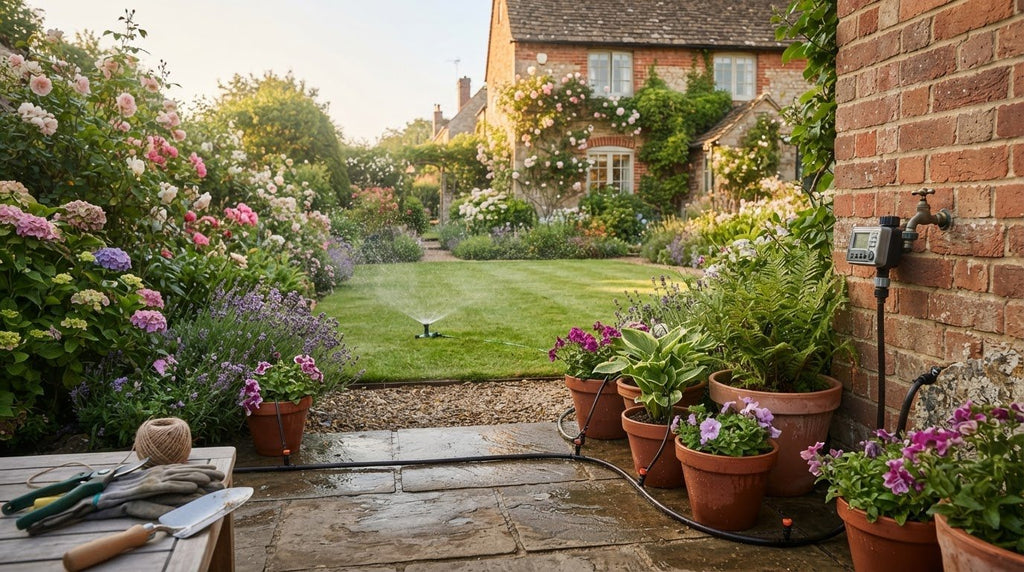
A timer can switch the water on, but it can’t guarantee that every pot, flower bed and lawn gets what it needs. ‘Set and forget’ holiday watering for peace of mind starts with matching the watering method to your garden, then testing the whole setup before you leave.
It’s understandable to wonder whether a timer will be reliable enough, especially when different parts of the garden have different watering needs. A suitable automatic system, tested in advance, can make it easier to leave home with confidence. But automation is not foolproof, so it helps to know what the system can and can’t do.
This guide compares watering options for containers, beds and lawns, explains how a timer works with the delivery method, and provides a practical checklist for testing before your trip. You’ll also find what to check, including local water restrictions, and how to make a simple backup plan. Garden Watering specialises in automatic watering systems and offers advice to help customers choose a setup that fits their garden, rather than simply buying a timer and hoping for the best.
Key Takeaways
- Think of “set and forget” as automated watering that still needs planning and testing, not a guarantee that every plant will get enough water.
- Understand how the timer, water source and delivery method work together. The timer alone can’t confirm that water reaches each area.
- Compare drip irrigation and sprinklers according to the plants and garden areas they need to water.
- Use a pre-holiday checklist to organise watering zones, follow manufacturer instructions and catch setup problems before you travel.
- Choose a setup that suits your garden, and seek product advice if you’re unsure which watering method to compare.
What "set and forget" holiday watering can, and cannot, do
Automated watering can take routine watering off your holiday to-do list, but “set and forget” doesn’t mean setting a timer and assuming every plant will be fine. A practical plan matches the watering method to the garden, checks that the setup works and accounts for conditions that may change while you’re away. That’s what 'set and forget' holiday watering for peace of mind should mean.
It’s understandable to worry about pots drying out or a lawn receiving too much or too little water. Plants have different needs, and even containers close together can dry at different rates. A small pot in a sunny spot may need closer attention than a larger pot in shade. Automation can reduce daily effort, but it can’t prevent every fault, blocked outlet or change in weather.
A short video offers one example of a simple watering idea. Treat it as inspiration, then check whether the approach suits your plants and setup before relying on it while you’re away.
Why holiday watering needs more than a timer
A timer controls when watering starts. It doesn’t confirm that water reaches every plant or that the amount is suitable. Plant type, container size, position and weather all affect how quickly soil dries. A small pot in a sunny spot may need closer attention than a larger container in shade. Before scheduling outdoor watering, check your local water company’s current restrictions, as rules can vary and change.
Which parts of the garden need different attention?
Assess containers and hanging baskets separately from beds and lawn areas. Pots have a limited volume of compost, while beds and lawns cover broader areas and may need different watering arrangements. Sun, shelter and exposure matter too: a basket near a warm wall may dry faster than a shaded bed, while wind can affect exposed areas. Grouping plants by location and watering needs makes it easier to decide where separate delivery arrangements may help.
For an overview of how one common delivery method works, see Drip irrigation systems, which deliver water close to plant roots. The right choice depends on your garden layout, not on one method being best everywhere. For a broader overview of available options, explore the Hozelock watering systems range. This guide focuses on choosing and checking a home-garden setup, not on installation or landscape design services.
How an automatic holiday watering setup delivers water
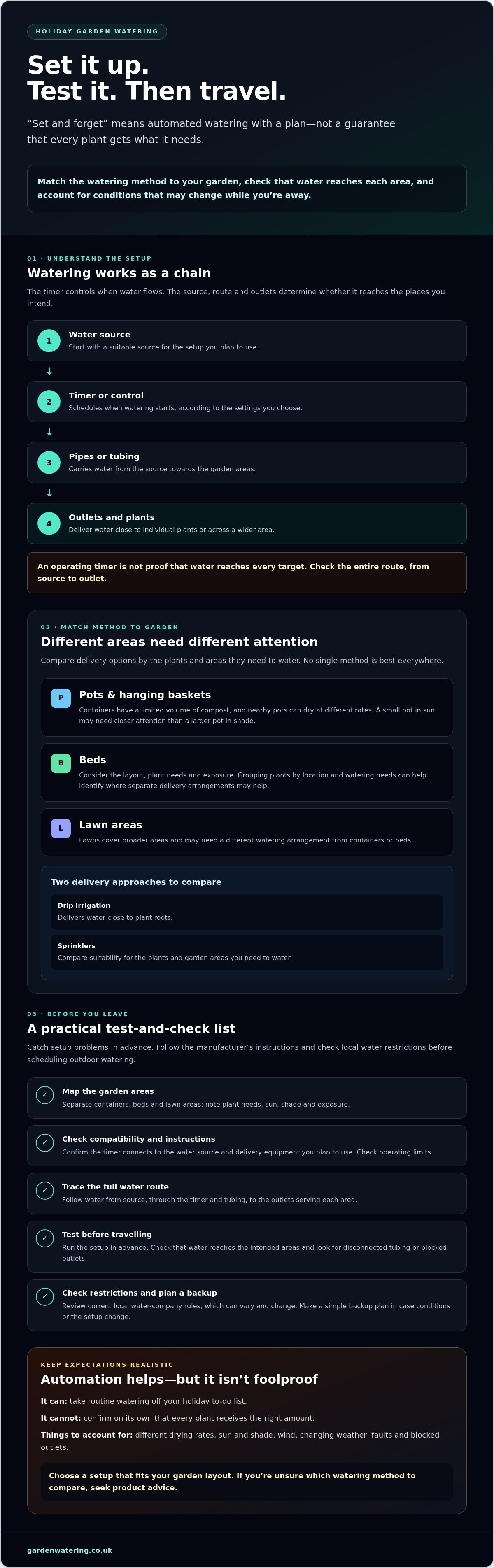
An automatic watering setup works as a chain: water comes from a suitable source, a timer or control schedules its release, and pipes or tubing carry it to outlets around the garden. Those outlets may deliver water near individual plants or distribute it over a wider area. If one part of the chain doesn’t suit the garden, some areas may receive too much water while others get too little.
A timer is a control device, not a complete watering system. It determines when water flows, while the delivery method and layout determine where it goes. Suitability depends on your water source, garden layout and the plants you need to water. Start with the timer as the control point, then trace how water will travel from there to each target area.
What does a water timer actually control?
A timer schedules watering according to the settings you choose. Before selecting one, consider how it connects to your water source and the delivery equipment you plan to use. Read the manufacturer’s instructions for setup, compatibility and operating limits rather than assuming every timer suits every arrangement. You can compare options in the garden irrigation water timers collection.
Timing is only one part of the plan. A timer can’t confirm that tubing is connected correctly, an outlet is unobstructed or water reaches the plants you intend to water. Trace the route from source to outlet, then check that the schedule and delivery method suit each area. An operating timer is not proof that the whole setup is working.
How does water reach pots, beds, and lawns?
Distribution tubing carries water from the source towards the garden areas you want to water. Drip irrigation is one option for individual plants, containers and planted areas, with outlets positioned near the plants. Check the tubing route and outlet placement against your garden layout and the equipment instructions. For a lawn or broader area, a sprinkler system may be more appropriate if its reach and placement suit the space.
Check coverage rather than assuming one outlet will serve every zone. A row of pots, a planted bed and a lawn may need different arrangements. During a test, check the furthest points as well as the areas closest to the source. Look for missed plants and water landing where it isn’t needed. Make adjustments in line with the manufacturer’s guidance, then test again. Matching the control to the delivery method is a practical foundation for 'set and forget' holiday watering for peace of mind.
Timer, drip irrigation, or sprinkler: which option is more dependable?
A timer on its own isn’t a complete watering solution. It can start water flowing on schedule, but it can’t confirm that water reaches every plant, that an outlet hasn’t shifted or that the amount suits the area. Dependability comes from choosing a suitable delivery method, setting it up correctly and checking the results before you travel.
There’s no universal winner. Consider what needs watering, how specifically water must be delivered and whether you can check coverage easily. The comparison below is a starting point, not a substitute for the instructions supplied with your chosen equipment.
- Pots and planted beds: Drip delivery may suit areas where outlets need to reach individual plants or specific rows.
- Lawns and broader areas: A sprinkler may be worth considering where water needs to cover an open space.
- Mixed gardens: Separate delivery methods may be more practical for containers, beds and lawn areas with different coverage needs.
When might drip irrigation suit holiday watering?
Drip irrigation can be useful for pots or beds where you want to direct water towards particular plants. Whether it suits your garden depends on the layout: tubing needs to reach the intended area, and outlets need to be positioned to serve the plants. Before choosing, check the system’s instructions and consider how you’ll inspect each outlet during a test. You can compare available drip irrigation systems as part of your product research.
Trace the route from the water source to the furthest pot or section of bed. Check for plants the tubing might bypass, and confirm that connections and outlet placement follow the manufacturer’s guidance. A system that suits a neat row of containers may need a different layout for a winding or irregular bed.
When might a sprinkler be the better fit?
A sprinkler may suit a lawn or another broader area, depending on its shape and the reach specified for the equipment. Before leaving, run a test and look for missed patches, excessive overlap, obstacles that interrupt the spray, or water landing on nearby paths and walls. Adjust the position or arrangement according to the product instructions, then check coverage again.
For 'set and forget' holiday watering for peace of mind, assess the complete setup: water should reach the intended areas, the timer and delivery equipment should be compatible, and the arrangement should suit the garden. If one method doesn’t fit every zone, consider separate arrangements instead of expecting a single outlet to do every job.
How to set up and test holiday watering before you leave
A supervised test is a practical way to spot problems before you travel. Check the full arrangement, not just the timer. Water must reach the intended plants, connections need to stay secure, and excess water shouldn’t collect where it could cause trouble.
Build a garden-specific watering checklist
Start by listing the plants and areas that need attention. Group containers, beds and lawn sections separately so you can match each area with a suitable delivery method and check it properly. If you’re comparing kit formats, explore Hozelock watering kits as one product-research option.
- Map the watering areas. Note each group of pots, hanging baskets, planted beds and lawn sections. Flag plants in particularly sunny, sheltered or exposed positions.
- Plan the route. Trace where the hose or tubing will run from the water source. Check that it can reach every target area without being stretched, kinked or easily disturbed.
- Position outlets. Place drip outlets near the plants they’re meant to serve, or position sprinklers with the lawn’s shape and obstacles in mind. Follow the product instructions for placement and setup.
- Check compatibility and supply. Read the manufacturer’s guidance for the timer and delivery equipment, including connection requirements and operating limits. Confirm the water source is available for the planned schedule.
Test the whole system before travelling
Run the complete setup while you’re at home, using the schedule and arrangement you intend to rely on. Watch the water move through the system rather than assuming a timer display means every area is being watered.
- Inspect connections and outlets. Look for leaks, loose fittings and blocked or inactive outlets. Check that water reaches each intended plant or area.
- Check coverage and drainage. Look for missed patches, water landing on unwanted surfaces or pooling where it shouldn’t. Make adjustments in line with the equipment instructions.
- Retest after changes. Run the system again after moving an outlet, changing a route or adjusting the schedule. A changed setup needs another check.
- Make a final check and backup plan. Shortly before departure, confirm the timer settings, connections and water supply. If possible, ask someone you trust to check the garden while you’re away and explain how to spot a problem.
These steps make 'set and forget' holiday watering for peace of mind a tested plan rather than a guess. To compare watering equipment for your garden, browse the Hozelock watering kits.
Choose a holiday watering setup that fits your garden
A good choice starts with the garden, not the timer. Identify the areas that need watering, choose a delivery method for each, add compatible timing control, then test the complete setup before you travel. This approach makes 'set and forget' holiday watering for peace of mind more practical, while keeping expectations realistic.
Match the setup to the garden you actually have
For a container-heavy garden, consider whether tubing can reach each pot and whether outlets can be placed where water is needed. Beds may suit drip delivery, while a lawn may call for sprinklers, depending on its shape and the equipment’s guidance. If your garden includes all three, planning separate watering zones can make it easier to set, observe and test each arrangement.
Consider how you’ll check coverage, too. A layout that looks straightforward on paper may have awkward corners, obstacles or plants beyond the reach of an outlet. Map the areas first, then choose equipment for the actual route and positions instead of trying to make one method cover every situation.
What to check before choosing a system
A timer and delivery method need to work together. The timer sets the schedule, while tubing, drip outlets or sprinklers carry water to the chosen zones. After selecting equipment, test the setup at home and make any adjustments in line with the manufacturer’s guidance. Check local water-company restrictions before planning outdoor watering, as requirements can vary.
Garden Watering is a UK retailer specialising in Hozelock automatic watering systems, drip irrigation and pop-up sprinklers. The company offers advice to help customers choose garden watering products. For product research, explore Hozelock watering systems and compare the options with your garden’s needs. If you’re unsure which type may suit your pots, beds or lawn, ask for product-selection advice before choosing.
Leave home with a watering plan you’ve tested
Greater confidence starts with a setup that suits your garden. Group plants by area, choose a delivery method that reaches them, add compatible timing control, and test the complete system before you go. A timer alone can’t confirm that every plant is receiving water, so check the outlets, coverage and water supply while you’re still at home.
That’s the practical approach to 'set and forget' holiday watering for peace of mind: automate routine watering, keep expectations realistic and make a simple backup plan. Pots, beds and lawns may need different arrangements, so choose for the garden you have rather than relying on a one-size-fits-all setup.
Garden Watering specialises in Hozelock automatic watering solutions and provides advice to help customers choose garden watering systems. Explore the options and compare them with your garden’s needs: Explore Hozelock watering systems.
With a suitable system, a careful test and a sensible fallback, you can set off feeling better prepared and enjoy your time away.
Frequently Asked Questions
Can I leave automatic watering running while I am on holiday?
Yes, if the system suits your garden, is set up according to its instructions and has been tested before you leave. Check that water reaches every intended area, connections are secure and the supply is available. Watering needs can change with weather, so automation can’t remove every risk. Check current guidance from your local water company, and consider asking someone you trust to check the garden while you’re away.
Is a water timer enough to keep plants watered while I am away?
No. A timer controls when water flows, but it can’t confirm that every plant receives enough. It needs to work with a suitable delivery method, such as drip tubing for specific plants or a sprinkler for an appropriate lawn area. Before relying on the setup, run it while you’re at home and inspect the outlets, connections and coverage. Also check the timer’s instructions for setup and compatibility with your water source.
How do I water potted plants while on holiday?
Group pots by their location and watering needs, then consider a delivery method that can reach each container. A drip system may suit pots when outlets can be positioned near the plants and connected according to the manufacturer’s guidance. Test the complete setup while you’re home: check that each pot receives water, connections don’t leak and water drains as expected. Pots in sunny or exposed positions may need particular attention.
What happens if an automatic watering system fails while I am away?
If the system stops working, plants may miss scheduled watering. If a connection leaks or an outlet shifts, water may go where it isn’t wanted. A test can help catch setup problems, but it can’t prevent every fault or change in conditions. Before travelling, check the full system and make a simple backup plan, such as asking someone you trust to look in and contact you if they spot a problem.
Can drip irrigation water a garden during a holiday?
Yes, drip irrigation can be used for holiday watering if its layout suits the garden and the outlets reach the plants that need water. Position outlets according to the equipment instructions, then run the system and check that each plant is receiving water. A timer can schedule the flow, but it won’t confirm that outlets are working. Check local water-company restrictions before planning outdoor watering, as guidance may vary.
Should I use a sprinkler or drip irrigation while I am away?
Choose based on the area and how water needs to reach it. A sprinkler may suit a lawn or broader area if its reach fits the shape and obstacles. Drip irrigation may be more appropriate for pots or planted beds where outlets need to serve specific plants. Mixed gardens may need separate arrangements. Test coverage before departure, checking for missed areas, unwanted spray and outlets that aren’t delivering water.
How long before my holiday should I test automatic watering?
Test early enough to observe the complete setup, make adjustments and run it again before you leave. There isn’t one suitable lead time for every garden, as layouts, equipment and schedules differ. Don’t leave the first test until departure day. Check the timer settings, supply, connections and coverage during a supervised run, then do a final check shortly before travelling. Follow the manufacturer’s instructions whenever you change the setup.
`-
Posted in
'set and forget' holiday watering for peace of mind, automatic watering systems, drip irrigation, garden irrigation, garden timers, holiday watering, plant care tips, vacation garden care, watering checklist