Smart Irrigation: Save on UK Water Bills in 2026
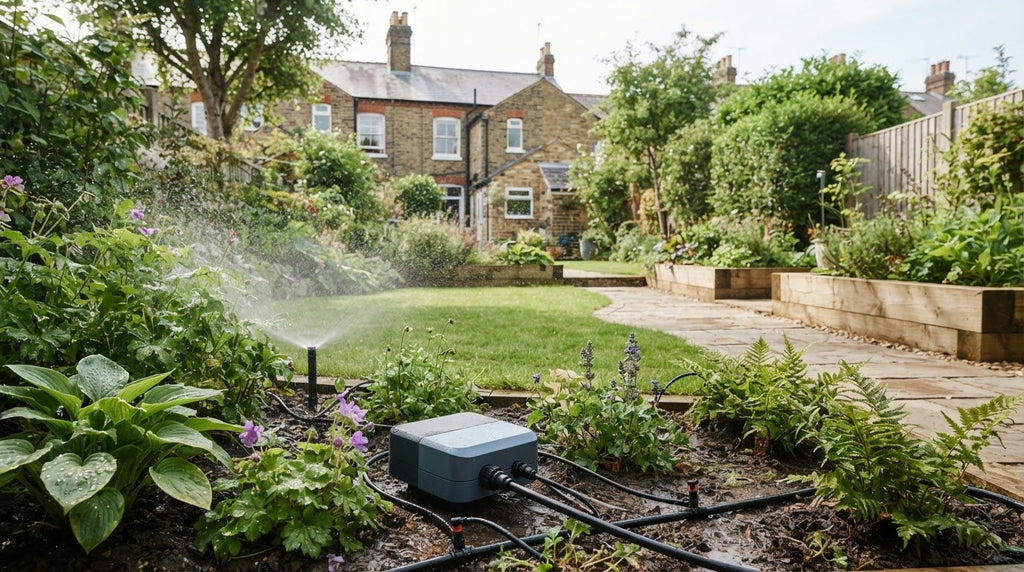
Could a smart controller actually cut your water bill, or simply help you water your garden more efficiently? It depends on your setup. Water bill savings with a smart irrigation controller are possible when watering responds to local weather and your plants’ needs, rather than following a fixed schedule. But a timer can’t make an unsuitable sprinkler or watering routine efficient on its own.
It’s reasonable to question how much your garden adds to your household bill, especially when bills vary and not every home is charged in the same way. Start by checking how you’re billed and estimating how much water your garden uses. Then compare usage over time, without relying on a promised percentage saving.
This guide explains which controller features can help avoid unnecessary watering, how to monitor changes, and how to choose between timers, drip irrigation and sprinklers. Soil, plant type and garden layout matter too, so match the watering schedule and delivery method to your garden, not just the device.
Key Takeaways
- A controller can reduce avoidable watering, but lower water use doesn’t automatically mean a lower bill.
- For water bill savings with a smart irrigation controller, the schedule and watering method need to suit your plants and garden conditions.
- Compare a basic timer, an adaptive controller and manual watering by their controls, adjustment options and setup needs.
- Use comparable meter readings and note other household changes to assess whether your watering adjustments affect usage.
- Match drip irrigation, sprinklers or watering kits to your garden layout and plants, then choose control options that fit your needs.
Water bill savings with a smart irrigation controller
The practical question is whether the controller helps you avoid watering when your garden doesn’t need it, and whether your bill reflects the water you use. The sections below explain what to check before choosing a system and how to assess changes.
Can a smart irrigation controller really reduce your water bill?
Yes, it can reduce avoidable watering, but any bill saving depends on how you use it and how your household is charged. Using less water and paying a lower bill are related, but they aren’t the same outcome. A metered household may see a change in recorded water use, while an unmetered bill may not respond directly to reduced garden consumption.
A smart irrigation controller manages when and how long a watering system runs. Depending on the model, it may follow a planned schedule or adjust watering in response to garden conditions. The aim is to apply controlled amounts of water where needed, rather than running a programme without considering whether the garden needs watering.
For a visual overview of smart irrigation, watch this guide from Hunter Landscape Irrigation:
What makes an irrigation controller smart?
A basic timer runs watering at selected times for set durations. This can make watering more convenient, but a fixed programme may continue when conditions change. Some controllers offer adaptive features, such as adjusting a schedule using weather information or soil input. Check the specific model’s features rather than assuming every controller can do this.
Whatever the controls, the schedule still needs to suit the plants, soil and delivery system. A controller can’t fix an unsuitable watering layout. If you’re considering a different way to deliver water around planted areas, explore drip irrigation systems.
When could it affect a UK water bill?
If you have a water meter, record readings over comparable periods before and after changing your watering schedule. Note rainfall, seasonal changes and other household water-use changes, since these can affect the comparison. If you’re unmetered, reducing garden use may still conserve water, but it may not directly change a bill that isn’t based on the volume used.
Check your water company’s billing terms rather than assuming one UK-wide tariff. Weather, soil, planting, watering habits and system setup all influence results, so no controller guarantees savings. Even when bill savings are hard to isolate, automation may make regular watering more convenient to manage.
How smart irrigation controls can prevent avoidable garden watering
Automation doesn’t save water by itself. A controller can run a schedule that’s too long, too frequent or poorly matched to the garden. To avoid unnecessary watering, set run times around what plants need and check that water reaches the intended areas without overspray or runoff.
Effective irrigation matches water delivery to plant needs and changing conditions. A bed of established shrubs, for example, may need a different schedule from pots that dry out quickly or a lawn that needs broad, even coverage. Treat the controller as a way to manage a suitable watering plan, not as a substitute for one.
Schedules, sensors and weather adjustments
Schedules set the days and times watering runs, along with the duration for each zone. Fixed settings may suit one part of the season but become excessive after rainfall or as conditions change, so review them regularly. Some models can pause or adjust watering using weather information or input from a rain or soil sensor. Check that the specific controller supports the feature you want.
Sensor placement and settings matter. A rain sensor beneath an overhang may not register rainfall in the garden, while an incorrectly configured sensor may pause or adjust watering at the wrong time. Follow the device instructions and observe how the system responds before relying on it without regular review.
Why the watering method matters too
The controller manages the schedule; the delivery method determines where water goes. Drip irrigation can direct water towards planted areas, making it worth considering for beds, containers or rows of plants. Sprinklers can cover wider areas such as lawns, but may wet paths or other surfaces if their reach or position doesn’t suit the layout. The RHS offers advice on garden watering methods to help you compare approaches.
Even a well-planned schedule can waste water if equipment isn’t working as intended. Check for leaks, blocked emitters, spray landing beyond planted areas, or water running off before it can soak in. These problems can undermine efficient use regardless of the controller’s features.
If targeted delivery seems better suited to your planting, explore drip irrigation systems as one option. Match the setup to your garden, then review its coverage and schedule as conditions change.
Smart controller vs basic timer: compare the features that matter
The right choice depends on your garden layout and how much adjustment you want to manage. A basic timer can provide straightforward scheduling, while a controller with verified adaptive features may offer more ways to respond to changing conditions. Manual watering gives you direct control, but you need to remember to adjust each session.
| Option | Control method | Adjustment options | Setup needs | May suit |
|---|---|---|---|---|
| Basic timer | Runs at programmed times and durations | Usually changed by updating the schedule | Check that it fits the watering system and routine | A garden with a stable layout and straightforward watering needs |
| Controller with adaptive features | Runs a schedule, with supported features that may respond to weather or sensor input | Depends on the specific model and its settings | Check compatibility, power needs, zones and any sensor requirements | A garden where additional adjustment may be useful |
| Manual watering | You decide when and where to water | Can be changed as conditions or priorities change | Needs regular attention and access to the watering method | A small area or an irregular routine where hands-on control suits you |
Convenience and savings aren’t the same measure. Automation can make watering easier to manage, but it doesn’t prove that you’re using less water or paying less. For water bill savings with a smart irrigation controller, compare water use over similar periods and account for other changes in household use. Cranfield University’s example of water conservation with smart technology also highlights the role of monitoring and informed behaviour, rather than technology alone.
Which features are worth checking before choosing?
First, count the watering zones your garden needs. If the lawn, pots and planted beds need different schedules, check that the controller can manage them appropriately. Verify any rain, soil-moisture or weather-based functions against the manufacturer’s specifications. Also consider whether programming feels manageable, what power the device needs, whether it suits your water source and what maintenance its sensors or connections require.
System compatibility matters too. Where relevant, the controller must work with the timer, valves or watering equipment already in place. Compare available garden irrigation water timers by their confirmed functions and fit, rather than assuming a more advanced option will suit every setup.
When is a basic timer enough?
If your garden has a stable layout, similar watering needs and a routine that rarely changes, straightforward scheduling may be all you need. More control may help if weather often affects your routine, plants have varied needs or schedules change through the season. An advanced controller won’t automatically produce greater savings, so choose features you can set up correctly and use consistently.
How to measure whether your watering changes are saving water
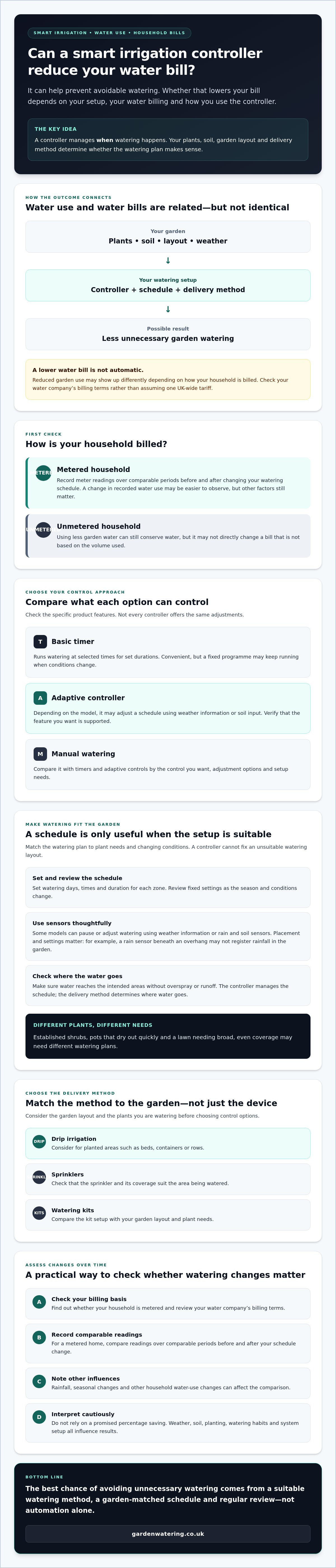
A meter reading can show whether household water use has changed, but it won’t identify the garden as the cause on its own. To assess water bill savings with a smart irrigation controller, create a simple baseline, make a documented adjustment and compare readings over similar periods. Weather and changes in household routines can affect the result, so treat it as an indication rather than proof that the controller alone caused a difference.
A simple baseline and review method
Before changing your setup, note the meter reading and record how the garden is watered during a defined period. Include watering days, approximate run times and any manual watering. At the end, take another reading and note rainfall, household changes and anything unusual, such as guests staying or a leak being repaired.
Next, change one relevant setting where practical, such as the schedule for a particular zone. Record what you changed and why, then repeat your notes and readings over a comparable period. The weather won’t be identical, but comparing similar periods makes the result more useful.
Compare meter readings over similar periods, and account for weather and changes in household water use before attributing any difference to garden watering.
A simple log can keep the comparison clear:
- Start and end meter readings, with dates.
- Watering schedule and any changes made.
- Rainfall or notable changes in local weather.
- Other household water-use changes, plus leaks or repairs.
If your household isn’t metered, this method won’t give you a garden-specific volume from the bill. You can still keep a schedule and condition log to see whether your routine changes, but don’t assume reduced use will directly change an unmetered charge.
Adjust the schedule without stressing plants
Use the garden as well as the controller display to guide adjustments. Check soil and plant condition, and look for persistent wet patches, wilting, uneven coverage or water running off before it can soak in. These signs can point to a schedule or delivery issue, though plant condition can have other causes too. Check coverage and equipment before making a large change to watering.
Review the programme as UK seasons and local weather shift; settings that suit one spell may not suit another. Before watering, check whether any current local restrictions apply. Keep notes after each adjustment, and avoid changing several settings at once if you want to identify what made a difference.
For help choosing a watering setup that’s suitable for your garden, explore watering options and product advice.
Choose a water-conscious setup that fits your garden
A suitable watering setup starts with the garden, not the controller. Consider which areas need water, what grows there, how water reaches the garden and how much control you want over the schedule. A layout with lawn, containers and planted beds may need different approaches for each area. Matching the system to those needs can help avoid watering places that don’t need it, though no setup guarantees a lower bill.
Match delivery to plants and garden layout
Drip irrigation can deliver water to specific planted areas, which may suit beds, rows or containers when the system layout and connections are compatible. A lawn has different coverage needs: sprinklers are designed to distribute water across a wider area. Check that their reach suits the lawn without regularly spraying paths or nearby beds.
Also consider the water source and how you want to operate the system. A timer may be useful for scheduled watering, while a more adaptive option is worth considering only if its features suit your setup and can be configured for different areas. These are options to assess, not products that guarantee water bill savings with a smart irrigation controller.
For broader context on automated watering and system components, read this Hozelock automatic watering system guide. It can help you think through the parts of a setup before choosing an approach.
Explore suitable watering options and get advice
Garden Watering sells Hozelock automatic watering systems, drip irrigation systems, pop-up sprinkler systems and garden watering kits. The retailer also offers product advice, backed by over 15 years of experience helping customers consider irrigation choices. It doesn’t provide installation services, so check product information and setup requirements to understand what’s involved before choosing.
Compare options against your plants, garden layout, water source and preferred level of control. If you’re ready to review one category, explore garden watering systems as a practical next step.
Make your next watering choice with confidence
A smart controller can help prevent unnecessary watering, but water bill savings with a smart irrigation controller depend on a schedule and delivery method that suit your garden, as well as how your household is billed. A basic timer may be enough for a simple, stable routine; gardens with varied plants or changing needs may benefit from more flexible control.
Start by matching the watering method to your plants and layout, then review your schedule and compare water use over similar periods. Keep weather and other household changes in mind so you can judge results realistically, without assuming a particular saving.
Garden Watering brings over 15 years of specialist irrigation experience, with product advice focused on matching watering systems to garden needs. Explore the available options and take a considered next step with Explore garden watering systems.
A well-matched setup can make watering easier to manage while helping you care for your garden thoughtfully.
Frequently Asked Questions
Can a smart irrigation controller lower my water bill?
It can, if it helps reduce unnecessary watering and your bill reflects the water you use. A suitable schedule or verified weather-responsive feature may prevent watering when it isn’t needed, but results depend on the garden, system settings and household habits. Metered customers can monitor changes in water use. If your bill isn’t based on measured consumption, using less garden water may not directly reduce the amount charged.
How much water can a smart irrigation controller save?
There’s no reliable saving amount that applies to every garden. Results depend on how much you currently water, the controller’s features, your schedule, weather, soil, plants and irrigation equipment. A controller won’t necessarily reduce use if the existing routine is already well matched to the garden. Track meter readings over comparable periods and record watering changes to assess your results, rather than relying on a universal percentage.
Do I need a water meter to save money with an irrigation controller?
You don’t need a meter to reduce the amount of water your garden uses, but a meter can help you track household consumption. If you’re metered, compare readings across similar periods and note changes in other household use. An unmetered bill may not change directly when you water less, because the charge isn’t calculated from the volume used. Check your water company’s billing terms to understand your arrangement.
Is a smart irrigation controller better than a basic water timer?
Not necessarily. A basic timer may suit a garden with a simple, stable routine, while a controller with verified adaptive features may offer more ways to respond to changing conditions. Check the exact model’s functions, setup needs and compatibility before choosing. Extra features can improve convenience, but they don’t guarantee lower water use or bills. Choose an option you can configure for your garden and use consistently.
Can a smart controller work with drip irrigation?
It may, but compatibility depends on the controller and irrigation setup. Check the manufacturer’s specifications for connections, supported zones, power requirements and any equipment needed to operate the system. Drip irrigation can suit planted areas where targeted water delivery is appropriate, but the schedule and layout still need to match the plants. Check for leaks or blocked emitters, as these can affect performance regardless of controller type.
When should I change my garden irrigation schedule in the UK?
Review your schedule as seasons and local weather change, and after noticing signs such as persistent wet patches, runoff, wilting or uneven coverage. Rainfall and changing plant needs may mean a fixed programme needs adjustment. Check soil and plant condition rather than relying only on the timer display. Before watering, also check whether any current restrictions apply in your area, as rules can vary by location and circumstances.
What should I check before buying an irrigation controller?
Start with compatibility: confirm the controller suits your water source, existing equipment and required number of watering zones. Check the manufacturer’s specifications for weather, rain or soil-sensor functions rather than assuming they’re included. Consider programming ease, power needs and maintenance, then match the delivery method to your plants and garden layout. A basic timer may be enough for a straightforward routine; extra features are useful only if they fit your needs.
`-
Posted in
drip irrigation, eco gardening, garden timers, garden watering, smart garden tech, smart irrigation, water bill savings with a smart irrigation controller, water bills UK, water conservation