UK Heatwave: Practical Temporary Watering Solutions
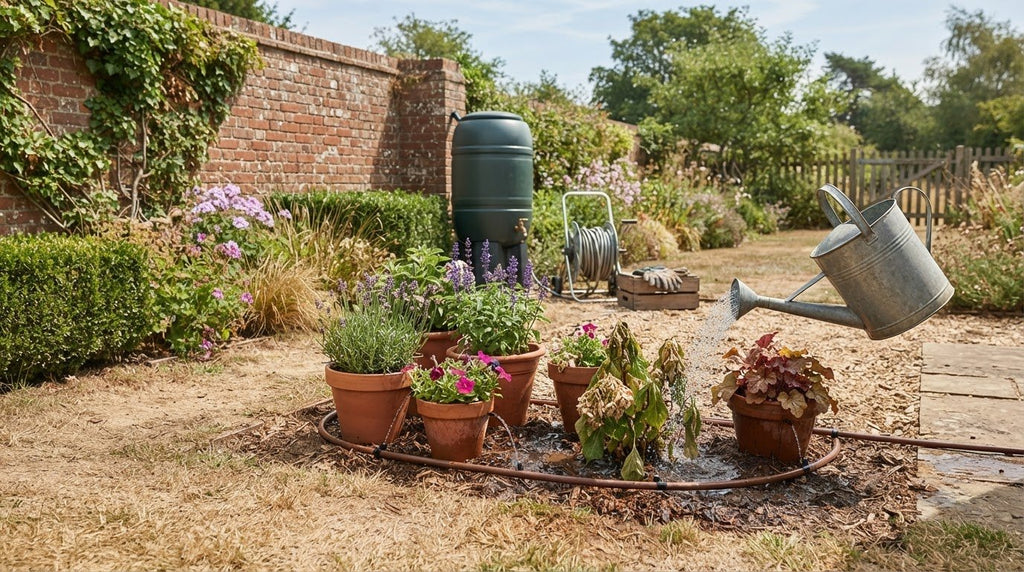
What if the best temporary watering solution for summer heatwave conditions isn’t watering every plant, but getting water to the ones that need it most? When temperatures climb, it’s easy to feel you should water the whole garden, even when time is short or local restrictions may apply.
That uncertainty is understandable. Newly planted flowers, containers and plants showing signs of stress may need attention before established plants. A carefully chosen watering method can save time and direct water where it’s needed. The right approach depends on your garden layout, the equipment you have and the rules in your area.
This guide explains how to prioritise vulnerable plants, compare temporary options such as drip irrigation and watering kits, and use water thoughtfully during hot weather. Check the latest advice from your local water company before setting up, as restrictions can vary by area. A temporary system can help you manage a heatwave without assuming every garden needs permanent automation.
Key Takeaways
- Start with containers, newly planted specimens and plants showing water stress, rather than trying to water the whole garden.
- Choose a temporary watering solution for summer heatwave conditions by matching the method to your garden layout, available equipment and time.
- Compare hand watering, hose watering, drip irrigation and sprinklers to find a practical balance of targeted coverage and setup effort.
- Water at the root zone, test where the water reaches and check the soil so you can adjust your routine as conditions change.
- Check current advice from your local water company before using a hose or irrigation system, as restrictions may vary by area.
Temporary watering during a summer heatwave: what needs attention first?
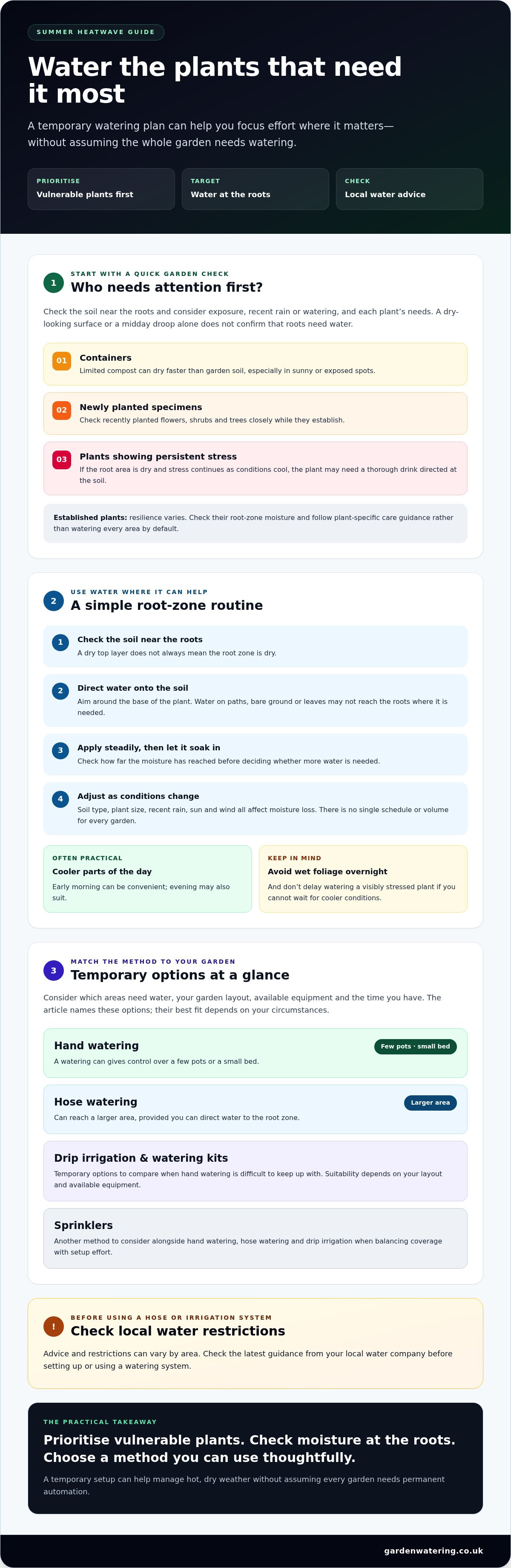
You don’t need to water every part of the garden at once. Start with plants most exposed to drying out: containers, recently planted specimens and anything showing persistent signs of water stress. Check the soil near the roots to focus your effort where it’s useful, rather than watering just because the surface looks dry.
A temporary watering solution for summer heatwave conditions is a short-term way to meet plants’ increased water needs while hot, dry weather lasts. The right response may be targeted hand watering, or a temporary system if keeping up by hand is difficult.
For practical ideas on watering through hot weather, watch this video:
Which plants should you water first in hot weather?
Containers have a limited volume of compost, so they can dry faster than garden soil, particularly in sunny or exposed spots. Check newly planted shrubs, flowers and trees closely while they establish. Prioritise valuable or vulnerable plants according to their specific care guidance, as needs differ by plant and growing conditions.
Check moisture near the roots, not just at the surface. A dry-looking top layer doesn’t always mean the root zone needs water. Plants also vary in resilience: drought tolerance in plants helps explain why some established plants cope better with dry spells than others.
What should you check before watering?
Take a quick walk around the garden. Note which containers and beds are exposed, when each area last had rain or watering, and how the soil feels near the roots. This gives you a practical priority list before you reach for a watering can or choose equipment.
A plant that droops during the hottest part of the day may be reacting temporarily to heat. Don’t rely on wilting alone: check the soil and look for signs that persist as conditions cool. If the root area is dry and the plant remains stressed, it may need a thorough drink directed at the soil. Follow reliable, current plant-care advice for specimens you’re unsure about.
If hand watering will be difficult to keep up with, explore Hozelock watering options when considering a temporary setup. First identify which plants need help, then match the method to those areas rather than watering the whole garden by default.
When and how should you water plants during a summer heatwave?
Once you’ve identified which plants need attention, direct water to the soil around their roots. Repeatedly wetting leaves may leave the root zone dry, while water landing on paths or bare ground between plants is unlikely to help. Apply water steadily to the soil, then check how far it has reached.
Check moisture at the root zone before watering again, because a dry surface doesn’t always mean the soil around the roots is dry. Soil type, plant size, recent rain and exposure to sun or wind all affect how quickly moisture is lost. There’s no single watering schedule or volume that suits every garden.
Is early morning or evening better for watering?
Cooler parts of the day are often practical for watering because less water may evaporate quickly than during the hottest sunshine. Early morning can be convenient; evening may also suit, though avoid leaving plants with wet foliage overnight where this could encourage problems. Don’t delay watering a visibly stressed plant if you can’t wait for a cooler spell. For plant-specific recommendations and exact timing guidance, check current advice from the RHS.
How can you water roots without wasting water?
Direct water onto the soil around the base of a plant, rather than spraying paths or surrounding areas. A watering can gives control over a few pots or a small bed; a hose can reach a larger area, provided you can target the root zone. For further practical advice on gardening in hot weather, see the University of Minnesota Extension guide and adapt its general guidance to UK conditions and your plants.
After watering, give the moisture time to soak in, then check the soil near the roots again. If it’s still dry, water more slowly so moisture has time to penetrate rather than run off. If it feels damp, hold off and reassess later. This check helps avoid repeating a watering just because the surface looks dry.
For a small planting area, careful hand watering may be all you need. If you have several plants to reach, a drip irrigation system is another option for delivering water near roots. Match any temporary watering solution for summer heatwave conditions to the area you need to cover, and check current RHS and local water-company advice before deciding how to use it.
Which temporary watering method suits your garden in a heatwave?
The best temporary watering solution for summer heatwave conditions depends on what needs water and how much time you can give it. Hand watering may be enough for a few pots, while a planted border, several containers or a lawn may need a different approach. Use this comparison to narrow down the options, then check local water-company restrictions before using a hose or irrigation equipment.
| Method | Coverage | Setup effort | Suitable for | Limitations |
|---|---|---|---|---|
| Hand watering | Targeted, plant by plant | Low; use a watering can | A few priority pots and small beds | Needs your attention each time; larger gardens may take longer to cover. |
| Hose watering | Can be directed to individual plants or areas | Low to moderate, depending on access and equipment | Beds and containers within reach | Requires active use and may be restricted by local water-company rules. |
| Drip irrigation | Directed along planted areas | Some setup to position and test the system | Borders, rows of plants and groups of containers | Needs suitable layout and checking to confirm water reaches the intended plants. |
| Sprinkler | Wider, more general coverage | Positioning and coverage checks needed | Suitable lawn areas or wider zones | Less targeted for individual pots and plants; check where the water lands. |
Is hand watering enough for a short heatwave?
For a small patio with a few containers, or a short list of vulnerable plants, hand watering can be straightforward. You control where the water goes and can check each plant as you go. In a larger garden, repeating the task across several beds may be difficult to fit into a consistent routine. A garden watering kit may be worth considering if you need equipment suited to your layout, but automation isn’t necessary for every garden.
When does drip irrigation or a sprinkler make sense?
Drip irrigation suits planted areas where you want to direct water towards the soil near roots. Consider it for beds or groups of containers. A sprinkler is generally better suited to a lawn or wider area than to individual pots, where targeted watering may be more appropriate.
A timer can help you keep to a planned routine, but it can’t tell you whether plants need water. Check the soil and adjust for the weather, plant needs and current local restrictions. If timed watering fits your setup, compare garden irrigation water timers before choosing equipment.
How to set up a temporary watering routine safely and responsibly
A quick check before switching on a hose or irrigation system can prevent water going where it isn’t needed and help you follow current local rules. Treat a temporary watering solution for summer heatwave conditions as a setup to monitor, not something to leave running unchecked. Needs can change with rainfall, temperature and plant condition.
How do you create a simple temporary watering setup?
Work through these steps before relying on the setup:
- 1. Prioritise plants. List the containers, newly planted specimens and other plants that need the closest attention.
- 2. Choose a suitable method. Match hand watering, a hose or targeted irrigation to the size and layout of the area.
- 3. Position the equipment. Place outlets near the soil around the plants’ roots, not over paving or empty ground.
- 4. Test the coverage. Run the setup briefly while watching where the water goes. Check for leaks, overspray, blocked outlets and water pooling or running onto paving.
- 5. Review the soil. Check moisture near the roots after watering. Adjust the position or routine if water misses plants, runs away from beds or leaves the root zone dry.
Make changes one area at a time, then test again. If an outlet waters the path rather than the bed, reposition it before extending the setup to other plants.
What should UK gardeners check during a heatwave?
Before using a hose or irrigation system, check the latest notices from your local water company. Restrictions and their wording can differ between areas and may change, so don’t assume advice that applies elsewhere applies to your home. If a notice is unclear, check directly with the relevant water company before watering.
For general plant-care recommendations, consult current RHS guidance and follow any specific advice for your plants. Check with the relevant authority before relying on a claim about what a restriction permits. Don’t assume a watering method is exempt or restriction-proof. Direct water towards plants that need it and avoid running equipment unattended. Using water thoughtfully is sensible, but no method guarantees a particular saving.
If you need equipment for a temporary setup, compare garden watering kits against your layout and the plants you plan to water. Check the rules first, then test coverage and review the soil as conditions change.
Watering Solutions: During and After the Heatwave
A temporary setup should make caring for priority plants easier, not add unnecessary complexity. Hand watering may be manageable if you have only a few containers or a small bed. If you’re struggling to reach several planted areas, a temporary irrigation kit could make the routine more practical. Choose based on your garden, water access and how long hot weather is expected to last.
How can you choose a solution without overcomplicating things?
Keep the decision simple. Consider the size of the area, which plants need water, where your water source is and how often you can check the setup. A watering can or hose offers direct control but needs your time. Drip irrigation can suit planted areas but takes setup and coverage checks. A watering kit may help connect suitable equipment for the job, but it still needs to fit your garden.
- Hand watering: straightforward for a small number of plants; requires you to repeat the task.
- Temporary irrigation: may be more manageable across several areas; requires positioning, testing and monitoring.
For planning beyond a short heatwave, use reliable system guidance and consider whether your needs are seasonal or ongoing. Don’t choose more equipment than your garden and routine call for.
What should you do when temperatures ease?
When the weather cools or rain returns, reassess the soil near plant roots and check how plants are responding. Don’t keep a heatwave watering routine running automatically just because it was useful during hotter, drier conditions. Reduce or pause watering as appropriate, while continuing to monitor containers and newly planted specimens that may still need attention.
If you’ve used temporary equipment, adjust, remove or store it according to its instructions and intended use. Check for blockages or leaks before putting it away, and make sure local water-company advice still permits any hose or irrigation use you plan to continue. Persistent watering needs may point to a longer-term system choice rather than an emergency setup.
Garden Watering offers specialist product-selection advice backed by over 15 years of experience advising customers on garden watering. For a suitable short-term or ongoing option, explore Hozelock watering options and choose equipment that fits your garden and the plants you need to care for.
Keep your garden cared for as the weather changes
A practical temporary watering solution for summer heatwave conditions starts with the plants that need help most. Check moisture near the roots, choose a method that suits your garden and available time, and test that water reaches the intended plants. Before using a hose or irrigation system, check your local water company’s current advice.
As temperatures ease or rain returns, reassess the soil and adjust your routine rather than continuing heatwave watering by default. Hand watering may be enough for a few pots, while drip irrigation, sprinklers or a watering kit may suit other garden layouts. Choose equipment for the job at hand without overcomplicating the setup.
Garden Watering has over 15 years of experience helping customers choose watering systems, with a specialist range that includes Hozelock systems, drip irrigation, pop-up sprinklers and watering kits. Explore Hozelock watering options for your garden and find equipment suited to your plants and setup. For help choosing a suitable system, explore the range and get advice from Garden Watering.
Frequently Asked Questions
How often should I water my garden during a summer heatwave?
Water when the soil around a plant’s roots is dry and the plant needs moisture, rather than following a fixed daily schedule. The right frequency depends on soil type, plant, container size, sun and wind exposure, and recent rainfall. Check the root zone before watering again, as the surface can dry faster than the soil below. Give priority to plants that dry out quickly, and follow specific care guidance for valuable or vulnerable specimens.
Is it better to water plants in the morning or evening during hot weather?
Early morning or evening can be practical because conditions are cooler than during the hottest part of the day, which may reduce rapid evaporation. Choose a time that lets you direct water onto the soil and check it has soaked in. Don’t delay watering a plant that clearly needs attention simply because it isn’t the ideal time. Plant needs and conditions vary, so check current RHS advice for specific recommendations.
Can I use a sprinkler as a temporary watering solution in a heatwave?
Yes, a sprinkler can suit a lawn or other appropriate wider area, provided local water-use rules allow it. It may be less suitable for individual containers or plants that need targeted watering. Test the coverage first: check that water reaches the intended area rather than paths or neighbouring beds. A temporary watering solution for summer heatwave conditions should match the plants and garden layout, not just the equipment you have.
What is the best temporary watering solution for containers?
For a few containers, a watering can or carefully directed hose may be simplest because you can water each pot’s compost directly. If you have several pots and hand watering is becoming difficult, a suitable drip irrigation system or garden watering kit may be worth considering. Check the compost near the roots and confirm that each container receives water. Container material, size, position and plant type all affect how quickly compost dries.
Should I water a wilting plant straight away during a heatwave?
Check the soil first. A plant can droop temporarily in heat, so wilting alone doesn’t confirm that it needs water. Feel the soil around the roots; if it’s dry and the plant remains stressed as the day cools, water the root area thoroughly. If the soil is already damp, adding more water may not help. For a valuable or unfamiliar plant, consult reliable, plant-specific care guidance.
Can I water my garden with a hose during a UK heatwave?
Check your local water company’s current notices before using a hose. Restrictions vary by area and can change; where a hosepipe ban applies, garden watering with a hose may be prohibited. Don’t assume rules elsewhere apply to your home. Check the wording and any relevant exceptions directly with your water company. A watering can may be permitted under some restrictions, but confirm current local advice rather than relying on a general rule.
Do I need an automatic watering system for a short heatwave?
No. If you have a few priority plants and can water them reliably by hand, a watering can may be enough. A temporary kit or automatic system could be more manageable if you’re caring for several areas or can’t keep up with repeated watering. Choose based on garden size, plant needs and how long you expect to use it. Garden Watering offers specialist product advice backed by over 15 years of experience.
`-
Posted in
drip irrigation, garden watering, heatwave gardening, plant care, summer garden tips, temporary irrigation, temporary watering solution for summer heatwave, UK gardening, water conservation